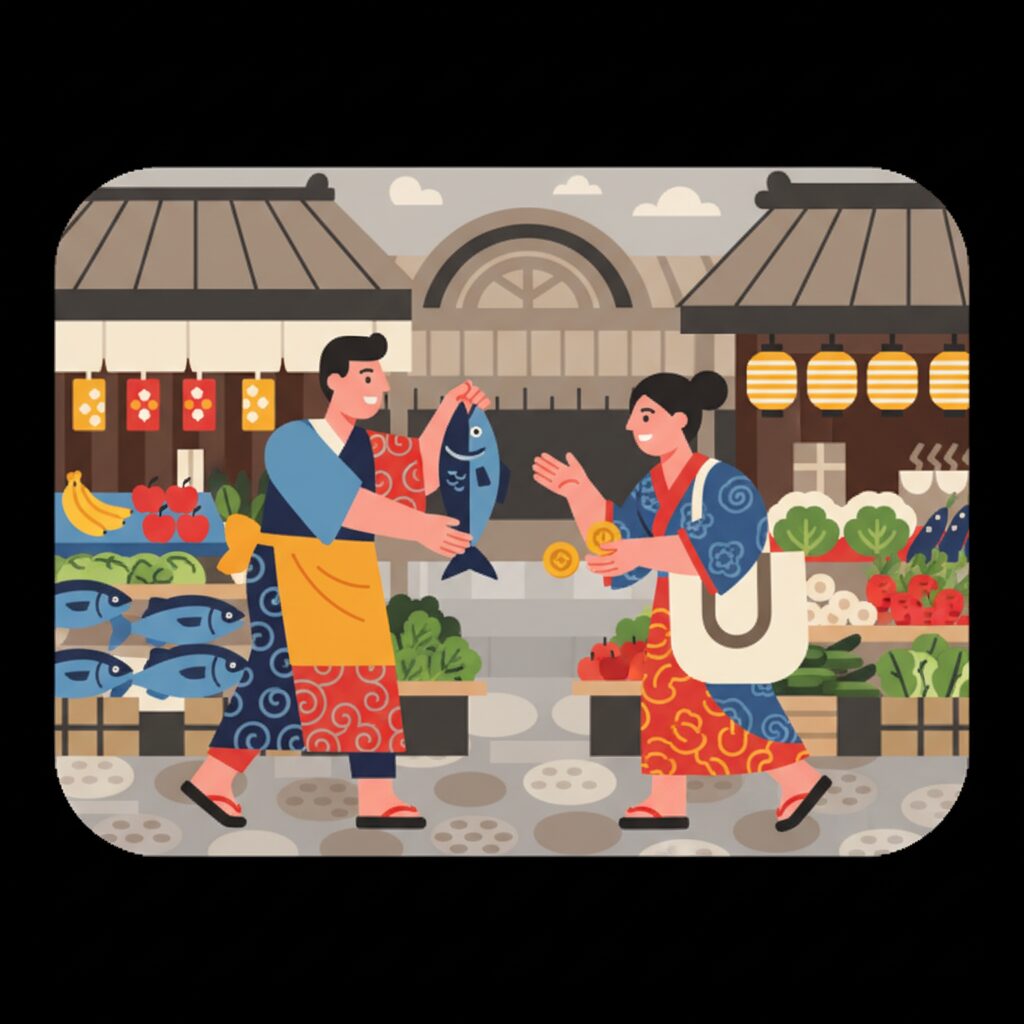
Step off the train in Tokyo, and you enter a world of serene commerce. Shops are quiet temples of consumption. Transactions are smooth, silent, and flawlessly efficient. Prices are fixed, displayed with the certainty of a mathematical theorem. You pay the number you see. The system works. Now, step off the train in Osaka, walk into a bustling shōtengai, and the air hits you differently. It’s a riot of sound and color, a chaotic symphony of shopkeepers yelling, neighbors gossiping, and the sizzle of takoyaki on a hotplate. Here, a price tag isn’t always a final statement; sometimes, it’s an opening line. It’s the start of a conversation, a playful dance of wits known as negiri, or haggling. For anyone accustomed to Japan’s famously rigid social codes, this can be a shock. We’re taught that politeness in Japan means following the rules, not questioning the price. But Osaka, as always, plays by its own rulebook. This isn’t rudeness; it’s communication. It’s a deep-seated part of the city’s merchant soul, a cultural tic that reveals more about the Osakan mindset than a thousand guidebooks ever could. Understanding this art form is key to understanding the city itself. It’s a skill, a game, and a direct line to the vibrant, practical, and fiercely human heart of Osaka. But be warned: this game isn’t for everyone. It requires a bit of nerve, a smile, and a willingness to engage in a way that might feel confrontational at first. This is your guide to navigating that lively, and sometimes intimidating, world.
After you master the art of haggling, why not enhance your Osaka adventure by discovering the city’s urban rhythm through its shared cycles?
The Merchant’s DNA: Why Osaka Plays by Different Rules
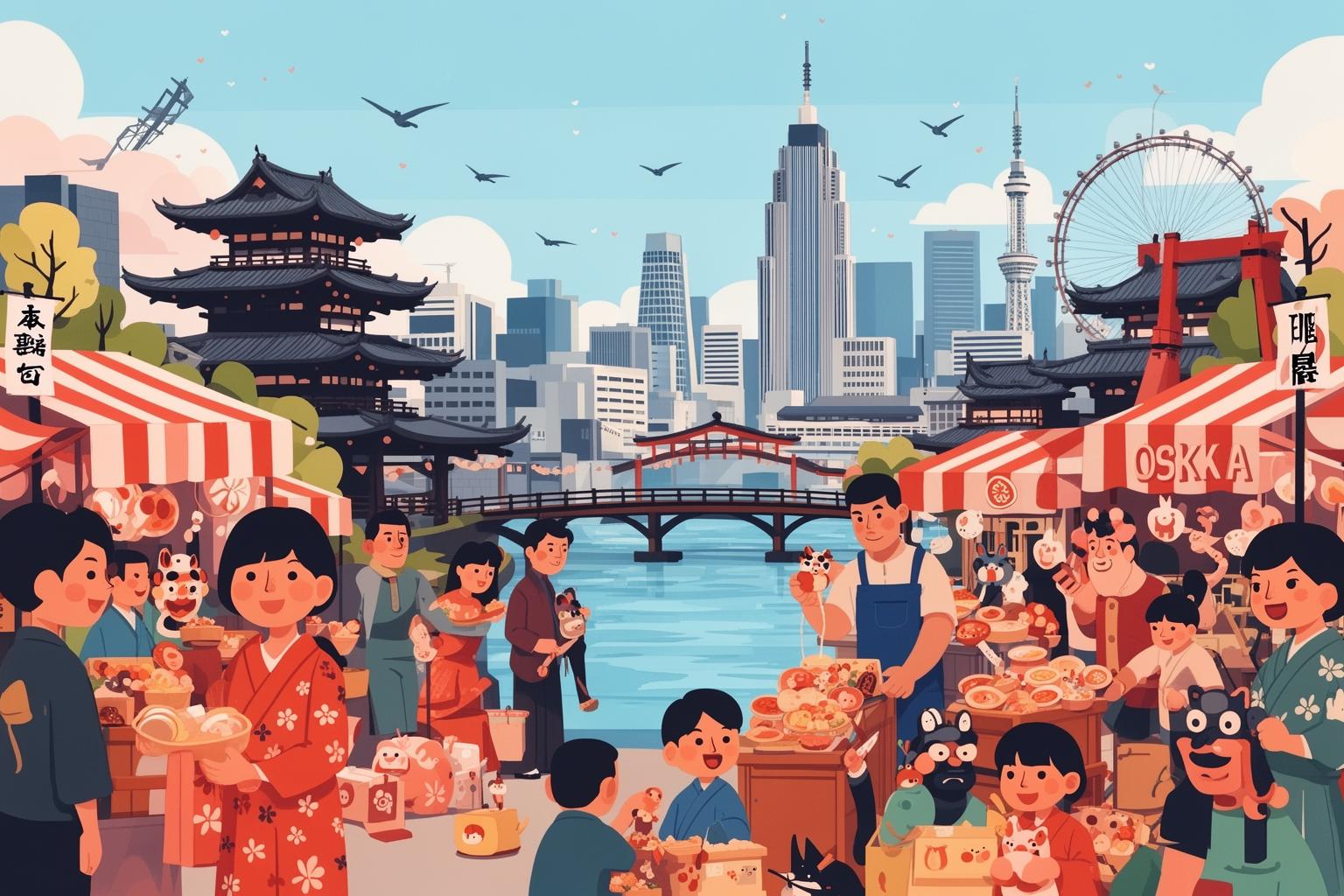
To understand why you might consider asking for a discount in Osaka, you need to look back several centuries. While Tokyo—then known as Edo—was the strict political center, governed by samurai and bureaucrats who prioritized order and hierarchy above all else, Osaka was the lively commercial hub of the nation. It was the Tenka no Daidokoro, the “Nation’s Kitchen.” Rice, sake, soy sauce, and goods from across Japan flowed through its ports and were traded in its markets. This city wasn’t built by warriors or politicians; it was established by shōnin, or merchants. And for a merchant, value is paramount. A deal isn’t just about exchanging goods for money; it’s about relationships, cleverness, and the excitement of the transaction. A skilled merchant knew their product, their customer, and how to set a price that left everyone satisfied. This spirit remains alive. It’s woven into the city’s DNA. While Tokyo’s culture developed under the strict formality of the shogun’s court, Osaka’s culture emerged from the lively, competitive marketplace atmosphere. This history produced a fundamentally different mindset. In Tokyo, social harmony is often preserved by following established rules and avoiding direct confrontation. In Osaka, harmony emerges through direct, honest, and often humorous interaction. A bit of friendly haggling isn’t seen as conflict; it’s a form of engagement. It signals that you, the customer, are paying attention. You’re not merely a passive consumer; you’re an active participant in the economic dance. You value the item enough to want it but also respect your own money enough to seek the best possible price. The shopkeeper, in turn, respects a customer who knows what they’re doing. It’s a game of mutual appreciation played out over a price tag.
The Haggling Arena: Mapping Your Playing Field
Before you head to the nearest 7-Eleven and attempt to bargain for your onigiri, it’s essential to understand the landscape. Haggling in Osaka is a highly contextual art. Trying it in the wrong place won’t just fail; it can lead to confusion, embarrassment, and a violation of a powerful unspoken rule. Knowing where the negotiation happens is the most valuable skill you can acquire.
The Hot Zones: Where the Game is On
Think independent, think owner-operated, think flexible. The chance for successful haggling exists where the person you’re dealing with has the authority to make a decision.
Den Den Town (Nipponbashi)
Osaka’s electronics district is a treasure trove of everything from the latest cameras to rare vintage video games. While big chains like Bic Camera or Yodobashi Camera maintain fixed prices, the real opportunity lies in the smaller, independent shops tucked away on side streets. These stores are often packed with used gear, rare parts, and previous-year models. Especially when purchasing a higher-priced item such as a second-hand lens or a vintage amplifier, a polite price inquiry is often welcomed. The owners are passionate specialists who enjoy discussing their craft. Demonstrate genuine interest, ask insightful questions, and they may be willing to reduce the price by a few thousand yen, particularly if you offer to pay in cash.
Shōtengai (Shopping Arcades)
These covered shopping streets form the heart of Osaka’s neighborhoods and are prime spots for a little bargaining—if you pick your targets carefully. A young staffer at a chain drugstore likely can’t help, but the owner of a small family-run furniture store or an independent kimono shop might. The trick is to focus on places where stock has lingered or where you’re making a significant purchase. Buying a full set of kitchen knives at a specialty shop in Doguyasuji? Bundling items at a local clothing boutique? These are ideal moments to politely ask if there’s any room on the price. The older the shop and owner, the more they’re likely to enjoy the challenge.
Flea Markets and Outdoor Stalls
This is haggling’s top tier. At venues like the expansive monthly flea market at Shitennoji Temple, bargaining isn’t just accepted—it’s expected. Prices on antiques, second-hand clothing, pottery, and assorted curios are almost always negotiable. Vendors are there to make sales and relish the interaction. Here, you can be more straightforward. A friendly smile paired with “how about this much?” is part of the ritual. It’s a relaxed, fun environment to hone your skills and get a feel for the rhythm of negotiation.
The No-Go Zones: Don’t Even Think About It
Knowing where not to haggle is just as crucial. In these places, the price is inviolable. Questioning it is like challenging the laws of physics.
Department Stores & Major Chain Retailers
Stores like Daimaru, Takashimaya, Uniqlo, and Muji operate on a principle of strict price integrity. The price displayed applies to everyone, everywhere. Staff are employees bound by rigid corporate policies and have no power to alter prices. Attempting to haggle here will be met with a polite but firm refusal and perhaps some bewilderment. This simply isn’t how these businesses operate. Their model values consistency and efficiency over individual negotiation.
Supermarkets & Convenience Stores
This should go without saying, but it’s worth noting. Prices for items like a carton of milk or a bag of chips are fixed. These high-volume, low-margin businesses rely on a quick, smooth checkout process. Pausing to negotiate the price of a bento box would be like trying to hold a deep conversation inside a revolving door—it just disrupts the flow for everyone.
Restaurants and Cafes
Never haggle over the cost of food or drink. A bowl of ramen priced at 900 yen is 900 yen. That price reflects the ingredients, labor, chef’s expertise, and the establishment’s overhead. Questioning it is to disrespect their craft and livelihood. However, you can build rapport with the owner of a local izakaya you visit regularly, which might earn you a free side dish (omake) over time—but that’s a gesture of loyalty, not a negotiation result.
The Playbook: How to Haggle Without Causing an International Incident
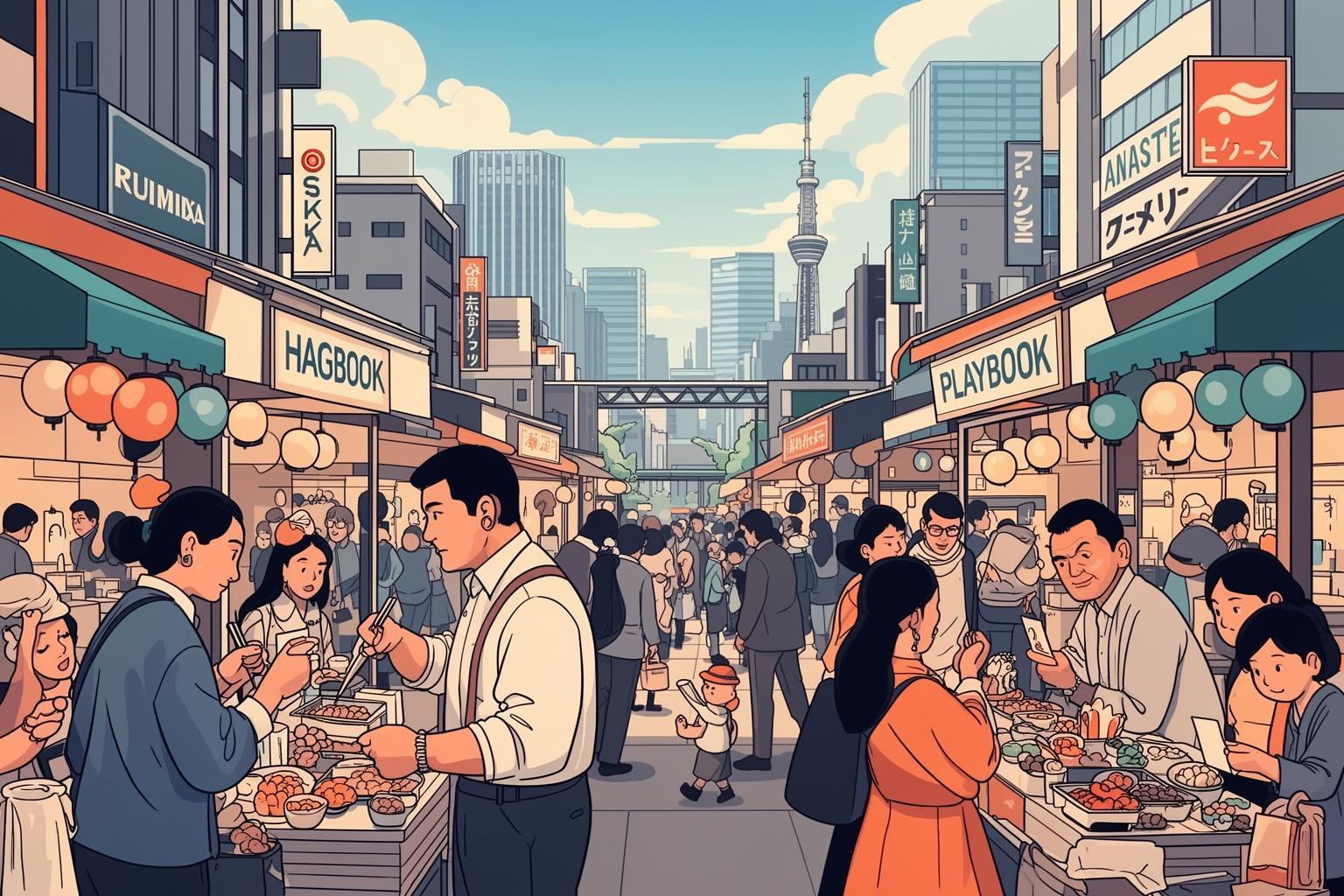
So, you’ve landed in a promising second-hand shop in Den Den Town and spotted a vintage camera you adore. The price feels a bit steep. What’s your next step? Success isn’t about being pushy or demanding; it’s about being charming, strategic, and respectful. It’s a performance, and knowing your lines is key.
Phase One: The Approach
Your initial move shouldn’t focus on the price—it should focus on building rapport. Begin by sincerely appreciating the item and the store. Compliment the owner on their collection. Ask about the item’s history or features. This does two things: it signals you’re a serious potential buyer, not just browsing, and it creates a warm, human connection. You’re not opponents in a financial battle; you’re two people who share a love for cool vintage cameras. Spend some time cultivating this connection before even thinking about discussing money. In Osaka, business is personal.
Phase Two: The Opening Move
When it’s time to bring up the price, subtlety is key. Instead of bluntly asking, “Can you make it cheaper?”, try a softer, more traditional Japanese phrase. One beautifully indirect expression is, “Chotto dake o-benkyō shite moraemasen ka?” which literally means “Could you study it a little bit for me?” but is understood as “Could you see if it’s possible to lower the price a little for me?” It’s very polite and frames a discount as a favor—something that comes from the shopkeeper’s expertise. In Osaka, you might also hear the more direct local dialect, “Mō chotto yasuku naran?” (Can’t it get a bit cheaper?). Which phrase to use depends on the shop’s vibe, but starting with the polite form is always a safe choice.
The Tactics of the Trade
Once the discussion is underway, there are several classic tactics to consider. These aren’t about deception; they’re accepted moves in the negotiation game.
- The Bundle: Possibly the most effective and least confrontational approach. Pick two or three items you want. Say, “I really love this camera, and I’m also interested in this lens and camera bag. If I buy all three, could you offer a special price?” This shifts you from a single-item buyer to a valued customer making a bulk purchase. Most shop owners are happy to provide a discount to move more stock.
- The “Kizu” Gambit: Works well for second-hand goods. Find a minor cosmetic flaw—a tiny scratch or a small scuff. Point it out politely, not as a complaint but an observation. “Ah, there’s a little scratch here, isn’t there? Given that, could you possibly adjust the price a bit?” This offers the seller a legitimate reason to lower the price without losing face.
- The “Omake” Request: Sometimes the price is non-negotiable, but you can still gain extra value. Instead of asking for a discount, request a bonus item. “I understand the price is fixed, but could you include a set of batteries?” or “Would it be possible to get a case thrown in for the same price?” This is the art of the omake, or bonus, deeply rooted in Japanese retail culture.
- Cash is King: Although Japan is increasingly cashless, small independent shops still face credit card fees. Politely mentioning, “I can pay in cash right now,” can sometimes be the final nudge needed for a small discount.
The Endgame: Knowing When to Fold ‘Em
Negotiation is a dance, not a battle. The seller may counter with a price slightly lower than the sticker but still above your ideal. At this point, you usually get one last chance to make a gentle counter-offer. However, if the seller says, “Gomen, kore ga genkai desu” (Sorry, this is my limit) or “Kore de seiippai,” (This is the absolute best I can do), the negotiation ends. Pressing further is rude and breaks the unspoken rules of the encounter. Smile, thank them for their time and consideration, then decide whether to accept their final offer gracefully or to politely decline and walk away. The goal is a win-win, not a battle of wills. Keeping the positive spirit of the interaction matters more than saving an extra 500 yen.
The Osakan Mindset: It’s Not About the Money, It’s About the Win
To an outsider, this entire process might seem like a lot of fuss just to save a few dollars. But that completely misses the point. For many Osakans, haggling isn’t mainly about saving money—it’s about the victory. Securing a good deal is a source of pride, a story worth sharing, and proof of one’s cleverness. The highest compliment in Osaka isn’t “You’re rich,” but rather “You’re a savvy shopper” (kaimono jōzu). Talking up a great bargain you scored is a common and celebrated topic. It shows you’re not a kamonegi—a slang term for an easy mark or sucker. This sharply contrasts with Tokyo’s consumer culture, where status is often shown by buying the latest, trendiest items at full price from a prestigious department store. In Osaka, status comes from demonstrating value and sound economic judgment. This is frequently misunderstood by people from other parts of Japan, who might call Osakans kechi (stingy). But it’s not stinginess. An Osakan will gladly spend a fortune on something truly valuable, whether it’s a delicious meal or a high-quality product. What they refuse to accept is feeling overcharged. They want to be sure they paid a fair price—or better yet, a price that was slightly less than fair, in their favor. It’s about the principle. The haggle is a validation of that principle, confirming that they are sharp, resourceful, and in control of their own financial fate.
A Guide for the Unconvinced: Navigating the Haggle-Averse Path
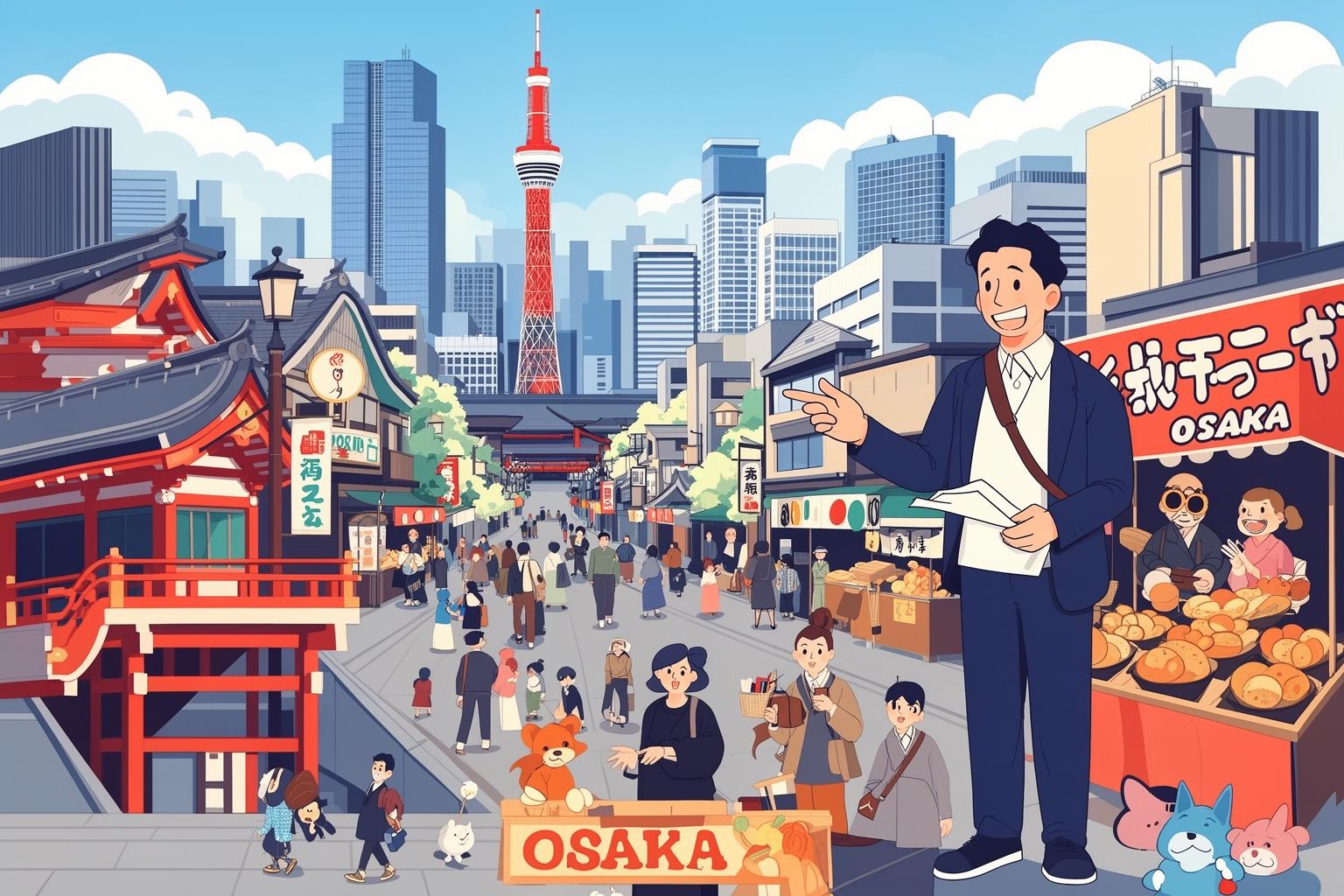
Let’s be honest. For many people, especially those who grew up in cultures where haggling is rare or who are naturally non-confrontational, this whole process can seem stressful. The subtitle of this article exists for a reason. If the thought of politely negotiating a price makes your stomach tense, that’s completely okay. You don’t have to haggle to enjoy a happy and fulfilling life in Osaka. Paying the listed price is always an acceptable—and often simpler—choice. You won’t be judged, and you’ll still be supporting a local business. There is absolutely no shame in it. In fact, many Japanese people from outside Osaka feel the same way you do. However, you can still appreciate the culture without directly taking part in it. Think of it as a spectator sport. The next time you’re in a lively shōtengai, just observe. You’ll eventually see an obachan (a middle-aged or older woman), the undisputed grandmaster of haggling, work her magic. Notice how she builds rapport, playfully contests the price, and how she and the shopkeeper laugh together as they agree on a number. It’s a free, often hilarious, lesson in Osaka culture. And if you want to enjoy the pleasure of receiving a little extra without the stress of bargaining, there’s a better way: become a regular. Find a local vegetable stall, butcher, or tofu shop that you like. Visit consistently. Greet the owner. Make small talk. After a few visits, you’ll likely notice them adding an extra onion to your bag, giving you a slightly larger cut of meat, or slipping a small block of tofu as a “service.” This is the ultimate expression of Osaka’s relationship-based economy. It’s not a discount you requested; it’s a reward for your loyalty. It’s a quiet acknowledgment that you’re no longer just a customer—you’re part of the neighborhood.
Ultimately, the culture of haggling offers a small but powerful glimpse into what makes Osaka so unique compared to the rest of Japan. It’s a city that values pragmatism over protocol, direct human connection over detached formality, and good-natured debate over polite silence. It embodies the idea that rules are sometimes just suggestions and that life is a conversation, not a script. Even if you never ask for a single yen off, simply knowing the option exists changes how you feel about the city. It makes the atmosphere hum with a bit more energy, a bit more possibility. It’s a reminder that in Osaka, commerce isn’t just a sterile transaction. It’s a lively, messy, and wonderfully human experience.