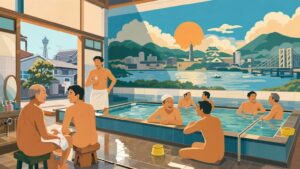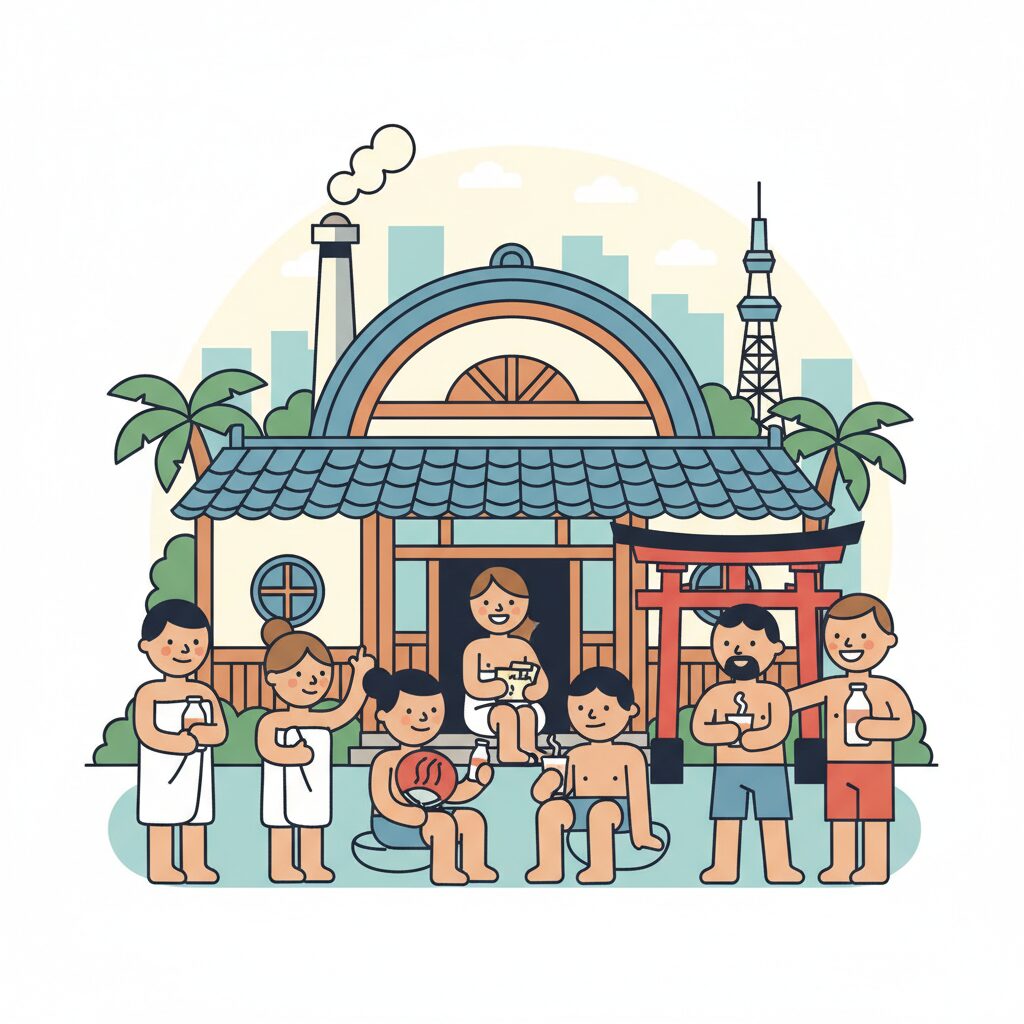
Step off the train in Osaka, and the first thing that hits you is the energy. It’s a city that moves at its own pace, a whirlwind of neon, sizzling street food, and a dialect that tumbles out with a rhythm all its own. You might be here for work, for study, or just to build a life in a city that feels a little more real, a little less polished than its eastern counterpart, Tokyo. But after a long day navigating the crowded subways and the endless hustle, a question arises, one that gets to the very heart of daily life here: how do people in Osaka truly unwind? You have a perfectly good shower in your apartment, a private space to wash away the day. Yet, you see them every evening, your neighbors, emerging from their homes with small baskets in hand, heading towards a building with a tall, slender chimney and a telltale curtain flapping in the breeze, marked with the simple character ゆ (yu), for hot water. This is the neighborhood sentō, the public bath, and your first thought might be, “Why?” In an age of ultimate convenience and privacy, why embrace this seemingly ancient, communal ritual? The answer is one of the deepest secrets to understanding Osaka. It’s not about getting clean. It’s about getting connected. The sentō is the city’s living room, its social club, its unofficial community center, and for a few hundred yen, it offers a window into the soul of Osaka that you’ll never find in a tourist guide.
Embracing the full spectrum of Osaka’s local life, you might also enjoy navigating the chaotic Super Tamade market to complement the community vibe of the sentō experience.
More Than a Bath: The Sentō as a Social Hub
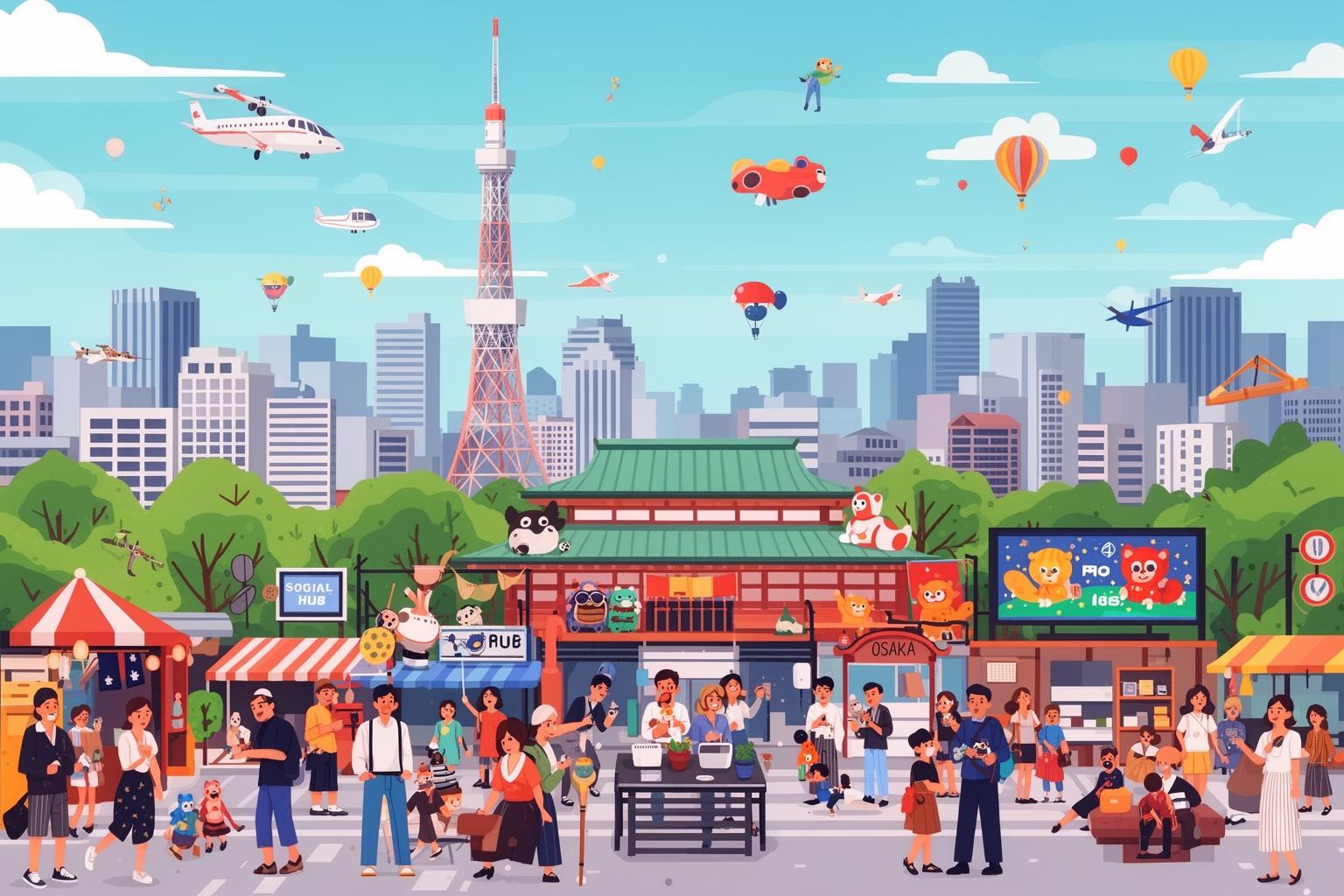
The fundamental misconception for many foreigners is seeing the sentō solely as a practical facility. It’s just a place to wash, right? Wrong. That’s like saying a pub is merely a place to drink. The main purpose of the Osaka sentō is social. It embodies a concept called hadaka no tsukiai, or “naked communion.” When you remove your clothes, you also shed your job title, brand affiliations, and social status. Everyone becomes simply people, sharing the same hot water. This fosters a profound sense of equality and openness, which is distinctly Osaka. The city takes pride in being down-to-earth, and there’s nothing more down-to-earth than being naked in a room full of your neighbors.
The Art of Naked Communication
In a Tokyo sentō, you might encounter a quiet, reflective atmosphere where people soak in respectful silence. In Osaka, however, the steam is thick with lively chatter. This is where you hear real-time commentary on the city. Old-timers passionately debate the latest performance of the Hanshin Tigers baseball team, their voices bouncing off the tiled walls. A group of obachan (aunties) exchange crucial neighborhood news: the new bakery that opened, which supermarket offers the best price on daikon radishes this week, the newest gossip about a local family. Young parents watch their children splash in the shallower baths, sharing tips and sympathies about sleepless nights. Coming from a culture with a long history of public bathing myself, I’ve always been intrigued by this contrast. The Chinese bathhouse can be a place for business meetings or quiet relaxation, but the Osaka sentō feels more like a lively family reunion. You aren’t just an anonymous visitor; you are part of the community. A simple nod, a “Maido” (Osaka’s way of saying “Welcome”), or a remark on the water temperature—“Ee oyu desu ne” (Nice and hot, huh?)—is often enough to spark a friendly conversation. For anyone learning Japanese, this is a valuable, low-pressure setting to practice listening and speaking with people who aren’t putting on a formal front.
The Neighborhood’s Living Room
Consider the typical Osaka apartment: practical, compact, and often not very spacious. The sentō serves as a communal extension of the home. It’s a place where you can stretch out in a way that’s impossible in your own small bathtub. It offers a warm, spacious sanctuary accessible to all. On a cold winter night, the sensation of sinking into a large pool of perfectly heated water is a luxury that costs less than a cup of coffee. This communal approach to comfort is a core aspect of Osaka life. While Tokyo often feels like a collection of individuals privately pursuing their goals, Osaka resembles a network of interconnected communities. The sentō is a key hub in that network. It’s where you check in on an elderly neighbor living alone, see the local shop owner outside their store, and build casual, everyday relationships that truly weave the fabric of a neighborhood. This isn’t a staged, “retro” experience; it’s a vibrant, living part of the social infrastructure.
The Osaka Sentō Aesthetic: Practicality Over Polish
If you’re anticipating the calm, minimalist style of a Kyoto ryokan, prepare to be surprised. The typical neighborhood sentō in Osaka embodies Showa-era practicality. It’s often aged, with chipped tiles and grout that has seen better days, yet it is unfailingly spotless. The design prioritizes function over form, reflecting the city’s deep-rooted merchant culture. Why spend on extravagant decorations when the essentials—the water and the heat—are flawless?
A Museum of Showa Life
Stepping into the changing room, or datsuijo, feels like traveling back in time. Rows of simple wooden or metal lockers, secured with old-fashioned keys on elastic wristbands, greet you. Against one wall, a large, leather-covered massage chair offers a vigorous full-body vibration for 100 yen. In a corner stands a vintage sliding weight scale, silently judging your post-bath satisfaction. Above, a large, slow-turning ceiling fan spins quietly. After bathing, you’ll likely see a classic glass-fronted refrigerator humming, stocked not with craft beer but small glass bottles of milk coffee, fruit milk, and Bireley’s Orange soda—the quintessential sentō drinks. These aren’t staged props for Instagram; they are original fixtures preserved for decades because they still function perfectly. This “if it ain’t broke, don’t fix it” mindset is quintessential Osaka, valuing lasting practicality over passing trends.
The Art of Water
The real charm is in the bathing area. A grand mural usually dominates the back wall, often a majestic depiction of Mount Fuji, though sometimes featuring local scenes or even European landscapes. This Fuji mural, a classic sentō feature, is meant to evoke spaciousness and grandeur. Below it lies a variety of baths, each serving distinct purposes. The main bath (shuhai) is large and comfortably hot. Special features include the jetto basu, or jet bath, with powerful underwater jets massaging your back and legs with intense force. Older men can often be seen stoically enduring the pounding, wearing expressions of grim satisfaction. Then there’s the notorious denki buro—the electric bath—where two metal plates on opposite tub sides emit a low-voltage current, creating a peculiar tingling, vibrating sensation in your muscles. It’s both therapeutic and torturous, and trying it for the first time is a rite of passage. Many sentō also have a yakusoyu, or medicinal bath, infused with seasonal herbs like mugwort, iris root, or yuzu, filling the steamy air with fragrance. And of course, no sentō is complete without a sauna, often blisteringly hot, placed next to the mizuburo—a plunge pool of freezing water. The ritual of sweating in the sauna followed by plunging into icy water is believed to boost circulation and is treated with near-religious reverence. These features aren’t mere luxuries; they are essential tools for attaining perfect relaxation.
Decoding Sentō Etiquette: An Osaka Guide
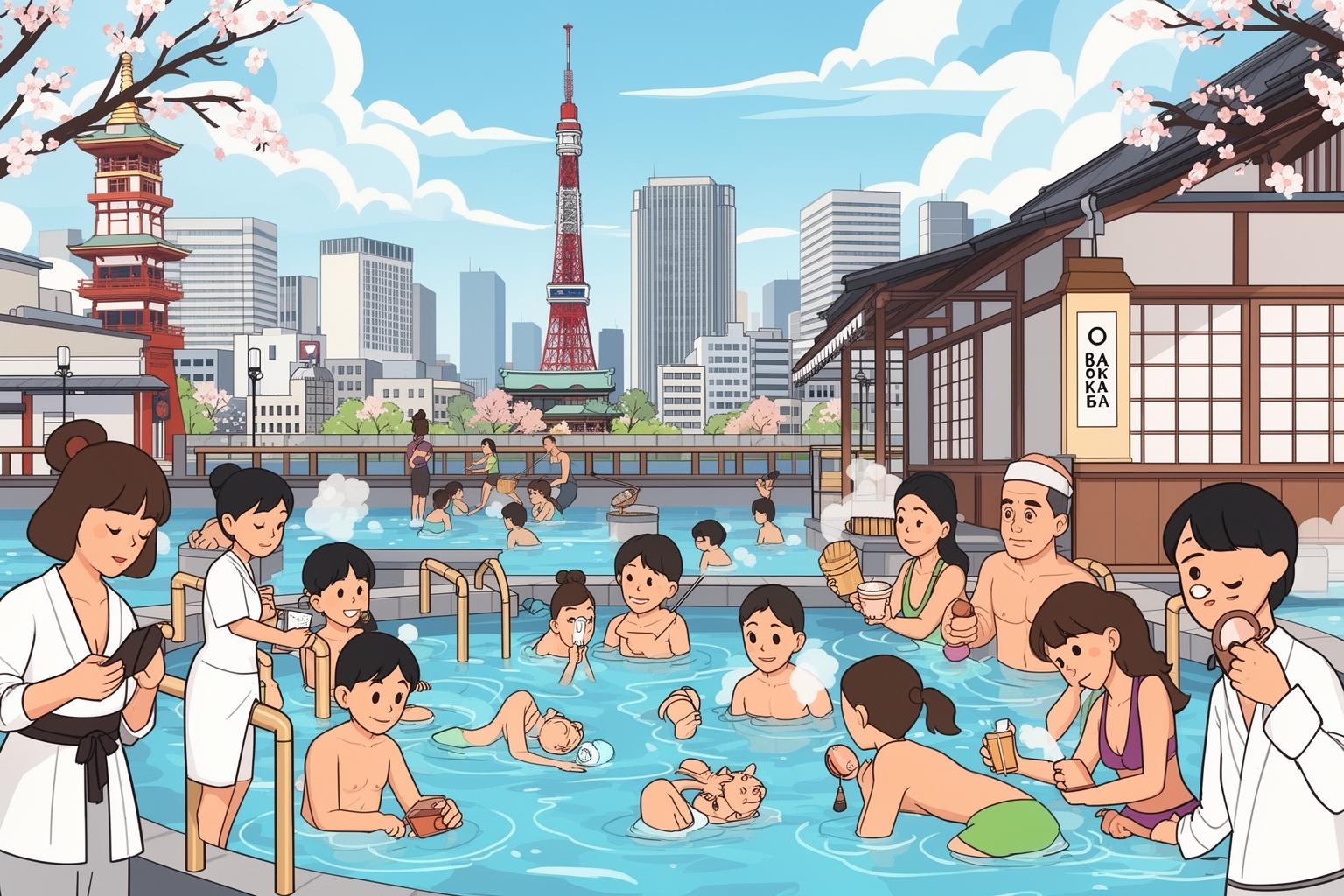
While Osakans are famously laid-back, the sentō follows a strict set of unspoken rules. Breaking them immediately marks you as an outsider, but adhering to them earns you acceptance as someone who respects the culture. The fundamental principle is simple: the bath water is meant for soaking, not washing. The communal water must remain pristine for everyone’s use.
Mastering the Pre-Bath Ritual
Before you even consider stepping into the main bath, you must thoroughly wash your entire body. Locate an empty washing station equipped with a stool, a basin, and a faucet with a shower head. This is not a quick rinse but a full, soap-and-scrub routine. Observe the locals: they lather up and scrub every inch of their body with a small washcloth. This process is a crucial gesture of respect for the shared space. Once you are completely clean, use your basin to scoop hot water from the bath’s edge—called kakeyu—and gently splash it over yourself to adjust your body to the temperature before slowly entering the main tub. No diving, no splashing. The transition from the washing area to the soaking area is a sacred moment.
The Small Towel Conundrum
You’ll notice everyone carries a small, thin towel. This is your multipurpose tool. You use it to scrub your body while washing, and when walking between baths, it provides a bit of modesty by covering your front. Crucially, this towel must never enter the bath water, as it is considered unclean. So what do you do with it? You may place it on the tiled edge of the bath, or if you want to follow the pros, fold it neatly and balance it on top of your head. It might look amusing, but it’s a clear sign you know the etiquette.
The Great Tattoo Debate
This is a major issue for many foreigners. Historically, tattoos in Japan have been linked to the yakuza, or organized crime. As a result, many onsen and sentō have strict “No Tattoos” policies. Osaka, being more pragmatic and less formal than other regions, is generally more relaxed, but the rule often applies, especially in older, family-run establishments. It is not a personal judgment against you or your tattoos; rather, it is a longstanding cultural rule intended to ensure all patrons feel safe. What should you do? Some newer, larger “Super Sentō” might allow tattoos or request you to cover them with waterproof patches. However, many traditional neighborhood sentō will still deny entry. The best approach is to look for a sign at the entrance (usually an image of a tattoo crossed out). If you don’t see one, you can discreetly ask. A key Osaka difference is that if you become a regular at a local sentō and the owner knows you as a respectful member of the community, the rules might be relaxed. This flexibility and focus on personal relationships over rigid policy is a hallmark of the Osaka attitude.
A Window into Osaka’s Soul: Why the Sentō Endures
In a hyper-efficient, technologically advanced country, the continued existence and vibrancy of neighborhood sentō in Osaka is a striking anomaly. It persists because it meets deep-rooted needs often overlooked by modern life. It serves as a powerful counterbalance to the isolation of the digital era, standing as a haven for face-to-face community.
The Ultimate in Cost-Performance
Osaka is a city shaped by merchants, whose people have a renowned reputation for being financially shrewd. While the term kechi (stingy) is frequently used, a more accurate description is value-conscious. Osakans insist on excellent kosupa, or cost-performance. The sentō perfectly embodies this ideal. For around 500 yen, you gain access to abundant hot water, various types of baths, a sauna, and a warm, social space to relax for an hour or two. It’s a complete entertainment and wellness experience for the price of a fancy latte. This remarkable value proposition greatly contributes to its lasting popularity. It’s an affordable, everyday indulgence that reinforces the local ethos of maximizing value.
The Great Equalizer
More than anywhere else, the sentō showcases Osaka’s down-to-earth spirit at its best. When everyone is naked, social hierarchies vanish. A CEO might be soaking alongside a construction worker, and a university professor sharing a laugh with a ramen shop owner in the sauna. There’s no room for pretense. Conversations are straightforward, honest, and grounded. This mirrors the wider Osaka character: a disdain for affectation and a preference for frankness. Foreigners often describe Osaka people as “friendly,” but it goes deeper than that. They are accessible and direct. The sentō is the training ground for this social skill, a place where barriers come down and genuine human connection is the currency. To truly grasp why Osakans appear so open, you must understand the institutions that nurture that openness, with the sentō as a prime example.
Finding Your Local Sentō: A Practical Epilogue
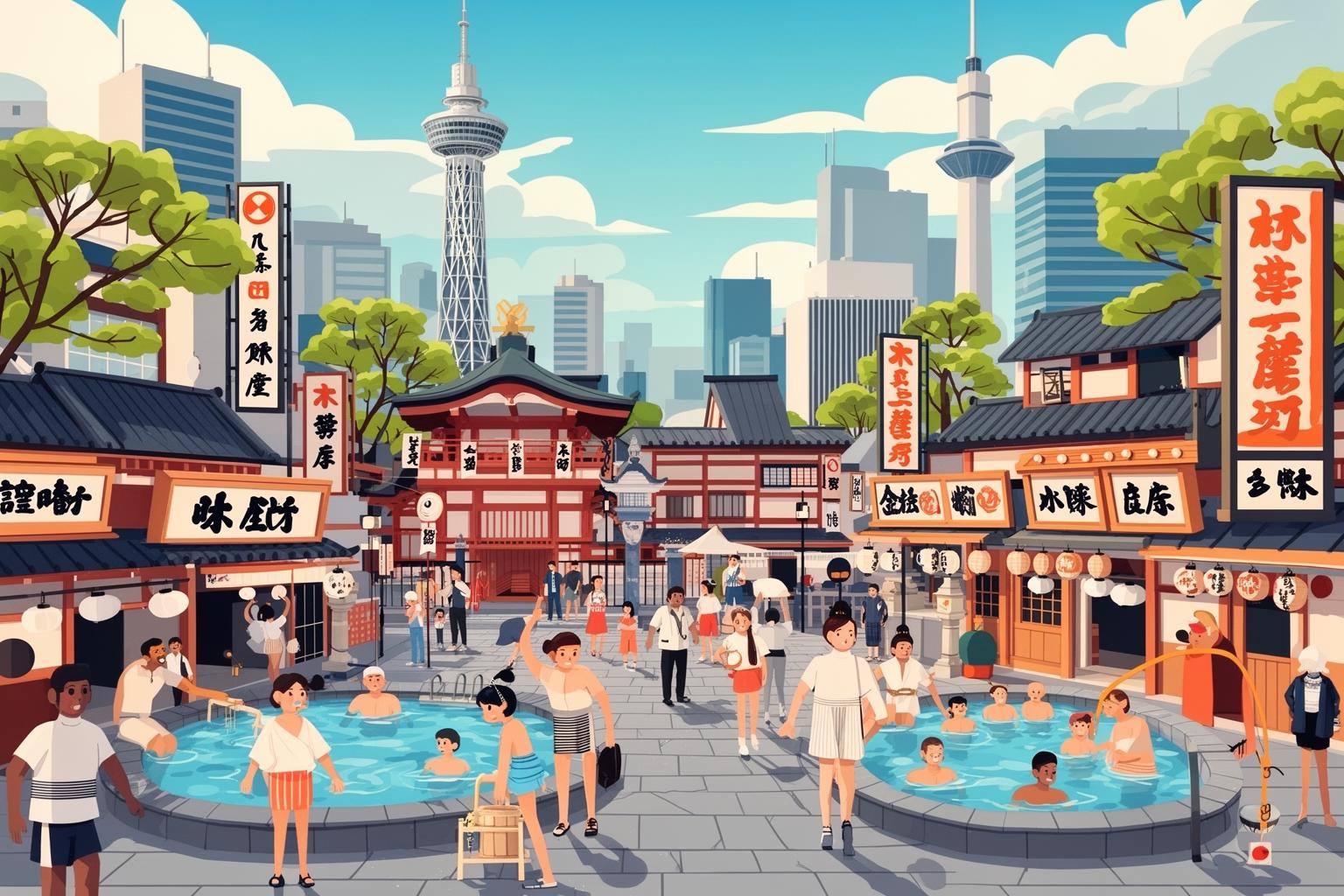
So, how do you take the plunge? The first step is simply to stroll around your neighborhood. Keep an eye out for that tall chimney. In the evening, watch for the warm glow shining through a noren curtain bearing the ゆ symbol. That’s your invitation.
Your first visit may feel intimidating, but the anxiety will fade the moment you step inside. You’ll slide open the door to the sounds of a television and the clatter of lockers. An owner, often an elderly man or woman, will be seated on a raised platform called a bandai, from where they can oversee both the men’s and women’s changing rooms. Don’t be alarmed; it’s tradition. Greet them, pay your fee, and they will direct you to the proper side. Bring your own soap, shampoo, and both a small and large towel if you have them—it’s a sign of being a regular—though you can almost always rent or purchase a set for a small fee. Also, bring a few extra 100-yen coins for the massage chair or a post-bath drink.
Once inside the bathing area, simply observe. Watch what others do. Take your time. No one is judging you. In fact, your presence as a foreigner making an effort to participate in a local custom will probably be met with curiosity and quiet approval. The neighborhood sentō is not a tourist attraction. It is a cornerstone of community life. By stepping inside, you are doing more than just taking a bath—you are accepting an invitation to experience the real Osaka, the city as its people live it every single day. You are washing away the distance between being a visitor and becoming part of the neighborhood.