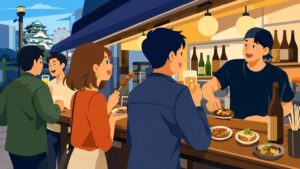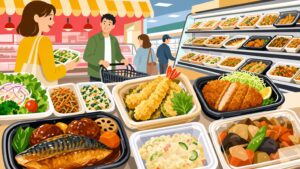
Forget what you think you know about shopping in Japan. Erase the images of silent, gleaming department stores where every apple is a flawless work of art and the only sound is the gentle hum of the escalator. That’s one side of the coin, for sure, a side polished to a high sheen in cities like Tokyo. But in Osaka, life pulses to a different beat. It’s a rhythm you feel most intensely not in the flashy high-rises of Umeda, but in the sprawling, covered arteries of the city’s neighborhood shōtengai, or shopping arcades. The morning here doesn’t begin with a quiet cup of coffee. It explodes in a symphony of rolling metal shutters, the sharp chop-chop-chop from a butcher’s block, the booming calls of a fishmonger announcing the day’s catch, and the sizzle of oil as a croquette shop fires up its fryers for the first batch. This isn’t just a place to buy groceries. It’s the city’s open-air living room, its communal kitchen, and the stage for a daily performance of Osakan culture. For anyone trying to understand what makes this city tick, what separates its soul from the rest of Japan, the answer isn’t in a castle or a skyscraper. It’s right here, under the weathered plastic ceilings of a local shōtengai, where commerce and community are so tightly woven they’re impossible to separate. This is where you learn to live like an Osakan, one errand, one conversation, one freshly fried tempura at a time.
The vibrant pulse of everyday life in these shōtengai is deepened by a distinctive Osaka food philosophy that transforms routine dining into a celebration of local culture.
The Shōtengai as the City’s Kitchen and Main Street
More Than Just a Roof Over the Sidewalk
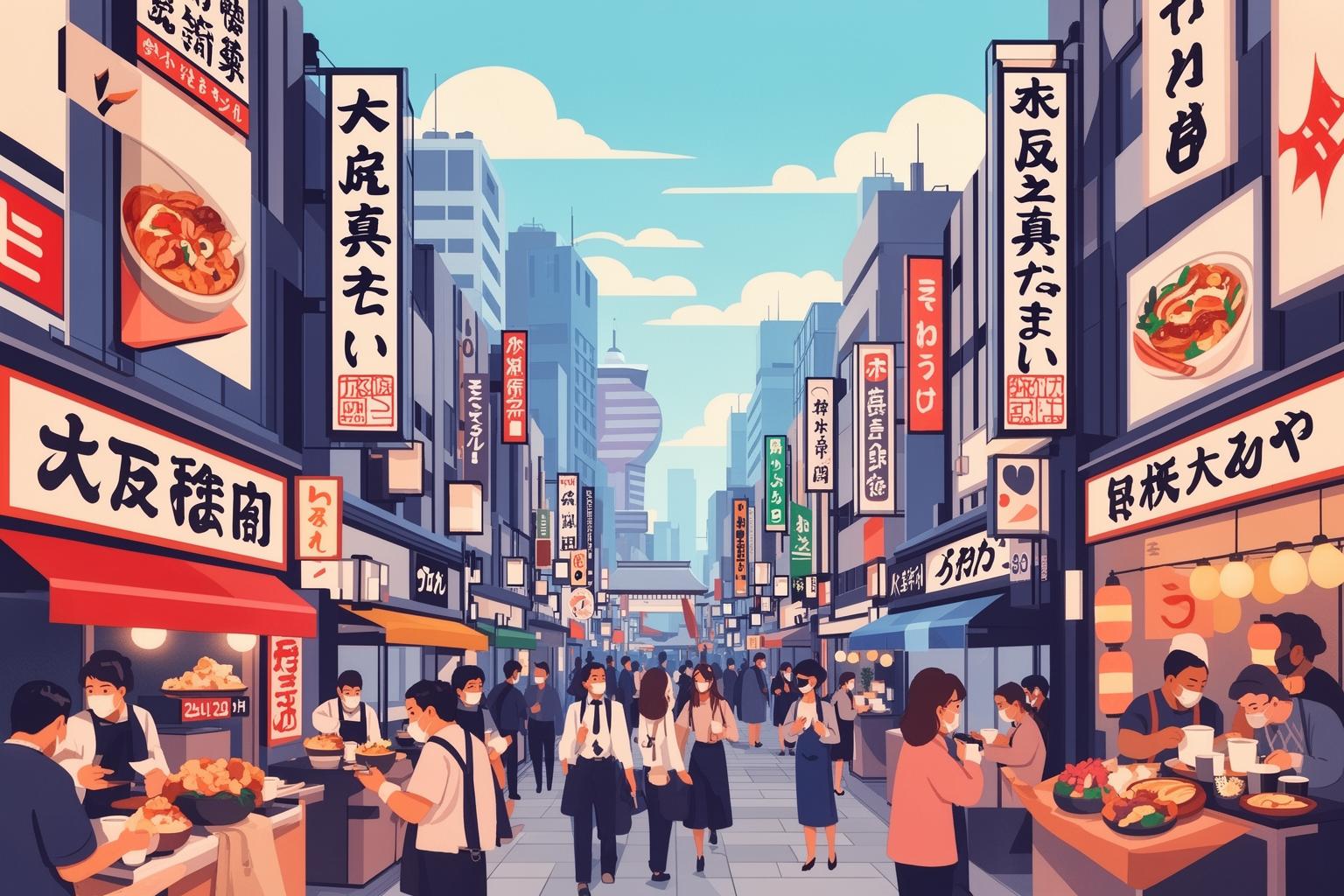
At first glance, a shōtengai might seem like a simple solution to Osaka‘s often unpredictable weather—a permanent shelter shielding people from both rain and the scorching summer sun. But its role goes much deeper. It forms the foundation of neighborhood life, a self-contained ecosystem buzzing with a unique kind of energy. While a Tokyo resident might make one efficient trip to a large, multi-level supermarket for the entire week, an Osakan grandmother is likelier to make a daily visit to her local arcade. She doesn’t just shop at one store; she weaves her way through a constellation of specialists who have perfected their craft over generations.
There’s the tofu maker, whose shop is warm with the steam from fresh batches of silken tofu and thick slabs of atsuage ready for frying. Next door, the butcher doesn’t simply sell pre-packaged meat trays. He’s a skilled craftsman, expertly slicing paper-thin beef for sukiyaki or advising on the ideal cut for a rich, slow-cooked curry. Tell him what you’re cooking for dinner, and he’ll provide exactly what you need, perhaps with a cooking tip. Further down, the fishmonger’s stall is a dazzling, lively display on ice. He scales and guts your selected fish in a blur of practiced movements, all while chatting loudly and cheerfully with a customer three people deep. There are stores devoted exclusively to konbu and dried goods, tiny shops that sell only handmade tsukemono (pickles) stored in huge wooden barrels, and greengrocers offering vegetables still dusted with dirt—a reassuring sign they came from a nearby farm rather than a central warehouse. This specialization fosters a culture of expertise and trust. You’re not buying a generic product; you’re purchasing from someone who is the undisputed master of their craft.
The Soundscape of Commerce: The Osaka Dialect in Action
To an untrained ear, the shōtengai may sound like pure chaos—a wall of noise, a constant flood of overlapping voices. But listen more carefully, and you’ll begin to hear the rhythm within the madness. This is Osaka-ben, the local dialect, thriving in its natural environment. The usual Japanese greeting “Irasshaimase” (Welcome) is still present, but often delivered with a booming, guttural force that feels less like a polite invitation and more like a bold declaration of presence. More frequently heard, though, are phrases that characterize Osakan commercial exchanges. “Maido!” serves as a versatile greeting and farewell, a shortened form of “maido arigatou gozaimasu,” meaning “Thank you, as always.” It suggests a relationship, a shared history. You’re not a stranger; you’re a regular, even if it’s your first visit. It’s an immediate welcome into the neighborhood community.
The most iconic phrase, often used humorously on TV but genuinely spoken in these arcades, is “Mokarimakka?” (“Are you making a profit?”). The usual response is a knowing smile and “Bochi bochi denna” (“So-so,” or “Can’t complain”). This isn’t a serious question about financial health. It’s a verbal handshake, a ritual acknowledging the common struggles and efforts of small business life. It’s a way of saying, “I see you. We’re in this together.” This direct, nearly playful manner of business conversation is a world apart from the careful, nuanced formality of Tokyo. In Osaka, the talk, the banter, the back-and-forth—it’s all part of the transaction. You’re expected to engage, to be present. Silence might be read as disinterest or aloofness. The noise is the sound of the community’s heart beating.
Navigating the Morning Rush: The Unspoken Rules of the Game
The Art of the Haggle (and When Not To)
One of the biggest clichés about Osaka is that everyone haggles over everything. Foreigners sometimes arrive expecting to bargain for a single daikon radish as if they were in a Southeast Asian night market. This is a fundamental misunderstanding of the local culture. You don’t argue over the listed price of an item. Trying to knock 20 yen off a 150-yen tomato will only earn you a puzzled look. The Osakan “haggle” is a far more subtle and relationship-based dance. It revolves around the concept of omake, which means “a little something extra.”
Here’s how it works: you become a regular at a fruit stand. You buy a few apples, a bunch of bananas, and some seasonal grapes. As the owner bags your items, they might slip in an extra orange or a slightly bruised persimmon with a gruff, “Kore, omake.” (“Here, this is extra.”). This isn’t a discount; it’s a gift. It’s a recognition of your loyalty and a gesture of goodwill. The shopkeeper is showing their generosity, and you, the customer, demonstrate your appreciation. The art lies in cultivating the kind of relationship where omake naturally becomes part of the exchange. You do this by being a consistent customer, engaging in friendly conversation, and showing you value their products. It’s a system based on mutual respect, not aggressive bargaining. The aim isn’t to save a few yen; it’s to strengthen a human connection. In a world of impersonal barcodes and fixed prices, the omake is a beautiful, tangible symbol of the relational economy that sustains the shōtengai.
The Personal Touch: Why Your Greengrocer is Your Best Friend
The real currency in a shōtengai isn’t yen; it’s relationships. In a supermarket, you’re an anonymous consumer pushing a cart. In the shōtengai, you’re a person with a name, a family, and a dinner to prepare. After a few visits, the vendors start to remember you. The butcher knows you like your pork cut a little thicker. The fishmonger will spot you and call out, “The saba is perfect for grilling today!”—saving you from buying something less ideal. The woman at the vegetable stand will tell you which spinach is sweet enough to eat raw in a salad and which is better suited for blanching.
This is information you simply can’t get from a plastic-wrapped package. It’s expert, personalized advice that turns a simple errand into a collaborative effort. You’re not just buying ingredients; you’re co-creating your evening meal with a team of specialists. This deep personalization is the shōtengai’s superpower. It fosters a strong sense of loyalty that mega-chains can’t replicate. People don’t just shop here for convenience; they shop here because they feel recognized and valued. They come for the gossip, the familiar faces, and the comforting feeling of being part of a community that knows them. It’s a daily reaffirmation that they belong.
The Bicycle Ballet and the “Suman” Nod
The physical space of a shōtengai is a lesson in controlled chaos. The narrow lanes move with a flurry of activity: elderly shoppers pulling small carts, mothers navigating strollers, delivery boys on bicycles laden with crates, and shopkeepers darting in and out of their stalls. There are no traffic lights or designated lanes. It should be a recipe for disaster, but it works thanks to an unspoken choreography. The key to this dance is efficiency and mutual awareness.
The primary rule is to keep moving. People don’t stop for long, meandering chats in the middle of the lane; they step aside. The most important element is the Osakan use of “Suman.” It’s a casual, slurred version of “sumimasen” (excuse me/sorry). If a bicycle needs to get past you, you won’t hear a polite “excuse me, please.” Instead, you’ll get a quick “suman” with a slight nod or a small wave of the hand as they skillfully weave around you. It’s not rude; it’s efficient. It’s an acknowledgment of shared space without ceremony. Everyone understands that all are busy, everyone has a destination, and the goal is to keep the flow smooth for all. This practical, no-fuss approach to public navigation is quintessentially Osakan. It values function over form, getting the job done with minimal fuss.
The Shōtengai and the Osakan Identity: Beyond the Groceries
“Ketai” vs. “Kechi”: Understanding Osaka’s Economic Mindset
Outsiders often label people from Osaka as cheap, but the reality is much more complex and is best illustrated by two similar-sounding yet vastly different words: ketai and kechi. A foreigner might assume both mean “stingy,” but to an Osakan, they represent opposite ends of the spectrum between financial virtue and vice. Ketai refers to being offensively cheap—trying to avoid paying your fair share at a group dinner or being miserly to a socially embarrassing degree. It is seen as a negative trait.
Kechi, in contrast, is considered a badge of honor. It means being frugal, shrewd, and smart in managing money. It’s about demanding and receiving the absolute best value for every yen spent. The shōtengai is the grand temple of kechi. People shop there not only because it’s cheaper than a department store, but because the value is exponentially greater. The vegetables are fresher, the fish was swimming earlier that morning, and the advice from the vendors comes at no extra cost. A kechi person understands that paying 300 yen for exceptional, fresh tofu from a specialist is a much better deal than 200 yen for a mass-produced, watery block from a supermarket. It’s an obsession with quality-per-yen. This mindset sustains the entire shōtengai economy. Vendors know their customers are discerning, so they must provide superior goods at competitive prices. Customers, in turn, reward the best vendors with their loyalty. It is a sophisticated, self-regulating system grounded in a shared cultural value of being wise with money, not just saving it.
The Community’s Living Room
Ultimately, the shōtengai goes beyond its role as a commercial district. It is the heart and soul of the neighborhood. Seasonal festivals are held here, with lanterns hanging from the rafters and local children parading through the streets. It’s a place where elderly residents, who might otherwise be isolated, find daily social interaction and a reason to leave their homes. The benches scattered along the arcade aren’t just for tired shoppers; they serve as social hubs where neighbors catch up and watch the world go by. The arcade offers a safe, familiar route for kids walking home from school, who might stop for a 100-yen korokke as a snack.
This deep connection to everyday life fosters a strong sense of local pride and ownership. When a new chain store tries to move in, it often faces skepticism from residents protective of their local, family-run shops. A thriving, vibrant shōtengai is viewed as a sign of a healthy, connected community. Its fortunes rise and fall with the neighborhood it serves. In an era dominated by online shopping and impersonal retail, the Osaka shōtengai stands as a powerful testament to the enduring human need for connection, community, and a truly excellent piece of fish recommended by someone you trust.
A Practical Morning Itinerary: Your First Shōtengai Run
Step One: The Reconnaissance Lap
Diving straight into the action can feel overwhelming. So on your initial visit, don’t plan to buy anything. Your goal is simply to observe. Take a slow stroll from one end of the arcade to the other. Engage all your senses. Breathe in the sweet scent of roasting tea leaves from one shop, the savory smell of grilling eel from another, and the fresh, oceanic aroma of the fishmonger. Listen to the flow of the language, the vendors’ calls, and the shoppers’ conversations. Notice which shops are the busiest—a long queue is the best endorsement. Observe the remarkable specialization: one shop offers dozens of types of beans, another focuses solely on kamaboko (fish cakes), and a third specializes in Japanese sweets. This first lap is about soaking in the atmosphere and mapping out the area. It shifts you from tourist to observer, the crucial first step toward becoming a participant.
Step Two: The Purchase and the Conversation
Once you feel more at ease, it’s time to make a purchase. Begin with something simple and low-risk, like fruit or a baked treat. Choose a stall with a friendly vendor. Rather than just pointing, try to interact. A simple “Kore, oishii desu ka?” (“Is this delicious?”) can make a big difference. It shows you value their opinion. Listen to their advice. When they say the persimmons are especially sweet today, take their word for it. Make eye contact and smile. When paying, place your money on the small tray provided and be ready to take your change. The transaction will be quick and smooth. A simple “Arigatou” or, if you feel adventurous, a “Maido!” as you leave will be warmly received. You’ve just completed your first successful purchase. It’s not just about the item but also about navigating a cultural exchange with confidence.
Step Three: The Post-Shopping Coffee
The final moment in the morning shōtengai routine is a stop at a local kissaten. Nestled between the butcher and the pharmacy, these old-fashioned coffee shops often feel like charming Showa-era time capsules, with dark wood paneling and worn velvet seats. This is where the community comes to unwind. Order a coffee before noon, and you’ll probably receive “morning service” or “mōningu,” a classic Japanese coffee shop offer that includes a thick slice of toast and a hard-boiled egg for free or a small extra charge. Relax and watch the shōtengai’s life play out from a new vantage point. You’ll see shopkeepers taking a break, groups of grandmothers having their daily meet-up, and local business owners reading the newspaper. The kissaten acts as the shōtengai’s cooldown, a place to enjoy your purchases and the connections you’ve begun to form. It’s the moment you realize you haven’t merely run an errand; you’ve truly engaged in the life of the city.