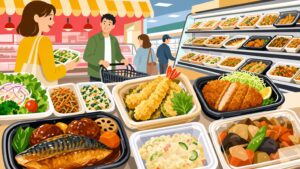
When you first hear the word ‘Kuidaore,’ it hits you with the force of a cartoon anvil. The common translation, ‘to eat oneself into bankruptcy,’ paints a wild picture of a city populated by hedonistic gluttons, joyfully devouring takoyaki and okonomiyaki until their wallets are empty and their belts burst. You see the flashing lights of Dotonbori, the giant mechanical crab, and the steaming food stalls, and you think, ‘Okay, I get it. It’s about volume.’ But living here, weaving through the shotengai arcades with a stroller and a grocery list, you quickly realize that’s just the flashy billboard advertisement for a much deeper, more intricate philosophy. To dismiss Kuidaore as simple overeating is to miss the very soul of Osaka. It’s not about how much you can eat. It’s about how well you can live, how smartly you can spend, and how deeply you can connect with the people who feed you. This isn’t a culture of reckless consumption; it’s a culture of calculated, joyful investment in every single bite, and it dictates the rhythm of daily life in a way that sets Osaka profoundly apart from the rest of Japan.
Delving into the role of intimate local snack bars reveals how even the smallest culinary institutions contribute to Osaka’s artful blend of indulgence and thoughtful living.
Deconstructing ‘Kuidaore’: It’s Not Gluttony, It’s an Investment

The core misunderstanding of Kuidaore stems from failing to understand its economic origins. Osaka was, and in many respects still remains, a city of merchants. It was the ‘Nation’s Kitchen’ (Tenka no Daidokoro), the central hub where rice and goods from across Japan were gathered, stored, and traded. This history shaped a mindset that is relentlessly practical, shrewd, and fixated on one thing above all else: value. An Osakan doesn’t merely spend money on food; they invest it, expecting a substantial return on that investment. This principle influences every transaction, from a Michelin-starred meal to a bag of freshly fried croquettes.
The Gospel of ‘Cost Performance’
In Tokyo, a restaurant’s reputation, elegant decor, or a chef’s celebrity status can often justify a high price. In Osaka, these factors come second. The main criterion for judging any meal is ‘cost performance,’ or as it is commonly called, kosupa. Is this meal worth the yen I’m paying? This question is debated with the seriousness of a parliamentary session. A 1,500-yen bowl of ramen in Osaka must deliver an unforgettable broth, perfectly textured noodles, and a slice of chashu so tender it melts on the tongue. If it doesn’t, word will spread. People will say, ‘It was good, but for that price? You can do better.’
This isn’t about being cheap; it’s about being smart. Watch a local family choose a takoyaki stand. They’re not just picking the shortest line. They’re observing: How large are the octopus chunks in the batter? How generous is the vendor with bonito flakes and pickled ginger? Is the price for eight pieces reasonable compared to the stand two blocks away? This is a rapid micro-economic analysis. Spending 500 yen on mediocre takoyaki is considered a personal failure, a foolish waste of capital. Spending 600 yen on takoyaki that is clearly superior is a victory, a savvy investment that yields not only a full stomach but also satisfaction. This mindset extends throughout daily life. My neighbors will travel an extra fifteen minutes to a different supermarket because the daikon radishes are twenty yen cheaper and the fish is fresher. It’s a game, and winning it is a source of daily pride.
The Merchant’s Pride and the Customer’s Right
This obsession with value creates a unique dynamic between seller and buyer. It’s a relationship built on mutual, unspoken respect for the deal. An Osaka shop owner takes pride not only in the taste of their food but also in the fairness of their price. They want you to leave feeling like you got a bargain, like you won. That’s how they earn your loyalty.
You see this in small interactions. The owner of the local fruit stand might add an extra mikan orange for my daughter, not just as a kind gesture, but as a performance of generosity. It’s a way of saying, ‘See? This is a good place. We take care of you here.’ In return, customers have an unspoken right to be discerning. Complaining isn’t seen as rude; it’s seen as valuable market feedback. The dialogue is direct and honest. There’s less of the formal, deferential politeness found in Tokyo. Here, the transaction is more of a partnership. The vendor is proud to offer a great product at a great price, and the customer is proud to be savvy enough to find it. This historic merchant spirit means that Kuidaore is not passive consumption; it is an active, engaged participation in the city’s economy.
How ‘Kuidaore’ Shapes Daily Life and the Social Fabric
Beyond economics, the Kuidaore philosophy is the key force driving Osaka’s social culture. It’s what makes the city feel so grounded, approachable, and deeply communal. Food serves as the stage for the daily unfolding of life’s drama, the medium through which relationships are nurtured and communities solidified. It’s the city’s default mode for human connection.
Food as the Default Social Lubricant
In many cultures, the standard greeting is ‘How are you?’ In Osaka, it’s often ‘Did you eat yet?’ (Mou tabeta?) or ‘What did you have for lunch?’ Food acts as the starting point for nearly every conversation. Business deals are closed over plates of kushikatsu and glasses of beer. Friendships are formed while sharing a bubbling pot of nabe. Social barriers feel lower here because the activities that bring people together are naturally casual and affordable.
The culture of tachinomi (standing bars) exemplifies this perfectly. These are small, no-frills spots where you can drop in for a quick drink and a few skewers. There are no reservations, no dress codes, and often no chairs. You stand shoulder-to-shoulder with salarymen, students, and retirees, united by a shared appreciation for good, inexpensive food. Strangers easily strike up conversations because everyone is there for the same straightforward reason. This differs greatly from the more formal, reservation-driven dining culture found in Tokyo. In Osaka, spontaneity is woven into the social fabric. This accessibility explains why Osaka is often called ‘friendly.’ It’s not merely an abstract trait; it’s a direct outcome of a food culture designed to bring people together with minimal hassle and maximum value.
The Neighborhood Kitchen: Shotengai and Local Shops
While tourists flock to Dotonbori, the true heart of Kuidaore thrives in the hundreds of shotengai (covered shopping arcades) winding through the city’s residential neighborhoods. These arcades act as the city’s collective pantry. Living here means you don’t rely on one large supermarket for everything. Instead, you cultivate a network of trusted local specialists.
You visit the tofu maker, whose family has been crafting fresh tofu on site for three generations. You stop by the butcher, who knows you’re preparing curry tonight and recommends a particular cut of beef. You check with the fishmonger, who proudly shows the day’s catch and advises the best way to grill it. You pick up a few potato croquettes from the 惣菜 (sozai, prepared side dish) shop for a quick, easy dinner addition. My children know the baker by name, and she always saves them their favorite melon pan. This isn’t a quaint, nostalgic ideal; it’s the practical, everyday reality of life in Osaka. The Kuidaore philosophy encourages you to view your neighborhood as an ecosystem. By supporting these small vendors, you invest in your own community. You pay for expertise, trust, and the human connection that sterile supermarket aisles can never provide.
Fierce Loyalty and Fiercer Rivalry
This neighborhood-focused food culture fosters a powerful sense of local pride. An Osakan’s identity often ties closely to the culinary champions of their area. They won’t just say they like okonomiyaki; they’ll passionately claim that the best okonomiyaki on earth comes from a particular, modest shop near their train station—and they’ll defend that belief fiercely. These debates are a cherished local pastime. Who makes the best dashi in their udon? Which bakery bakes the fluffiest shokupan? This isn’t mere idle talk. It’s an ongoing process of community building, a way to reaffirm shared tastes and local loyalties. It’s proof that in Osaka, food is never just food. It represents history, identity, and a declaration of belonging.
What Foreigners Often Misunderstand
Due to its reputation, many newcomers arrive in Osaka carrying a set of preconceived ideas. They anticipate a city fueled by deep-fryers, where every conversation is loud, and every meal is a variation of flour and sauce. While there is some truth to the stereotype, it overlooks the remarkable depth and sophistication that also characterize the city’s culinary scene.
It’s Not Just About Takoyaki and Okonomiyaki
To view Osaka cuisine as merely its famous street food is like reducing Italian food to just pizza. The true cornerstone of Kansai cuisine—and a source of great pride—is the dashi. This savory broth, typically made from kombu seaweed and bonito flakes, is the essence of the region’s cooking. Compared to the cuisine of the Kanto area around Tokyo, which often features a stronger, saltier soy sauce base, Kansai dashi is more subtle, delicate, and complex. It’s crafted to enhance the natural flavors of the ingredients rather than mask them. A simple bowl of Kitsune Udon in Osaka can be a revelation, with its light, umami-rich broth perfectly balancing the sweet fried tofu and chewy noodles.
Moreover, Osaka is the birthplace of kappo cuisine, a dining style considered the sophisticated older sibling of Kuidaore. Less formal than the highly ritualized kaiseki of Kyoto, kappo dining involves sitting at a counter and engaging directly with the chef. You watch as they slice sashimi, grill fish, and artfully arrange seasonal vegetables. It’s high-end dining that still retains the merchant city’s spirit of straightforwardness and transparency. The value here lies in the chef’s exceptional skill and the impeccable quality of the ingredients, presented without unnecessary extravagance. It is the Kuidaore philosophy elevated to an art form.
‘Loud’ and ‘Direct’ Isn’t Rudeness, It’s Honesty
Another challenge for foreigners is understanding Osaka’s communication style. People here can seem more direct, more inquisitive, and louder than in other parts of Japan. This can occasionally be misread as brash or even rude. However, when viewed through the lens of Kuidaore, it becomes clearer. This style of communication reflects the marketplace, not the imperial court.
In a bustling market, one must speak up to be heard. Clarity about what you want and think is essential. Honesty is preferred over ambiguity because it is more efficient. When a shop owner tells you, ‘Don’t buy that one, this one is much better today,’ they’re not trying to upsell you; they’re offering honest, expert advice because their reputation depends on your good experience. They are fulfilling their part of the Kuidaore pact. This directness extends to personal interactions as well. People may ask questions that seem forward elsewhere, but often it stems from genuine curiosity. This culture of open, honest exchange, born from a world of commerce and trade, is a fundamental part of what makes Osaka thrive.
Living the ‘Kuidaore’ Life: A Practical Guide
So how do you, as a resident, go beyond being just a tourist in Osaka’s food scene and truly embrace the Kuidaore philosophy? It involves shifting your perspective from simply consuming to actively participating. It means engaging with the city’s food culture on its own terms.
Embrace the Spirit of Exploration
Your first step is to bypass the spots with the largest signs and the longest tourist lines. The real essence of Kuidaore thrives in the backstreets, residential neighborhoods, and family-run establishments that have stood the test of time. Choose a random station on a local train line, get off, and wander. Follow your instincts. Peek inside the small shops with handwritten menus and faded noren curtains. Often, the most unforgettable meals come from these modest places, where the owner serves as both chef and server.
Be bold and strike up a conversation. A simple ‘Oishisou desu ne’ (‘That looks delicious’) can open a dialogue. Ask for a recommendation: ‘Osusume wa nan desu ka?’ (‘What do you recommend?’). This small gesture shows respect for the vendor’s expertise and instantly transforms a simple transaction into a personal interaction. You’ll not only enjoy a better meal, but you’ll also gain a glimpse into the story behind it.
Learn the Language of Value
To connect with Osakans, learn to appreciate things as they do. Perfect the art of expressing your satisfaction in local terms. A heartfelt ‘Meccha oishii!’ (‘This is crazy delicious!’) accompanied by a smile is the highest compliment. Learn to recognize and comment on good value. Saying something like, ‘Kore de happyaku en? Yassui!’ (‘Only 800 yen? So cheap!’) isn’t impolite; it acknowledges the vendor’s skill in offering excellent kosupa. You demonstrate that you understand and value a core principle of their culture. This shared understanding forms a powerful bond, turning you from an outsider into someone who truly ‘gets it.’
Find Your Go-To Spots
Ultimately, living the Kuidaore lifestyle isn’t about tirelessly trying every restaurant in the city. It’s about discovering your favorite places. It’s about becoming a regular. It’s about finding ‘your’ ramen shop where the owner knows you like extra green onions, ‘your’ coffee roaster who inquires about your family, and ‘your’ bakery that feels like part of your own kitchen. This is how you build a life here. You gradually weave yourself into the fabric of a neighborhood through these small, repeated acts of commerce and connection. Kuidaore, in its purest and most sustainable form, is about finding the people and places that offer real, lasting value to your everyday life. It’s not about emptying your wallet on food. It’s about enriching yourself—one delicious, savvy, and heartfelt meal at a time.