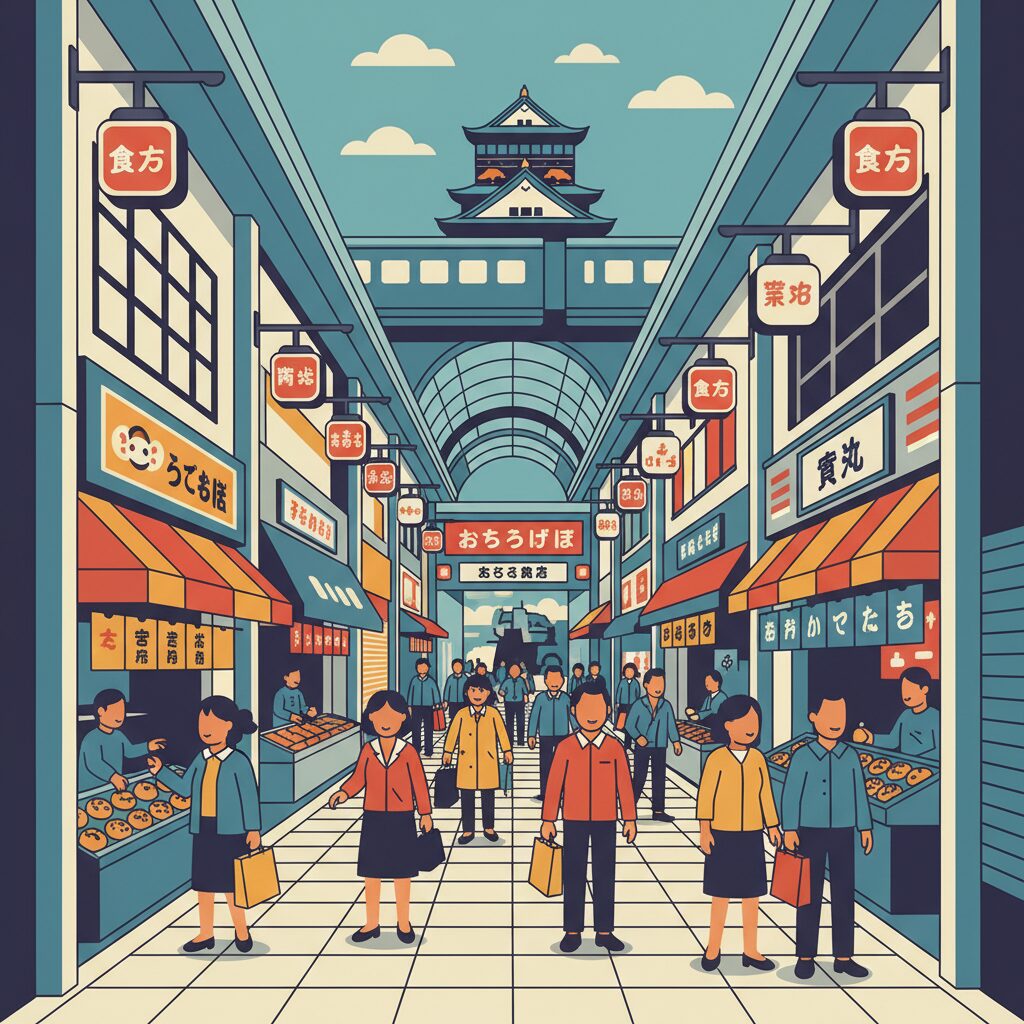
When you first arrive in Japan, you learn the retail gospel. You learn the crisp, clean call of “Irasshaimase!”—welcome! It echoes through department stores, rings out in convenience stores, a polite and uniform acknowledgment of your presence. It’s the sound of commerce, efficient and impersonal. It’s the sound of Tokyo. Then, you come to Osaka, and you step into a shotengai, one of the city’s covered shopping arcades. The air is thick with the smell of fried croquettes and grilled fish. The sound is… different. It’s not a clean, uniform chorus. It’s a jumble of overlapping conversations, a cacophony of greetings that feel less like a welcome mat and more like an invitation to a family reunion you didn’t know you were attending. The first time the butcher didn’t just sell me my pork, but asked where I was from, what I was cooking, and then told me my son had my eyes, I was momentarily stunned. This wasn’t in the textbook. This chaotic, warm, and deeply human symphony is the real welcome to Osaka, and learning its rhythm is the key to understanding the city’s soul.
This authentic Osaka vibe carries into its lively nightlife, where local tachinomi serve as natural icebreakers that effortlessly turn chance encounters into lasting connections.
The Language of the Arcade: More Than Just a Transaction
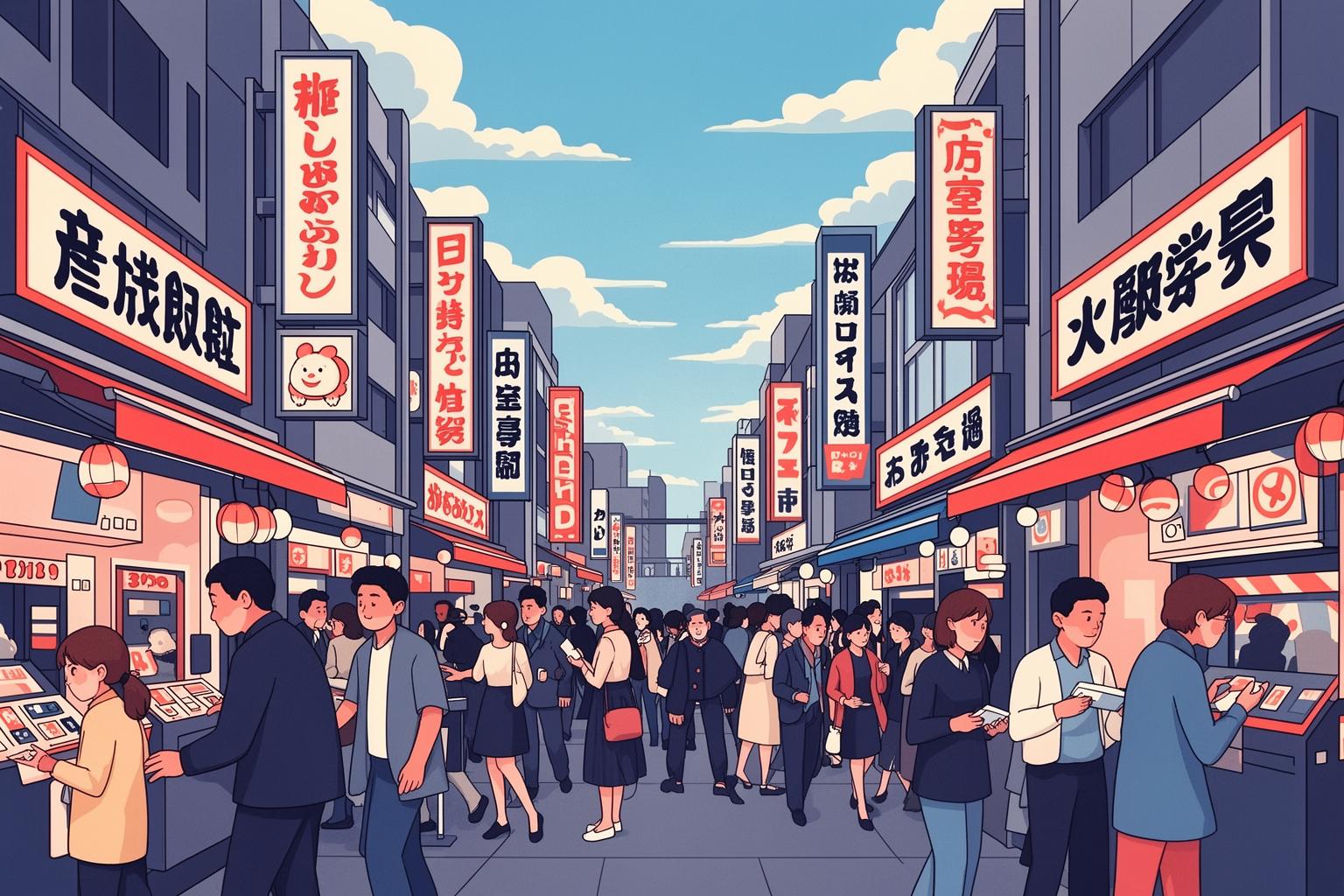
In much of Japan, a shopping trip tends to be a sterile, predictable experience. You choose your items, pay, receive a polite thank you, and then leave. The roles are clearly defined: you are the customer, and they are the vendor. However, in an Osaka shotengai, that boundary becomes beautifully, wonderfully blurred. The transaction often serves only as the opening act for the main event: the conversation. This isn’t about being ‘friendly’ in a superficial way; it reflects a deeply ingrained culture of community where commerce and connection are inseparable.
Greetings That Break the Mold
Forget standardized welcomes. Here, greetings are personal, providing a running commentary on the rhythm of the day. Instead of a formal “Irasshaimase,” you’re more likely to hear a gruff but warm “Maido!” which roughly means “Thanks for your continued patronage!” It’s a greeting that presumes you’re a regular, even if it’s your first visit. It instantly includes you. Or you might hear “Okaeri!”—welcome back—from the fruit stand lady as you pass by, a greeting typically reserved for family returning home. She’s not just welcoming you into her shop; she’s welcoming you back to the neighborhood, to this shared space that acts as the community’s living room.
This verbal shorthand is efficient but also rich with unspoken meaning. It says, “I see you. You belong here.” For a foreigner trying to find their footing, hearing “Okaeri” from someone outside the family can be a surprisingly moving experience. It’s a small verbal anchor in a new city.
The Gentle Art of the Tease
One of the most striking—and eventually endearing—aspects of shotengai communication is the banter. It can feel like a mild roast. The fishmonger might notice you eyeing expensive tuna and joke, “Anata ni wa takai de!”—That’s too expensive for you! Or the elderly lady at the pickle shop might comment on your repeated purchase of sweet radishes for the third week running, saying, “You really like these, huh? Getting a bit obsessed, aren’t you?” In Tokyo, such remarks from a shopkeeper would warrant a corporate apology. They’d be seen as shockingly unprofessional, crossing the customer-service boundary.
But here, it’s a sign of affection. It’s a form of recognition. The teasing says, “I remember you. I notice your habits. You are part of the scenery of my day.” It’s a tsukkomi, the straight-man retort in Japanese stand-up comedy, applied to daily life. They’re not mocking your finances or taste; they’re inviting you into a playful verbal exchange. The expected response isn’t offense but a witty comeback—a boke, the role of the funny-man. Even a simple, embarrassed laugh and a shrug is a perfectly acceptable reply. Taking part in this interaction, however awkwardly at first, is how you move from being an anonymous customer to a neighborhood fixture.
The Unspoken Rules of Community Commerce
Navigating this environment requires recognizing that the exchange involves more than just money for goods. It’s a complex social ecosystem governed by its own set of mostly unwritten rules. It stands in stark contrast to the point-card-and-automated-checkout efficiency of a modern supermarket.
Unsolicited Advice is a Gift
When you purchase a head of cabbage, the vegetable seller might stop you. “How are you planning to cook this?” she’ll ask, not out of idle curiosity, but as a prelude. Before you can respond, she’ll launch into a detailed explanation of the absolute best way to prepare it for okonomiyaki, or give a lecture on why this particular cabbage suits soup better than stir-fry. During my first few times, I found myself nodding politely while internally thinking, I have a recipe, thank you. I mistook it for criticism of my cooking skills.
That was a classic foreigner’s mistake. This isn’t criticism; it’s knowledge sharing. It’s the community’s accumulated wisdom being passed on freely. She’s not just selling you a cabbage; she’s invested in making sure you have the best possible experience with it. She cares about your dinner. This exchange of expertise weaves a web of mutual reliance. You depend on her for the best produce, and she relies on you to appreciate it properly. It’s a relationship, not merely a sale.
The Performance of Haggling
Then there’s the well-known Osaka practice of haggling, or negeri. This is a delicate matter, often misunderstood. You don’t do it everywhere, and it’s not about aggressively demanding a lower price. It’s a performance, a playful ritual. It typically begins with a bit of admiration for the product, a friendly chat with the vendor, and then a tentative, almost conspiratorial, “Chotto makete kureru?”—Can you give me a little discount?
The shopkeeper might feign shock, clutch their heart, and lament thin profit margins. You might sigh dramatically. It’s a brief, improvised play. Often, they’ll add an extra green onion or a slightly bruised apple as a ‘service’ instead of lowering the price. The real goal isn’t saving a hundred yen; it’s the interaction itself. It’s a game that strengthens the human connection beyond the purely financial. Trying this at a department store in Ginza would land you escorted out by security. Here, in the right setting with a small, independent vendor, it’s part of the fun. The key is to keep it lighthearted, friendly, and be ready to accept a ‘no’ with a good-natured laugh.
The Shotengai vs. The World: An Osaka-Tokyo Divide
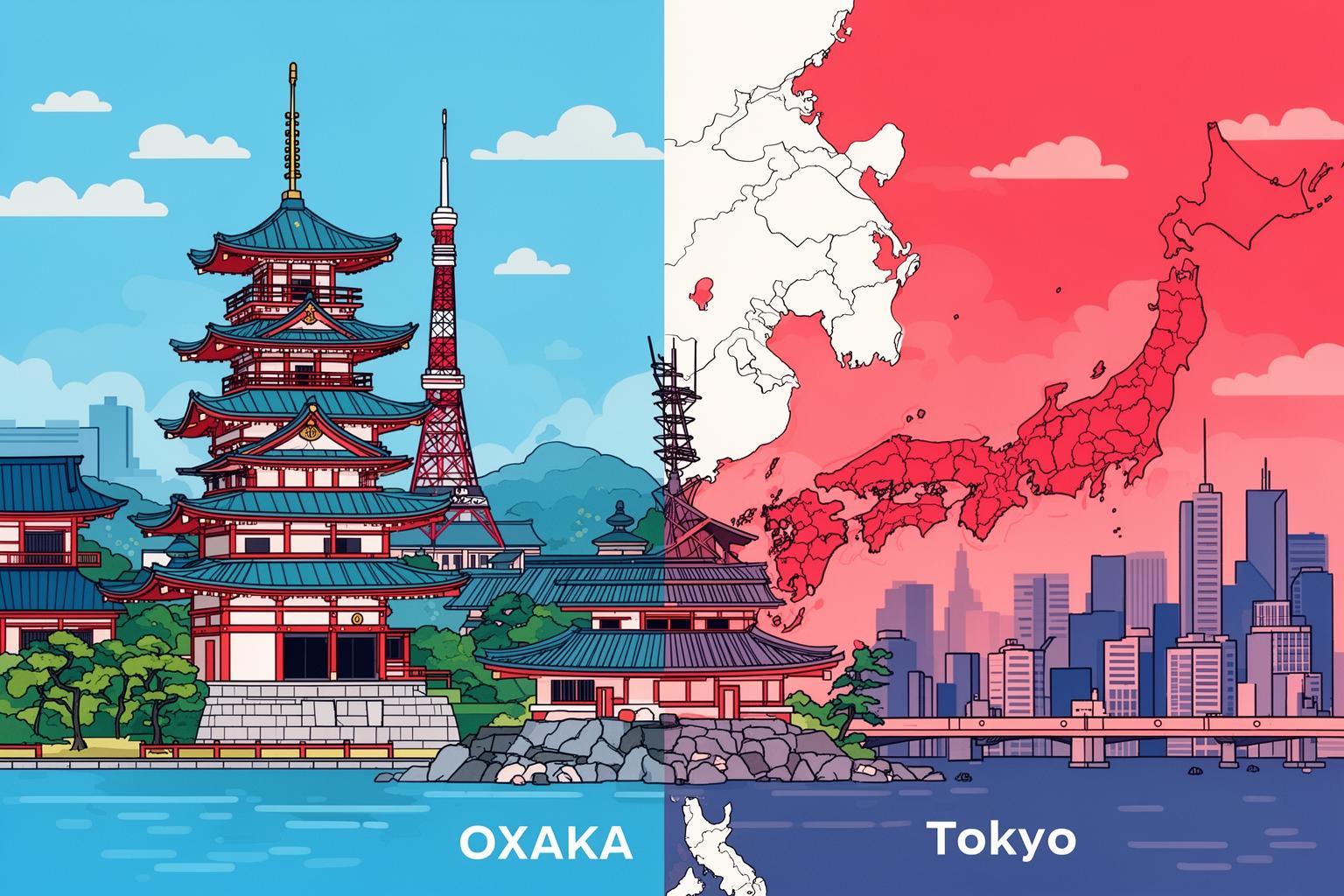
The contrast in communication style between an Osaka shotengai and a Tokyo shopping street perfectly encapsulates the cultural divide between the two cities. It’s not about one being superior to the other; rather, it reflects fundamentally different approaches to public space and social interaction.
Tokyo: The Elegance of Anonymity
In Tokyo, public life is grounded in polite, professional distance. Service is impeccable, efficient, and impeccably performed. The convenience store cashier moves with practiced precision. The department store attendant bows at just the right angle. The system is designed to be frictionless, enabling millions to coexist in a dense space with minimal interpersonal conflict. This anonymity offers a form of freedom. You can go through your day without engaging in social pleasantries. The focus remains on the task at hand—shopping, commuting, eating. The human element is streamlined to maintain order and efficiency.
This system is elegant and, in many ways, very comfortable. You always know what to expect. There are no surprises. But after living in Osaka, it can also feel cold. It’s a city where you can easily feel invisible, a single face lost in a vast, indifferent crowd. The service is directed at the role you occupy—the customer—not at you as an individual.
Osaka: The Warm Chaos of Recognition
Osaka, in contrast, flourishes on a certain level of warm, managed chaos. The shotengai is the ultimate embodiment of this. Here, efficiency takes a backseat to humanity. A queue at the butcher shop might move slowly because the butcher is catching up with a customer about her daughter’s recent wedding. This would be unthinkable in Tokyo, where delaying the line for a personal chat would be considered inconsiderate.
In Osaka, everyone in line understands without being told. They’re not only waiting to buy meat; they’re participating, even passively, in the life of their community. They might chime in with their own congratulations. The city operates on the belief that people are not obstacles to be efficiently managed but individuals to be acknowledged. This ongoing, low-level social interaction—the banter, advice, gossip—creates the city’s famous warmth. It’s messy, sometimes loud, often intrusive, but never lonely. In an Osaka shotengai, you cannot be invisible, no matter how hard you try.
How to Thrive in the World of Shotengai Banter
For someone new, especially from a more reserved culture, this can all feel a bit overwhelming. The sheer level of engagement can be intense. So, how do you navigate it without feeling like you’re constantly on display?
You Are Not Obligated to Be a Comedian
The most important thing to keep in mind is that you are not expected to come up with the perfect punchline. Osakans are conversational experts, and they understand that not everyone is. A warm smile, a nod, a simple “Hontou desu ka?” (Really?), or a laugh is a completely acceptable response to a friendly tease. Your participation, no matter how small, is what counts. They are offering a hand; you just need to acknowledge it.
Become a Regular Face
These relationships don’t develop overnight. They grow through consistency. Pick a fruit stand, a tofu shop, a butcher. Visit regularly. Purchase one or two items. Make eye contact. Say hello and thank you. That’s all. Over weeks and months, your face will become familiar. The greetings will become more personal. The shopkeeper might start setting aside your favorite type of tomato for you. This is how you earn your place in the community. It’s a slow, natural process of showing up.
Learn to Love the Small Talk
Embrace the side conversations. A five-minute shopping trip might stretch into a fifteen-minute chat about the weather, the Hanshin Tigers baseball team, or the best way to remove a stubborn stain from a shirt. This is not wasted time. This is the point. In a world increasingly dominated by automation and impersonal interactions, the shotengai remains a fiercely guarded space for human connection. It reminds us that the fabric of a community is woven not from efficient transactions, but from thousands of these small, seemingly trivial moments of shared humanity.
Living in Osaka means adjusting your expectations of service and social interaction. It means realizing that a question about your dinner plans isn’t intrusive, but inclusive. It means recognizing that a playful jab is a verbal hug. The shotengai is more than just a place to buy groceries. It’s a training ground, a daily lesson in the art of living together. And once you stop hearing the noise and start hearing the music, you’ll discover it’s a beautiful song to be part of.