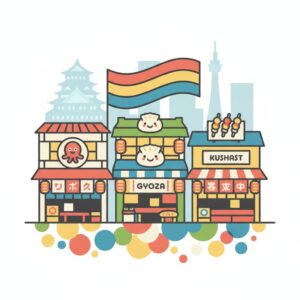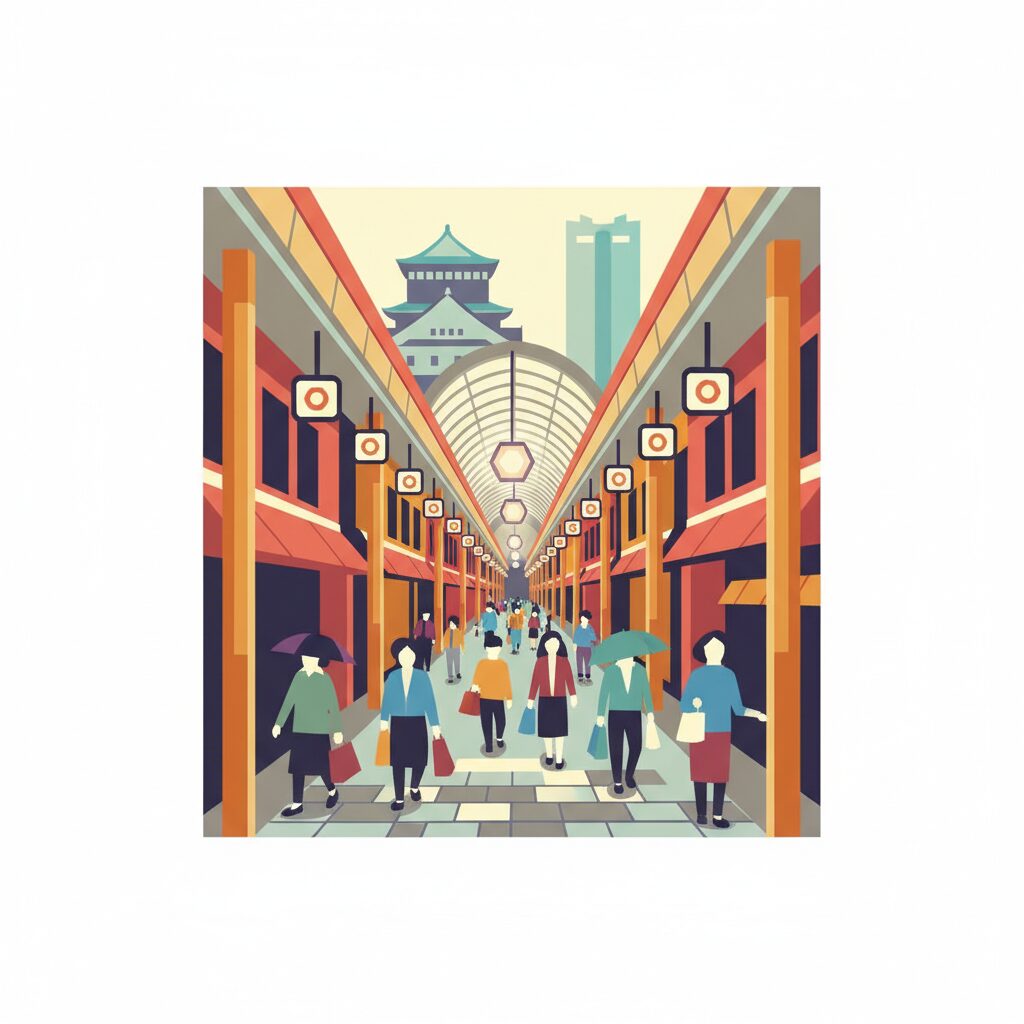
The first time I saw it, I froze. A middle-aged woman, oba-chan incarnate with a perm that defied gravity, was holding a daikon radish like a weapon. She was locked in a smiling, high-speed verbal volley with the vegetable stand owner. The air crackled with laughter and rapid-fire Kansai-ben, the local dialect. Words were exchanged, the daikon was gestured with, a price was named, another was countered, and then, a sudden explosion of mutual laughter. The oba-chan paid a slightly lower price, took her daikon, and got a few extra green onions tossed in for free. The whole exchange lasted maybe thirty seconds. It wasn’t a fight; it was a performance. It was a conversation. In Tokyo, where I’d spent my first few years in Japan, this would have been unthinkable. Shopping there is a silent, respectful affair of polite nods and exact change. But this was Osaka. This was the daily art of nebiki kosho, or price negotiation, played out on its main stage: the shotengai, the covered shopping arcade that acts as the beating heart of any true Osaka neighborhood. This wasn’t about saving a few yen on a radish. It was about connection, a game, and a fundamental part of the city’s social fabric. For anyone trying to understand what makes Osaka tick, the shotengai is ground zero, and the friendly haggle is the secret handshake.
This lively spirit of local interaction also reflects how Osaka’s kuidaore philosophy permeates every aspect of daily life, from casual shopping to the city’s renowned food culture.
More Than Money: The Philosophy Behind the Haggle
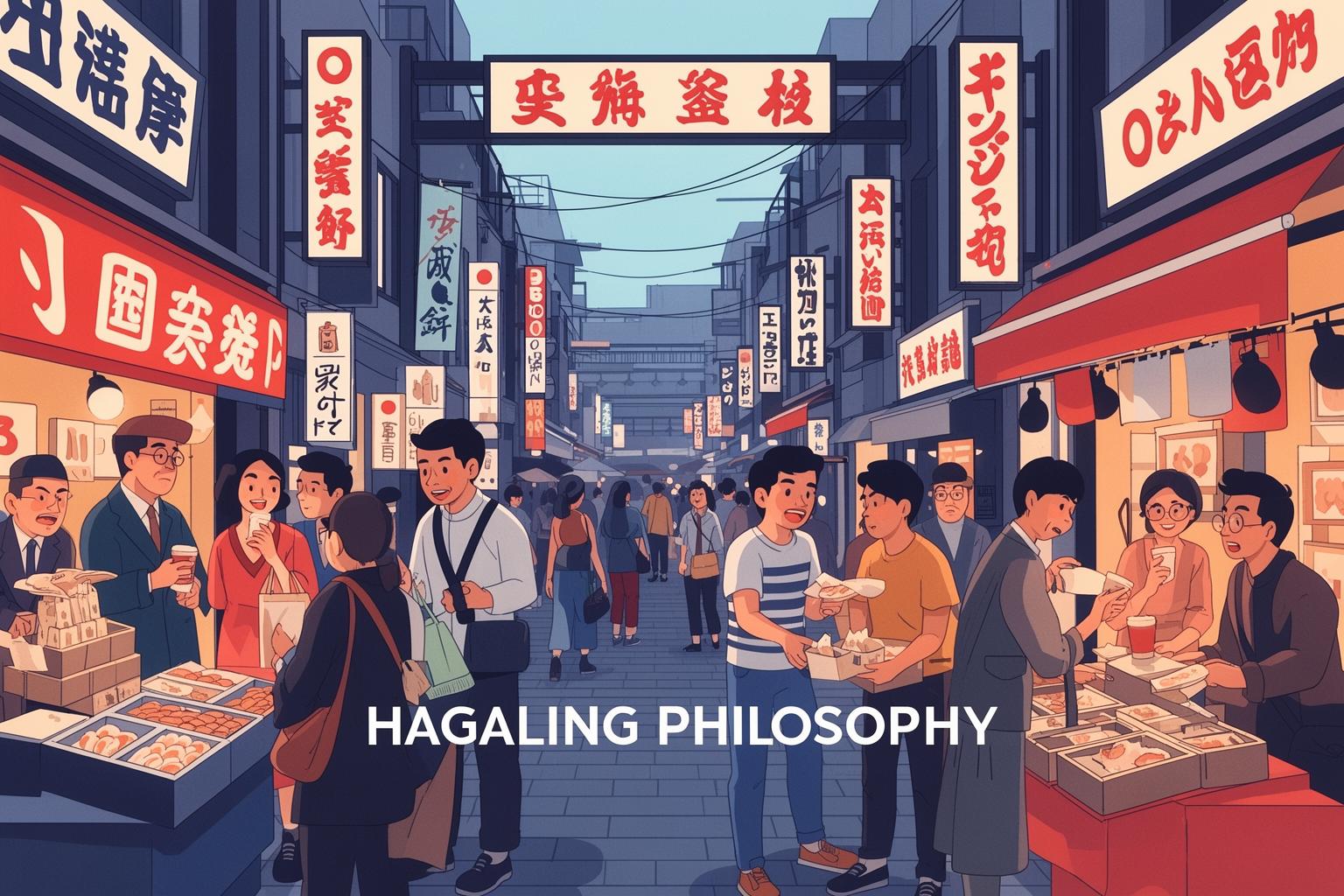
To those unfamiliar with the practice, especially individuals used to the fixed-price politeness common throughout much of modern Japan, the concept of haggling can come across as aggressive, disrespectful, or simply cheap. This represents the first and most significant misunderstanding about Osaka. The art of nebiki kosho rarely stems from poverty or stinginess; rather, it is a deeply rooted cultural tradition born from the city’s history as Japan’s mercantile hub. It serves as a form of communication, a test of cleverness, and a way to forge human connections in an increasingly automated society. Paying the listed price silently, without any exchange of words or playful banter, can feel cold and impersonal. You’re merely a customer, a walking wallet. But when you engage and ask for a little consideration, you become a person—you become part of the experience.
It’s Not About Being Cheap, It’s About Being ‘Akindo’
Osaka was built by merchants known as akindo. The akindo spirit embodies being smart, savvy, and recognizing the true value of things—not just their price. It’s about practicality and avoiding wasteful spending, reflected in the local pride in “cost performance.” An Osakan will gladly share the story of a great deal they scored on a pair of shoes, not because they’re poor, but because they’re shrewd shoppers who outwitted the system. In this light, haggling expresses the akindo ethos. It’s a way of saying, “I respect your goods, and I also respect my wallet. Let’s find a price that satisfies us both.” It’s a transaction between two intelligent parties, not a blind acceptance of a price tag. The aim isn’t to cheat the shopkeeper but to arrive at a fair price through a moment of human connection. That shared moment of agreement often holds more value than the hundred yen you might save.
The ‘Maido’ and the ‘Mokari Makka?’: Building Social Capital
Listen carefully in any shotengai, and you’ll hear the rhythm of Osaka’s commerce. It begins with the greeting “Maido!” which roughly means “Thanks for your continued patronage!” It’s warm, familiar, and acknowledges an ongoing relationship. Then comes the classic, nearly cliché greeting among friends: “Mokari makka?” which asks, “Are you making money?” The usual reply is a wry “Bochi bochi denna” – “So-so.” This banter isn’t merely small talk; it forms the linguistic foundation of a trade-based community. It recognizes that everyone is here to earn a living, but in a friendly, collective spirit. Haggling fits naturally within this framework. It’s an extension of the conversation. When you become a regular at the local fishmonger or fruit stand, you’re no longer just a customer; you’re a joren-san. The shopkeeper recognizes your face and might inquire about your family. After several visits, haggling turns from negotiation into ritual. Discounts become a natural part of the relationship. One day, the owner might simply round down the price without a request or toss in an extra item—an omake. That added potato or bonus shrimp is the real reward. It’s the shopkeeper’s way of saying, “I see you. Thanks for coming back.” This is social capital transforming into tangible, delicious value.
The Rules of Engagement: Where, When, and How to Haggle
Obviously, you can’t just start haggling anywhere. Trying to get a discount on your latte at Starbucks or your bento at 7-Eleven will only earn you a puzzled look and a polite but firm refusal. There is a right time and place for everything, and nebiki kosho has its own particular set of unwritten rules. Learning this etiquette is essential to engaging in the culture rather than simply offending people. It’s about reading the situation, understanding the context, and grasping the language of the deal, both spoken and unspoken.
The Stage: Shotengai vs. Department Store
First, be aware of your location. The absolute no-go areas are the temples of modern, standardized retail. Department stores like Daimaru or Takashimaya, chain supermarkets, convenience stores, and branded boutiques are off-limits. Prices here are fixed, computerized, and non-negotiable. Attempting to haggle in these places is a serious cultural misstep, akin to wearing shoes on a tatami mat. The prime setting for this interaction is the shotengai. More specifically, look for independent, family-run shops within the arcade: fruit and vegetable stalls, fishmongers, tofu makers, small clothing shops selling unbranded goods, and pickle shops. Flea markets and some smaller, more chaotic electronics shops in places like Den Den Town can also be good opportunities. A key sign is the presence of the owner. If you’re speaking to the person who owns the stock and sets the prices, you have a chance. If you’re talking to a part-time employee in uniform, you’re wasting your breath.
Reading the Room: The Art of Observation
Before you say a word, you must gauge the situation. Is the shopkeeper overwhelmed with a long line of customers? Not a good time. They prioritize speed and efficiency at that moment. Is the atmosphere quiet and formal, or lively, chatty, and full of friendly banter between staff and customers? A lively environment is a green light. Examine the products themselves. Are prices clearly printed on neat, laminated signs? That implies prices are fixed. Are they handwritten on pieces of cardboard, or are there piles of goods with no prices at all? That suggests flexibility. The time of day is also important. Late afternoon, about an hour before closing, is the prime time for haggling, especially on perishable items. The fishmonger would rather sell that last piece of mackerel at a discount than have it go to waste. The baker wants to clear out day-old bread. This is called “service time,” when shopkeepers are often more willing to negotiate. It’s not about exploitation; it’s a mutual benefit. You help them move their stock, and they offer you a better price.
The Language of the Deal: Phrases and Techniques
Haggling itself is a subtle, gentle art. It’s not the aggressive, high-pressure bargaining you might see in films. The tone should always be light, friendly, and even a bit self-deprecating. A big smile is your most important tool. You’re not demanding a discount; you’re asking for a small favor. The classic phrase is, “Chotto makete kuremasen ka?” (Can you give me a little discount?). But there are softer approaches. A gentler way is to point at the price and say with a hopeful smile, “Chotto dake, ne?” (Just a little, right?). Another effective tactic is buying in bulk. Pick up two or three items and say, “Kore to kore, issho ni kattara, dou naru?” (If I buy this and this together, what’s the deal?). This shows you’re a serious customer and makes it easier for the shopkeeper to justify a discount. If you’re a regular, using your loyalty is key. Saying “Itsumo arigatou!” (Thanks for always helping me out!) before your request can work wonders. The key is to be charming, not demanding. Treat it as a game you’re both enjoying. If they say no, laugh it off. The relationship always matters more than the transaction.
The Osaka vs. Tokyo Divide: A Tale of Two Shopping Carts
The difference in shopping culture is one of the most immediate and revealing contrasts between Osaka and Tokyo. It offers a glimpse into the essence of each city. One prioritizes seamless efficiency and social harmony above all else; the other thrives on lively human connection and practical savvy. Living in Osaka after experiencing Tokyo means noticing this difference every time you go out to buy groceries. It’s the contrast between a silent, sterile transaction and a loud, messy, and wonderfully human exchange.
Tokyo’s Silent Transaction
Imagine a typical supermarket in a Tokyo neighborhood. It’s clean, brightly lit, and strikingly quiet. Shoppers move through the aisles with focused, silent determination. The checkout interaction is a model of minimalist efficiency. A polite bow, a whispered “Irasshaimase” (Welcome). The cashier scans items with swift, precise motions. The only questions are procedural: “Pointo ka-do wa omochi desu ka?” (Do you have a point card?), “Fukuro wa go-riyou desu ka?” (Will you be using a bag?). You pay, receive your change with a respectful two-handed gesture, another bow, and you’re done. The entire process is designed to be smooth and avoid any potential awkwardness or imposition. In Tokyo, the cultural value of wa (harmony) means you don’t put others on the spot. Asking for a discount would do just that. It would interrupt the smooth flow, create a moment of possible conflict, and be seen as rather rude. The system is the system, and everyone honors its boundaries for the sake of collective comfort.
Osaka’s Lively Exchange
Now, step into a shotengai in Osaka. The difference is a full-sensory experience. It’s loud. Shopkeepers shout out their daily deals: “Yasui de! Yasui de!” (It’s cheap! It’s cheap!). The smell of grilled fish from one stall blends with the sweet scent of fresh fruit from another. People don’t move in silent lines; they gather around shops, chatting with the owners. Conversation is the main event, and shopping almost secondary. Here, the transaction is just the beginning of a broader interaction. The fishmonger will tell you how to cook the fish you just bought. The vegetable vendor will comment on the weather. And someone will inevitably be haggling. This difference comes from Osaka’s history. As the “nation’s kitchen” and Japan’s primary commercial hub for centuries, Osaka’s identity is deeply tied to business, trade, and negotiation. Trust and relationships weren’t just nice to have—they were essential for survival. You had to look someone in the eye, have a real conversation, and strike a deal. This commercial DNA remains today. For many Osakans, Tokyo’s sterile efficiency feels cold and distant. They prefer the messiness of human interaction. It’s a sign that the community is alive, that people are still connecting personally, not just as anonymous consumers.
When Haggling Goes Wrong (And How to Recover)
Even with the best intentions, your attempt at nebiki kosho might not always be successful. You could misread the atmosphere, the shopkeeper might be having an off day, or the profit margins on that item might simply be too narrow. Receiving a “no” is part of the process. How you respond to that rejection is what distinguishes a savvy local from an awkward tourist. It’s a test of your cultural sensitivity and your ability to stay gracious. The key is to remember that the relationship is the priority, not the discount. Recovering smoothly is more important than winning the haggle.
The Rejection: It’s Not Personal
When a shopkeeper declines your offer, they almost never do so in a harsh or confrontational manner. You won’t hear a blunt “No.” Instead, you’ll receive a gentle refusal softened with classic Osakan warmth and subtlety. This often comes with a smile, a slight tilt of the head, and expressions like, “Akan, akan, sore wa chotto kitsui wa~” (No way, no way, that’s a little tough~) or “Gomen na, kyo wa kore ga genkaiなんや” (Sorry, this is the limit for today). The tone is apologetic, as if they genuinely wish to help you. Your response is vital. Do not take offense. Do not appear disappointed. And definitely do not storm off. Instead, smile, laugh lightly, and say something like, “Wakatta, wakatta! Jaa, sore de onegai shimasu!” (I get it, I get it! Okay, I’ll take it at that price then!). By promptly and cheerfully accepting the price, you show you were just playing along. You took your shot, it didn’t work out, no hard feelings. This is how you earn respect. Burning bridges over a few hundred yen is a rookie error. A graceful loss today sets the stage for a potential win—or a nice bit of omake—on your next visit.
The Foreigner’s Misstep: Coming on Too Strong
A frequent mistake foreigners make is importing a haggling style from cultures where it’s a more aggressive, confrontational process. This isn’t a Moroccan souk or a Southeast Asian night market. Opening with an offer that’s 50% of the asking price is not a clever tactic; it’s an insult. It suggests the shopkeeper is trying to cheat you. Osaka haggling is about subtlety and a light touch. It’s a gentle nudge, not a hard push. You’re asking for a small favor, a bit of “service,” not demanding a massive discount. If an item costs 1,000 yen, you might aim to get it for 900 yen or have the tax informally waived. You don’t start by offering 500 yen. The interaction should feel like a collaborative effort to find a fair compromise, not a power struggle. Remember, you’re often dealing with small family businesses, not huge corporations. They need to make a living. The goal is to create a win-win scenario where they make a sale, and you walk away feeling like you received a special, personalized deal because the shopkeeper likes you.
The Real Prize: More Than Just a Discount
As you spend more time in Osaka, wandering through the shotengai and participating in these small, daily rituals, you begin to understand. You come to realize that the hundred yen saved on fish was never the real point. The true value lies in the interaction itself. The real reward is the relationship you build, the sense of belonging to a neighborhood, a community. It’s the feeling of being recognized. It’s the fishmonger saving the best cut of tuna for you because he knows you’re coming. It’s the fruit stand owner giving your child an extra strawberry while you shop. It’s the butcher sharing a tip on how to make the perfect tonkatsu. This is the texture of daily life in Osaka. It’s a city that hasn’t let efficiency and anonymity completely erase the messy, vibrant, and deeply human connections forged over a market stall. The discount is merely a token, a tangible symbol of that connection. So next time you’re in a shotengai, don’t just pass through. Stop. Listen. Engage. Try a little friendly nebiki kosho. You might not always save money, but you will always gain something far more valuable: a genuine taste of what it truly means to live in Osaka.