Living in Osaka, you get used to the rhythm. It’s a relentless, pounding beat. The clatter of the Loop Line, the sizzle of takoyaki grills in Namba, the roar of the Hanshin Tigers crowd. The city’s energy is its brand, a chaotic, vibrant, in-your-face personality that’s intoxicating. You learn to navigate the crowded shopping arcades, to understand the rapid-fire Kansai dialect, to appreciate the direct, no-fluff attitude of its people. You think you’ve figured Osaka out. You think it’s a city of concrete, commerce, and comedy. And then, you take a 45-minute train ride south, and the rhythm breaks.
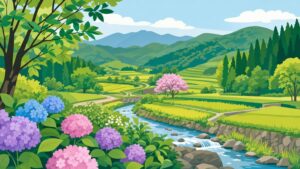
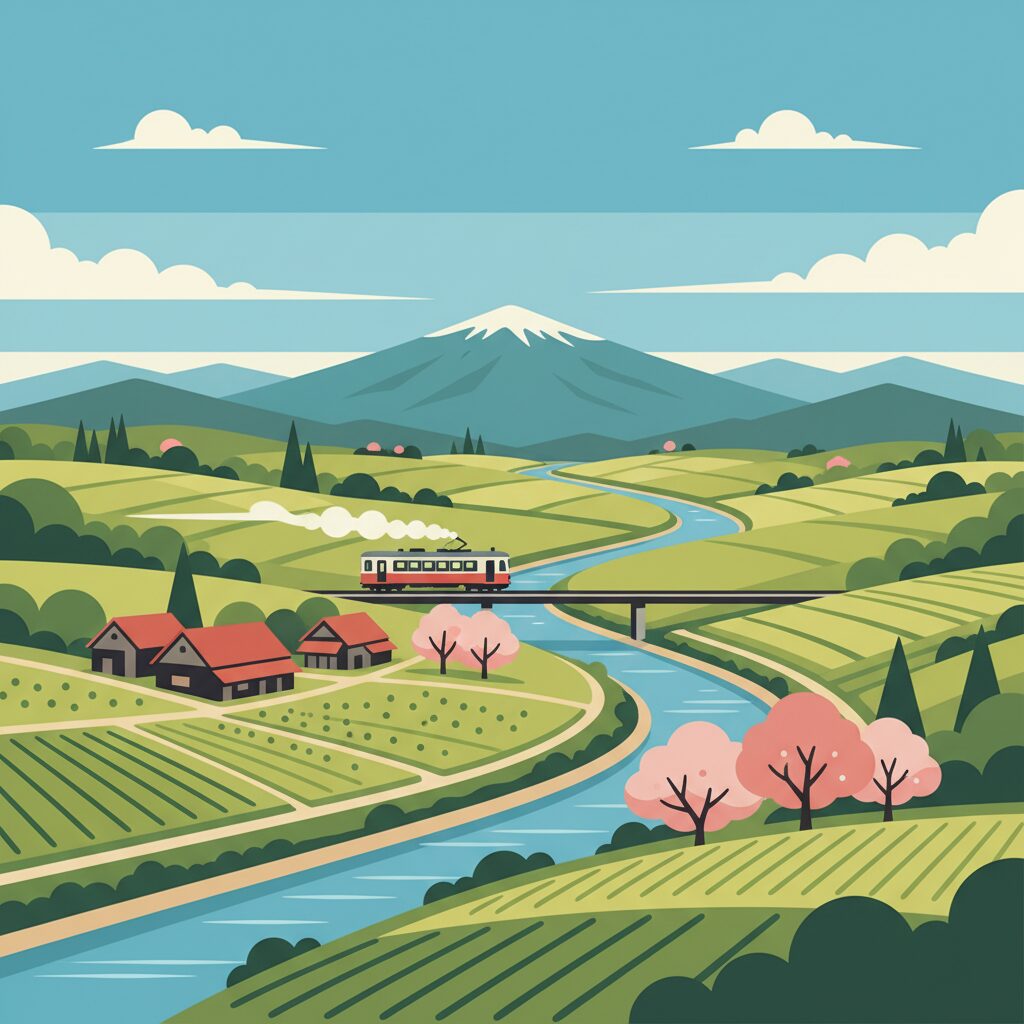
The world you thought you knew dissolves. The concrete towers recede, replaced by bamboo groves clinging to hillsides. The gray expanse of the city gives way to patchwork fields of vibrant green. You step off the train not into another bustling station, but into a pocket of profound quiet, where the loudest sound is the chirping of cicadas or the distant rumble of a farmer’s truck. This is Minamikawachi, the southern, rural heart of Osaka Prefecture. It’s a place that forces you to tear up your neatly filed definition of Osaka and start again. This isn’t just a day trip; it’s a re-education. It’s about discovering that the soul of this metropolis isn’t just forged in the merchant districts, but also tilled in the soil of these quiet valleys. This journey into Osaka’s backyard is a journey into its heart, revealing the roots of a culture that is far more complex, grounded, and deeply connected to the land than its neon-drenched image suggests.
For readers yearning to explore more of Osaka’s rich heritage, consider taking a weekend stroll through a preserved Edo-period merchant town in Tondabayashi for an immersive experience into the region’s timeless charm.
Trading Concrete for Canopies: The Shock of Leaving Osaka City
The transition feels almost cinematic. Boarding the Kintetsu Line at the vast, maze-like Abenobashi Station seems like any typical city commute. You’re surrounded by salarymen fixated on their phones, students carrying oversized backpacks, and the usual buzz of urban urgency. The train departs, and for the first fifteen minutes, the view is quintessential Osaka: a dense patchwork of low-rise buildings, tangled power lines, and flashes of commercial signage. But after passing Fujiidera and crossing the Yamato River, something begins to change. The buildings shrink, and the spaces between them widen. Suddenly, you spot a vegetable patch, then another, and soon an entire field.
The Kintetsu Line’s Transformation
The shift in scenery parallels a change in the train’s atmosphere. Commuters disembark, replaced by elderly couples with walking sticks and small families carrying picnic baskets. The air inside the carriage seems to lighten, and the collective tension eases with each kilometer traveled further south. Gazing out the window becomes an act of discovery. You’re not just witnessing the absence of the city; you’re seeing the presence of something entirely different. Terraced rice paddies ascend the hills, their surfaces glimmering like mirrors. Old farmhouses with heavy, tiled roofs, known as kominka, lie nestled in clusters, surrounded by persimmon trees. It’s a landscape that feels less suburban and more like a painting—a vision of a Japan that the city appears to have forgotten.
“Osaka… is this still Osaka?”
This question echoes in your mind. As a resident, your mental map of Osaka usually stays within the wards enclosed by the Loop Line, a sprawling yet contained urban ecosystem. Minamikawachi upends that map. Stepping off at a station like Tondabayashi or Kawachinagano feels like arriving in another prefecture entirely. The air is cleaner, carrying the scent of damp earth and woodsmoke rather than exhaust fumes and fried food. The pace is strikingly slow. People don’t rush; they stroll. They stop to chat with the station master. They wait patiently at crosswalks even when no cars are nearby. This radical shift challenges the monolithic identity we often assign to cities. Tokyo’s urban sprawl feels endless—a gradual fade into suburbs that all look vaguely similar. Osaka, in contrast, has a sharp edge. The city ends, and the countryside begins, with a surprisingly close and clear border. This proximity of two very different worlds within the same administrative boundary is a defining—and often overlooked—aspect of life here.
The Local Station Vibe
The local train station in Minamikawachi acts as a microcosm of this distinct lifestyle. It’s not a transit hub; it’s a community center. The kiosk isn’t a sleek convenience store chain but a small, family-run shop selling local snacks and newspapers. Elderly residents sit on benches, not merely waiting for a train, but simply passing time, greeting acquaintances as they pass. The friendliness here differs from the performative energy of a Dotonbori shopkeeper trying to attract customers. It’s a quieter, more observant warmth. A nod, a soft “Konnichiwa,” a sense of shared space. It’s the first sign that the famous Osaka friendliness takes many forms, and this is its mellow, countryside version.
Getting Your Hands Dirty: The Reality of Rural Osaka Life
To truly grasp Minamikawachi, you need to do more than simply observe it; you must touch it, taste it, and connect with the people who bring it to life. The area is sprinkled with farms and artisan workshops that invite visitors not just as passive observers but as active participants. It is through these hands-on experiences that the essential values of the Osaka spirit—practicality, pride, and a certain straightforward honesty—become vividly clear.
The Mikan Orchard Experience
Picture spending an afternoon at a family-owned mikan (mandarin orange) orchard situated on a sunlit hillside. The owner, a man in his late sixties with hands as rugged as tree bark, doesn’t welcome you with a polished speech. Instead, he hands you a pair of clippers and a basket, directing you towards the trees. His instructions are concise and to the point: “Twist and pull, no, not like that. You’ll bruise the fruit. Cut here. Clean.” There are no excessive courtesies or flowery language. This isn’t the carefully choreographed omotenashi of a Kyoto tea ceremony. It’s better. It’s genuine.
Talk vs. Action: An Osaka Mentality
This exchange perfectly illustrates Osaka communication. In Tokyo, you might receive a long, polite explanation filled with honorifics and gentle suggestions. Here, the emphasis is on the result. The farmer aims to teach you the right way to do something—efficiently and effectively. His directness is not rudeness; it’s a form of respect. He respects you enough to avoid wasting your time with empty words. He assumes you’re here to learn and take action, not merely to be entertained. This practical, action-driven approach forms a key part of the Osaka character. It stems from a merchant culture where outcomes mattered more than appearances and is reinforced by an agricultural tradition where nature disregards fancy words but responds to proper technique. Foreigners often mistake this bluntness for impatience or lack of politeness, but it’s frequently the opposite: a sign that you’re regarded as a capable individual rather than a fragile guest.
Sake and Soy Sauce: The Artisan’s Pride
This same mindset permeates the region’s artisan producers. Minamikawachi hosts centuries-old sake breweries and soy sauce makers, often family-run for generations. Visiting one of these establishments, such as the Nishijo Sake Brewery in Tondabayashi, is a journey into a world of deep pride and precision. The master brewer shares the process with quiet intensity, his passion evident not through grand declarations but in the meticulous way he explains rice polishing or the critical role of local water drawn from the Kongo mountains.
“Uchi no mon”: The Insider Mentality
When discussing his sake, he often uses the phrase uchi no mon, which literally means “our thing” or “our stuff.” This seemingly simple phrase carries rich cultural meaning. It reflects a fierce local pride and a strong sense of belonging. It’s not just sake; it’s our sake, crafted with our water and our rice, following our traditions. This isn’t arrogance; it’s a deeply rooted confidence in the quality and uniqueness of their local product. This mindset fuels Osaka’s renowned regionalism. It explains why people here are so passionate about their local cuisine, dialect, and sports teams. It’s a powerful sense of identity that sharply contrasts with the more standardized, national identity often emphasized in Tokyo. In Osaka, local identity comes first, and that provides immense strength and pride.
Walking the Ancient Trails: Nature and History Intertwined
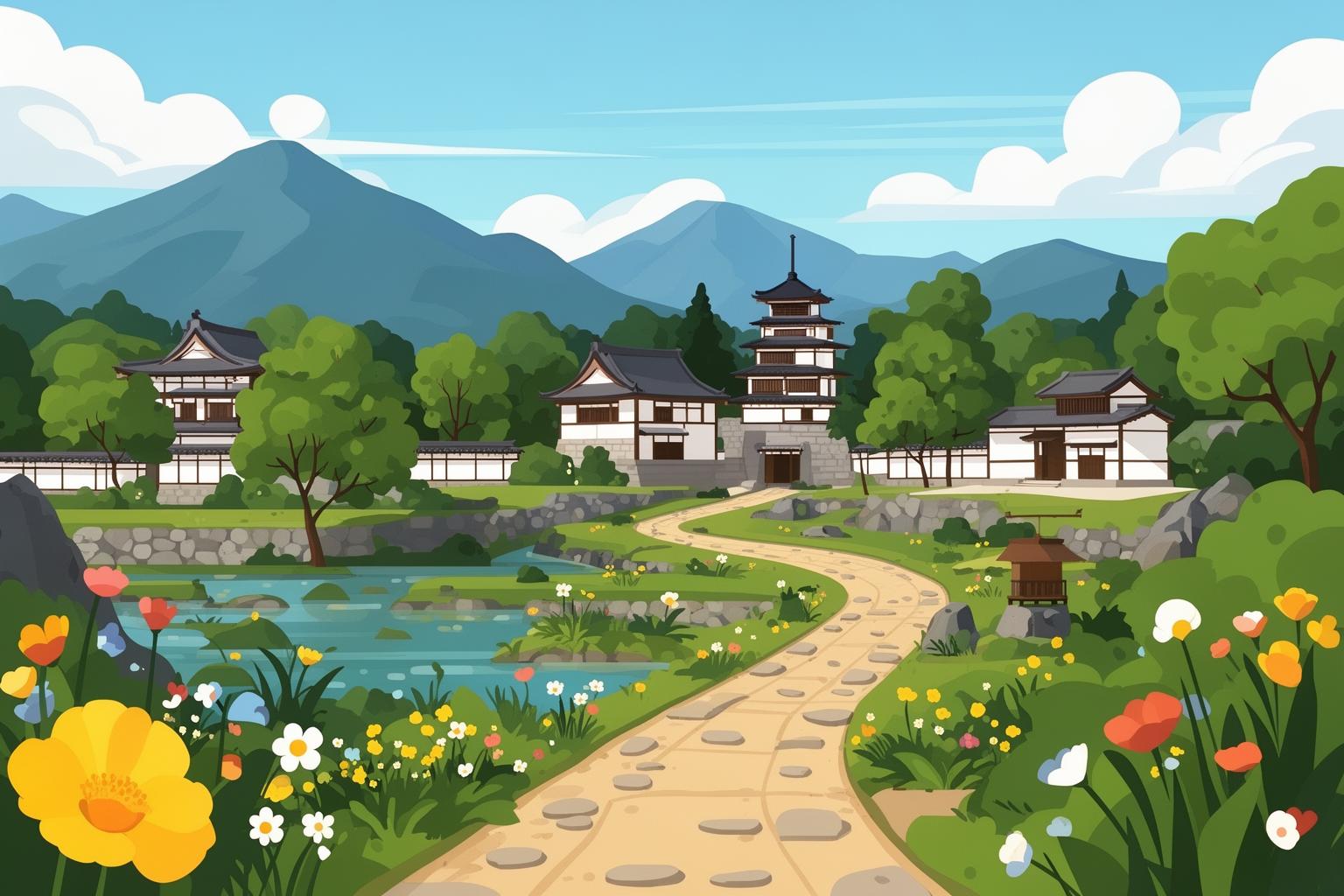
Minamikawachi is not just an agricultural region; it is a landscape rich in history and spirituality. The mountains forming its backbone, especially the Kongo and Katsuragi ranges, are threaded with ancient pilgrimage routes and hiking trails. Walking them allows you to physically connect with the layers of history lying just beneath the surface of modern Osaka.
Mount Kongo and the Pilgrim’s Path
Hiking Mount Kongo, Osaka’s highest peak, is an essential Minamikawachi experience. The trail features a mix of steep stone steps, gentle forest paths, and wooden boardwalks. What truly sets it apart, however, are the people you encounter along the way. The trail is dominated by incredibly fit and energetic seniors, many of whom have climbed the mountain thousands of times. They pass by with cheerful, booming greetings like “Konnichiwa!” or encouraging shouts of “Ganbatte!” (Go for it!). Their purposeful, lively strides defy their age, with faces reflecting the satisfaction of a cherished daily ritual.
Community on the Mountain
There is a tangible sense of community on the trail that feels uniquely Osakan. Strangers make eye contact, comment on the weather, and may offer you a piece of candy or a pickled plum for energy. This stands in stark contrast to the reserved anonymity typical of Tokyo crowds, where avoiding eye contact is common. Around Tokyo, hikers often keep to themselves, absorbed in their own journey. Here, the hike feels like a collective, communal effort. This spontaneous friendliness may be surprising at first but arises from the same social fabric that sparks conversation between strangers at a standing bar in Kyobashi. It is a shared sense of space and experience, an unspoken acknowledgment that “we’re all in this together.”
Discovering the Kofun: History Beneath Your Feet
As you explore the lower elevations and plains of Minamikawachi, you’ll notice oddly shaped, keyhole-like hills covered in trees. These are kofun, massive burial mounds for emperors and powerful clans dating from the 4th to 6th centuries. The Furuichi Kofun Group, a UNESCO World Heritage site, is situated here. While entry is not permitted, their immense scale and silent presence inspire awe. They serve as a constant, physical reminder that this region was Japan’s political and cultural heart long before samurai warriors, shogun, or the city of Edo (now Tokyo) existed.
A Different Sense of Time
For someone living in Osaka, this is a profound realization. The city, with its modern skyscrapers and relentless business focus, rests on a foundation of immense historical depth. The kofun’s presence introduces a different sense of time to your perception of the place. The city’s frantic pace centers on the next quarter, the next trend, the next train. In Minamikawachi, surrounded by ancient tombs and mountains venerated for millennia, you sense deep time. This duality lies at the heart of the Osaka experience. It is a place simultaneously obsessed with the future and deeply anchored in its ancient past—a contradiction that makes it endlessly captivating.
The Taste of the Land: Food, Markets, and Local Logic
Nowhere is the character of Minamikawachi—and, by extension, the practical heart of Osaka—more apparent than in its relationship with food. This region serves as Osaka’s breadbasket, renowned for its eggplant (nasubi), cucumber, and grapes. The ways in which this food is grown, sold, and consumed reveal much about the local mindset.
Roadside Stations (Michi no Eki) as Social Hubs
Forget supermarkets. The destination to choose is a michi no eki, or roadside station. These are far more than simple farmers’ markets; they are vibrant hubs of local life. Inside, you’ll find rows of freshly harvested vegetables, each bag or bundle labeled with the name—and sometimes even the photo—of the farmer who grew it. The produce appears irregular, occasionally muddy, but is bursting with a vitality you’ll never encounter in vacuum-packed grocery store items.
The Price-Conscious, Quality-Obsessed Shopper
Watch the shoppers, especially the older women—the famous Osaka obachan. They don’t just grab whatever they see first. Instead, they pick up the vegetables, feel their weight, examine them from every angle, and compare prices with sharp scrutiny. They ask the staff straightforward questions: “When was this picked?” “Is this one sweet?” This reflects the well-known Osaka kechi (stingy or frugal) stereotype, but viewing it as mere stinginess misses the point entirely. It’s about demanding value. It’s a deep-rooted conviction that you should get the absolute best quality for your money. This savvy consumerism is a source of pride. It’s a skill refined over generations in a merchant city where every yen mattered. It’s not about being cheap; it’s about being smart, practical, and unwilling to be taken advantage of. This attitude starkly contrasts with Tokyo, where aesthetics and brand names often overshadow straightforward value.
From Farm to Izakaya: The Local Food Chain
This passion for local quality extends into the restaurants. Visit a small, family-run izakaya in a town like Kishi, and you’ll experience an extraordinarily short farm-to-table journey. The menu shifts daily, based on what the owner sourced from the local market that morning. The tempura might be made from eggplants grown on a nearby farm you likely passed on your way. The owner will share this proudly—not as a sales pitch, but simply as fact. “The best stuff comes from just down the road,” he’ll say, as if any other sourcing method is simply unreasonable.
“This is REAL food”: A Statement of Identity
This hyper-local focus stands as a quiet resistance to the homogenization of food culture. It’s the belief that genuine flavor comes from the soil you know and the people you see every day. For Osakans, food is more than nourishment; it’s identity. The pride they hold in their local dishes—from takoyaki to the unique flavor of their udon broth—is well known. In Minamikawachi, you can trace the root of that pride. It’s not merely about a recipe; it’s about the fundamental quality of the ingredients themselves. This bond with the land offers an anchor, a sense of authenticity in a rapidly changing world, defining the Osaka spirit as much as its commerce and comedy.
What Minamikawachi Teaches You About Osaka
A weekend in Minamikawachi does more than just recharge your energy; it fundamentally shifts your understanding of the city you call home. You return to the noise and concrete of Tennoji or Umeda with fresh eyes, noticing the rural echoes woven into the urban rhythm.
Beyond the Stereotypes
The key takeaway is that Osaka is not a single, uniform entity. The brash, loud, money-driven merchant is a stereotype—just one dimension of a far more complex identity. The quiet, proud, dirt-under-the-fingernails farmer of Minamikawachi is just as much an Osakan as the comedian from Namba. Thriving here means embracing this diversity and recognizing that different social norms apply in different settings. The straightforwardness of a farmer and the banter of a shopkeeper both stem from the same foundation of pragmatic honesty, expressed in distinct ways.
The Pragmatic Soul
Minamikawachi’s agricultural roots help explain the city’s ingrained pragmatism. Life on a farm is shaped by tangible realities: the weather, the soil, the seasons, the harvest. This fosters a mindset that prioritizes practical results and common sense over abstract theories or strict formalities. This is why Osaka often feels more grounded and less hierarchical than Tokyo. There’s a shared belief in finding the most efficient, logical way to get things done, even if it means bending some rules or skipping certain polite conventions. It’s a culture focused on “does it work?” rather than “is it proper?”
A Different Kind of Connection
Finally, a retreat to Minamikawachi reveals the nature of community in Osaka. In the vast anonymity of the city, interactions can seem fleeting and transactional. But the social fabric is cultivated in places like this, where communities are small, interconnected, and built on mutual reliance. The instinct to connect, to treat a stranger on a mountain trail like a temporary neighbor, is a rural value that has endured through migration to the city. This explains why Osakans might come across as nosy or overly familiar to outsiders. They operate within a social model where public and private boundaries are more blurred, and a shared sense of community is the default.
Why This Matters for a Resident
For any foreigner living in Osaka, a visit to Minamikawachi is essential. It offers the context needed to decode the city’s complex character. It helps clarify that the Osakan focus on value stems from a respect for hard work and quality resources. It shows that the direct, sometimes blunt communication style is a sign of efficiency, not rudeness. And it reminds you that beneath the chaotic, modern exterior of one of Japan’s largest cities lies a soul deeply connected to the earth, its history, and the simple, profound logic of the land.