You wake up in Osaka. The city hums outside your window, a low, steady thrum of trams, bicycles, and the distant chatter from the local shotengai shopping street. You need coffee. Your first instinct, honed by global habit, might be to search for the nearest green mermaid logo or a sleek, minimalist third-wave cafe. You could do that. You’d get a decent cup of coffee, pay your seven hundred yen, and go about your day. But you wouldn’t be starting your day in Osaka. You’d just be having coffee in Osaka. To truly begin your day like a local, you need to understand the magic, the mystery, and the beautiful economic absurdity of the ‘Morning Service.’ You’ve probably seen the signs outside Showa-era coffee shops, those charmingly dated establishments with names like ‘Cafe de Peacock’ or ‘Coffee House Pure.’ A little hand-painted sign, maybe with a faded photo, offering a deal that seems too good to be true: order one cup of coffee between the hours of 7 a.m. and 11 a.m., and you get a full breakfast thrown in for free. Or, more accurately, for the price of that single cup of coffee. This isn’t a special promotion. It’s not a gimmick. It’s a fundamental institution, a daily ritual woven into the fabric of the city’s life. It’s a cultural phenomenon that says more about the Osaka mindset—its pragmatism, its obsession with value, its deep-seated sense of community—than any guidebook ever could. This is the world of the ‘kissaten’ morning, and it’s your first lesson in deciphering the city’s soul.
After enjoying Osaka’s unique morning service, you might extend your adventure with weekend getaways from Osaka that whisk you off to explore the cultural treasures of nearby regions.
The Unspoken Deal: Deconstructing ‘Morning Service’
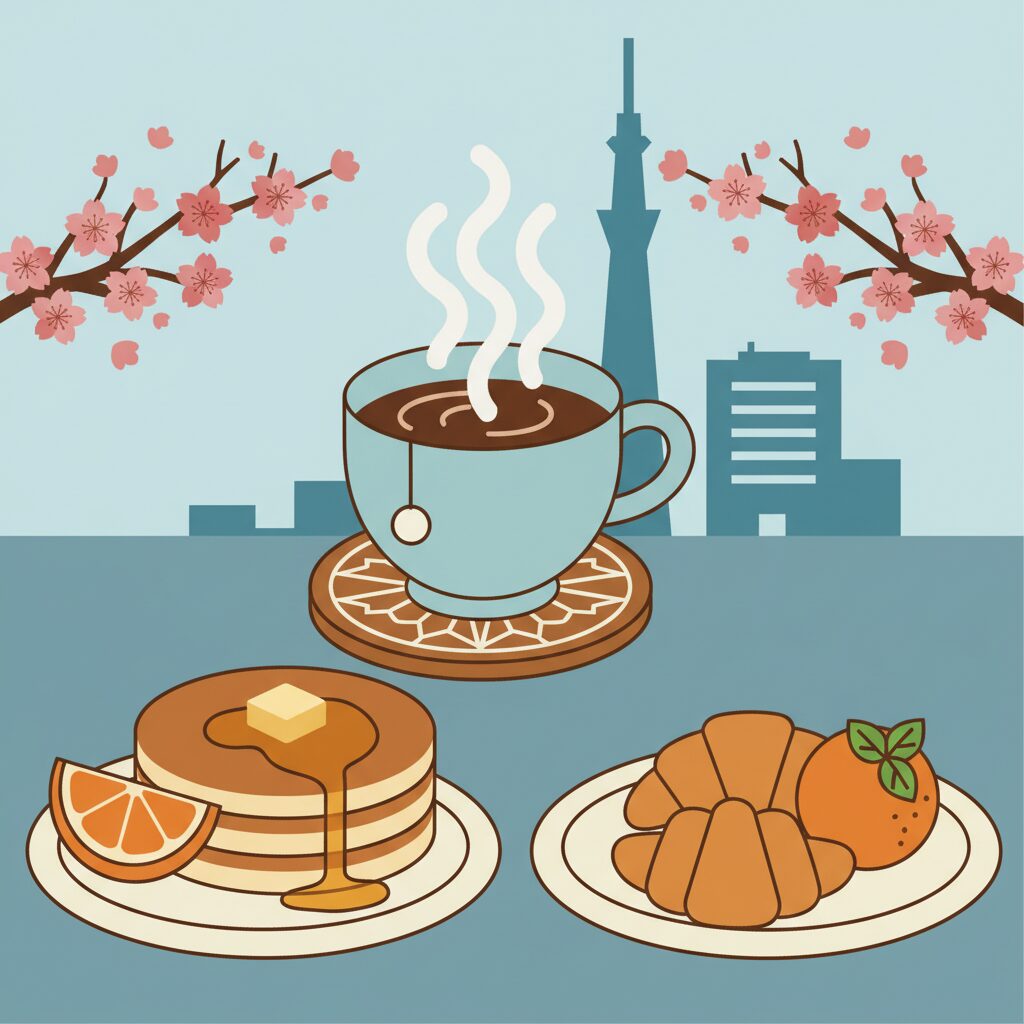
So, what exactly do you get for your 500-yen coin? Step into a local kissaten, settle into a plush, slightly worn velvet seat, and order the ‘Morning.’ What arrives is a lesson in satisfying simplicity. First, the coffee. It’s not a single-origin pour-over with hints of bergamot. It’s straightforward coffee-flavored coffee. Usually dark and robust, brewed in a siphon or flannel drip brewer, it serves as a no-nonsense caffeine delivery system and the foundation of the whole experience. Alongside it comes a plate. On that plate, you’ll almost certainly find a slice of toast. But this isn’t a flimsy, pre-sliced piece of bread. This is ‘shokupan,’ Japanese milk bread, sliced defiantly thick—at least an inch, sometimes more. It’s toasted to a perfect golden brown, with a fluffy, cloud-like interior, served with a pat of butter or margarine and a small packet of jam. Next to the toast is the protein: a hard-boiled egg, still warm in its shell, resting in a small ceramic cup. Depending on the generosity of the establishment, there may be more—a small mound of cabbage salad dressed with sesame, a tiny bowl of yogurt, a few slices of orange. All of this—the toast, egg, salad, and coffee—comes to you for the price of the coffee alone.
It’s Not ‘Free,’ It’s ‘Included’
Here’s the first stumbling block for many foreigners. The word ‘service’ in Japanese-English, or ‘wasei-eigo,’ doesn’t mean customer service in the usual sense. It means ‘a bonus,’ ‘on the house,’ or ‘included.’ When a shopkeeper tosses in an extra apple with your purchase, that’s ‘service.’ So, ‘Morning Service’ isn’t about staff being particularly attentive; it’s a set meal deal where the food comes included with the drink. This concept is essential to grasping the Osaka merchant spirit. It’s about ‘omake,’ the culture of a little extra. It’s a strategic act of generosity. The owner isn’t losing money on the toast and egg; they’re investing in your loyalty. By offering an undeniably great deal, they ensure you don’t head to the chain cafe down the street. You return. Tomorrow, and the day after that. It becomes your place. It’s a long-term strategy in a city built on relationships, not just transactions.
The Economics of Generosity
The numbers may seem odd at first. How can they possibly turn a profit? The answer lies in volume, low overhead, and a profound understanding of human psychology. These kissaten are often run by a single person, the ‘Master,’ or a married couple. They often own the property, avoiding crippling rent. They buy ingredients in bulk from local suppliers they’ve known for decades. The menu is small and consistent, minimizing waste. But the true genius lies in the pricing anchor. You, the customer, are mentally anchored to the coffee’s price. You feel like you’re getting an incredible bargain—and you are. This fosters gratitude and loyalty that a multinational corporation with a loyalty app can only dream of. It’s a beautifully human-scaled economic model, a quiet rebellion against the impersonal nature of modern commerce. It embodies the Osaka phrase ‘moukarimakka?’ (‘making a profit?’), a standard greeting. The implied response is ‘bochi bochi denna’ (‘so-so’), a humble way of saying things are going okay. The Morning Service is the engine that keeps things ‘bochi bochi.’
The Kissaten: A Stage for Osaka’s Daily Drama
To truly understand the Morning Service, you need to grasp its natural setting: the kissaten. These are not cafes as we know them today. They are time capsules. Step inside, and you leave the 21st century behind. The air is thick with the rich aroma of dark-roast coffee, sometimes mixed with the faint, sweet scent of stale cigarette smoke—a reminder of a bygone era, as many of these establishments remain from a time before smoking bans. The décor is distinctly mid-century Showa: dark wood paneling, low-hanging brass lamps casting a warm, dim glow, vinyl booths in shades of burgundy or forest green, and perhaps a small, trickling water feature in the corner. There’s no Wi-Fi password taped to the wall. No ambient lo-fi hip-hop playing. Instead, you hear the sound of a television in the corner, broadcasting morning news or a daytime chat show, the rustle of newspapers, and a low murmur of conversation.
The Cast of Characters
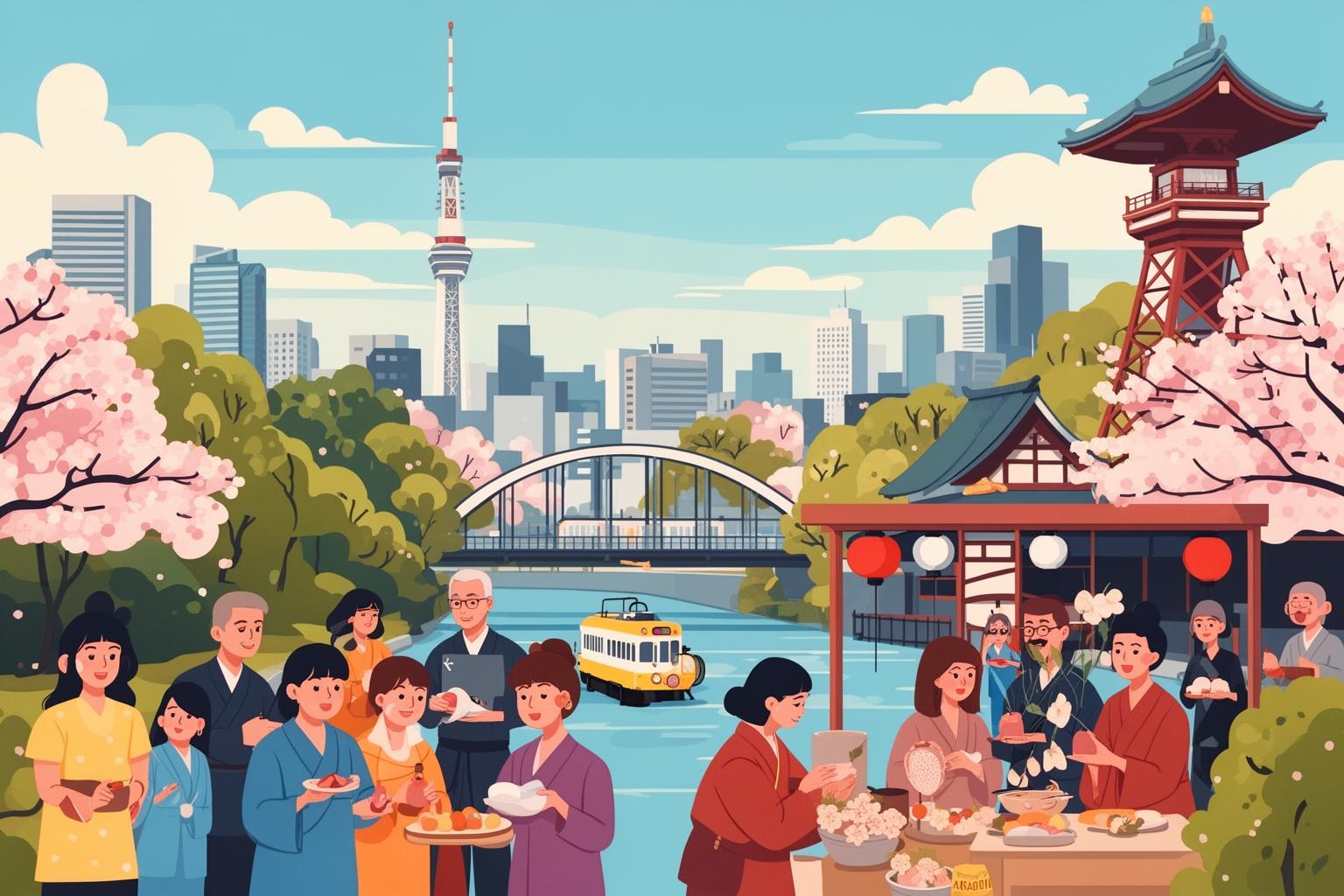
A kissaten during morning hours is a microcosm of the neighborhood—a living room for the community. In one corner, a group of ‘obachan’—elderly ladies—with perfectly coiffed hair catch up on the latest gossip over coffee and toast. In another booth, a salaryman in a rumpled suit pores over the sports section from cover to cover, savoring a brief moment of peace before heading to the office. The lone elderly gentleman at the counter, who has visited every day for forty years, exchanges a few words with the owner. He doesn’t need to order; his usual simply appears before him. This is not a place for laptops or Zoom calls. It’s a place for connection, quiet contemplation, and being part of the neighborhood’s gentle, rhythmic pulse. Sociologists call it a ‘third place,’ a vital hub of community life neither home nor work. It’s where you can be alone, together.
The Master’s Domain
At the heart of this scene stands the ‘Master.’ Not a manager, not a barista—the Master. Usually a man of a certain age, he is the soul of the kissaten. He moves with quiet, practiced efficiency behind the counter, polishing glasses, operating a magnificent, gleaming siphon coffee maker that resembles a chemistry experiment, and keeping a watchful eye on his domain. The Master is a pillar of the community. He knows his regulars by name, their troubles and triumphs. He is a repository of local knowledge, a silent confidant. The relationship is not server to customer; it’s host to guest. This deeply personal connection contrasts sharply with the Tokyo experience, where efficiency and anonymity often dominate. In an Osaka kissaten, you are not a data point in a sales report—you are a person with a name and a usual order.
Osaka vs. Tokyo: A Tale of Two Mornings
The culture of Morning Service highlights the fundamental differences between Osaka and Tokyo. A Tokyo morning often resembles a frantic ballet of efficiency. People pour out of train stations, grabbing an onigiri from a convenience store and a canned coffee from a vending machine, consuming them on the move. Alternatively, they might rush into a Starbucks for a latte—a transaction that takes ninety seconds—before settling at a sterile counter to plug in their laptops. Time is treated as a commodity to be optimized, with the primary goal of fueling up and heading to work as quickly as possible. It’s a culture centered on individual speed.
The Osaka Pace
Osaka, while still a large and bustling metropolis, moves to a slightly different rhythm. The Morning Service ritual acts as a built-in pause button. It compels you to sit down, take a breath, and engage, however briefly, with another person. It values collective experience over individual efficiency. It implies that the day should start not with a frantic rush, but with a moment of composed calm. This is not to imply Osaka residents are lazy; far from it. The city is a commercial powerhouse. Yet there’s a deep-seated belief that a good deal coupled with a moment of human connection is essential for a successful day. This reflects a merchant culture that recognizes business is fundamentally about people. Relationships formed over a 500-yen coffee set tend to be more enduring than those built on quick digital transactions.
Why It Thrives Here
This tradition is firmly rooted in Osaka’s history. Known as Japan’s historical merchant capital and ‘the nation’s kitchen,’ business has always been conducted face-to-face. Deals were made, partnerships forged, and information exchanged in venues like teahouses and later, kissaten. Offering a little extra—the ‘omake’—was a gesture of goodwill, helping to build the trust vital for business. It was a tangible form of hospitality. By contrast, Tokyo’s culture, shaped by its samurai and bureaucratic background, is more formal and structured. Osaka’s culture is more fluid, pragmatic, and relational. The Morning Service is a contemporary expression of that centuries-old merchant spirit. It’s practical hospitality. It’s good business. It’s simply the way things are done.
How to Navigate Your First ‘Morning Service’
Stepping into a traditional kissaten for the first time can feel somewhat intimidating, like entering a private club where everyone else already knows the rules. However, the reality is much more welcoming. The key is understanding what to look for and how to behave.
Finding the Right Spot
Forget the main, flashy streets. The best kissaten are hidden away in covered ‘shotengai’ shopping arcades or along quiet residential side streets. Look for obvious signs: a faded plastic awning, a revolving barber-style pole light near the door, and the crown jewel—a dusty glass case outside displaying remarkably realistic plastic food models of the menu items. The name will likely be written in elegant katakana. These visual clues are your invitation. They indicate a place that isn’t trying to be trendy; it’s simply being itself. These are the spots that have served their communities for decades, fueled by coffee and toast.
The Unspoken Etiquette
When you step inside, a small bell will likely jingle, announcing your arrival. The Master will look up from behind the counter and greet you with a gruff but warm ‘Irasshaimase!’ (‘Welcome!’). You can usually sit anywhere you like unless a seat is discreetly marked as reserved. After you settle in, the Master will bring you a glass of water (‘omizu’) and a small wet towel (‘oshibori’). There’s often no printed menu for the morning set; it’s just understood. You simply say, ‘Morningu, onegaishimasu’ (‘The morning set, please’). If there are options (e.g., ‘A Set’ with egg, ‘B Set’ with salad), they’ll be displayed on a small sign on the wall or table. The atmosphere is quiet. People read, speak softly, or just gaze into space. It’s a place to be, not to perform. When you’re finished, you don’t wait for a bill—you simply walk up to the cash register by the door. The Master will total your order. Be ready with cash; many of these old-school establishments haven’t adopted credit cards.
Beyond the Toast: What ‘Morning Service’ Really Teaches You About Osaka
On the surface, it appears to be just an inexpensive breakfast. However, upon closer examination, the Morning Service reveals a profound cultural lesson. It provides insight into the core values that drive Osaka. It uncovers a perspective often misunderstood by outsiders and sharply contrasts with the rest of Japan.
The Philosophy of Value
Osaka residents are often labeled as money-obsessed, sometimes unfairly branded as ‘cheap.’ This is a fundamental misconception. The genuine Osaka mindset isn’t about stinginess; it’s about an intense aversion to being taken advantage of. It’s a fixation on ‘cost performance.’ They aren’t seeking the cheapest option; they desire the best possible value for their yen. The Morning Service perfectly exemplifies this. You pay a fair price for a carefully brewed cup of coffee. The additional satisfying meal isn’t viewed as a handout but as a sign of a smart, well-managed business that respects its customers. It fulfills a deep cultural need to feel like you’ve made an intelligent choice.
A Different Kind of ‘Omotenashi’
The term ‘omotenashi,’ the Japanese ideal of selfless, meticulous hospitality, is well known. In upscale Tokyo restaurants or Kyoto ryokans, it manifests as elegant, formal service. While beautiful, it can sometimes feel distant. Osaka’s hospitality is different. It is more practical, grounded, and human. It’s less about deep bows and more about the owner remembering how you like your toast. It’s the ‘obachan’ at the next table offering you candy. It’s the culture of ‘omake.’ The Morning Service isn’t a performance of hospitality; it’s hospitality you can genuinely enjoy. It’s a warm, tangible gesture saying, ‘We’re glad you’re here. Have some toast.’ This down-to-earth approach is why Osaka is often described as ‘friendly’—a friendliness rooted in mutual respect and a shared appreciation for a good deal.
The Fading Tradition and Its Modern Echoes
It’s important to acknowledge that this world is gradually disappearing. The Masters are growing older, and their children frequently pursue different paths. For every beloved kissaten that survives, another closes, replaced by convenience stores or sterile chain cafes. Yet, the spirit of the Morning Service lives on. Its essence has been handed down. In neighborhoods like Nakazakicho or Horie, modern, trendy cafes offer their own versions of a morning set—perhaps avocado toast and artisanal coffee—but the core principle stays the same. It’s a tribute to a tradition deeply cherished enough to endure. It stands as a testament to the idea that starting the day in Osaka is, and always should be, about more than just coffee. It’s about community. It’s about value. And it’s about taking a moment to sit, enjoy a simple meal, and remember that the best things in life often come as a delightful, unexpected ‘service.’