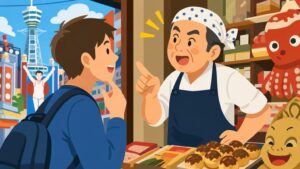
I remember my first week living in Osaka, standing in a small fruit shop near my apartment in Tennoji. I was holding two apples, trying to decide which was better. The shop owner, a cheerful man with a deeply creased smile, walked over. He looked at the apples in my hands, then looked at me with a perfectly straight face and said, in slow, deliberate Japanese, “The one on the right is for juggling. The one on the left is for eating.” I just stood there, completely baffled. Was this a special kind of apple? Was he serious? I offered a weak, confused smile. He waited a beat, and when I didn’t respond, his wife popped up from behind the counter and smacked him lightly on the arm. “Stop confusing the customers!” she scolded, before winking at me. “They’re both delicious, dear.” The husband just shrugged, a twinkle in his eye. It was my first, dizzying encounter with the engine that runs this city: the conversational duet of ‘boke’ and ‘tsukkomi’. It wasn’t about selling apples; it was a performance, an interaction, a tiny piece of theater played out over a wooden crate of fruit. In Tokyo, a shopkeeper might quietly wait for you to choose. In Osaka, they join you in the decision-making process, turn it into a joke, and expect you to play along. This city doesn’t just communicate; it performs a constant, running dialogue of absurdity and correction. It’s a rhythm that can feel alien at first, but once you learn the steps, you realize it’s not just comedy. It’s the very heartbeat of life in Osaka.
This lively interplay of humor not only defines Osaka’s unique communication but also mirrors the broader cultural contrast evident in Osaka’s directness versus Tokyo’s tatemae, inviting us to appreciate the nuanced dynamics of everyday life in Japan.
The Anatomy of a Laugh: Boke and Tsukkomi Defined
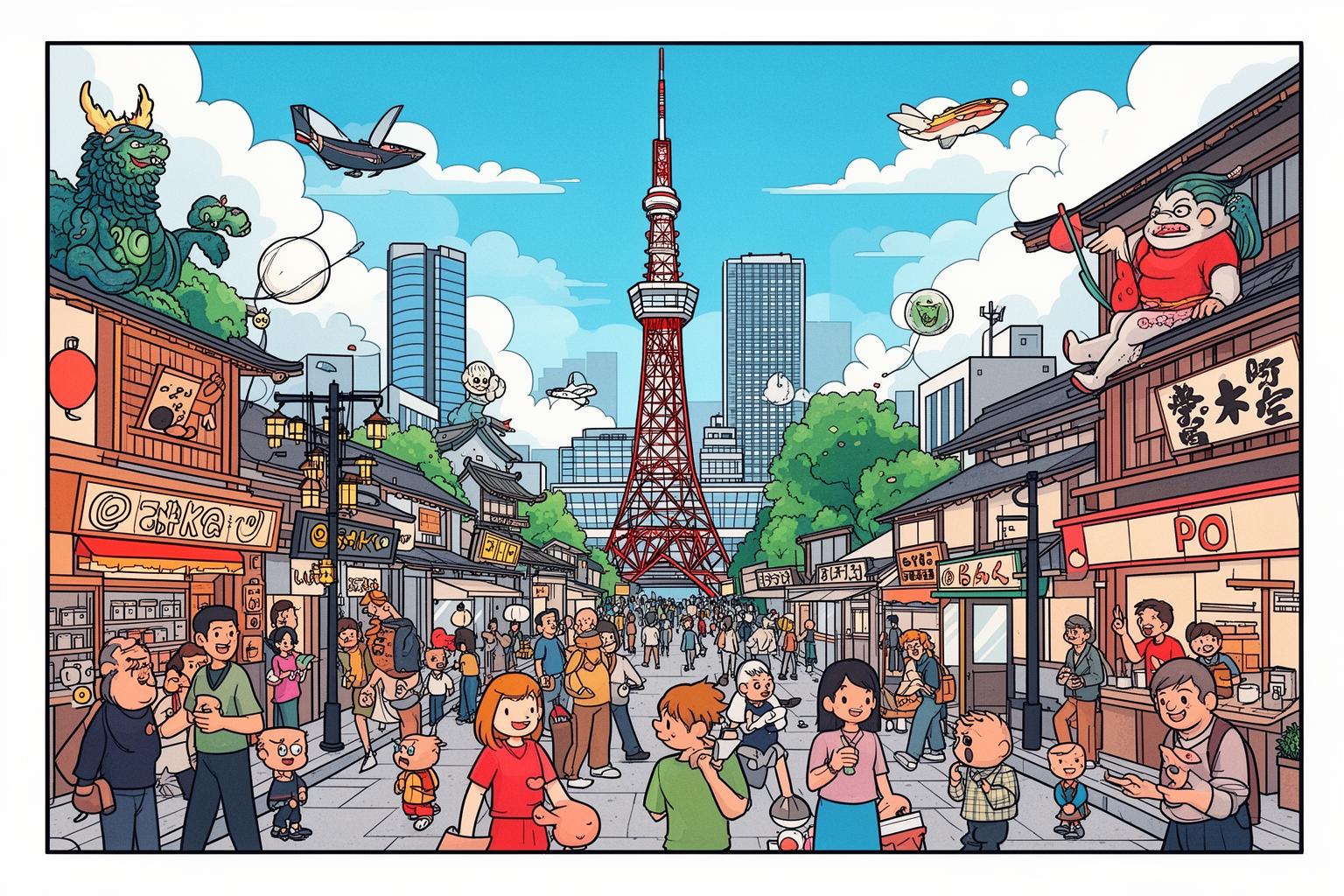
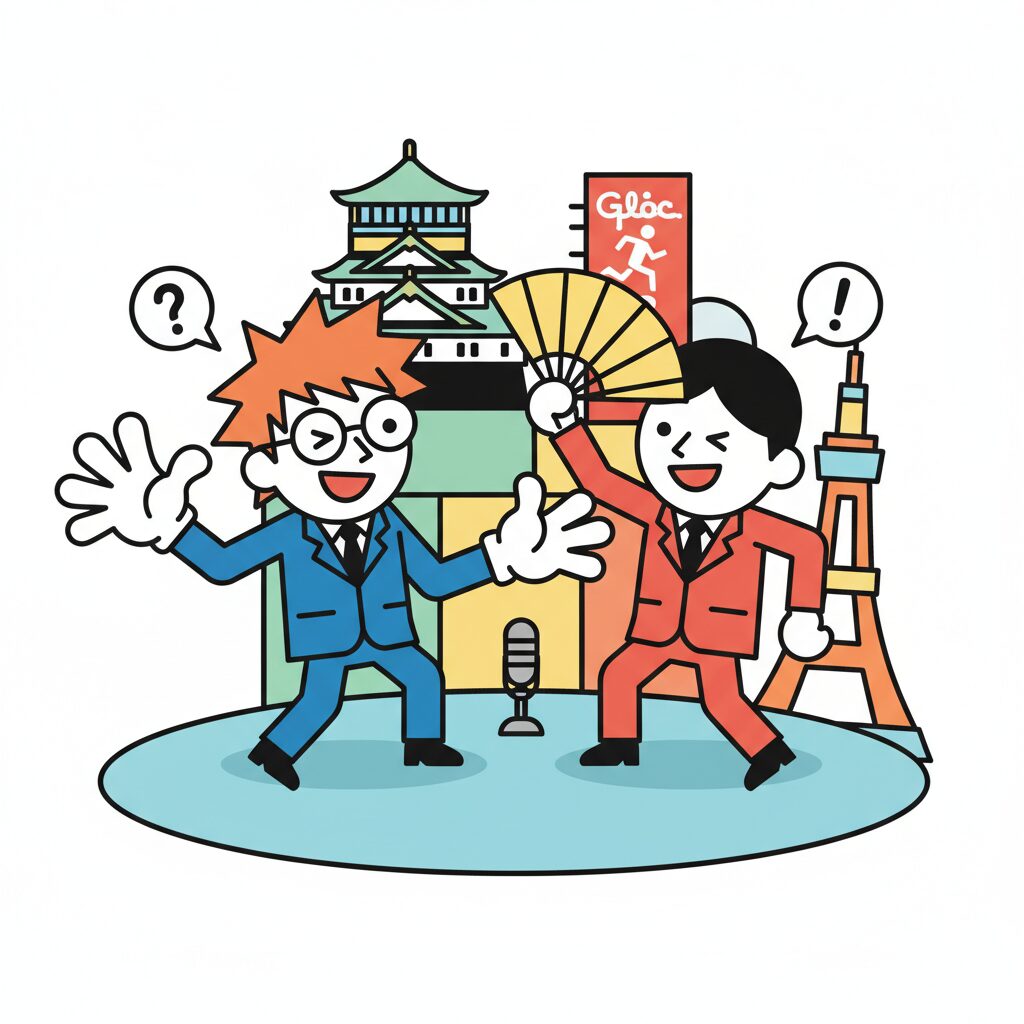
At its essence, the dynamic is straightforward, reflecting the classic comedy duos recognized globally. There is the ‘boke’ (ボケ), the funny one, the fool, the airhead. They say or do something absurd, incorrect, or simply strange, serving as the setup. Then there is the ‘tsukkomi’ (ツッコミ), the straight man, whose job is to highlight the ‘boke’s’ absurdity with a quick, sharp correction, often paired with a light tap or gesture. They deliver the punchline. Think of Abbott and Costello or a contemporary slapstick routine. The ‘boke’ constructs a peculiar house of cards, and the ‘tsukkomi’ knocks it down—within that collapse lies the humor.
The ‘Boke’: A Master of Strategic Stupidity
What many foreigners often misunderstand is that the ‘boke’ is not truly an idiot. Portraying the ‘boke’ requires social intelligence. The person saying something ridiculous is deliberately creating a light-hearted moment. They momentarily lower their own status to invite connection. It’s a vulnerable, open-handed offering of humor. When my fruit seller told me an apple was for juggling, he wasn’t questioning my intelligence; he was handing me a golden chance to engage. He was tossing me a conversational ball, hoping I’d catch and return it. This deliberate, self-aware foolishness is a key aspect of the Osaka mindset. It’s a way of saying, “Let’s not take ourselves too seriously. Let’s find fun in this everyday interaction.”
The ‘Tsukkomi’: The Anchor of Reality
The role of the ‘tsukkomi’ can be even more perplexing for outsiders. To a Western ear, a sharp ‘tsukkomi’ might sound like an insult, criticism, or rude interruption. In truth, the ‘tsukkomi’ is the scene’s hero. They confirm the ‘boke’s’ joke by acknowledging it. Without the ‘tsukkomi’, the ‘boke’s’ remarks would just hang awkwardly. The ‘tsukkomi’ offers the release, the punctuation that signals to everyone it was a joke. The shopkeeper’s wife calling her husband an idiot wasn’t a real marital quarrel; it was the completion of the comedic cycle. Her ‘tsukkomi’ told me, the puzzled foreigner, “Don’t worry, he’s just being silly. We’re all in on this.” The ‘tsukkomi’ is the conductor who brings the conversational orchestra back into harmony, making the brief venture into absurdity feel safe and enjoyable.
A City That Speaks in Punchlines
In Tokyo, conversations often resemble a calm lake, carefully navigated to avoid creating ripples. Politeness, indirectness, and maintaining group harmony (‘wa’) are essential. In contrast, conversations in Osaka resemble a lively, rushing river. The aim isn’t to avoid conflict but to spark playful energy. This marks the most significant difference in everyday life between the two cities. In Osaka, you don’t simply have conversations; you build routines. The whole city acts as a stage, with every citizen as a potential comedy partner.
The Supermarket Checkout as Center Stage
This contrast is most evident in the most mundane daily tasks. Imagine this: you’re at the checkout, purchasing a single, forlorn-looking leek. The cashier, a middle-aged woman with a perfectly styled perm, scans it and exclaims loudly, “Wow, what a huge feast you’re making tonight!” This is a classic ‘boke’ opening. A Tokyo cashier would likely say nothing about your purchase. The Osaka cashier, however, has just invited you to join a game. A blank stare means failure. A nervous chuckle is a passing grade. But the best response is a ‘tsukkomi,’ something like, “Of course! All my friends are coming. All zero of them.” Or play along with a counter-‘boke’: “Yes, this is for my pet giraffe.” The cashier will burst out laughing, the person behind you might chuckle, and for a brief moment, a routine transaction transforms into a shared human experience. This is the currency of Osaka.
The Unwritten Rules of Neighborhood Banter
This dynamic is magnified among neighbors, particularly the older generation of women known as ‘obachan.’ They are masters of the ‘boke’ and ‘tsukkomi’ exchange. They’ll comment on your clothes, hairstyle, groceries, and the weather all in one breath. If you wear a bright yellow raincoat, an ‘obachan’ might say, “Are you trying to become a traffic light?” This isn’t a fashion critique but an act of affection. It’s their way of saying, “I see you. I acknowledge you. Let’s share a laugh.” The proper response isn’t to feel self-conscious but to volley back. A good ‘tsukkomi’ would be, “Just making sure you see me so you don’t run me over with your shopping cart!” This playful exchange builds community. It’s a constant checking-in, a way of maintaining social bonds through humor instead of formal greetings.
How to Survive and Thrive in Osaka’s Comedy Club
For many foreigners, the constant pressure to perform can be tiring and intimidating. What if you’re not naturally quick-witted? What if you don’t catch the joke? The fear of responding wrongly can cause social withdrawal, which is exactly the opposite of what Osakan interaction aims to foster. The good news is, you don’t need to be a professional comedian to fit in—you just have to learn the basic cues.
Step One: Recognize the Invitation
The first and most crucial step is to reframe what you’re hearing. When someone says something that sounds overly direct, personal, or just plain strange, your initial reaction shouldn’t be, “Are they being rude?” Instead, ask yourself, “Is this a ‘boke’?” In most cases, it is. The person asking why you bought so much bread isn’t criticizing your carb intake; they’re tossing you a conversational softball. Realizing the playful intent behind the words is half the battle—it prevents offense and turns the exchange from a confrontation into a chance to engage.
Step Two: Your ‘Tsukkomi’ Training Wheels
You don’t have to come up with a clever, perfectly-timed retort. The simplest and most beloved ‘tsukkomi’ in the Kansai dialect is the charming phrase: “Nande ya nen!” (なんでやねん!). It roughly means “Why?!” or “What the heck?!” or “Are you kidding me?!” and serves as a universal key to unlock almost any ‘boke’ situation. The fruit seller says the apple is for juggling? “Nande ya nen!” The cashier asks if you’re throwing a party for your single leek? “Nande ya nen!” It’s a friendly, mildly exasperated exclamation showing you get the joke and are playing along. Adding a dismissive wave while saying it scores extra points. Mastering this phrase will instantly make you feel more involved in the flow of conversation.
Step Three: Embrace the ‘Gaijin Boke’
Once you’re comfortable, you can try an advanced move: playing the ‘boke’ yourself. As a foreigner, you have a unique advantage. You can fully embrace the role of the ‘confused outsider’ with hilarious effect. This is the ‘gaijin boke’ (foreigner fool). Head to a takoyaki stand, point at the round, doughy octopus balls, and ask with a straight face, “Can I have three of those chocolate donut holes?” The vendor will absolutely love it. They’ll immediately jump into the ‘tsukkomi’ role, explaining with theatrical flair that it’s actually octopus. You won’t just have made their day—you’ll have shown that you deeply understand the culture. You know the rules so well that you can start the game yourself. This is the shortcut to becoming beloved by every shopkeeper in your neighborhood.
Comedy as a Philosophy of Life
This continuous back-and-forth isn’t merely a quirky way of communicating; it represents Osaka’s history and spirit. As a merchant city, success relied on quickly building relationships, thinking on your feet, and developing a thick skin. Haggling and negotiation demanded sharp wit and resilience. Finding humor in everyday challenges wasn’t just entertainment; it was a survival tactic. This mindset is ingrained in the city’s identity. It embraces the idea that life can be tough and business harsh, but there’s always space for a laugh. It values human connection, even if it’s a bit messy and loud, over sterile formality.
This is why Osaka feels fundamentally different from Tokyo. In Tokyo, you could live for years without ever talking to your neighbors. The system prioritizes smooth, anonymous efficiency. In Osaka, your neighbors will know your name within a week, likely because they’ve already joked about the quirky plant on your balcony. This city demands engagement. It asks you to be present, listen, and participate. The reward for stepping into this dynamic is a strong sense of community and belonging that’s rare to find elsewhere. Life in Osaka is a bit louder, more chaotic, and infinitely more entertaining. You just have to be willing to be part of the joke.