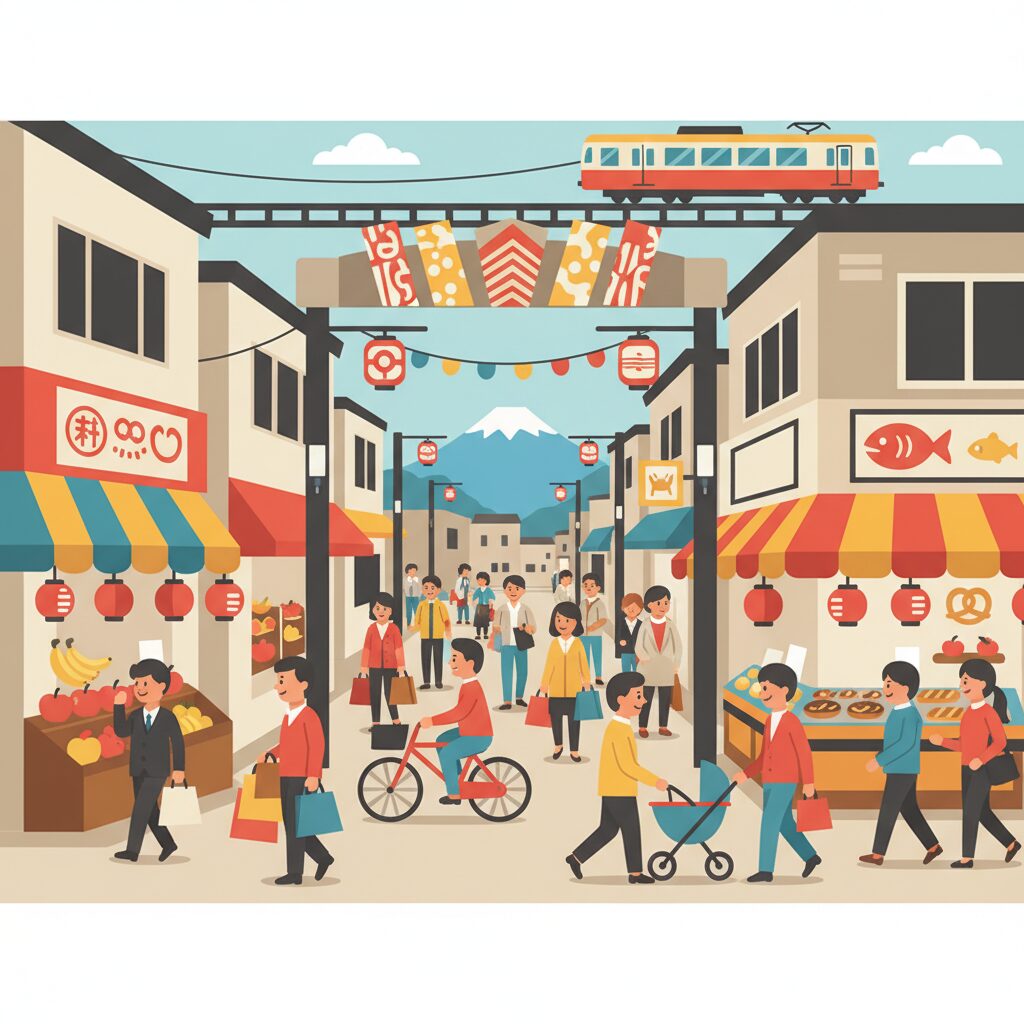
When I first moved to Osaka, I thought I understood Japan. I’d spent plenty of time in Tokyo, navigating the pristine, silent efficiency of its subway stations and the polished floors of its towering department stores. Japan, to me, was a world of quiet consideration and orderly lines. Then I walked into my neighborhood shotengai, a covered shopping arcade, on a Tuesday afternoon, and that entire understanding shattered into a million noisy, colorful, and deliciously chaotic pieces. It wasn’t just a street with shops. It was a sensory assault. A butcher in a blood-flecked apron was shouting about a sale on pork cutlets. An old woman was laughing, her voice a gravelly boom, as she haggled with a fishmonger over the price of mackerel. The air was thick with the smell of grilled eel, sweet soy sauce, and the deep, earthy funk of a pickle shop that had been there for eighty years. This, I quickly realized, was not Tokyo. This was the real Osaka, and the shotengai was its beating heart.
For anyone trying to understand what makes Osaka tick, what truly separates it from the rest of Japan, the journey begins here. Forget the slick, modern malls for a moment. They exist, of course, but they are soulless corridors of commerce compared to these living, breathing arteries of daily life. The shotengai is more than a place to buy your groceries; it’s the city’s open-air living room, its kitchen, and its community bulletin board all rolled into one. It’s where the unspoken rules of Osaka culture are on full display, and learning to navigate it is the first step in feeling like you truly belong here. So, let’s peel back the curtain on these vibrant, essential corridors and discover why they are the key to unlocking the soul of this city.
Amid the energetic buzz of the shotengai, you might also enjoy our guide to Osaka’s friendly communication style for making friends to discover how humor weaves into the city’s vibrant social fabric.
The Kitchen of the City
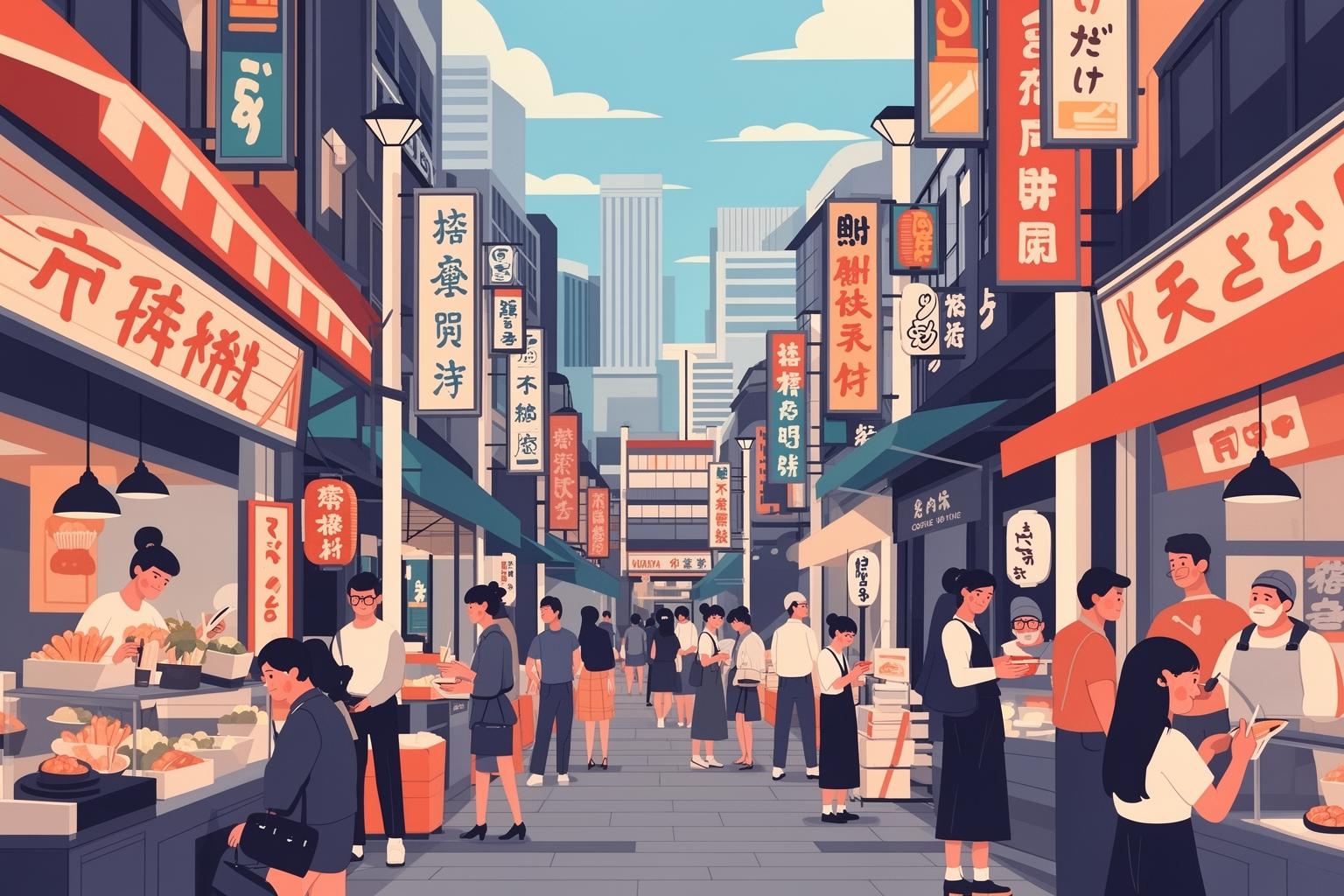
Before you even consider a supermarket, imagine the shotengai as the neighborhood’s shared kitchen pantry. This isn’t a place for a quick, efficient one-stop shop. Instead, it’s where you assemble a meal, bit by bit, through a series of conversations and connections. In a typical arcade, you won’t find a large, impersonal grocery store. Rather, you’ll encounter a collection of small, highly specialized vendors who have devoted their lives to a single craft. There’s the tofu vendor, his hands always moist, offering a dozen varieties of tofu, from firm momen for stir-fries to silky kinu that melts on your tongue. He’ll ask about your dinner plans before recommending the ideal block, perhaps even suggesting you try the fresh yuba (tofu skin) he made that very morning.
A few steps away, the salty, briny scent of the ocean fills the air. This is the fishmonger’s domain. The ice-filled styrofoam boxes showcase a vivid array of the day’s catch. The owner won’t just sell you fish; he’ll advise which one is best for grilling, which is perfect for sashimi today, and which you should simmer with daikon radish. He’ll scale, gut, and fillet it right before your eyes, his knife moving with a skillful, mesmerizing speed. Next door is the butcher, whose cleaver’s rhythmic thud provides a steady backdrop to the arcade’s lively atmosphere. He knows his regular customers by name—and likely their preferred cuts. Ask for ground pork, and he won’t hand you a plastic-wrapped package; he’ll take a fresh slab of pork and grind it just for you on the spot.
This highlights the core of the Osaka approach to food and everyday life. It isn’t about sterile convenience; it’s about expertise and human connection. Each purchase is a consultation with a knowledgeable artisan. You’re not merely a consumer; you’re a partner in the process of preparing dinner. This network of specialists—the fruit and vegetable stall with its impeccably seasonal produce, the tsukemono (pickle) shop with its vivid, pungent barrels, the tea merchant who offers samples of the latest green tea harvest—constitutes the foundation of the local food culture. It’s a system based on trust and daily interaction, far removed from the anonymous, pre-packaged experience of modern supermarket chains. This is why the food in an Osaka home often feels so lively; it is made up of ingredients handled by people who genuinely care about their craft.
A Symphony of Noise and Negotiation
The first thing a newcomer notices in an Osaka shotengai is the noise. It’s not background music; it’s the main attraction. Tokyo hums quietly with polite efficiency, while Osaka pulses with a high-decibel wave of lively interaction. The air is alive with overlapping calls from shopkeepers, a distinctive commercial vocabulary that’s both an invitation and a theatrical performance.
“Irasshai, irasshai!” (Welcome, welcome!) forms the continuous chorus, but the variations reveal the story. “Yasukushitoku de!” means “I’ll give you a good price!”—a classic Osaka opening line. “Moukarimakka?” (“Making any money?”) is a traditional merchant greeting, to which the usual, self-deprecating reply is “Bochi bochi denna” (“So-so”). This isn’t just empty noise; it’s the sound of a culture where commerce doubles as entertainment. Vendors aren’t merely selling; they are performing. Their loud calls, jokes, and exaggerated gestures all contribute to an atmosphere of energy and abundance.
This vibrant energy drives the spirit of negotiation. While you won’t be haggling over a 100-yen radish, the idea of securing a good deal, of feeling victorious, is deeply rooted in the Osaka mindset. It’s a friendly game, a dance. The ultimate prize is the omake—a little extra given for free. Buy a few apples, and the vendor might toss in another, slightly bruised one with a wink and a “Kore wa omake!” (This one’s on the house!). The extra apple’s monetary value isn’t the point—it’s a gesture of goodwill, signaling that a relationship has been established. It’s the shopkeeper’s way of saying, “I see you, I appreciate you, please come again.” This small act transforms a simple transaction into a moment of human connection, a cornerstone of life in Osaka.
Beyond the Big Names: Finding Your Local Arcade
Tourists flock to Shinsaibashi-suji or Dotonbori, massive arcades resembling consumerist theme parks. And while Tenjinbashi-suji, Japan’s longest shotengai, is an impressive commercial marathon, the true spirit of the city lies in smaller, unassuming neighborhood arcades tucked away from main roads in residential areas such as Tenma, Fukushima, or deep in the city’s southern parts.
These are places where time seems to have paused gracefully. Here, shops cater to the community’s genuine daily needs. There’s always a kissaten, an old-school coffee shop with worn velvet chairs, where elderly residents gather for their morning coffee, toast, and gossip, reading a physical newspaper from cover to cover. There’s a tiny stationery store, stacked to the ceiling with notebooks and pens, serving generations of local schoolchildren. You’ll find a small pharmacy where the pharmacist knows everyone’s ailments, and a slightly dusty clothing store offering what might be called “Osaka grandma chic”—lots of leopard print and comfortable, elastic-waist pants.
These local shotengai serve as an essential social safety net. Shopkeepers are the neighborhood’s eyes and ears. They know who recently had a baby, whose child is struggling in school, and which elderly resident hasn’t been seen for a few days. In a country with an aging population, this informal surveillance is invaluable. It’s a community-led support network built on daily, casual interactions. Walking through your local arcade isn’t just about shopping; it’s about checking in with your community. This dense fabric of weak social ties gives Osaka neighborhoods a grounded, resilient feel, sharply contrasting with the often anonymous and transient life in other major cities.
The Unspoken Rules of the Arcade
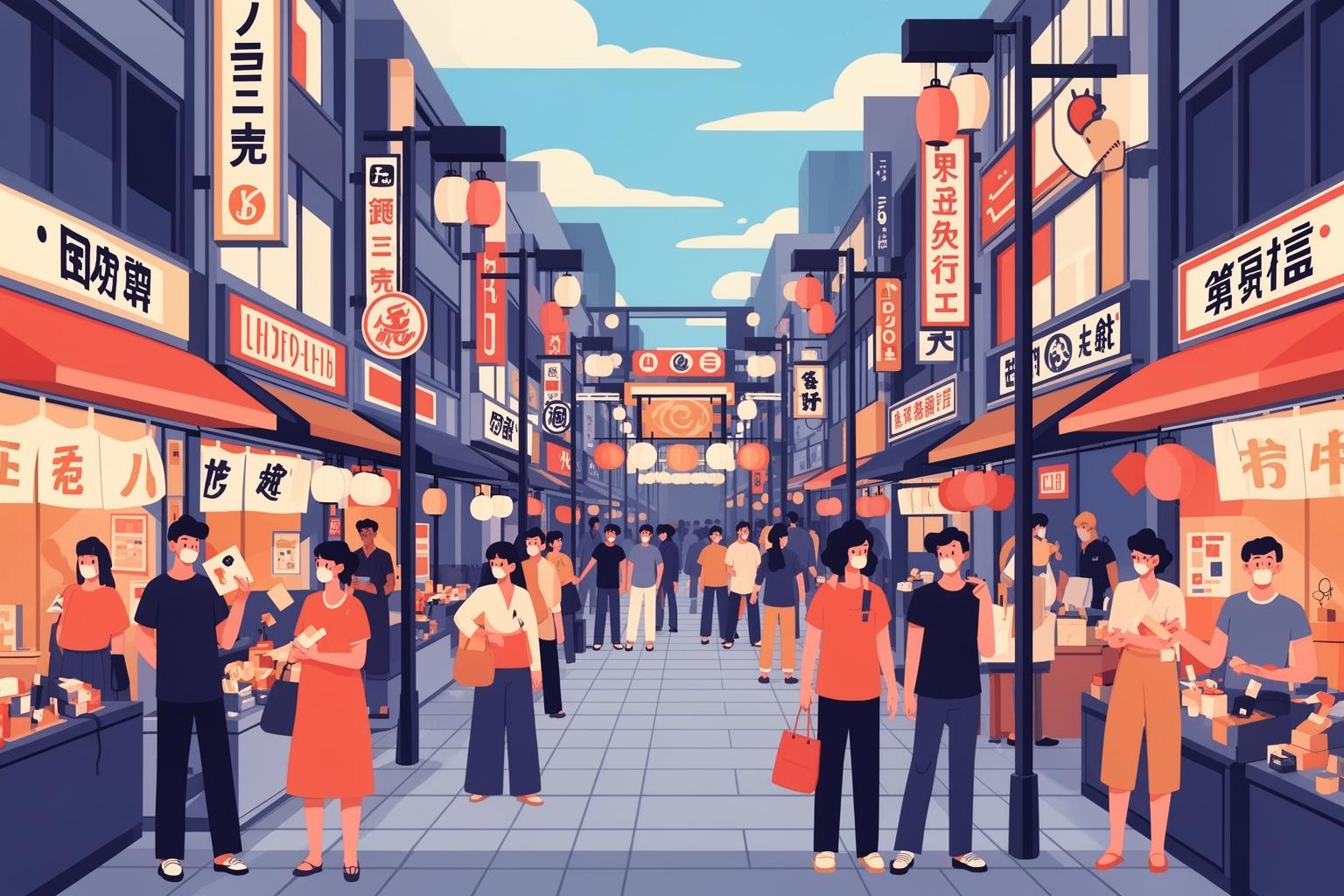
For a foreigner, entering this world can be intimidating. It’s loud, fast-paced, and social rules aren’t explicitly stated. However, they are straightforward and based on mutual acknowledgment. Here’s how to navigate it like a local.
Engage, Don’t Just Browse
In a Western supermarket, silently browsing while lost in your own thoughts is normal. In an Osaka shotengai, this can seem cold or distant. You don’t have to engage in deep conversations at every stall, but acknowledging the shopkeepers is essential. A simple “Konnichiwa” when you approach, a nod, or making eye contact is expected. The vendors are present and expect you to be as well. Silence is the exception, not the norm. The space is inherently interactive, and your participation, however small, helps keep it vibrant.
Conversation is a Tool
Not sure what something is? Ask. Unsure how to cook a particular vegetable? Ask. This isn’t considered bothersome; it’s a chance for the vendor to share their knowledge. Questions like “Kyou no osusume wa?” (What do you recommend today?) or “Kore, douやって taberu no?” (How do you eat this?) are encouraged. It shows respect for their craft and opens the door to an important human connection. The response will likely be enthusiastic, detailed, and might even come with a free, unsolicited tip on what else to make for dinner.
Understand the Rhythm
A shotengai has its own unique rhythm. It gradually wakes up mid-morning, hums along throughout the day, and then bursts into a controlled frenzy between 4 and 6 p.m. This is when everyone shops for dinner. It’s crowded, chaotic, and the best time to soak in the place’s raw energy. Conversely, many shops close early. This is not a 24/7 convenience culture. The shotengai works on a human schedule, meaning the shopkeepers need to go home, cook dinner, and rest. Understanding and respecting this rhythm is part of truly integrating into local life.
Why Tokyo Can’t Replicate the Shotengai Vibe
People frequently inquire about the tangible distinctions between Osaka and Tokyo, and the shotengai is one of the most apparent examples. Tokyo has its own counterparts, such as Yanaka Ginza or Ameya Yokocho, but these often feel more like curated tourist attractions or nostalgic throwbacks rather than vital, functioning elements of everyday life. Tokyo’s growth has been largely shaped by massive private railway companies that built their empires around train stations. Life is oriented vertically, within towering department stores, or horizontally, through vast, clean, and often sterile underground malls directly connected to the stations.
This design emphasizes efficiency and control. It is impressive in its own right, enabling millions of people to navigate the city with minimal friction. However, it also limits spontaneous human interaction. Osaka’s development followed a different path. As Japan’s historic merchant hub, its culture grew at street level. Commerce was face-to-face, conducted openly, and the city’s layout reflects this. The shotengai are a legacy of this history—extensive, organic, ground-level networks that evolved to serve the neighborhoods they traverse. They are messy, sometimes inconvenient, and delightfully inefficient in their emphasis on human-to-human contact.
This highlights the fundamental difference in the personalities of the two cities. Tokyo values harmony (wa), which often appears as a preference for smooth, predictable systems where no one is inconvenienced. Osaka values humanity (ninjo), embracing the messy, humorous, and sometimes loud reality of human relationships. A Tokyo department store clerk will offer flawless, polite, but distant service. An Osaka shotengai vendor will ask where you’re from, make a joke about your Japanese, and give your child a piece of candy. One represents a perfect system; the other is a lively, imperfect community. The shotengai serves as the stage on which that community performs its daily drama.
Not a Museum, But a Living, Breathing Organism
It’s easy to glance at the peeling paint on some of the older shops or the distinctly retro signage and assume the shotengai is a relic, a museum piece from a bygone era. But that would be a serious misconception. These arcades are not stuck in the past; they are vibrant, constantly evolving entities that mirror the shifting needs of their communities.
Look closely, and signs of renewal are everywhere. Beside an 80-year-old fishmonger, a young barista might have set up a specialty coffee stand, its sleek modern design providing a striking yet welcome contrast to the surrounding old-world charm. A traditional sweet shop could now be sharing a wall with a trendy bakery specializing in artisanal sourdough. Young entrepreneurs, priced out of more expensive commercial districts, are attracted to the shotengai for its affordable rent and built-in foot traffic. They bring fresh energy, new customers, and renewed life to these historic passageways.
The shotengai serves as a living measure of the neighborhood’s vitality. You can observe the challenges—the aging population mirrored by the presence of small clinics and pharmacies, and occasional closed storefronts. But you also witness resilience—the new families pushing strollers, community-organized festivals that draw everyone into the street, and the strong loyalty of residents who continue to shop there, not just for bargains, but for the sense of connection.
To live in Osaka and not embrace your local shotengai is to miss the essence of the city. It’s choosing to live superficially, opting for the sterile convenience of supermarket aisles over the rich, chaotic, and deeply human fabric of the arcade. When you step into that flood of sounds and smells, when you banter with the butcher and receive a little omake from the fruit seller, you’re not merely buying food. You’re participating in a century-old ritual. You’re plugging directly into the electric current of Osaka life, taking your first true step from being a visitor to becoming part of the neighborhood.