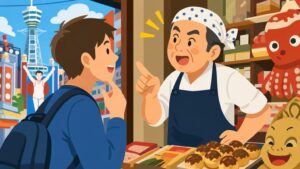
The first time it happened, I was completely lost. I was standing at a tiny takoyaki stall tucked away in the Tenjinbashisuji Shopping Street, the longest in Japan. The air was thick with the savory smell of grilled octopus and dashi batter. I pointed at the sizzling cast-iron pan and, in my best textbook Japanese, ordered a boat of eight. The old man behind the counter, with a weathered face and a mischievous glint in his eye, looked at my t-shirt—a brightly colored, slightly obnoxious thing I’d bought on a whim—and then looked me dead in the eye. He said, with a perfectly straight face, “For you? Two million yen.” I froze. My mind raced through every possible scenario. Was this a tourist trap? Was he being serious? Did I accidentally insult him? I mumbled an apology and started to back away, utterly confused. He burst out laughing, a deep, hearty sound, and slapped the counter. “Just kidding, kid! 500 yen.” He then handed me my takoyaki with an extra one thrown in for free, winked, and turned to the next customer.
That was my real introduction to Osaka. Not the castle, not the glittering signs of Dotonbori, but a five-second interaction that completely scrambled my understanding of Japanese social etiquette. In Tokyo, where I had spent some time before, conversations with shopkeepers were paragons of politeness—respectful, efficient, and predictable. This was… different. It was playful, personal, and a little bit chaotic. It felt less like a transaction and more like the start of a conversation, a verbal handshake disguised as a joke. I soon learned that this wasn’t an isolated incident. This playful, comedic sparring is the lifeblood of communication in Osaka. It’s the city’s secret language, its primary tool for breaking down barriers, and the single most important thing you need to understand if you want to move beyond being a visitor and truly connect with the people who call this vibrant city home. This guide is your decoder ring for that language, a deep dive into the art of Osaka’s comedic banter, and how you can join the fun to make friends and feel like a true local.
This playful energy extends beyond the streets, inviting you to explore local coworking spaces that double as creative community hubs in Osaka.
What in the World is Nori-Tsukkomi?
To grasp Osaka’s humor, you need to understand its basic structure. Forget complex linguistic theories; this humor is a rhythm deeply embedded in the local culture, much like the sound of the Shinkansen arriving at the station. At its core lies a concept from Japanese stand-up comedy, manzai, which has extended beyond the stage into everyday life. This dynamic centers on the roles of the boke and the tsukkomi.
Deconstructing the Comedic Duo
Imagine it as a conversational dance between two partners. First, there’s the boke. This is the funny man, the fool, the one who says something ridiculous, incorrect, or simply silly. They set up the joke. For example, they might point to the famous Glico Running Man sign in Dotonbori and ask, “Is that a famous marathon runner from my hometown?” They create a small, temporary break in reality.
Next is the tsukkomi. This is the straight man, the one who corrects the boke. Their role is to spot the absurdity and call it out, restoring order with a sharp, witty comeback. The tsukkomi would respond, “No, you idiot! That’s a candy advertisement! Were you born yesterday?” This reply serves as the punchline. Importantly, the tsukkomi‘s retort is not truly angry or insulting; it’s the expected, necessary conclusion of the joke. The sharpness of the comment is what makes it funny. Their interaction is fast, rhythmic, and cooperative. It’s a joint creation of a humorous moment, and Osakans excel at casting strangers into these roles spontaneously.
The Solo Art of Nori-Tsukkomi
While the two-person boke and tsukkomi setup is fundamental, Osaka’s daily life often features a more advanced, solo version called nori-tsukkomi. This is where things get especially interesting and highlight the locals’ quick wit. Nori means “to get on board” or “to go along with it.” So, in nori-tsukkomi, when someone takes on the boke role by saying something absurd, you first go along with them, embracing their ridiculous premise. Then, just as they think you agree, you hit them with the tsukkomi, pointing out the absurdity.
Let’s reconsider my takoyaki experience through this perspective. The vendor’s line, “For you? Two million yen,” was a classic boke—setting up a joke. My confused silence was just confusion. But a seasoned local would have delivered a perfect nori-tsukkomi. They might have replied: “Two million yen? Okay, deal! I’ll just sell my house first, is a check alright?” That’s the nori—enthusiastically going along with the outrageous price. Then, immediately following up with the tsukkomi: “Wait a minute! Are these octopus balls made of gold?! Just give me the regular ones, you cheapskate!” That quick exchange, lasting only seconds, would be seen as a brilliantly executed social performance, earning laughs and instant connection. It signals you’re clever, attentive, and ready to join the game. It’s a verbal sport, and everyone’s welcome to play.
The Unspoken Rules of Osaka Banter
Entering this world of comedic back-and-forth can feel intimidating. It seems like there are no rules, yet there are deep, unspoken codes that guide these interactions. Grasping them is essential to distinguish a friendly joke from a genuine insult, and it’s what transforms a smooth, laughter-filled exchange from an awkward misunderstanding.
It’s a Sign of Affection, Not Aggression
This is arguably the most important rule for any outsider to absorb. A tsukkomi might sound harsh at first. Words like “idiot,” “stupid,” or sharp commands might be part of the dialogue. Many non-locals, especially those used to more indirect communication, instinctively feel personally attacked. Are they mocking my clothes? My accent? My very being? The answer is almost always a firm no.
In Osaka, a playful jab indicates engagement. It’s a way of saying, “I see you. I’m comfortable enough with you to drop the formalities.” Silence or overly polite, generic replies can sometimes imply distance or disinterest. A sharp but smiling tsukkomi is a pull, an invitation to get closer. When the woman at the bakery says, “Buying another pastry? You’ll get fat!” she isn’t criticizing your diet. She’s treating you like a regular, a neighbor she feels free to tease. The right response isn’t offense but a witty comeback like, “It’s for energy! I have to walk all the way home, you know!” This shared laughter forges a bond that simple, polite transactions never could.
Reading the Room: When and Where to Joke
This playful banter isn’t a license to be cheeky in every circumstance. Context matters. You wouldn’t make a boke and tsukkomi joke while being seriously reprimanded by your boss or while a doctor explains a medical condition. The humor belongs to low-stakes, informal social settings.
Where does it flourish? The shotengai (local shopping arcade) is the prime arena for this sport. Shopkeepers have been sharpening their skills for generations. Izakayas and standing bars are another hotspot, where alcohol lowers inhibitions and strangers become temporary comedic partners. Even casual exchanges with neighbors, like commenting on the weather, can quickly turn into a friendly roast. A handy rule is to watch for the smile. If the person you’re speaking with has a twinkle in their eye and a slight grin, they’re likely tossing the conversational ball to you, waiting to see if you’ll join in. If their tone is flat and expression serious, it’s best to stick to standard polite Japanese.
The “Aho” vs. “Baka” Divide
Here’s a linguistic subtlety that exposes the cultural divide between the Kansai region (where Osaka is) and the Kanto region (home to Tokyo). Both aho and baka can be translated as “idiot” or “silly,” but their emotional tones differ greatly. In Tokyo and much of eastern Japan, baka is the common term. It may be used playfully but can also carry a sharp sting. Calling someone baka can be genuinely insulting depending on context and tone.
In Osaka, however, aho reigns supreme. And aho is almost always used affectionately. It’s the verbal equivalent of a playful nudge. When an Osakan calls you aho, they’re usually smiling. It’s the go-to word for a tsukkomi retort. It means, “You’re being silly, but you’re one of us.” On the other hand, calling an Osakan baka might fall flat. It sounds foreign, harsh, and genuinely offensive to their ears. It’s like using the wrong tool for the job. Mastering the light, airy, affectionate use of aho is a true sign you’re starting to grasp the heart of Osaka communication.
How to Participate (Even if You’re Not a Comedian)
Alright, so you grasp the theory. You can distinguish a boke from a tsukkomi. But how do you actually take the stage? The fear of saying the wrong thing is real, yet the good news is that the entry barrier is very low. Osakans value effort far more than perfection.
Starting with the Basics: The Power of Reaction
You don’t need to come up with a clever, witty line on your first try. The simplest way to join the fun is just to learn how to react. When a shopkeeper throws out a boke, the worst response is to stand there silently, confused. The best move is simply to acknowledge the joke.
A laugh is universal. A big, genuine laugh signals you got the intent, even if you lack the words to reply. A simple smile and nod work just as well. To take it up a notch, learn the ultimate Osaka reaction phrase: “Nande ya nen!” This literally means “Why?!” or “What the heck?!” but is used like “No way!” or “You’ve got to be kidding me!” It’s a perfect, all-purpose tsukkomi that requires no complicated grammar. When the takoyaki man says, “Two million yen,” a laughing “Nande ya nen!” is the perfect response. It shows you’re in on the joke and completes the comedic exchange.
Your First Attempt at a Tsukkomi
Once you feel confident reacting, you can try delivering your own simple tsukkomi. The key is to keep it straightforward and rely on tone. The words matter less than the playful energy you bring. When someone makes an obvious exaggeration, a smiling “Uso!” (meaning “Liar!” or “No way!”) is a fantastic, easy comeback. If a clothing store clerk jokingly tells you a plain white t-shirt costs 50,000 yen, you can laugh and say “Takai!” (“Expensive!”). These simple replies, delivered with a grin, show you’re participating. You’re no longer just an audience member; you’re part of the act. Your tone is your safety net—so long as it’s light and friendly, your attempt will be warmly received.
Embracing the Boke: The Easiest Role for a Foreigner
Here’s a secret advantage for non-Japanese people in Osaka: you are perfectly suited to be the boke. You don’t even have to try. As a foreigner, you’re bound to make small mistakes with language, customs, or cultural norms. In many places, this might cause embarrassment or awkwardness. In Osaka, it’s a golden chance for connection.
When you accidentally use the wrong word or misread a sign, don’t shrink back in shame. Own it. Laugh at yourself. This self-deprecating attitude is a huge green light for Osakans. They’ll jump in with a friendly, gentle tsukkomi, and suddenly, your mistake turns into a shared moment of humor. For example, if you try to open a door that clearly says “push” by pulling it and struggle for a bit, someone might call out, “Other way, aho!” with a big grin. This isn’t an insult; it’s a moment of bonding. By being a willing and cheerful boke, you invite the city to engage with you in its favorite language.
Osaka vs. Tokyo: A Tale of Two Conversations
The uniqueness of Osaka’s communication style is best appreciated when compared to Tokyo’s. It’s not about one being superior to the other; rather, it reflects two cities with distinct histories that have developed entirely different ways of interacting.
The Transactional vs. The Relational
A typical service encounter in Tokyo exemplifies efficiency and politeness. It’s neat, quick, and flawlessly executed. You walk into a convenience store, place your items on the counter, pay, receive your change and bag with a polite bow, and then leave. The interaction is flawless but fundamentally transactional, aimed solely at completing a task.
Now, picture the same situation in Osaka. You put your items on the counter, and the cashier might say, “Oh, buying a lot of snacks today! Planning a party?” This isn’t part of any script; it’s an opening. It’s an effort to transform a simple transaction into a brief moment of human connection. The goal isn’t merely to sell snacks; it’s to create a pleasant, memorable interaction. The conversation itself becomes part of the service. This relational style characterizes Osaka, where people value the relationship, the feeling, and the shared laugh, often integrating it seamlessly into the task itself.
Why the Difference? A Historical Perspective
This contrast isn’t random; it’s embedded in the very essence of each city. Tokyo, historically known as Edo, was the hub of samurai and political power. Society was structured around a strict hierarchy, and communication was typically formal, precise, and respectful of rank. This tradition of formality and public reserve remains apparent today.
Osaka, in contrast, was Japan’s merchant capital, famously known as tenka no daidokoro (the nation’s kitchen). Its strength lay in commerce rather than samurai warrior culture. To thrive as a merchant, one had to be quick-witted, persuasive, and skilled at building relationships with customers and suppliers. Haggling, joking, and straight-talking were essential business tools. This practical, results-driven, and deeply human style of communication shaped the city’s culture. Humor wasn’t just for entertainment; it was a business tactic that has since grown into a social philosophy.
Daily Life Immersed in Humor
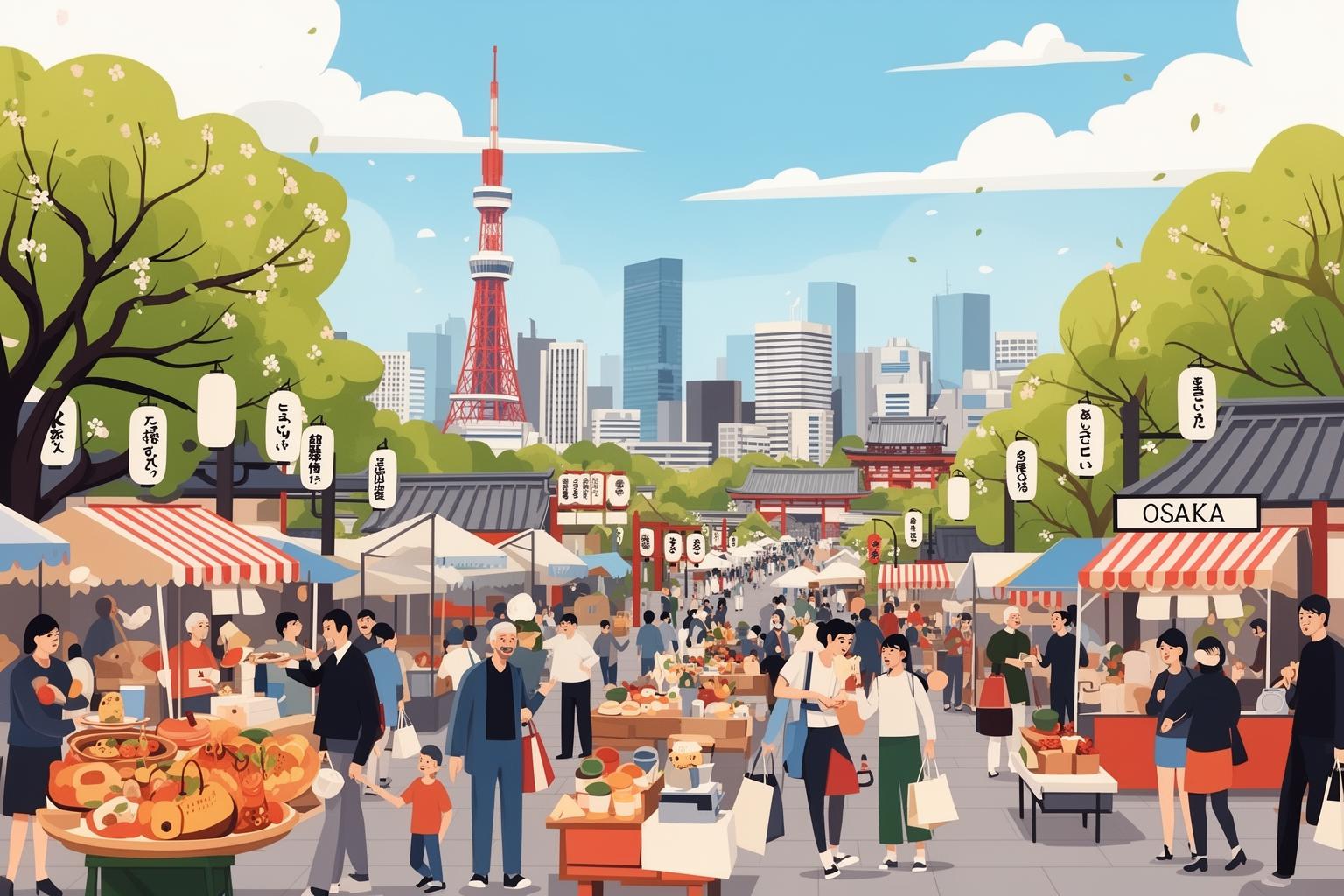
Once you attune your senses to this frequency of banter, you begin to notice it everywhere. It’s the constant, humming background noise of the city—a soundtrack of chuckles and witty retorts that turns daily life from feeling anonymous into something resembling a close-knit community.
A typical day is peppered with these small moments. In the morning, you might stop by your local bakery, where the owner holds up a slightly burnt pastry and tries to sell it to you as a “special smoky edition.” In the afternoon, while trying on a jacket, the shopkeeper might dramatically claim it makes you look like a movie star, an obvious exaggeration that invites a playful comeback. In the evening, at a standing bar in Kyobashi, you could overhear a group of strangers teasing each other about their favorite baseball teams, their banter flowing as freely as the beer.
This is what people mean when they say “Osaka people are friendly.” It’s not a passive, smiling friendliness. It’s an active, engaging warmth. They express their kindness by involving you, teasing you, and inviting you into a brief, shared performance. This steady stream of lighthearted interactions breaks down the chill of a big city, making you feel noticed and connected—even when you’re simply out running errands.
The Payoff: From Stranger to Neighbor
Initially, Osaka’s style of communication can feel like a test you’re perpetually failing. It can be loud, direct, and bewildering. However, once you grasp the unwritten rules—that it’s all rooted in affection and a desire to connect—it becomes an open invitation.
Learning to spot a boke and respond with a smile or a simple tsukkomi is more than just a linguistic trick. It signals that you want to be more than a tourist or a temporary resident. You’re showing a willingness to engage with the city on its own terms. The rewards are significant. That takoyaki vendor who joked with you will remember you next time you visit. The shopkeeper you shared a laugh with will greet you like an old friend. These small, humorous interactions are the foundation of community.
So, don’t hesitate to step into the ring. Don’t stress about delivering the perfect line. Your awkward Japanese, your puzzled look, your failed joke attempt—all are valuable contributions. In Osaka, a failed joke can be just as funny as a successful one, and the effort is always appreciated. Because in this city, a shared laugh is the shortest distance between two people, the quickest way to turn a stranger into a neighbor, and a neighbor into a friend.