The digital nomad’s curse is the endless search for the perfect third space. You flee the sterile silence of your apartment, only to land in the clatter and corporate hum of a chain coffee shop. The Wi-Fi is fast, the coffee is predictable, but the soul is nowhere to be found. It’s a global problem, but in Japan, the contrast feels sharper. You’re surrounded by centuries of aesthetic tradition, yet you’re typing away under the same fluorescent lights you’d find in Seattle or Stockholm. Then, someone whispers a name: Nakazakicho. They tell you it’s “right next to Umeda,” which sounds like a contradiction. Umeda is Osaka’s glistening, hyper-modern heart, a concrete and steel canyon of commerce. How could anything different survive in its shadow?
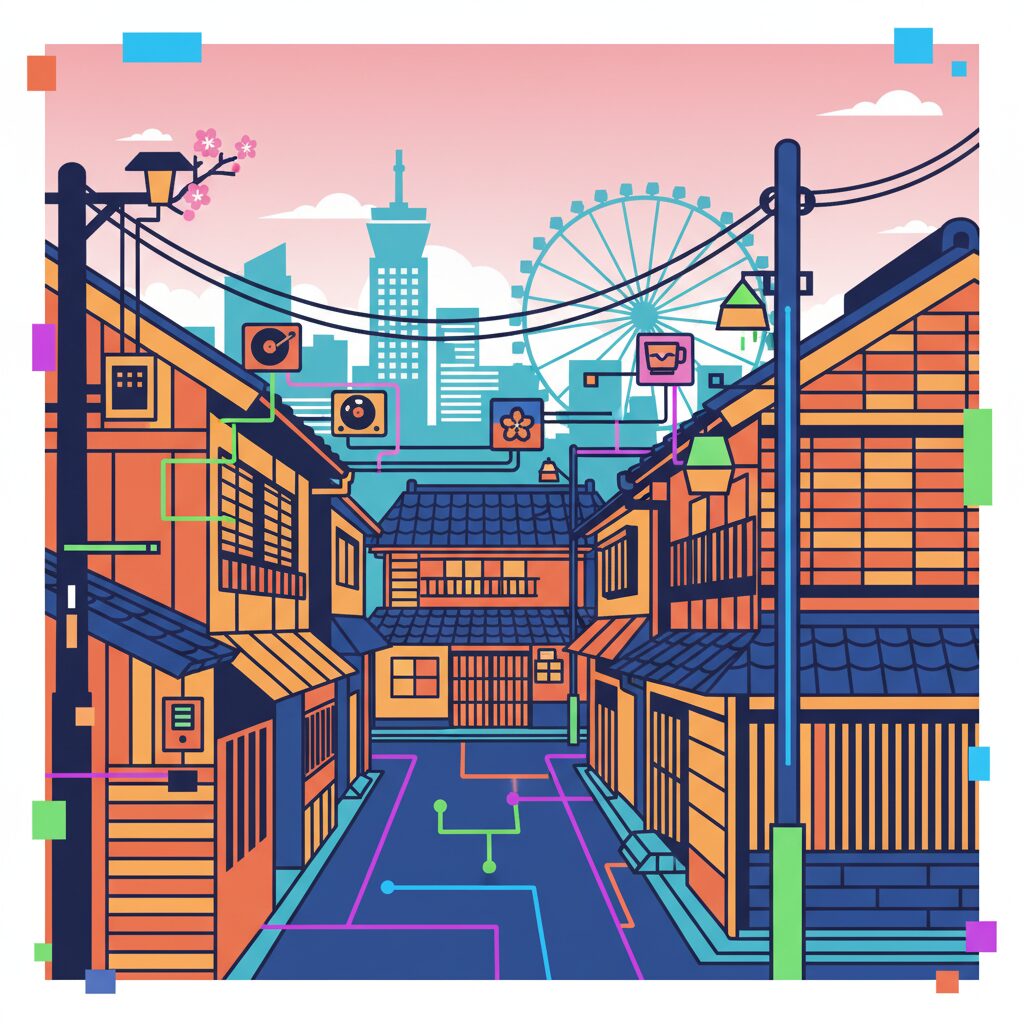
That question is the key to understanding Osaka. To get to Nakazakicho, you walk past the department stores, cross one major road, and suddenly, the world dissolves. The skyscrapers vanish from your peripheral vision, replaced by a low-slung skyline of weathered wooden houses and tangled telephone wires. The air grows quiet, save for the distant rumble of the trains and the clinking of a wind chime. This isn’t a theme park or a preserved district; it’s a living, breathing neighborhood that somehow missed the memo on 21st-century redevelopment. For a remote worker, it’s a goldmine of renovated kominka cafes, creative studios, and vintage shops. But for anyone trying to decipher the city’s DNA, Nakazakicho is the Rosetta Stone. It’s here, in these quiet alleys, that the unspoken rules of Osaka life—its pragmatism, its stubborn individuality, and its deep-seated suspicion of anything too polished—come into sharp focus.
Yet Osaka’s multifaceted allure extends beyond its historic alleys, inviting visitors to explore the vibrant shotengai social scene where casual banter blossoms into genuine connections.
The Umeda Paradox: Chaos Thriving Beside Corporate Order
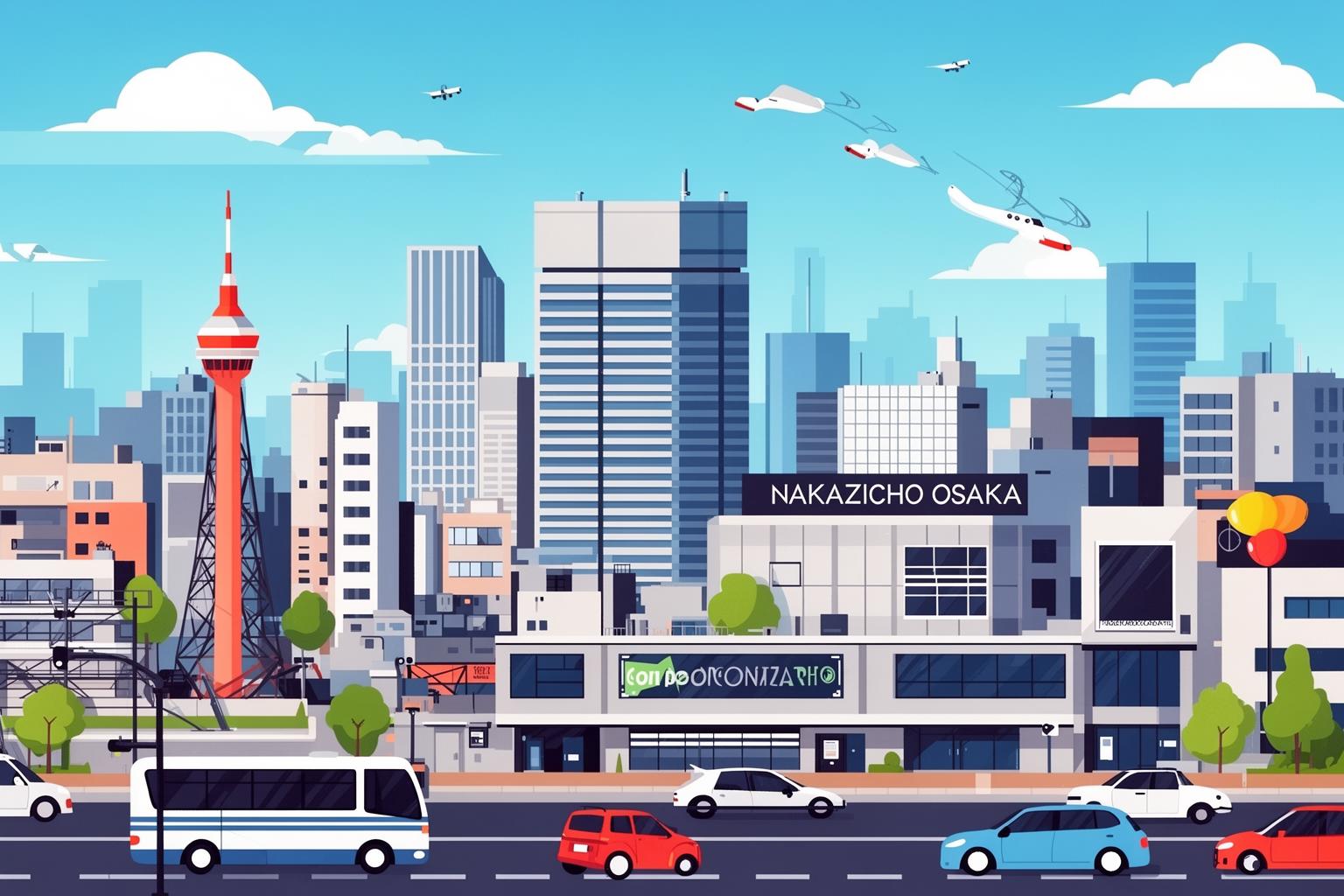
First, you have to admire the sheer boldness of Nakazakicho’s location. It’s just a five-minute walk from HEP FIVE, a mall topped with a giant red Ferris wheel. Ten minutes away stands the Umeda Sky Building, a testament to futuristic architecture. Streams of people pour out of JR Osaka Station, a tide of business suits and shopping bags moving deliberately through a landscape of polished granite and digital billboards. Nakazakicho, by contrast, is an island of calm in that flow, a neighborhood tuned to an entirely different rhythm.
This stark physical contrast reflects a fundamental Osaka mindset. Whereas Tokyo often feels like it erases its past to pave the way for its future—crafting distinct, carefully curated cool zones like Daikanyama or Shimokitazawa—Osaka simply lets things exist. There was no grand plan to shape a “retro artists’ quarter.” Nakazakicho exists because it largely escaped WWII bombings and was neglected by developers for decades. The buildings were old, rents were low, and practical creatives saw their chance. This organic, almost accidental development is quintessentially Osaka. The city’s merchant spirit understands value: why demolish a perfectly functional, if slightly crooked, building when you can set up a coffee roaster in its front room?
That contrast produces a striking but beautiful transition. One moment you’re surrounded by automated ticket gates and luxury brands; the next, you’re threading through an alley so narrow you must turn sideways to let a bicycle pass. The closeness of the hyper-modern and the deeply traditional isn’t experienced as a clash. It’s simply how things are. Osakans possess a unique ability to embrace two conflicting ideas simultaneously: a passion for vibrant commerce alongside a deep appreciation for the small, the personal, and the fiercely independent. Umeda is for making money; Nakazakicho is for living life.
Deconstructing the Kominka Cafe: More Than Just Old Wood
Step inside any of the dozens of tiny cafes tucked away in Nakazakicho’s labyrinth, and you enter a masterclass in the Osaka philosophy of aesthetics and business. These are kominka—traditional wooden houses, often over a century old, that have been given a new lease on life. However, this is not the pristine, museum-quality restoration you might encounter in Kyoto. The renovation is typically a visible, ongoing process.
The ‘Mottainai’ Mindset in Action
The core principle here is mottainai, that deeply Japanese sense of regret over waste. But in Osaka, it’s less a gentle philosophy and more a gritty, practical directive: Don’t throw it away if you can repair it or repurpose it. The outcome is an aesthetic born from necessity, not from a curated mood board.
Inside a cafe, you’ll notice exposed ceiling beams, darkened by age and smoke. The original earthen walls might remain mostly intact, patched here and there with fresh plaster. The furniture is a charming mix of mismatched pieces—a Showa-era velvet chair beside a school stool, a Formica-topped table from the 60s resting on a tatami mat floor. Nothing is perfect, and that’s exactly the point. The aim isn’t to create a flawless historical replica. It’s to craft a comfortable, functional space that honors the building’s history without being confined by it. This stands in stark contrast to Tokyo, where appearance and branding dominate. In Nakazakicho, the essence—the quality of the coffee, the warmth of the atmosphere—matters far more than the polish of the presentation. It conveys a quiet confidence: “What we offer is good enough. We don’t need fancy packaging.”
The Unspoken Wi-Fi Etiquette
Now, the remote worker’s million-yen question: Can you actually get any work done here? The answer is a classic Osaka “maybe, it depends.” This isn’t a culture of big signs and lengthy rule lists. You won’t see a “Laptop Users Welcome” banner. Instead, you have to read the air—a skill essential when navigating daily life in Japan, but especially crucial here.
Many cafes are tiny, perhaps seating only eight people. The owner is often a sole employee, carefully preparing pour-over coffee one cup at a time. In this setting, pulling out a 15-inch laptop and a tangle of chargers feels intrusive. The space is designed for quiet conversation, reading, or losing an hour just gazing through a wavy glass window. Other cafes, slightly larger, may have a small handwritten sign displaying the Wi-Fi password. This is a subtle invitation. But even then, there’s an unspoken agreement. You order regularly. You keep your voice low. You don’t occupy a four-person table alone during the lunch rush. You are a guest in what feels like a private home, and you behave accordingly.
This approach differs from the more transactional cafe culture in other cities, including parts of Tokyo, where dedicated co-working cafes have explicit policies and pricing. In Nakazakicho, the relationship is personal. You’re not simply buying Wi-Fi access; you’re buying into the venue’s atmosphere. Lingering for three hours over a single 500-yen coffee is the height of social faux pas. The rule of thumb is to gauge the situation. If the owner is chatty and the vibe relaxed, you’re probably fine. But if the mood is quiet and intimate, it’s better to leave your laptop packed away and just savor the coffee. This fosters a mindfulness that might hinder productivity but encourages creativity.
The People of the Alleys: Artists, Shopkeepers, and Accidental Entrepreneurs
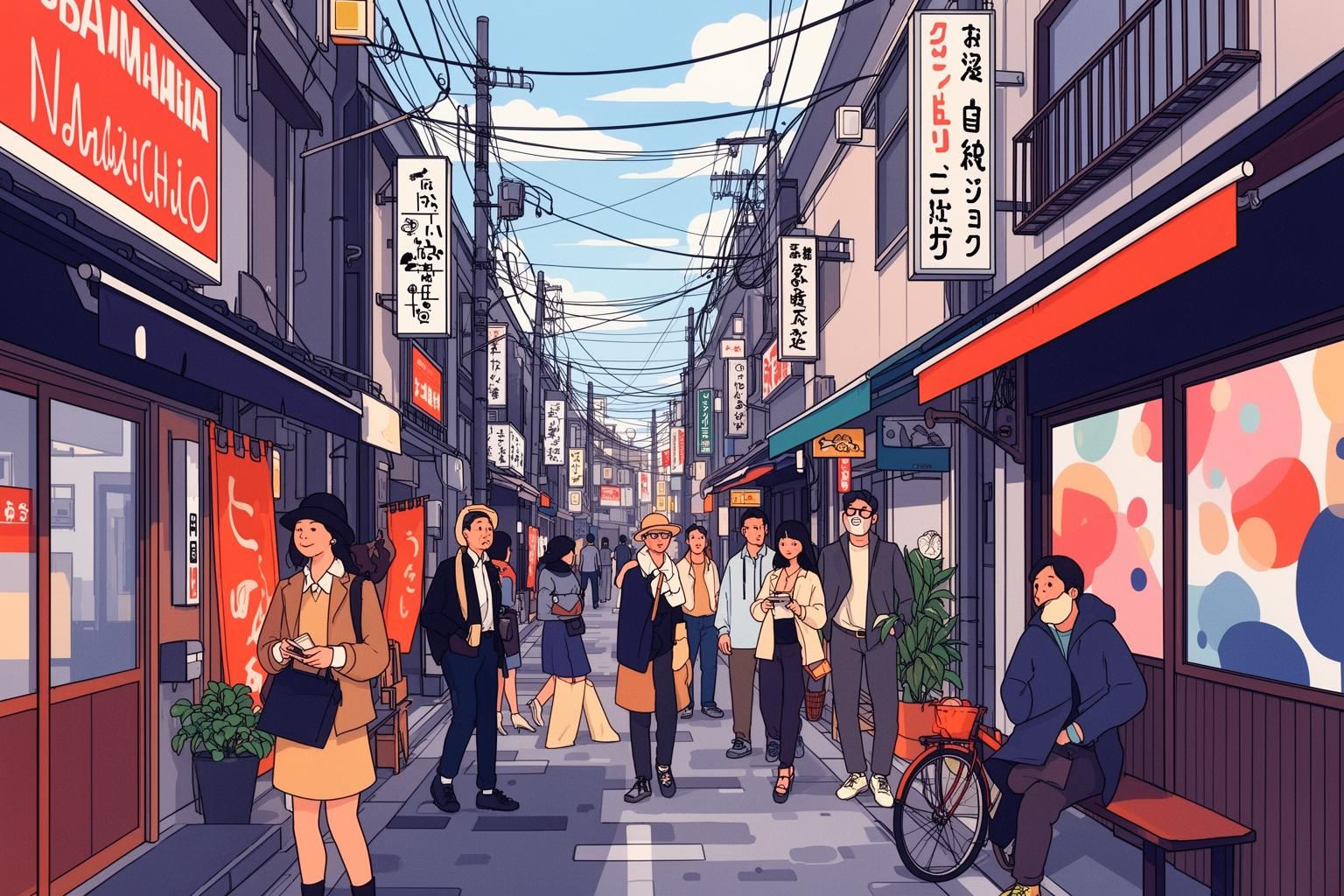
To truly understand Nakazakicho, you need to understand the people behind its shops. They embody Osaka’s entrepreneurial spirit—a spirit that values innovative ideas and a strong work ethic over prestigious degrees or large business loans.
The ‘Do It Yourself’ Spirit
Many shop owners are not experienced restaurateurs. They might be photographers, painters, musicians, vintage clothing collectors, or simply individuals enchanted by a dilapidated old house and a vision. They taught themselves plastering through YouTube tutorials, sanded and stained the floors by hand, and crafted counters from reclaimed wood salvaged from buildings slated for demolition. This DIY ethos is fundamental to the neighborhood’s identity.
In Osaka, starting a small business feels more accessible. The pressure for perfection is reduced. The focus is on starting, opening the doors, and refining things along the way. This stands in contrast to the more cautious mindset found elsewhere. Osakans often say, “Let’s give it a try and see what happens.” This attitude turns the neighborhood into a collection of passion projects. Shops represent more than commerce; they are extensions of the owners’ personalities and interests. Visitors aren’t just customers—they are guests in the owners’ personal worlds.
Conversation as Commerce
This brings us to another key aspect of daily life here: the merging of commerce and community. Don’t be surprised if a cafe owner asks about your work or where you’re from. This isn’t rehearsed politeness; it’s genuine curiosity.
This is where the stereotype of “friendly Osaka” holds true. The friendliness goes beyond being loud or outgoing—it’s a readiness to connect on a human level. In a small Nakazakicho cafe, you are not just an anonymous consumer but a person sharing a space with another. Regular customers are greeted by name, conversations emerge between tables, and the owner might suggest a nearby gallery or a friend’s vintage store.
For foreigners, this can be exceptionally welcoming. It offers an authentic gateway into the community. In a sprawling city like Osaka, discovering these intimate pockets of human connection is what makes it truly feel like home. It serves as a reminder that, at its core, commerce has always been about building relationships.
Navigating the Labyrinth: A Guide for the Uninitiated Remote Worker
Finding your ideal remote work spot in Nakazakicho isn’t about relying on a blog listing the “Top 5 Cafes.” It’s an experience of exploration and discovery. The neighborhood rewards those who take the time to wander.
Finding Your Spot: The Art of Wandering
The best places rarely sit on the main, slightly wider streets. They’re hidden away in alleys that seem like dead ends. Some have no sign, only a simple noren curtain over the door or a lone potted plant signaling a public establishment. Google Maps will guide you to the right block, but the last 20 meters are yours to navigate. You need to engage your senses. Follow the subtle aroma of roasting coffee. Listen for the soft sound of a jazz record playing behind a sliding door. Spot the warm glow of a single lightbulb in a window.
This process of getting lost and discovering something special is a metaphor for understanding Osaka itself. The city’s treasures aren’t always showcased on billboards. Its true character lives in the backstreets, the covered shopping arcades, and tiny standing-only bars. You have to be willing to stray from the planned path.
What to Expect (and What Not To)
To fully enjoy Nakazakicho as a remote worker, you need to adjust your expectations. This is not a Silicon Valley tech campus.
- Expect: Cash-only payments (the ATM is a bit of a trek). Quirky, unpredictable hours; some spots don’t open until 2 PM. Limited seating and even less personal space. Superb, carefully crafted coffee, tea, or homemade cake. An atmosphere so rich and unique you could bottle it.
- Don’t Expect: Power outlets at every seat (or at any seat). Lightning-fast, enterprise-grade Wi-Fi. Large tables for spreading out your work. Standardized, impersonal service. Uniformity in any form.
This is the fundamental trade-off of Nakazakicho. You trade the seamless convenience of the corporate world for character, authenticity, and a strong sense of place. It’s a choice that encourages you to slow down, be more deliberate, and appreciate the imperfections that make a place—and a city—truly unforgettable.
Beyond the Cafe: The Creative Ecosystem
It would be a mistake to view Nakazakicho as merely a collection of cafes. It is a complete, self-sustaining ecosystem of creativity. The cafes serve as community hubs, the neighborhood’s living rooms, surrounded by a dense network of other small, independent ventures.
As you explore, you’ll discover vintage clothing stores where owners curate every piece with an archivist’s dedication. You’ll come across tiny galleries in converted storerooms, showcasing local artists’ work. There are bookstores focused on a single genre, leatherworkers crafting bags in open-front workshops, and shops selling handmade ceramics that embrace their imperfections. These businesses all support one another. The cafe owner wears a shirt from the vintage shop next door. The gallery owner posts flyers for a concert at a nearby live house. The potter supplies cups for the new coffee stand down the alley.
This is the old merchant spirit of Osaka, reborn through creativity. It’s a community grounded in mutual support and a shared love for craft. As a remote worker, you can tap into this energy. Your workday isn’t limited to a single screen. Your breaks become small adventures—a quick browse through a rack of 1970s jackets, a five-minute chat with a photographer about their latest exhibition. What might be mundane work transforms into a day filled with cultural immersion.
Why Nakazakicho Explains Osaka
Ultimately, Nakazakicho is more than a charming neighborhood. It stands as a strong declaration of Osaka’s identity. In an era of relentless globalization and homogenization, where city centers worldwide are starting to look alarmingly alike, Nakazakicho serves as a determined act of defiance.
It challenges the notion that new is inherently better than old. It opposes the idea that efficiency trumps character. It pushes back against corporate pressures to expand, franchise, and smooth out rough edges until all uniqueness disappears. This neighborhood captures the essence of Osaka: practical, unpretentious, fiercely independent, and deeply valuing the human touch.
For a foreigner living here, it is an essential lesson. It encourages you to look beyond the loud, brash stereotypes of the city. Osaka is not just Dotonbori’s neon lights or the endless quest for the perfect takoyaki. It is also this: a quiet conversation over a carefully brewed coffee, in a room that has stood for a century, in an alley that refuses to fade away. For a remote worker, Nakazakicho provides a spot to plug in your laptop. But for anyone seeking to understand the soul of this city, it offers a place to connect with its heart.