You’ve heard the word, right? Kuidaore. It’s plastered on souvenirs, shouted from restaurant storefronts in Dotonbori, and offered up as the one-word explanation for Osaka’s entire identity. The standard translation is something dramatic, like “to eat until you fall into financial ruin.” It conjures images of tourists stumbling down neon-lit streets, bellies full of takoyaki and okonomiyaki, pockets empty. It’s a fun, flashy concept, a perfect slogan for Japan’s unofficial culinary capital. But let’s be real. Do the three million people living here actually spend their days eating themselves into bankruptcy? Is daily life in Osaka one long, non-stop food festival? That’s the postcard version. The reality is far more interesting, more practical, and much more ingrained into the city’s soul. Kuidaore isn’t a tourist activity; it’s a local operating system. It’s a philosophy that dictates not just a celebratory feast, but the quiet, everyday choices of where to grab a coffee, what to pack for lunch, and which supermarket has the best deals on tofu. It’s less about gluttony and more about an unshakeable, deeply held belief in value. To understand Osaka, you have to understand that here, a mediocre meal isn’t just a disappointment—it’s a personal offense. This mindset shapes everything, from the city’s layout to its residents’ personalities. So let’s push past the caricature of the Glico Running Man and find out what kuidaore truly means on a Tuesday morning, a Wednesday lunchtime, and a Friday night for the people who call this city home.
This everyday philosophy isn’t limited to dining habits but also permeates all corners of local life, as illustrated by the Nakazakicho code that deciphers the deeper urban pulse of Osaka.
Deconstructing ‘Kuidaore’: It’s Not About How Much, but How Well

The flashy translation of kuidaore captures the spirit to some extent but overlooks the core mechanism. The true driving force behind Osaka’s food culture isn’t the desire for sheer quantity, but an obsession with a concept locals know intimately: kosupa. This Japanese portmanteau of “cost performance” is elevated to a revered art form in Osaka. This is the genuine essence of kuidaore.
The Gospel of ‘Cost Performance’
Kosupa isn’t about cheapness—that’s easy. It’s about maximizing the return on every yen spent. The formula is straightforward: exceptional quality, great taste, and ample portion size must far exceed the price. A 15,000 yen meal can embody fantastic kosupa if it offers an unforgettable, top-tier experience. Conversely, a 400 yen bowl of udon can have poor kosupa if the noodles are mushy and the broth lacks flavor. This relentless pursuit of value sets Osaka apart from other cities, especially Tokyo. In Tokyo, you might pay extra for a restaurant’s name, trendy decor, or fashionable location. An Osakan scoffs at that. Here, the food takes center stage, while everything else plays a supporting role. If a restaurant charges a premium, it better deliver a transcendent culinary experience or it won’t endure. This principle is democratic, applying to everything from a humble korokke (croquette) at the butcher to a fine sushi dinner. Local pride isn’t about spending lavishly, but about uncovering hidden gems—the tiny standing bar offering fatty tuna for 300 yen, or the family-run diner whose lunch set could feed a small army for less than the price of a coffee in Tokyo. This daily treasure hunt defines the city’s palate.
The Unspoken Rule: Never Settle for ‘Maa, Ii ka’ (Oh, Well, This is Fine)
Throughout much of Japan, the social value of wa (harmony) might lead someone to politely accept a mediocre meal without fuss. You might hear a non-committal “maa, ii ka,” meaning “Oh well, it’s fine, I guess.” That phrase is poison in Osaka. Here, there’s an unspoken, collective agreement that life’s too short for boring food. Settling for mediocrity betrays the kuidaore spirit. This fosters an intense, almost Darwinian, competition among restaurants. A new ramen shop can’t simply be good; it must be exceptional to survive. A local coffee shop can’t just serve decent coffee; it needs to give people a reason to bypass three other cafes to get there. This pressure explains why you can wander into an unmarked eatery down a forgotten alley in a quiet residential district like Tenma or Fukushima and have one of the best meals of your life. The quality baseline is higher because customers refuse to accept anything less. You’ll hear it in conversations. Friends don’t just ask where you ate; they demand a detailed report. Was the dashi broth aromatic? Was the rice perfectly cooked? Was the price justified? A discussion about a slightly over-fried piece of tempura can turn into a passionate ten-minute monologue—not out of anger, but from a deep, personal devotion to the integrity of a good meal.
The Rhythm of an Osaka Stomach: A Day in the Culinary Life
So how does this philosophy unfold from morning until night? The daily eating habits of an Osaka local exemplify well-calculated, value-focused choices. It’s a lifestyle rhythm governed by the stomach and the wallet, perfectly balanced.
Morning: The Kissaten Culture and the ‘Morning Service’
While Tokyo mornings might revolve around quick convenience store coffee and onigiri on the go, Osaka begins its day at a more relaxed pace, often in a local kissaten (traditional coffee shop). The tradition of the “Morning Service” or simply “Morning” perfectly illustrates kuidaore in practice. The idea is simple yet brilliant: order a cup of coffee (usually between 400-500 yen), and a complimentary breakfast arrives. We’re not talking about a meager biscuit, but a thick slice of fluffy Japanese toast, a hard-boiled egg, and often a small serving of yogurt or a side salad. It’s a full, satisfying meal for the cost of just one drink. This isn’t a gimmick; it’s a routine business practice and a daily habit for many office workers, retirees, and freelancers. It’s a place to read the newspaper, chat with the owner, and prepare for the day without overspending. It’s both practical and communal, embodying the essence of kosupa.
Lunchtime: The 500-Yen Battlefield
By noon, Osaka’s business districts transform into a fierce battleground for the best lunch deals. The 500-yen coin, the “one coin,” reigns supreme. Office workers pour out of their buildings with a clear mission: secure the most delicious, filling, and affordable lunch available. The competition is intense. Restaurants display daily specials on chalkboards, each vying for attention. For 500 yen, you can enjoy a full teishoku set meal: a main dish like grilled fish or ginger pork, a bowl of rice, steaming miso soup, and pickles. You can find huge servings of kitsune udon, hearty curry rice, or generous portions of fried chicken. Picking a lunch spot is far from casual; it’s a strategic choice. People have their trusted favorites, places known for delivering consistent quality and value. Many will happily walk ten minutes past dozens of other options to reach that one reliable eatery. This daily migration reflects the local refusal to settle for convenience over satisfaction.
Evening: From Standing Bars to Neighborhood Izakayas
Evenings in Osaka often start at a tachinomi, or standing bar. These spots aren’t merely for quick, inexpensive drinks—they’re centers of affordable, high-quality dining. Found clustered near train stations and hidden in shopping arcades, they are filled with people heading home from work. For a few hundred yen per plate, you can enjoy expertly prepared dishes: fresh sashimi, simmered daikon radish, or crunchy tempura. Menus tend to be small and rotate daily based on market-fresh ingredients. Standing shoulder-to-shoulder with strangers, a temporary community forms, united by a love of good food and drink. This is an easy, low-barrier way to eat well. It contrasts with the sometimes more formal, pricier izakayas you might find elsewhere. In Osaka, a fantastic meal and a cold beer are always within simple, affordable reach. The true heart of the evening, however, lies in the neighborhood restaurants. Deep in residential quarters and local shotengai (covered shopping streets), small family-run venues serve the community. These places truly embody the kuidaore spirit, offering honest, tasty food at prices that keep locals coming back night after night.
Misconceptions and Realities: What Foreigners Get Wrong

The kuidaore slogan is so influential that it has fostered a few persistent stereotypes. For those living here, it’s essential to look beyond the tourist-friendly image and grasp the more complex reality.
Misconception 1: Osaka People Only Eat ‘Konamon’ (Flour-Based Foods)
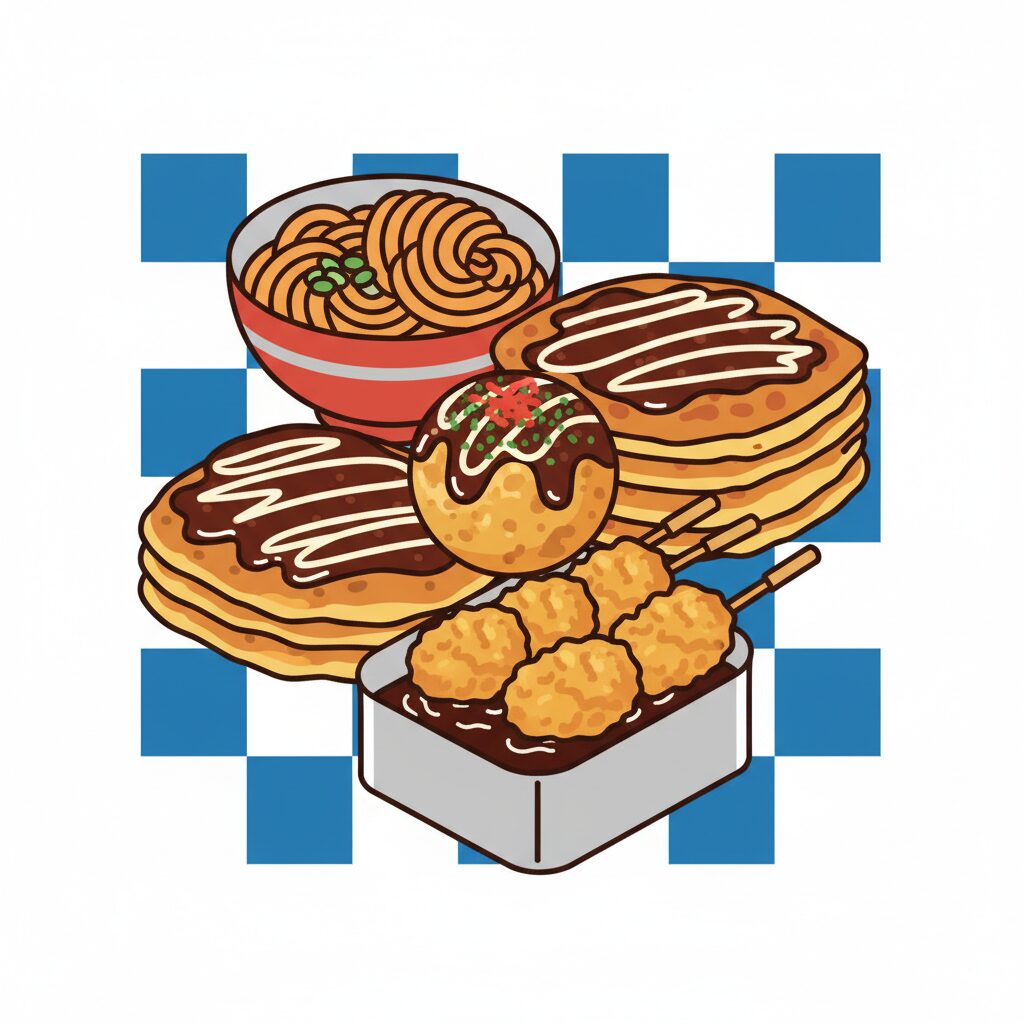
Ask a tourist to name Osaka foods, and they’ll mention takoyaki, okonomiyaki, and kushikatsu. These flour-based, filling dishes, collectively called konamon, are undeniably the city’s soul food. They are tasty, affordable, and everywhere. But assuming that’s all people eat is a major misconception. Historically, Osaka was known as Tenka no Daidokoro—the Nation’s Kitchen. As the primary port and distribution hub for rice and other goods during the Edo period, the city had access to top-quality ingredients from all over Japan. That tradition continues today. The kuidaore philosophy rests on a foundation of excellent ingredients. The local dedication to good dashi (broth), the heart of Japanese cuisine, is unmatched. Seafood from the nearby Seto Inland Sea is outstanding. Vegetables from the surrounding Kansai plains are highly valued for their taste. Kuidaore isn’t just about indulging in fried foods; it’s about a profound appreciation for the quality of every ingredient, from a slice of raw fish to a perfectly ripe tomato.
Misconception 2: ‘Kuidaore’ Means Being Loud and Unrefined
The lively, almost carnival-like vibe of places like Dotonbori and Shinsekai can create the impression that Osaka’s food culture lacks subtlety. This impression often extends to the people, who are stereotyped as louder and more straightforward than their Tokyo counterparts. However, this directness isn’t a sign of roughness; it stems from passion. An Osaka resident’s praise for an excellent dish is enthusiastic and sincere. Their criticism of a poor one is equally candid. This honesty shows respect for the food and the craft, driving chefs to improve. Moreover, there are strict, unspoken rules within this seemingly chaotic culture. The “no double-dipping the skewer” rule for kushikatsu is the best-known example. It’s not just a quaint custom; it’s a strict rule of hygiene and communal respect. At a standing bar, you make room for newcomers. In some places, you clear your plates and glasses yourself. There’s an underlying order and shared principles that keep the system functioning smoothly. It’s organized passion, not disorder.
Misconception 3: You Have to Spend a Lot to ‘Kuidaore’
This is perhaps the greatest misconception. The phrase “eat until you go bankrupt” suggests a lifestyle of lavish spending. The reality is quite the opposite. The true essence of kuidaore is about finding gastronomic delight on any budget. It’s a philosophy of ingenuity. This applies not only to dining out but also to home cooking. Osaka residents are extremely savvy shoppers. They know which supermarket offers the freshest fish on Tuesdays and which cuts prices on vegetables after 7 PM. The quest for the best kosupa deals is as fiercely contested in the aisles of Life or Mandai supermarkets as in the city’s restaurants. One perfect example is the depachika culture—the vast food halls in department store basements. As closing time nears, the atmosphere buzzes with excitement. This is “time sale.” Clerks announce discounts while shoppers gather around stalls selling premium bento, sushi, and salads, waiting for 20%, 30%, or even 50% off stickers. Snagging a delicious gourmet meal at a fraction of the price is a triumph. This is kuidaore at its purest, most practical, and most brilliant.
How ‘Kuidaore’ Shapes the City and its People
The obsession with good value in food is more than a mere interest; it is a core cultural characteristic that has influenced the city’s infrastructure, economy, and the very character of its inhabitants.
A City Built for Eating
Take a look around Osaka, and you’ll notice that the city is intentionally designed to support this way of life. Every train station, large or small, is surrounded by a dense network of eateries, ranging from tiny ramen stalls to multi-story restaurant complexes. The covered shotengai arcades, such as Tenjinbashisuji—the longest in Japan—serve not only as shopping streets but as vital veins of daily life, lined with butchers selling fresh croquettes, tofu makers, and countless small diners. Food is embedded in the city’s fabric in a way that feels more immediate and accessible than in many other major cities. Social life centers on it. When meeting friends, the first question is almost always, “What are we going to eat?” Workplace conversations are filled with recommendations and reviews of new spots. Food acts as the primary social currency, a universal language spoken with fluency and enthusiasm by all.
The ‘Akan!’ (No Way!) Attitude Towards Bad Value
This food-focused mentality demanding value doesn’t end at restaurant doors. It permeates every aspect of life and business in Osaka. The same discerning eye that evaluates the quality-to-price balance of a bowl of noodles extends to business transactions, shopping, and services. The Osaka dialect word akan means “no good” or “no way,” and it’s a sentiment locals readily express when confronted with a poor deal. This has given Osaka residents a reputation as tough negotiators and shrewd businesspeople. They prioritize directness and practicality over formality and fluff. For those used to Tokyo’s more indirect, harmony-focused communication style, this can be a cultural surprise. In Osaka, questioning a price or pointing out a flaw is not considered rude; it’s common sense. Why would you accept something that isn’t worth your time or money? This pragmatic, value-driven outlook is the ultimate expression of the kuidaore spirit: the belief that you should never settle for less than you deserve—whether it’s a perfectly seasoned takoyaki or a major business contract.