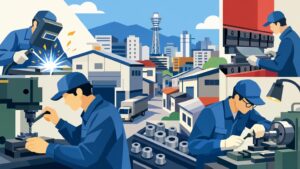
When you first land in Osaka, your senses get a shock. It’s the neon blaze of Dotonbori, the sheer vertical ambition of the Umeda Sky Building, the roar of a thousand conversations happening at once in a Shinsaibashi shotengai. You see the towers, the lights, the endless river of people, and you think you’ve got the city figured out. It’s loud, it’s commercial, it’s Japan on fast-forward. But that’s just the city’s public face, the one it puts on for the cameras. To understand what makes Osaka truly tick, you have to leave the glitter behind. You have to go east.
Out in Higashi-Osaka, the landscape changes. The skyscrapers recede in the rearview mirror, replaced by a low-slung skyline of two-story homes and unassuming, boxy buildings. The air smells different here—not of takoyaki and perfume, but of something metallic, oily, and alive. This is Osaka’s engine room, a sprawling ecosystem of thousands of tiny factories, workshops, and family-run businesses that form the city’s industrial backbone. This isn’t the polished, corporate Japan you see in Tokyo. This is something else entirely: a world built on callused hands, unspoken trust, and a stubborn, brilliant pride in making things. This is the world of monozukuri, the spirit of craftsmanship, and it’s where you’ll find the city’s honest, unfiltered soul. To get your bearings, take a look at the map. This sprawling area is where the real work gets done, far from the tourist trails.
The unvarnished energy of these local workshops is best captured by the metal heart of Higashiosaka, where tiny factories epitomize the city’s enduring grit and authenticity.
A Symphony of Grime and Precision
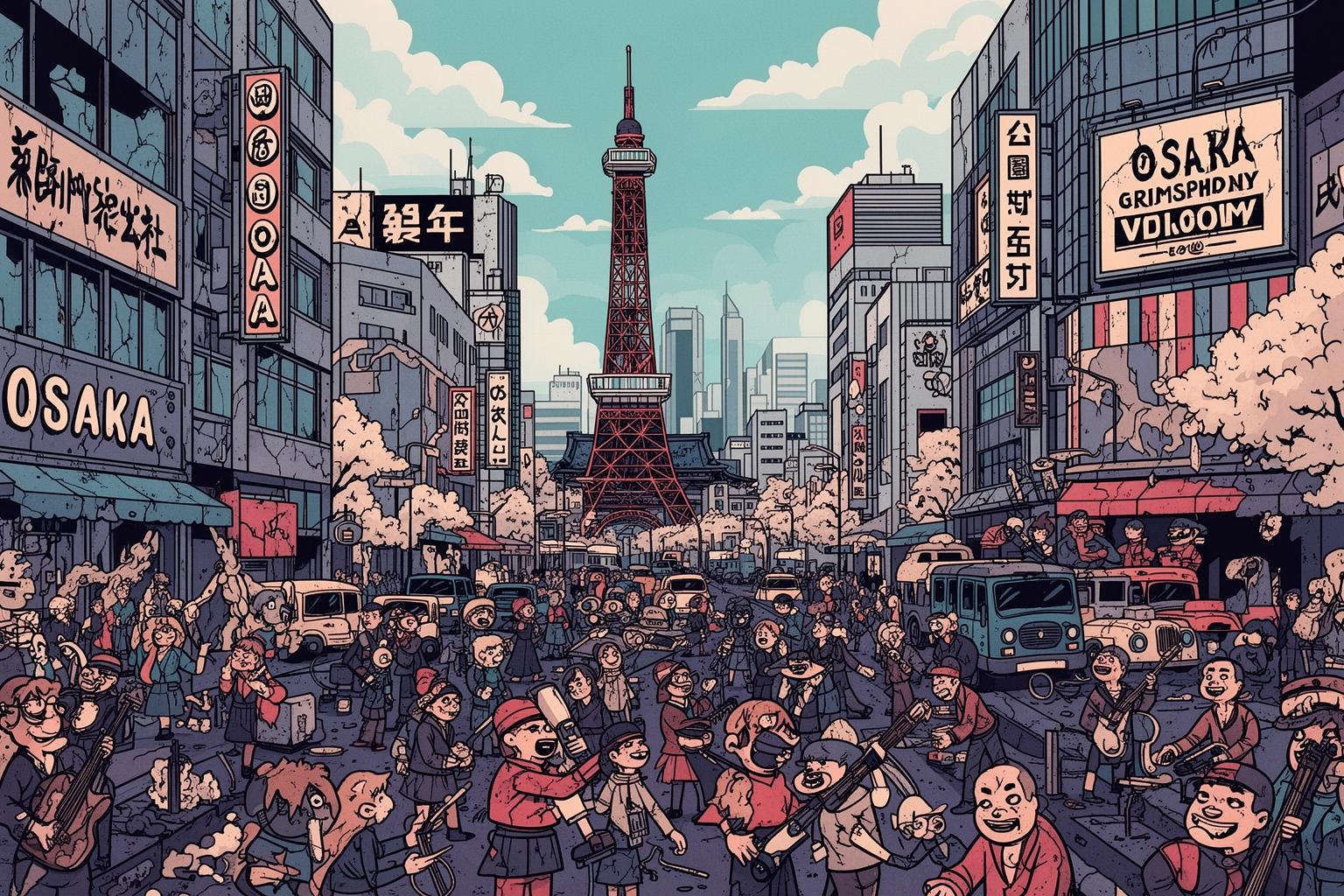
Strolling through the backstreets of neighborhoods like Takaida or Hanaten is a full-body experience. There’s a constant, rhythmic soundtrack: the high-pitched whine of a CNC lathe carving a perfect curve into a block of aluminum, the percussive, earth-shaking slam of a hundred-ton press stamping sheet metal, and the sharp hiss of a welding torch fusing steel with arcs of pure white light. You can feel the vibrations through the soles of your shoes. This isn’t noise; it’s the sound of creation—the music of a city that still makes things.
This contrasts sharply with the dominant work culture of Tokyo. In the capital, business unfolds in climate-controlled towers, carried out through emails, slide decks, and quiet meetings in sterile conference rooms. The work is abstract, digital, often invisible. You rarely see the tangible result of your efforts. In Higashi-Osaka, work is vividly, inevitably real. You can see it, touch it, even smell it. The proof of a day’s labor isn’t a sent email, but a pallet of perfectly machined parts, ready for shipment. Pride isn’t found in a clever marketing slogan; it’s in the micron-level precision of a gear that will spin silently inside a machine for thirty years.
This difference shapes a fundamentally distinct mindset. In Tokyo, people often speak about their company, their brand, their department. In Higashi-Osaka, people talk about their waza, their skill. Identity is personal. It belongs to the individual artisan, the shokunin, who has dedicated a lifetime to mastering a single craft. Many of these factories are small, employing just a handful of people, often from the same family. The boss isn’t a distant CEO in a skyscraper; he’s the man in the oil-stained jumpsuit working the milling machine beside you, the one whose father and grandfather worked that very machine before him. This isn’t just a job. It’s a legacy.
The Language of Trust: Beyond the Business Card
In Tokyo’s corporate world, ritual is paramount. You exchange business cards with a precise, two-handed gesture. You bow at the proper angle. You use highly formal keigo language. Relationships are founded on protocol and procedure. In Higashi-Osaka, however, the rules differ. While respect remains crucial, the currency of business isn’t formality; it’s trust. Here, a person’s word and reputation carry more weight than any contract drafted by a team of lawyers.
Business relationships develop over decades. A factory owner doesn’t just know his suppliers; he knows their families. He knows exactly who to call at ten o’clock at night when a critical machine breaks down and he needs a custom part by morning. The response won’t be, “Please submit a purchase order through the proper channels.” Instead, it will be a gruff, “How many do you need? I’ll get it done.” This embodies the famous Osaka “nantoka suru” spirit—the steadfast belief that any problem can be solved, that somehow, we’ll figure it out. It’s a pragmatic, get-it-done mindset that can feel refreshingly straightforward to a foreigner used to layers of bureaucracy.
This fosters an incredibly agile and resilient economic network. The area operates like one vast, decentralized factory. One small shop specializes in chrome plating, the one next door excels at precision gear cutting, and a third down the street handles specialized welding. When a complex order arrives, they don’t view each other as competitors; they see one another as partners in a finely tuned orchestra. Each plays their role, passing components from one expert to the next, often relying on a verbal agreement and a shared understanding of the impossibly high standards required. This horizontal network of specialists is Osaka’s secret strength, allowing it to adapt and innovate in ways a monolithic corporation simply cannot.
The Weight of a Handshake
The interactions are deeply personal. A deal might be finalized not in a boardroom, but over a shared plate of greasy okonomiyaki and a couple of beers at a local spot. The conversation centers on the Hanshin Tigers baseball team, the kids’ school exams, and only afterward, the details of a new order. They’re evaluating each other not as corporate entities, but as individuals. Can I trust this person? Do they share my dedication to quality? Do they have the courage to tackle a difficult job? A firm handshake and eye contact seal the agreement. This can be confusing for outsiders who look for paperwork and documented processes, failing to recognize that the system is built on something far more solid: human relationships.
What’s often misunderstood is that this isn’t a lack of professionalism. It’s a distinct form of professionalism, one grounded in personal accountability. If you fail to deliver, you haven’t just broken a contract; you’ve damaged your name, your family’s honor, and let down a neighbor who depended on you. The social pressure to excel is immense, far stronger than any corporate penalty clause. This quiet integrity is what holds the entire ecosystem together.
Life Between the Lathe and the Living Room
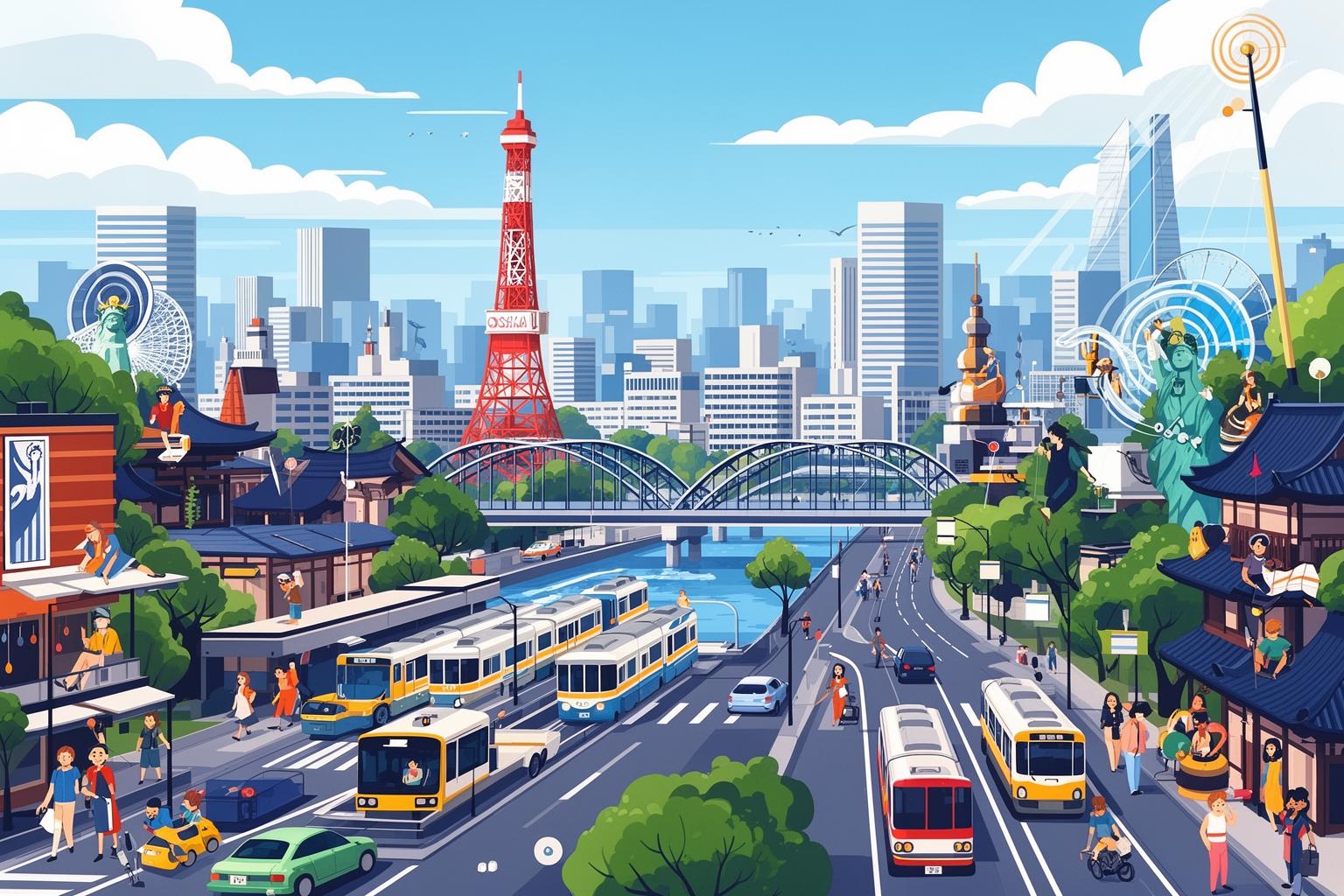
In Higashi-Osaka, the boundary between work and life is virtually nonexistent. This idea feels strange in today’s world of remote work and the push for “balance.” Many factory buildings are directly attached to the owner’s home. This arrangement is known as a kōba-tsuki-jūtaku, a residence with a factory attached. Children grow up surrounded by the smell of metal and the hum of machinery, which serve as the soundtrack to their childhood. They absorb the family trade not through formal lessons, but through osmosis, by observing their parents and grandparents working with quiet, focused intensity every day.
Daily life follows the rhythm of the workshops. Mornings begin early, with the clatter of steel shutters rolling up throughout the neighborhood. The local shopping street, the shotengai, acts as the community’s lifeline. It’s not filled with trendy cafes or souvenir shops; rather, you’ll find hardware stores selling specialized tools, tiny diners offering hearty, no-frills curry rice and udon lunches for under 500 yen, and public bathhouses where workers wash away the day’s grime and sweat while sharing stories and gossip in the steaming water.
To a foreigner, these neighborhoods might seem gritty or even intimidating. They lack the polish of central Osaka or the quaint charm of Kyoto. But dismissing them as mere industrial wastelands misses the point entirely. These are places with an exceptionally strong sense of identity and community. People know their neighbors and look out for one another. There is a shared purpose that unites them. The so-called “grime” isn’t a sign of neglect; rather, it is the residue of productivity, the evidence of creation. It proves this is a place where things of true value are made.
The Echo of the 5 PM Chime
The day follows a distinct rhythm. During lunch breaks, workers stream out of the factories into the local eateries. Conversations grow loud, and laughter comes easily. It’s a brief, communal pause from the morning’s intense focus. Then, as the clock nears five, a municipal chime often rings out across the neighborhood, its melody bouncing through the narrow streets. It signals the official end of the workday. While many dedicated artisans stay late, perfecting details or completing rush orders, the chime marks a collective relief. The pace slows, machinery noises fade, and the sounds of families gathering for dinner and friends meeting for drinks take over.
This shared rhythm is a powerful tie. It connects everyone to the same clock and cycle of work and rest. This is a sharp contrast to the hectic, nonstop pace of a global city like Tokyo, where people follow wildly different schedules and often remain disconnected from their neighbors. In Higashi-Osaka, you feel part of something greater than yourself—a community defined not only by location but by a shared purpose.
The Stubborn Pride of the Modern Shokunin
The world is evolving, and Higashi-Osaka is no exception. The workforce is aging, and it’s increasingly difficult to persuade younger generations to enter trades that require long hours, physical labor, and years of apprenticeship to master. Global competition is intense, with cheaper parts available from overseas. From an outside perspective, it might seem like a declining world, a remnant of a past industrial era.
However, that would underestimate the fierce, stubborn pride of the Osaka shokunin. These individuals are not quick to give up. The “nantoka suru” spirit is now directed toward the challenge of their own survival. They are adapting, innovating, and demonstrating that precision craftsmanship remains invaluable in a high-tech era.
Many of these small factories are now producing highly specialized components that cannot be mass-produced. They craft parts for the aerospace industry, advanced medical devices, and robotics. They apply decades of accumulated expertise to new materials and fresh challenges. One of the most notable examples is the Maido-1 satellite, a fully functional satellite constructed entirely by a consortium of small factories in Higashi-Osaka. It was a bold, nearly audacious idea, born from the desire to showcase their capabilities to the world. It was their resolute statement that their skills remain world-class, relevant, and essential.
This represents the future of monozukuri. It’s not about competing on price but competing on quality, ingenuity, and the ability to solve problems others cannot. It’s about preserving the artisan’s spirit while embracing the tools of tomorrow. The younger generation who choose to stay are not merely inheriting a business; they are becoming guardians of a legacy, blending traditional methods with digital design and global marketing.
To live in Osaka without understanding this world is to perceive the city only in two dimensions. The city’s renowned humor, pragmatism, distrust of authority, and fierce local pride—all are forged in these workshops. It’s the confidence of people who know how to make things, solve problems with their own hands, and rely on their neighbors rather than distant corporations. It’s an honesty hammered into the very steel they shape. The next time you’re in Osaka, take a train east. Listen beyond the noise of the tourist crowds. You might just catch the true, steady, and powerful heartbeat of the city.