

When you first move to Osaka, you notice the obvious things. The electric pulse of Namba, the aroma of takoyaki hanging thick in the air, the way people laugh louder here than anywhere else in Japan. You get used to the city’s vibrant, commercial face. But then, one day, you might find yourself wandering off the main thoroughfares, maybe exploring the eastern wards like Higashi-Osaka or Yao. You’ll hear it before you see it: a low, persistent hum. A rhythmic clanging of metal on metal. The high-pitched whine of a lathe. You’ll peek down a narrow alley, wedged between a two-story home with drying laundry and a tiny Shinto shrine, and see the open, greasy maw of a workshop. Sparks fly from a welding torch. A man in a grease-stained jumpsuit, brow furrowed in concentration, meticulously measures a piece of steel. This, my friend, is the real engine of Osaka. You’ve just found a machi-kouba.
These are not the sleek, automated factories you see in corporate brochures. These are the small, local, often family-run factories that form the bedrock of Osaka’s economy and, more importantly, its identity. To understand Osaka, you can’t just eat the food and see the sights. You have to understand the machi-kouba and the mindset they represent. This isn’t about sterile industrial parks cordoned off from society; this is industry woven directly into the fabric of daily life. It’s noisy, it’s gritty, and it’s profoundly human. It’s where the city’s famous pragmatism, its creative spirit, and its no-nonsense attitude are forged, quite literally, in fire and steel. This world, hidden in plain sight, explains more about why Osakans are the way they are than any castle or skyscraper ever could. It’s the city’s iron heart, beating with a steady, powerful rhythm just beneath the surface.
The relentless energy of Osaka’s small factories extends into the city’s evolving private railway culture, which weaves together the rhythms of local industry and urban mobility.
The DNA of Osaka: What is a Machi-Kouba, Really?
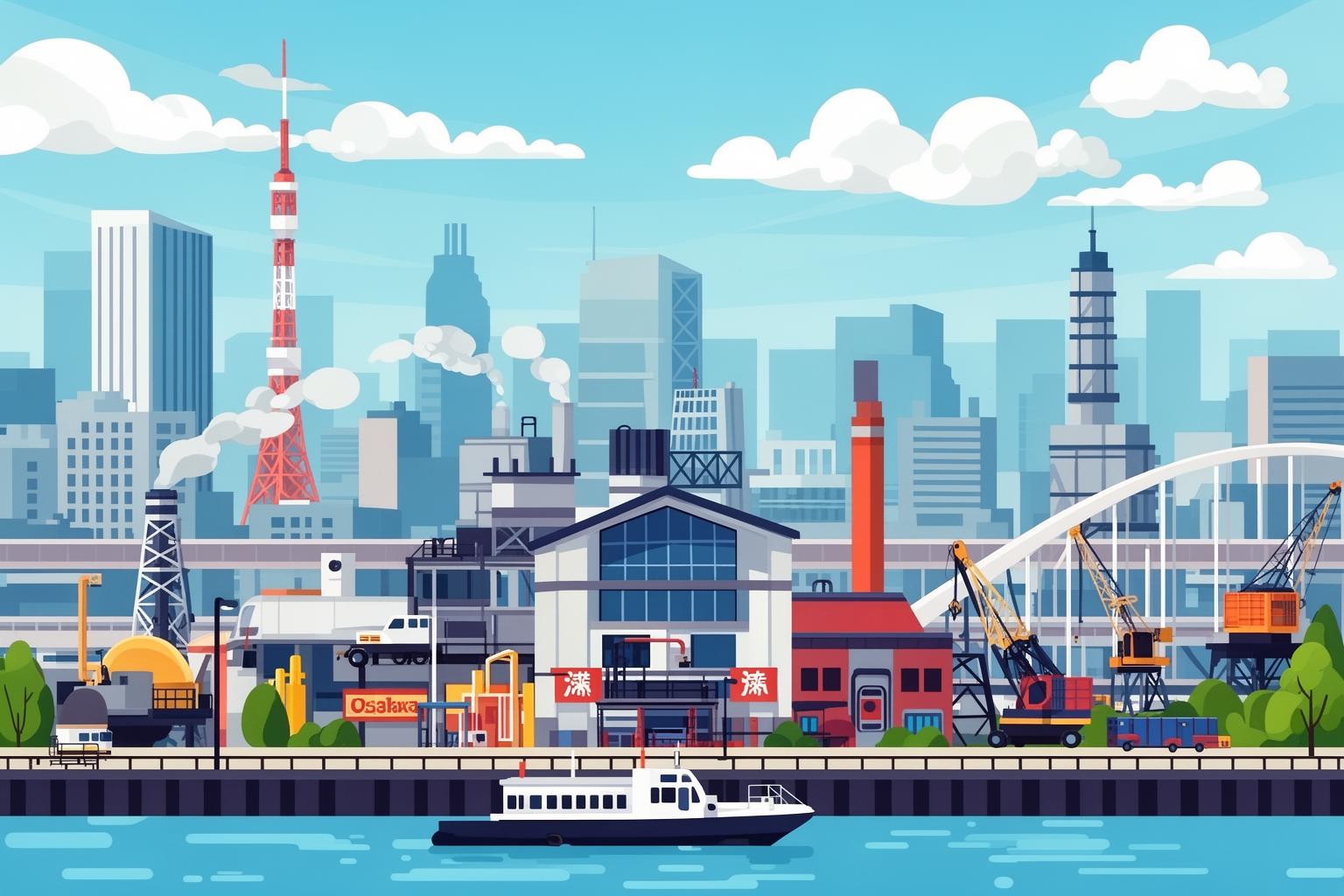
Before delving into the psychology, let’s clarify the definition. A machi-kouba translates to “town factory.” However, this translation is deceptively simple and overlooks the cultural significance of the term. It’s not merely a small factory; it represents a particular type of enterprise, one that reflects a heritage of craftsmanship, community, and strong independence. These workshops have fewer than 20 employees, often just a few, usually family members spanning two or three generations. They stand in stark contrast to the massive, impersonal corporations that dominate Tokyo’s skyline.
More Than Just a Factory
In many Western countries, zoning laws strictly separate industrial and residential zones. The concept of a metalworking shop operating next to a family residence seems chaotic, even hazardous. But in Osaka, this coexistence is typical. The machi-kouba is woven into the neighborhood’s soundscape. The steady pounding from the press shop down the street is as familiar to residents as the chime of the local train crossing. The scent of cutting oil becomes another layer in the city’s olfactory tapestry, blending with the aroma of grilled unagi and damp asphalt after summer rain.
This close proximity has a significant impact. It means the work isn’t abstract. The factory owner isn’t a remote CEO; he’s the guy you spot at the local sento, the grandfather whose grandchildren play in the same small park as yours. This blurs the line between “work life” and “community life.” The factory’s reputation is the family’s reputation. A poor-quality product not only hits the bottom line but also brings shame to the family name within the community. This intense social accountability acts as a powerful motivator for the exceptional quality that emerges from these humble workshops.
The Higashi-Osaka Phenomenon
Higashi-Osaka is the undisputed heart of the machi-kouba world. It has the highest density of small factories in all Japan. Driving or cycling through its intricate streets is an immersive experience. There are no clear boundaries. A row of modern apartments transitions into a block where every ground floor is an open-fronted workshop. One is milling tiny, intricate screws; the next bends thick metal tubes; another crafts precision molds. It feels like a living museum of the industrial age, yet these are not relics. They are essential components of the global supply chain, producing highly specialized parts that go into everything from bullet trains and medical devices to aerospace technology.
This concentration did not happen by chance. Osaka has been Japan’s commercial hub for centuries, known as “Tenka no Daidokoro” or “The Nation’s Kitchen.” It was the center for trade, logistics, and, consequently, the production of goods to support that trade. While Tokyo evolved into the center of samurai government and later corporate bureaucracy, Osaka became the home of merchants and makers. This historical role nurtured a population that is practically minded, entrepreneurial, and unafraid of hard work. Higashi-Osaka is the modern heir to that legacy. It’s a city built not on abstract financial concepts, but on the concrete creation of physical products.
The Osaka Mindset Forged in Steel
The machi-kouba environment has forged a unique Osaka character. This mindset often sharply contrasts with Tokyo’s more reserved and process-driven culture. Foreigners who transition from a typical Japanese corporate setting in Tokyo to doing business in Osaka frequently experience cultural whiplash. The machi-kouba holds the key to understanding why.
“Yatteminahare”: The Gospel of Getting it Done
A well-known Osaka phrase, often credited to Suntory founder Shinjiro Torii, perfectly embodies this spirit: “Yatteminahare.” It roughly means “Just give it a shot!” or “Go for it!” This phrase emphasizes action over endless deliberation. In a Tokyo boardroom, a new idea might undergo months of nemawashi (the process of laying groundwork and building consensus) and countless meetings before a decision is reached. In an Osaka machi-kouba, when a client brings a tough request or a new design, the seasoned owner’s response is more likely to be a thoughtful grunt, a chin scratch, and a decisive, “Okay, yattemiyo ka” (Alright, let’s try it).
This is not recklessness. It reflects a deep confidence rooted in a lifetime of hands-on problem-solving. These craftsmen possess an intimate, almost instinctive knowledge of their materials and machines. They trust their ability to adapt as they go along. Failure is not something to be ashamed of or avoided at all costs; it’s a piece of data, a necessary step toward a solution. This action-oriented mentality permeates Osaka culture. People here tend to be more direct, more willing to take risks, and more focused on results than on following a perfectly polished process.
Pragmatism Over Polish
Step into a typical machi-kouba, and your initial impression will likely be one of controlled chaos. The floor might be slick with oil, and tools and metal shavings cover every surface. Calendars from a decade ago often hang next to coffee-stained technical diagrams. To an outsider, it may seem messy or disorganized. This is a common misconception. But to the shokunin (master craftsman) working there, every item has its designated place. The layout follows a logic optimized for workflow, not aesthetics. The focus is entirely on function.
This perfectly symbolizes the Osaka business mindset. Substance always outweighs style. A flawlessly functioning prototype in a cardboard box is far more valuable than an elegant but vague PowerPoint presentation. Osakans are famously impatient with fluff and ceremony. They want to get straight to business. This directness can sometimes be misunderstood by foreigners and even people from Tokyo as rude or abrasive. It is not. It’s a form of respect. By being straightforward and skipping pleasantries, they show they value your time and intelligence. They assume you’re there to solve a problem or close a deal, and they want to address the matter as efficiently as possible.
The Art of the Niche: Survival of the Specialists
How do these small workshops survive amid globalization and mass production? They don’t compete on price or volume—they can’t. Instead, they endure by becoming the absolute best in the world at one extremely specialized task. This defines their strategy. You might find a factory that produces only a specific kind of spring with unique tension properties. Another might specialize in polishing metal surfaces to a smoothness no machine can replicate. A third may be the sole place in Japan capable of drilling a microscopic hole at a precise angle through a challenging material.
This hyper-specialization nurtures a culture of deep, obsessive expertise. The owner of that spring factory has probably devoted his entire life to mastering the metallurgy and physics of coiled metal. He thinks about it constantly, even dreams about it. This is the shokunin spirit, but in the Osaka style: less the serene, Zen-like pursuit of perfection associated with a Kyoto potter, and more a tenacious, gritty, and competitive drive to be the undisputed master of a particular field. Their pride is neither quiet nor contemplative; it is robust and openly proclaimed. They know they are the best, and they are unapologetic about it.
A Symphony of Noise: Daily Life in a Factory Town

Living in or near a neighborhood dominated by machi-kouba alters your perception of what a city truly is. It’s not merely a place for consumption and living; it’s a place of production. This reality influences the entire rhythm and social structure of the community.
The Rhythm of the Neighborhood
The day begins early. Long before office workers in Umeda have had their first coffee, the rhythmic clang and hum of the factories start. It’s the city’s industrial alarm clock. By mid-morning, activity reaches its peak. Delivery trucks, surprisingly small, navigate the narrow streets with practiced ease, dropping off raw materials and collecting finished components. At lunchtime, workers, dressed in their distinctive blue or grey uniforms, fill the local shokudo (canteens) and ramen shops, sharing banter in thick Osaka-ben over bowls of noodles and rice. The afternoon is a race to complete orders, with the sounds of machinery rising to a crescendo before gradually winding down in the early evening. When silence finally falls, it feels less like peace and more like a brief pause, the city catching its breath before the next day’s labor.
For a foreign resident, this can take some getting used to. The noise may feel intrusive at first. But over time, you begin to appreciate it. You realize it’s not just noise; it’s the sound of people working, of a community supporting itself. It’s the sound of value being created. It’s a constant, audible reminder that your city makes things, that it serves a real, productive purpose beyond the service and information economies dominant in many modern metropolises.
The Human Network: More Powerful Than Any Corporation
These hundreds, even thousands, of tiny factories are not isolated islands. They are nodes in an incredibly complex and resilient network built on generations of trust and mutual support. This is perhaps the most critical element of their success. The formal, rigid supply chains of a Toyota or a Panasonic are replaced here by something far more organic and fluid.
Imagine the owner of a screw factory gets an urgent order requiring a special kind of anti-corrosion coating he doesn’t have equipment for. He won’t search the internet for a supplier. Instead, he’ll pick up the phone and call Tanaka-san, whose plating shop is four blocks away. Their fathers probably did business together. He knows Tanaka-san’s work is impeccable, and Tanaka-san trusts he’ll be paid on time. If another factory’s lathe breaks down, a neighbor from a competing shop might bring a spare part or offer the use of their machine after hours to finish a critical job. This is not formal business; it’s community. This web of informal, trust-based relationships enables the entire ecosystem to be remarkably agile, able to respond to challenges and opportunities far faster than a lumbering corporate giant.
The Language of the Workshop
Communication within this network is very different from polite, formal Japanese (keigo). It’s fast, direct, and filled with the distinctive, often blunt, Osaka dialect. To an unaccustomed ear, a simple discussion about a technical specification might sound like a heated argument. There are sharp questions, quick interruptions, and gestures that are concise and emphatic. This isn’t a sign of conflict. It’s the language of efficiency, honed over decades of solving urgent problems on a noisy factory floor. There’s no time for ambiguity or beating around the bush when a multi-million yen machine is waiting. Understanding this is key to avoiding misinterpretation of the local character. What sounds like aggression is often just clarity and a shared focus on getting the job done right, right now.
The Craftsman’s Code: Pride, Passion, and Problems
While the machi-kouba system is a tremendous source of strength for Osaka, it is far from a romantic utopia. The craftsmen within this world are guided by a strict code of conduct but also contend with significant modern pressures that threaten their very survival.
The Shokunin Spirit, Osaka-Style
At the heart of the machi-kouba lies the spirit of the master craftsman, the shokunin. However, this is a distinctly Osakan interpretation. Their pride extends beyond crafting a beautiful object to solving seemingly impossible problems. The greatest satisfaction for a machi-kouba owner is when a major company like Panasonic or Sharp approaches them with a design that even their top engineers couldn’t figure out how to manufacture. Using a machine he likely customized himself and a lifetime of experience, the workshop owner will find a solution.
The most famous example is the Maido-1 satellite. In the early 2000s, a group of Higashi-Osaka factory owners, frustrated by the lack of recognition for their skills, decided to demonstrate their abilities by building their own satellite. It was a bold, almost absurd idea. Yet, by pooling their expertise—one factory handling the outer shell, another the intricate components, and another the specialized fasteners—they succeeded after years of effort. In 2009, Maido-1 was launched into orbit, symbolizing their collective skill and their uniquely Osakan “Yatteminahare” spirit. It sent a powerful message to the world: don’t underestimate the veterans in the grease-stained workshops.
The Struggle for Succession
Despite their pride and expertise, the machi-kouba face a grave existential challenge: succession. The work is demanding, hours are long, and the environment often harsh and hazardous. The current generation of masters, mostly in their 60s, 70s, or 80s, have children who, having enjoyed broader opportunities and university education, are often unwilling to inherit the family trade. They witness the financial hardships, physical strain, and relentless pressures and prefer the clean, stable, and more prestigious life of a salaried office worker.
This crisis is slowly unfolding across Osaka’s industrial heartlands. With each retiring master who leaves no successor, a lifetime of unique knowledge and invaluable skill disappears forever. The community recognizes this danger, and initiatives to attract young apprentices and modernize the manufacturing image are underway, but they face an uphill struggle against wider societal and economic forces. This reality adds a poignant dimension to the fierce pride of the remaining craftsmen. They are more than just workers; they are guardians of a legacy, battling to preserve a vital part of their culture.
Innovation in Grime-Covered Hands
It’s easy to dismiss these workshops, with their analog machines and traditional methods, as relics of a bygone era. This is a profound misconception. The machi-kouba are not opposed to technology; they are hubs of remarkable grassroots innovation. Their innovation just doesn’t resemble the type that happens in Silicon Valley labs.
It’s not about coding or app development. It’s physical, tangible problem-solving. It’s the welder who creates a novel jig to hold metal at a precise angle. It’s the lathe operator who figures out how to adapt his machine’s cutting tool for a new, challenging alloy. It’s the factory owner who merges techniques from two different industries to develop a completely new manufacturing process. This is hands-on R&D on the factory floor, fueled by immediate needs and deep knowledge of physical possibilities. They are constantly experimenting, refining, and adapting. This relentless and practical creativity is what has enabled them to endure and flourish for so long.
What This Means for You, the Foreign Resident

Grasping the machi-kouba culture is more than an academic pursuit; it’s a practical guide to navigating and appreciating everyday life in Osaka. It helps decode the city’s behaviors and offers a framework for understanding your neighbors and the local mindset.
Understanding Your Neighbors
If you live in Osaka, particularly in the eastern or southern neighborhoods, you likely engage with this culture daily without realizing it. The quiet man who runs the corner tobacco shop may have spent 40 years as a master mold-maker. The lively owner of your favorite izakaya might come from a family that has operated a screw factory for three generations. Their backgrounds shape how they see the world. They tend to be resourceful, self-reliant, and deeply value things that are well-crafted and functional. They appreciate straightforward talk and tangible results. When you recognize that the person you’re talking to lives in a world where your word and work quality matter most, their directness and lack of pretense become much clearer.
The Tokyo-Osaka Divide in Plain Sight
The machi-kouba perfectly illustrates the fundamental difference between Osaka and Tokyo. Tokyo serves as the brain and face of Japan Inc., housing corporate headquarters, government ministries, and high finance. Its work culture focuses on process, presentation, consensus-building, and maintaining harmony. Osaka, on the other hand, represents the guts and hands, with a culture centered on production, practicality, quick decisions, and achieving concrete results. Tokyo cares about the “how”; Osaka is obsessed with the “what.”
This contrast explains why business meetings feel so different. In Tokyo, the purpose of a first meeting often is to establish a relationship and agree on how future discussions will proceed. In Osaka, they want to know what you can deliver, how much it will cost, and when it can be done. They will challenge you, ask tough questions, and bargain over the price. Don’t take it personally; this is how they evaluate if you have the substance to back up your claims. If you prove your worth in this test, you will earn loyalty as strong as steel.
Finding Your Place in the Industrial Heartbeat
So, as a foreign resident, how do you connect with this vital part of Osaka? First, open your eyes and ears. Notice the small workshops in your neighborhood. Second, value craftsmanship. When engaging with local business owners, show genuine interest in their work and products. Ask questions and appreciate the skill involved. This is a language they respect far more than empty pleasantries. Third, don’t be intimidated by their direct communication style. View it not as rudeness but as a dedication to clarity. Respond with honesty and directness yourself.
Finally, immerse yourself in the ecosystem. Dine at local shokudo frequented by factory workers. Visit small hardware stores selling locally made tools. Seek out occasional open houses or factory tours. By doing this, you go beyond a superficial tourist experience and start to understand the real working heart of the city. You’ll discover that beneath the bright lights and famous food scene, Osaka has a soul of iron, with deep pride in its ability to create, solve problems, and get things done. This, above all, is what makes Osaka, Osaka.








