Hola! Sofia here. Let’s paint a picture. You’ve just moved to Osaka, a city buzzing with an energy that’s electric, almost tangible. You’re a freelancer, a student, a modern-day digital nomad, and your office is wherever your laptop is. This morning, you’ve chosen the ultimate hub of human movement: the grand, sprawling labyrinth of Umeda Station. You step off the train, full of ambition, picturing a cozy corner seat, the aroma of dark roast coffee, and a productive morning tapping away on your keyboard. You walk into the first cafe you see. And it hits you. Not the smell of coffee, but a wall of sound. It’s a chaotic ballet of salarymen in crisp suits gulping down espressos, groups of elegantly dressed women laughing over toast, and salespeople talking a mile a minute into their phones. Every single seat is taken. This isn’t the serene, minimalist workspace you saw on Instagram. This is the real Osaka morning. And finding a seat here isn’t just about luck; it’s about understanding the city’s unique, unwritten social contract, a rhythm that beats differently from the disciplined, silent pulse of Tokyo. To conquer the cafe, you first have to understand the commuter, the culture, and the controlled chaos that makes Osaka tick. It’s a puzzle of timing, observation, and knowing where to look beyond the obvious. Forget what you think you know about quiet Japanese cafes; we’re diving into the heart of the Osaka station shuffle.
When the vibrant chaos of morning subsides, you might later transition into Osaka’s dynamic nightlife by exploring the city’s unique bar hopping culture that offers a whole new perspective on its spirited urban rhythm.
The Cast of Characters: Who’s Actually in These Cafes?
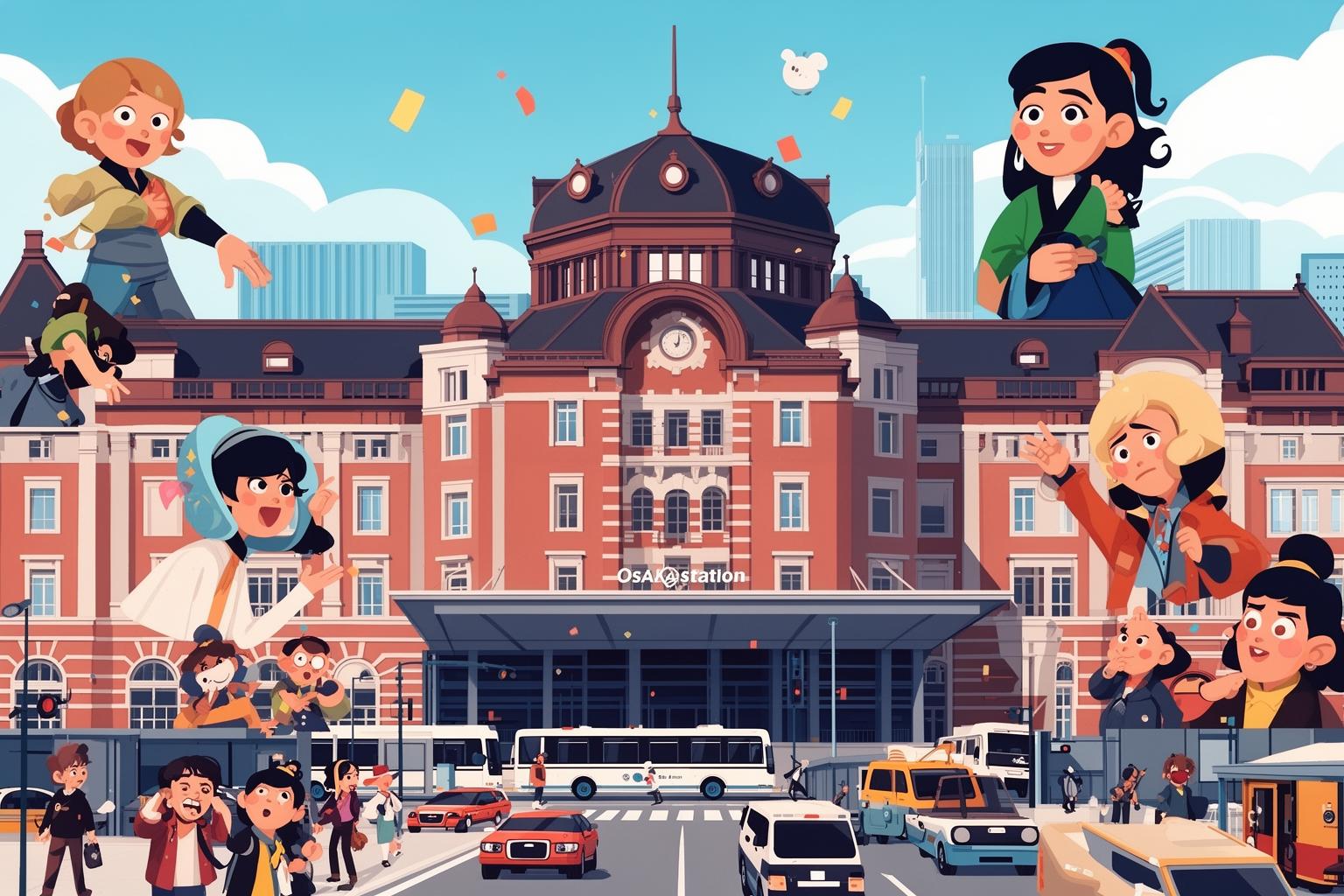
Before you even start planning your strategy, it’s essential to know who your competition is. A common misconception among foreigners is assuming everyone in a cafe is there for the same purpose as you: to settle in and work. In Osaka, especially during the morning rush, this is seldom the case. The cafe acts as an important third space, a transitional area between home and office, hosting a diverse cast of regulars, each with a unique goal. Identifying them is your first step to anticipating their behavior.
The Salaryman’s 15-Minute Buffer
Spot the sea of dark suits, usually grouped around the smoking area or by the counter. These are the city’s corporate warriors—the salarymen and office ladies. They aren’t here to work; they’re here to perform a ritual. They arrive at the station early, not out of diligence, but to create a mental buffer before the workday starts. Their goal is a quick, strong dose of caffeine and nicotine. They’ll grab a small coffee, catch up on the news on their phones, have a cigarette, and leave within fifteen minutes. They’re high-turnover patrons, occupying seats briefly. Their conversations are concise, work-focused, and they move efficiently, signaling they’re on the clock. Don’t be daunted by their numbers; they come and go quickly, usually before 9:00 AM.
The Obachan Social Hour
Listen for hearty, rolling laughter. You’ll find a group of middle-aged or older women—the famous Osaka obachan—gathered around a small table. For them, the cafe isn’t a workspace; it’s their parlor. Here, they catch up on neighborhood news, share family stories, and plan their day. Their presence beautifully reflects Osaka’s strong sense of community. Unlike Tokyo, where public spaces often require quiet restraint, Osaka’s culture is more communal and expressive. These women aren’t being rude; they’re simply using the space as it has been used for generations—as a place of connection. They linger, ordering the “morning set,” a classic combo of thick toast, boiled egg, and coffee, and measure their stay in conversations, not minutes. They often claim the most comfortable booth seats and aren’t in a hurry to leave. Appreciate the cultural moment, but know that waiting for their table could take a while.
The Salesperson’s Mobile Command Center
This person resembles you somewhat but carries a frantic energy. They have a laptop, typically a lightweight company-issued model. Their phone is engaged in a constant stream of business calls. These are the salespeople, account managers, and road warriors who use the cafe as a tactical base between meetings. They are the true power users, intensively seeking the prized seat with a power outlet. They’ll order just enough to justify their presence and type rapidly, as if a deadline is always imminent. Their business calls add to the noise level, which in the practical world of Osaka business, is completely acceptable. They are your direct rivals for the “good” seats, but their stays tend to be transient, governed by their appointment schedules.
The Lone Wolf and the Student Pack
Finally, in the less desirable seats—the small counters facing the wall, or the awkward table near the door—you’ll find the students and solo grinders. They are experts at tuning out their surroundings, headphones in, buried in textbooks or spreadsheets. They’re the quiet ones, adapted to the city’s ambient noise. They know that a cafe in an Osaka station isn’t a library. They maintain a neutral presence, neither loud nor fleeting. They’re simply trying to get through the day, just like you.
Umeda vs. Namba: A Tale of Two Morning Rushes
Not all station cafes are made equal. The essence of your morning experience hinges on which urban giant you’re navigating. Osaka’s two main hubs, the corporate north (Umeda) and the lively south (Namba), present entirely different arenas. Their unique characters shape the crowd, the tempo, and your likelihood of success.
Umeda: The Corporate Maze
Umeda feels less like a station and more like a vast, multi-tiered city unto itself. It serves as the junction for JR, Hankyu, Hanshin, and subway lines, all interconnected by a confusing web of underground tunnels, department stores, and sleek office buildings. The atmosphere here pulses with corporate drive. The morning rush resembles a wave of suits and sensible heels, moving quickly with clear purpose. It’s the closest Osaka comes to Tokyo’s intensity, but with one major difference: the silence is replaced by a steady, productive murmur of conversation.
Cafes near the station entrances—such as Starbucks and Tully’s in Lucua or Grand Front Osaka—are designed for speed and high turnover. Tables are small and crammed together, where lingering for hours over a single latte is socially frowned upon. The key here is precision. Avoid the peak hours from 8:00 AM to 9:30 AM at all costs. Instead, explore deeper into the maze. Check out cafes on the upper levels of department stores, which open later, around 10:00 AM, and tend to be brighter, more spacious, and attract shoppers rather than commuters. Alternatively, head down into the underground shopping arcades like Whity Umeda or Diamor Osaka, where numerous cafes slightly off the main commuter routes offer a surprisingly tranquil setting.
Namba: The Beautiful Chaos
Namba is Umeda’s wilder, more vibrant counterpart. It serves as the gateway to Minami’s entertainment and shopping districts, a bustling mix of commuters, tourists, vendors, and street performers. The energy here is less about corporate deadlines and more about the vibrant, eclectic heartbeat of the city’s true spirit. The crowd is a captivating blend: businesspeople heading to offices in Shinsaibashi, retail workers gearing up for shifts in Amerikamura, and early tourists consulting maps. The pace is as busy as Umeda’s, but feels less like a dash and more like a powerful, relentless current.
Cafes in Namba are far more varied. Beyond the familiar chains, you’ll discover a wealth of old-world kissaten. These traditional coffee shops are an essential part of Osaka’s cultural heritage. A word of caution for digital nomads: these are not your typical offices. A kissaten is a refuge for its regulars, a place to read a paper, savor a carefully prepared “morning set,” and often, to smoke. The air is dense with history and tobacco smoke. Opening a laptop here is a big etiquette misstep, disturbing the carefully maintained atmosphere and marking you as an outsider.
Your strategy in Namba is to leverage the chaos. Slip into covered shotengai (shopping arcades) like Ebisubashi-suji. Look up—many of the best cafes are on the second or third stories, providing a wonderful vantage point to observe the bustling scene below. These elevated retreats are often overlooked by the hurried masses. Even better, follow the ten-minute walk rule and explore nearby neighborhoods like Horie, famed for its trendy boutiques and equally stylish cafes, which cater more to a creative, laptop-friendly crowd.
The Unspoken Rules of Cafe Camping

So you’ve found a seat. Success! But the challenge is only halfway over. Now you need to maintain your spot while respecting the subtle, unspoken rules of Japanese cafe etiquette. This isn’t just about politeness; it’s about showing consideration for both the business and other customers, a value deeply rooted in the culture. In a commerce-driven city like Osaka, this respect is especially significant.
The One-Drink Minimum is Not a Day Pass
This is probably the most common misunderstanding among foreigners. In many Western cultures, buying one coffee might be seen as paying rent for a table over several hours. That logic doesn’t apply here. A single 400-yen coffee doesn’t grant you the right to occupy a valuable seat during peak hours. The unwritten rule is to remain a consistent customer. If you plan to stay longer than 90 minutes to two hours, it’s customary to order something additional. It doesn’t have to be a full meal—another coffee, a slice of cake, or a pastry will do. This small gesture shows you respect the cafe as a business, not a public library. During the hectic morning rush, the pressure is even greater. If you notice a queue forming, it’s a social hint to start wrapping up.
Reading the “Kuuki”: Atmosphere is Everything
A key Japanese concept called kuuki wo yomu, meaning “reading the air,” involves being sensitive to the social atmosphere and adjusting your behavior accordingly. Before opening your laptop, take a moment to gauge the room. Is the cafe filled with lively conversations among friends? In that case, the sound of typing will likely go unnoticed, and a quiet video call with headphones might be acceptable. Is the space relatively silent, with others reading or working in quiet? Then even the loud click of a mechanical keyboard can be disruptive. Osaka cafes tend to be more tolerant of noise than those in Tokyo, but there are limits. One universal rule is about phone calls: taking a loud, personal call at your table is considered extremely rude everywhere. If you must take a call, step outside.
The Great Power Outlet Hunt
Seats near power outlets are the most coveted spots in a cafe—they’re the prime real estate for remote workers. Securing one carries certain responsibilities. It’s not a seat you claim and then leave unattended for long periods. If you need to step away for more than a brief restroom break, it’s polite to pack up your valuable items, especially your laptop. Leaving belongings to “reserve” a power outlet seat for 30 minutes while running an errand is a serious breach of etiquette. The pragmatic spirit of Osaka might even prompt another customer to ask if you’re finished. This isn’t meant to be confrontational; it’s a direct, practical question. They see an unused resource and are simply checking its status. Be ready for this straightforwardness and understand it as part of the city’s no-nonsense approach.
Beyond the Chains: Finding Your Third Place
Competing for a cramped table at a station-front Starbucks can often feel like a losing battle. The true secret to enjoying a productive and pleasant cafe experience in Osaka is to think creatively and stray from the usual spots. It involves discovering the city’s hidden layers and realizing that the best places are seldom the most obvious.
Go Underground or Go Up
Osaka’s major stations resemble icebergs; what you see at street level is just a small portion of their full extent. Seasoned city dwellers know the trick is to move vertically. Head upwards. The 8th, 9th, and 10th floors of department stores like Daimaru, Hankyu, or Takashimaya often house elegant cafes with breathtaking city views. These spots draw a more relaxed crowd and tend to be blissfully empty on weekday mornings. Head downwards. The vast underground networks of Umeda and Namba are cities unto themselves, filled with a dizzying variety of eateries and coffee shops. Their lack of natural light sometimes makes them less popular for long visits, which can work to your advantage.
The 10-Minute Walk Rule
This is the most effective method to escape the chaos. The crowd density and rush intensity drop dramatically with each block you move away from a major station exit. Just a ten-minute walk can take you to a completely different environment. Near Umeda, walking a short distance northeast leads to Nakazakicho, a charming, retro neighborhood full of quirky, independent cafes run by artists and creatives. Near Namba, heading west into Horie—Osaka’s hub for youth fashion and design—reveals airy, minimalist coffee shops perfect for a stylish afternoon of work. North of Osaka Station is Fukushima, a gourmet hotspot famous for its incredible restaurants; during the day, it also features an increasing number of specialty coffee roasters and quiet cafes ideal for settling in.
Rethink Your Timing: The Reverse Commute
If your schedule allows flexibility, the ultimate strategy is to simply avoid the morning rush entirely. Why swim against the tide when you can wait for it to recede? Start your workday at home for an hour or two, then head out around 10:30 AM. By this time, the salaryman crowds have arrived, morning social gatherings are winding down, and the lunch rush has yet to begin. This golden window—roughly from 10:30 AM to 12:00 PM—is when cafes are at their calmest. You’ll have your choice of the best seats, baristas won’t be rushed, and the atmosphere will be far more conducive to focusing. Aligning your schedule with the city’s natural rhythms, rather than forcing your own, is the final key to mastering a successful cafe work life in Osaka.
The morning scene at an Osaka station cafe is more than just a struggle for caffeine and a seat. It’s a living, breathing snapshot of the city’s soul. Here, commerce, community, pragmatism, and a dash of chaos blend together in a ceramic cup. Unlike Tokyo’s polished efficiency, it offers a more boisterous, human, and perhaps more honest reflection of daily life. The aim isn’t to find a perfect bubble of silence but to discover your comfortable place within the dynamic hum. Learning to navigate this daily ritual—reading the atmosphere, respecting the business flow, and knowing when to venture just beyond the center—is to master the art of living well in this extraordinary city. In Osaka, you’re never just an anonymous face in the crowd; you’re part of its vibrant, noisy, and wonderful performance.