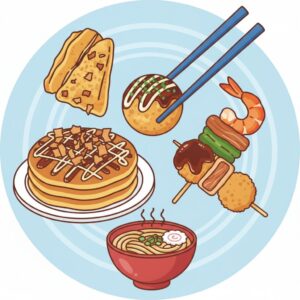
Walk through Osaka long enough, and you’ll get the big picture. You’ll see the neon glow of Dotonbori, the endless shopping arcades, the towers of Umeda piercing the sky. You’ll eat the famous trio: takoyaki, okonomiyaki, kushikatsu. You’ll understand the city’s reputation for being loud, friendly, and obsessed with food. But that’s the city on its grand, public stage. The real, everyday Osaka, the one that hums beneath the surface, reveals itself in quieter, more specific ways. It’s in the conversations you overhear on the Midosuji line, in the fiercely local pride of a neighborhood festival, and, most tellingly, in the bowls of food that never make it into the glossy travel magazines. One of those dishes is Kasu Udon. You might see the sign, three simple hiragana characters, かすうどん, hanging outside a no-frills noodle shop tucked under a railway arch or on a quiet residential street. It doesn’t look like much. It doesn’t sound like much. But this bowl of noodle soup is a key that unlocks a deeper understanding of Osaka’s character. It’s a story about resourcefulness, regional identity, and a working-class spirit that defines this city far more than any glittering skyscraper. This isn’t food from the heart of the metropolis; its soul belongs to Minamikawachi, the southern region of the prefecture, and its journey from there to bowls across the city tells you everything you need to know about how Osaka really works.
Embodying the resourcefulness of everyday Osaka, Kasu Udon offers a taste of heritage that is echoed in the city’s merchant mindset, enriching our understanding of local entrepreneurial spirit.
What Exactly is in the Bowl? The Secret of Abura Kasu
Let’s get straight to the point. Kasu Udon is a straightforward dish: a bowl of thick, chewy udon noodles in a hot, savory broth, topped with chopped green onions and the star ingredient, abura kasu. And it’s the kasu that makes all the difference. The term literally means something like “oil dregs” or “scraps,” which is candid and perfectly Osakan. Abura kasu is beef offal, specifically the small intestine, slowly deep-fried in its own fat over a long time. This process is a form of alchemy. All the moisture is removed, and the intestines transform into dark, intensely concentrated nuggets that are crispy, dry, and surprisingly light. They resemble pork rinds or gnarly croutons, carrying an incredibly rich, beefy aroma.
On its own, it’s a snack, often enjoyed with a sprinkle of salt alongside a cold beer. But its true purpose shines when it hits the hot udon broth. The magic happens immediately. The dry, crispy pieces rehydrate, but not into the soft, chewy texture of typical boiled horumon. Instead, they become gelatinous and wonderfully tender inside while retaining a slight chewiness. As they swell, they release their concentrated flavor—an avalanche of rich, savory, umami-packed beefiness—straight into the dashi. A simple, light Kansai-style broth made from kombu and bonito flakes is instantly elevated, transformed into something deeper, richer, and far more complex. It’s a flavor explosion. The first sip is a wave of savory depth that coats your tongue. The broth becomes oily, but in the best way, carrying the essence of the beef in every spoonful. The rehydrated kasu is a textural delight: soft, yielding, and melting in your mouth, worlds apart from its original crispy form.
From Byproduct to Beloved: The Minamikawachi Origin Story
This dish didn’t originate in a fancy kitchen in Namba, nor can its roots be traced back to a legendary culinary figure. Kasu Udon is genuine folk cuisine, born out of necessity and creativity in Minamikawachi, an area in southern Osaka Prefecture that includes cities such as Habikino and Fujiidera. Historically, this region was a hub for Osaka’s meat processing industry. Large-scale meat production inevitably produces many byproducts—the parts of the animal that aren’t prime cuts. In many cultures, these parts are simply discarded, but in Osaka, that’s almost sacrilegious.
The city’s ethos is famously captured by the concept of mottainai, a deeply ingrained cultural aversion to waste. It’s a term that conveys more than just “what a waste!”; it expresses a regret over wasting any resource, whether food, time, or energy. For the workers in Minamikawachi’s meat plants, discarding edible offal was unthinkable. As a result, they developed a preservation method: by slowly rendering and frying the intestines, they created a shelf-stable product called abura kasu, rich in calories and flavor. It was an affordable, long-lasting energy source for manual laborers.
From there, it was a natural step to add these flavorful morsels to the most accessible and comforting dish available: a bowl of udon. The combination was perfect. The simple, inexpensive noodles became a base for a rich, hearty, and satisfying meal. This origin story is vital. Kasu Udon isn’t just food; it’s a tribute to a working-class culture that prioritizes resourcefulness over refinement. It reflects the Osaka merchant spirit of finding value and creating something wonderful where others see none. It’s the culinary equivalent of transforming scrap metal into a perfectly functional, reliable machine. There’s no pretension here—only practicality and a remarkable depth of flavor.
The Osaka Code: Why Kasu Udon is More Than Just Udon
Understanding Kasu Udon means grasping the unwritten customs of Osaka’s culture. It’s a dish that boldly displays its identity, reflecting a spirit that feels fundamentally distinct from the refined elegance of Tokyo or the reserved traditions of Kyoto.
Substance Over Style: The B-Kyu Gourmet Philosophy
Osaka stands as the undisputed capital of B-kyu gurume, or “B-grade gourmet.” Far from an insult, this label is worn with pride. It denotes food that is straightforward, affordable, and incredibly delicious. It’s cuisine made for the people, not the critics. Takoyaki, okonomiyaki, kushikatsu—all belong to this storied tradition. Kasu Udon is perhaps one of its purest representations. There’s nothing visually delicate about it: a brown soup with brown noodles and brown chunks of rehydrated offal. It will never win a beauty contest. But Osaka locals don’t judge a dish by its appearance; they measure it by its impact. Does it deliver a bold burst of flavor? Is it satisfying? Is it worth the money spent? Kasu Udon emphatically answers “yes” to all three. Prioritizing practical satisfaction over visual elegance is a central principle of the Osaka outlook. While a Kyoto chef might spend hours carefully placing vegetables to evoke a seasonal scene, the Kasu Udon vendor focuses on one thing: drawing out the richest umami possible from humble ingredients.
The Gospel of “Shimiru”: Flavor That Seeps In
To truly savor Japanese comfort food, it’s essential to understand the idea of shimiru (味が染みる). This term describes how flavor deeply penetrates and saturates an ingredient. It’s the quality that makes oden so delectable—the daikon radish that has absorbed the broth for hours until it’s full of savory taste. Kasu Udon exemplifies shimiru, but with an interactive twist. It’s a two-way exchange. The broth soaks into the kasu, softening and plumping it. At the same time, the rich, beefy flavor of the kasu infuses the broth, completely transforming it. This mutual fusion of flavor is what makes the dish so captivating. It’s not just a topping resting on noodles; it’s an ingredient that truly melds with its surroundings. This focus on deep, infused flavor over mere surface seasoning is a signature of comfort food across Japan, and Kasu Udon pushes it to a deeply savory extreme.
An Unpretentious Fuel for an Unpretentious City
Consider when and where Kasu Udon is eaten. The eateries are often small, counter-only spaces, bustling at lunchtime with office workers and laborers. They fill up late at night with people enjoying a final, fortifying meal after a long night of drinking. It’s the ideal dish for a cold, rainy day—a bowl of warmth that feels like it replenishes your very soul. It’s restorative, not celebratory. It’s the culinary equivalent of the straightforward, no-nonsense Osaka dialect. It doesn’t waste time with pleasantries; it goes straight to the point, delivering warmth, energy, and a powerful hit of flavor. This role as honest, working-class fuel is ingrained in its essence. Kasu Udon is a dish for a city defined by its commerce, its industries, and its hardworking people who demand food that works just as hard for them.
Kasu Udon vs. The Rest of Japan: A Tale of Two Cities (and their Noodles)
To a newcomer, udon might all look the same. But place a bowl of Kasu Udon beside a signature noodle dish from Tokyo, and you’ll witness two distinct culinary philosophies. Tokyo’s food scene, while incredibly diverse, often emphasizes meticulous refinement. A high-end ramen bowl in Tokyo might include a broth made from three varieties of chicken, a dashi crafted from five types of dried fish, and an aromatic oil infused with rare scallions. The complexity arises from the careful layering of many distinct, perfectly balanced elements. In contrast, Kasu Udon is a celebration of raw power. It starts with a simple, clean dashi and intensifies it with one overwhelmingly strong ingredient. The depth comes from the singular richness of the abura kasu. It’s a bold, direct statement rather than a carefully orchestrated symphony. This contrast mirrors a broader cultural comparison frequently made between the two cities: Tokyo as the sophisticated, multi-layered capital, and Osaka as the straightforward, powerful, and pragmatic merchant city.
Even within Osaka, Kasu Udon is unique. The city’s other famous noodle dish is Kitsune Udon, said to have originated there. It features a sheet of sweet, fried tofu (aburaage) in a clear, delicate dashi. Kitsune Udon represents the gentle, comforting, and universally beloved side of Osaka udon. Kasu Udon, its rough-and-tumble cousin from the southern suburbs, is louder, richer, and more assertive. The coexistence of both dishes within the same city underscores that “Osaka” is not a single entity. It’s a mosaic of fiercely local identities, where the food from one neighborhood can tell a completely different story than that of another.
Finding Your Bowl: Navigating the Kasu Udon Scene
Although Kasu Udon shops can now be found scattered throughout the main areas of Namba and Umeda—largely due to the popularity brought by chains like KASUYA that helped popularize the dish—its true heartland is still in the south. For the most authentic experience, you need to venture into neighborhoods off the usual tourist routes. Take a local train to Fujiidera or Habikino, and you’ll discover small, family-run shops that have been serving the same recipe for decades. These spots offer broth with a distinctive depth and an atmosphere steeped in genuine local life.
When you enter one of these shops, the ordering process is straightforward. If it’s your first time, choose the classic, unadorned Kasu Udon. This is the fundamental, pure form of the dish. Sit at the counter and watch it being prepared: the noodles are boiled, placed in a bowl, the hot broth is ladled over, then a generous spoonful of kasu and a sprinkle of green onions are added on top. That’s all there is to it. On your table, you’ll probably find a container of shichimi togarashi, a seven-spice blend. Adding a little of this cuts through the richness of the broth with a pleasant touch of heat and citrusy spice. On future visits, you can try variations. A popular addition is a raw egg (tsukimi), which you stir into the hot broth to cook it partially, adding another layer of creamy richness. Other common toppings include a slab of konbu, tempura, or extra meat (niku). But the kasu always remains the undeniable star.
The Final Slurp: What Kasu Udon Teaches You About Osaka
Ultimately, a bowl of Kasu Udon is much more than just a meal. It serves as a history lesson, teaching the mottainai spirit that rejects waste—a practical approach that transforms a modest byproduct into a beloved regional delicacy. It reflects a profound appreciation for robust, umami-rich flavors that nourish the soul as well as the palate. It reveals that Osaka is not a single culture but a lively mosaic of towns and neighborhoods, each with its own stories, traditions, and tastes. Living in Osaka and eating only takoyaki is like reading a book’s cover and believing you know the whole story. The true essence of the city is captured in dishes like Kasu Udon, found in the rich, beefy broth and the chewy, gelatinous pieces of rehydrated kasu. It embodies ingenuity, the pride of the working class, and the savory, unpolished, deeply fulfilling spirit of a city that has always mastered the art of creating something wonderful from whatever is available.