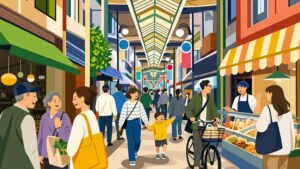
So, you’re moving to Osaka. You’ve heard the stories. It’s Japan’s rebellious second city, a merchant’s paradise where the food is loud and the people are louder. It’s not Tokyo. That much is clear. But as you start looking for a place to live, you’ll quickly run into the city’s first, and most fundamental, question: Kita or Minami? North or South? This isn’t just a matter of geography; it’s a choice of identity. It’s the difference between waking up to the hum of commerce and the roar of culture. It’s deciding which version of Osaka you want to call home.
The two poles of this urban magnet are Umeda in the north (Kita) and Namba in the south (Minami). To the uninitiated, they’re just two massive train station complexes choked with people. But to live here is to understand them as two distinct nations with their own customs, languages, and philosophies. Umeda is Osaka in a crisp, well-tailored suit, presenting its modern, international face to the world. Namba is Osaka in a worn-out festival happi coat, sleeves rolled up, ready to serve you another beer and tell you a story. As a historian, I see this divide as the living, breathing result of centuries of development. Kita grew around the new, forward-looking railways connecting Osaka to the rest of Japan. Minami, on the other hand, festered and grew organically from the ancient entertainment and theatre districts, a place built for pleasure, not just for passage.
This article isn’t a travel guide. You won’t find a list of the top ten takoyaki stands or the best photo spots. Instead, this is a deep dive into the real-life textures of these two city centers. We’ll explore the unspoken rules, the daily rhythms, and the fundamental mindset that defines life in each. Forget the tourist brochures. This is about choosing a neighborhood, a community, a life. It’s about deciding whether you belong in the polished corridors of Kita or the chaotic, vibrant alleyways of Minami.
This debate between urban finesse and laid-back vibrancy also echoes into everyday life, where understanding Osaka bicycle culture can offer insights into how local commuting habits bridge these two distinct realms.
The Tale of Two Cities: Kita’s Corporate Order vs. Minami’s Chaotic Charm
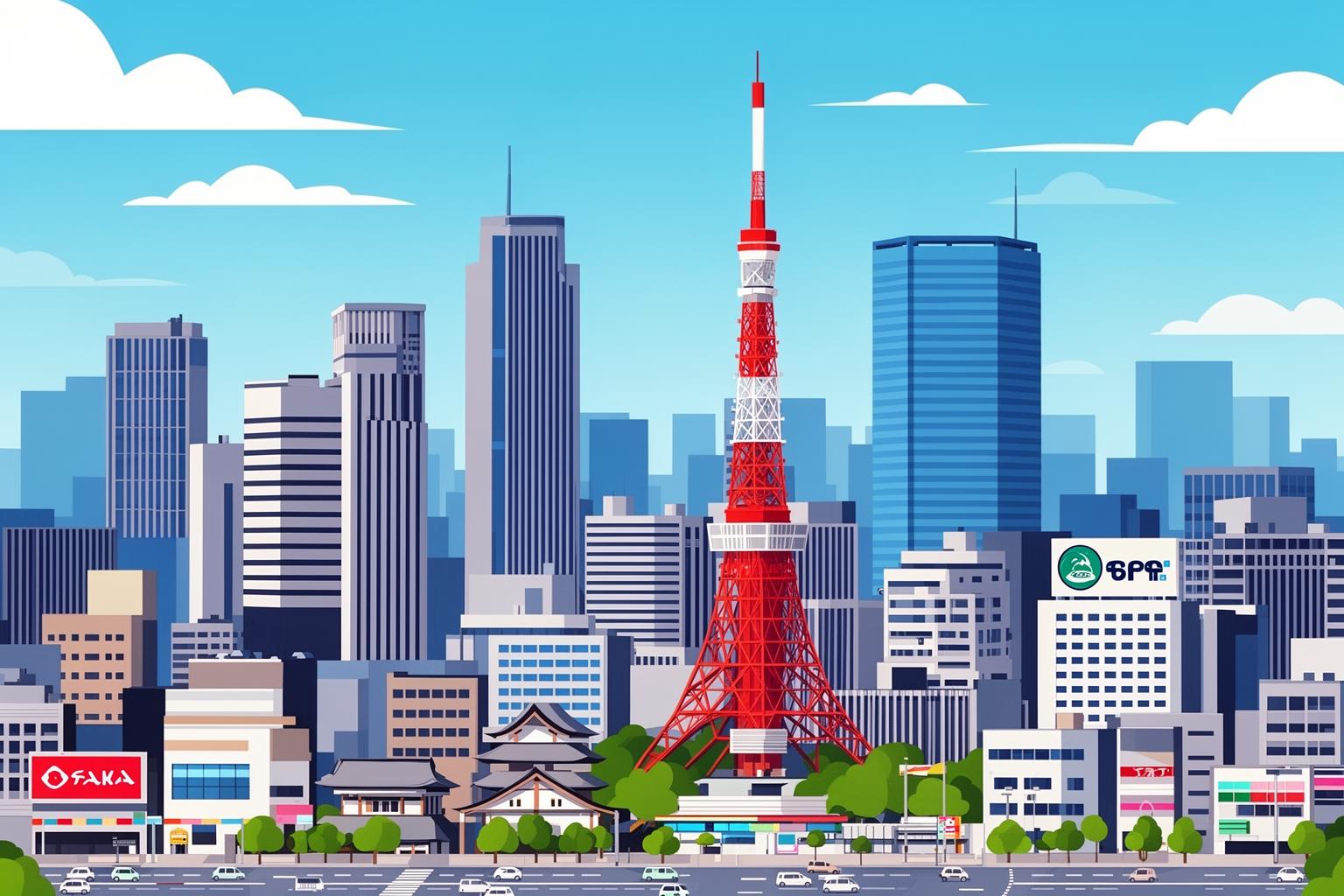
To grasp the difference between living in Kita and Minami, you first need to understand their core vibes. They are the twin engines of Osaka, yet they run on completely different fuels. One is driven by ambition and precision, while the other thrives on passion and spontaneity.
Umeda (Kita): The Polished Face of Commerce
As you step out of the station in Umeda, you are instantly surrounded by gleaming glass towers, broad avenues, and impeccably dressed professionals. This is Osaka’s central business district, its corporate hub. The energy here is tangible but restrained. It’s the deliberate pace of countless salarymen and women, the soft whisper of automatic doors at upscale department stores like Hankyu and Daimaru, and the refined murmur of conversations in stylish cafes. Umeda feels like a city with a purpose, always heading somewhere important. It’s structured, efficient, and deeply interconnected—not just by train lines, but by a shared sense of direction.
People you meet in Kita often have a mission. They’re commuting to a high-rise office, attending a business meeting, or partaking in a planned leisure activity like shopping for a designer bag or visiting an art exhibit. Interactions tend to be more formal and transactional, reflecting the business-oriented environment. A shopkeeper at Hanshin Department Store’s food hall will be impeccably polite and efficient, but less inclined to strike up a casual, meandering conversation than their counterpart in a Minami market stall. Life here follows a schedule. Lunch is a quick, high-quality meal in a depachika, and evenings might include a meticulously planned dinner at a restaurant with a view. The implicit rule in Umeda is that presentation matters—not flashy, but a projection of competence and sophistication. The architecture, from the Grand Front Osaka complex to the iconic Umeda Sky Building, embodies this vision of a modern, forward-thinking, and orderly city.
Namba (Minami): The Unfiltered Soul of the Streets
Now, take the Midosuji subway line eight minutes south to Namba. The moment you surface from underground, the atmosphere transforms dramatically. The air thickens, infused with the scent of grilled meat from countless tiny restaurants and the noise of overlapping music, pachinko parlors, and street vendors’ calls. Welcome to Minami. This is Osaka relaxed, its tie loosened, its shoes kicked off. It’s a sprawling, chaotic, and vibrantly human ecosystem of entertainment, food, and commerce at their rawest.
Namba and its neighboring districts—Shinsaibashi, Dotonbori, Amerikamura—are a sensory feast by design. The people here are a lively, eclectic mix. You’ll see tourists admiring the Glico Running Man sign, local youths dressed in avant-garde street fashion, focused chefs hustling through Kuromon Market, and raucous groups of friends spilling out of izakayas well into the night. Life in Minami unfolds on the street. It’s spontaneous and performative. Daily interactions are direct, informal, and often shot through with the city’s renowned humor. Shopkeepers aren’t just selling; they’re engaging, joking, making connections. The unspoken rule is a spirit of “nori”—a shared, improvisational energy. It’s about leaping into the moment, whether that means trying an unusual street snack, joining a crowd headed into a tiny bar, or striking up a chat with the person next to you. This is the heart of “kuidaore,” the Osaka philosophy of eating and living with abandon and joy.
The North-South Axis: How Midosuji Boulevard Divides and Connects
Midosuji, a grand, tree-lined boulevard running straight from north to south, serves as the physical and spiritual link between these two worlds. Traveling its length reveals the gradual transformation of Osaka’s character block by block. Beginning in Umeda, you are surrounded by flagship stores of global luxury brands and the monumental headquarters of major corporations. The atmosphere here exudes calm, affluent grandeur.
Heading south, the mood starts to change. You pass through Yodoyabashi and Honmachi, the city’s financial and administrative hubs. Here, the architecture blends stately pre-war buildings, like the Osaka City Central Public Hall, with sleek modern office towers. It’s quieter than Umeda, more sober and focused—a transitional zone, the calm before the southern storm.
Crossing the Nagahori-dori canal, the transformation quickens. You enter Shinsaibashi. Storefronts become trendier, the crowds younger. Side streets burst into a maze of independent boutiques and bustling shopping arcades. Finally, you reach Namba, where the boulevard’s refined elegance gives way to the neon-lit, anything-goes energy of Minami. This journey, taking less than ten minutes by subway, perfectly captures the essence of the city. Osakans are experts at code-switching: polished professionals of Kita by day, raucous revelers of Minami by night. The Midosuji Line is more than a commuter route—it’s a daily passage between two identities of the city. The secret to living in Osaka lies in understanding that these two worlds, while distinct, form inseparable parts of a single, complex whole.
Choosing Your Neighborhood: Practical Realities of Living in Kita vs. Minami
Your choice between Kita and Minami ultimately depends on the kind of daily life you want to lead. It’s about deciding what you want to see each morning when you step outside your front door. Both areas serve as major hubs, with the surrounding residential neighborhoods offering a wide range of lifestyles.
Life Around Kita
Living right next to Umeda Station itself is uncommon, as it is primarily a commercial area. However, the nearby neighborhoods provide excellent residential options that capture the spirit of Kita. To the east lies Tenma, known for the Tenjinbashi-suji, Japan’s longest shopping arcade. This neighborhood is a food lover’s haven, boasting a grittier, more local atmosphere than central Umeda, filled with numerous standing bars and izakayas. To the northeast is Nakazakicho, a quaint, bohemian area featuring Showa-era wooden houses now converted into unique cafés, vintage shops, and art galleries. It offers a peaceful, creative retreat just a ten-minute walk from the corporate buzz. To the west, Fukushima has developed into one of Osaka’s trendiest dining districts, home to a high concentration of Michelin-starred and Bib Gourmand restaurants tucked away in its side streets.
- Housing: Kita is defined by modern, high-rise apartments often referred to as “tower mansions.” These offer great views, contemporary amenities, and strong security, but come at a premium price.
- Pros: Transportation access is unmatched. Umeda is a key hub for JR, Hankyu, Hanshin, and several subway lines, providing easy travel anywhere in Kansai, including Kyoto and Kobe, for work or leisure. The area feels clean, orderly, and relatively quiet in its residential parts. Being close to the beautiful Nakanoshima Park, a riverside oasis with museums and cafés, is a major advantage.
- Cons: Life here can feel more impersonal and less community-focused than in the south. If you’re seeking the classic, bold Osaka character, Kita might feel too sterile and polished for your everyday life.
Life Around Minami
Living in Minami means immersing yourself in Osaka’s vibrant, round-the-clock culture. Residential options here are deeply embedded within the city’s entertainment districts. West of Namba is Horie, a trendy, fashionable neighborhood known for designer furniture shops, independent clothing boutiques, and chic riverside cafés. It offers a somewhat more relaxed and sophisticated version of the Minami lifestyle. Just north of Dotonbori is Amerikamura, the heart of youth culture, packed with vintage stores, live music venues, and a constant parade of unique street fashion. To the southeast lies Nipponbashi, or Den Den Town, Osaka’s equivalent of Akihabara, a paradise for anime, manga, and electronics fans.
- Housing: Minami offers a more varied housing mix, including older, smaller apartment buildings, renovated walk-ups, and some newer high-rises. It can be more affordable than Kita, but you may trade off space and modern conveniences for a prime location.
- Pros: You are literally steps away from the best food, shopping, and entertainment the city has to offer. The energy is contagious, with always something new to explore. For those who thrive on urban adventure and spontaneity, Minami is a never-ending playground. It’s a highly walkable area where everything you need for daily life is within easy reach.
- Cons: It can be noisy. Very noisy. The constant crowds, music, and nightlife can be overwhelming if you value peace and quiet. The sensory overload isn’t for everyone, and the area can feel relentlessly intense, especially on weekends and holidays.
The Osaka Mindset: Where Do You Belong?
Ultimately, the choice between Kita and Minami reflects what you want from your life in Osaka. It taps into the city’s dual identity, a constant balancing act between its history as a merchant city and its ambition as a modern metropolis.
A common misconception among foreigners is to see Dotonbori’s neon lights and assume that defines all of Osaka’s character. Many are surprised by the sharp, corporate efficiency of Umeda, which can feel more like Tokyo than the Osaka they expected. Conversely, a business traveler who only visits Umeda’s office buildings might leave thinking Osaka is just another polished Japanese city, missing the vibrant, chaotic soul beating just a few kilometers south.
The reality is that Osaka is both. The Kita mindset represents the city’s outward face: professional, ambitious, and economically strong. It reflects a legacy of commerce, a place where big deals happen and fortunes grow. This is the city’s “tatemae,” its public facade. In contrast, the Minami mindset is the city’s “honne,” its true, unfiltered self. It emerges from the lively theater scene, the practical spirit of small shopkeepers, and the communal joy of food and drink. It’s straightforward, down-to-earth, humorous, and deeply human.
Most Osakans live between these two extremes, seamlessly navigating both worlds in their daily lives. The real question for newcomers is: which world do you want as your default? Would you prefer to start your day in the calm, orderly north and venture south for leisure? Or would you rather wake up in the vibrant heart of the city and travel north occasionally for a touch of order and sophistication?
There is no right or “better” Osaka. There is only the Osaka that suits you. Umeda and the wider Kita area offer convenience, polish, and seamless connectivity—a perfect base for exploring Kansai from a modern, clean home. Namba and the lively Minami districts provide complete immersion, a daily journey into the cultural and culinary core of Japan’s most dynamic city. Choosing between them is the first, most important step in shaping your own Osaka story. Are you here for business or banter? The gleaming towers or the glowing lanterns? Your choice will lead you home.