
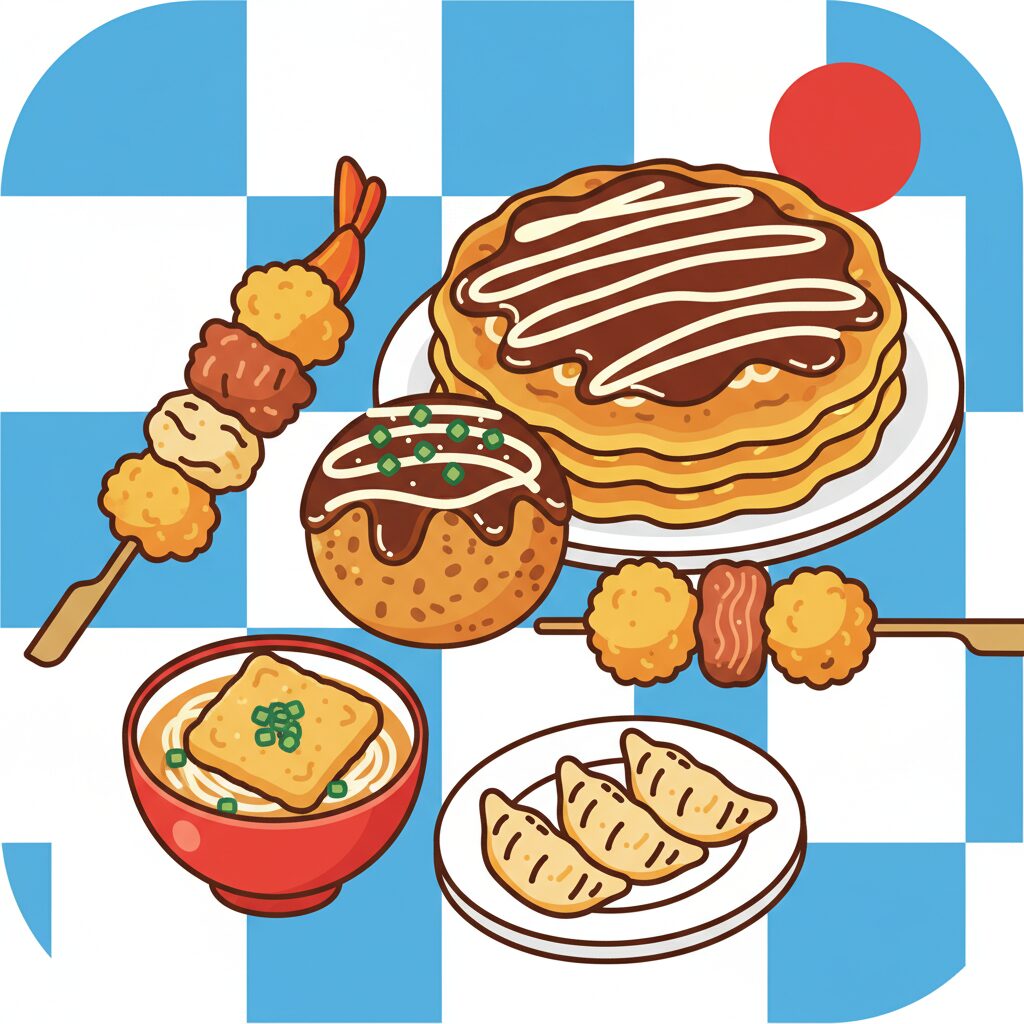
When you first hear about Osaka, you hear about kuidaore. The word gets tossed around like confetti, a catch-all for the city’s vibrant food scene. It translates, famously, to “eat until you drop,” and your mind probably jumps straight to a neon-drenched Dotonbori night. You picture steaming plates of takoyaki, sizzling okonomiyaki on a flat-top grill, endless skewers of kushikatsu. It’s a vision of glorious, delicious excess. And look, that’s not wrong. That’s definitely part of the picture. But it’s only the opening scene. Living here, you quickly learn that kuidaore isn’t just a tourist slogan for a night out. It’s not about gluttony. It’s a philosophy. It’s a critical, sharp-eyed, deeply ingrained mindset that dictates how Osaka people interact with food on the most fundamental level—not just in restaurants, but in the quiet, everyday ritual of grocery shopping. It’s a spirit that transforms a simple trip to the supermarket into a strategic mission for maximum value. Forget the flashy billboards for a second. The real heart of kuidaore beats loudest in the fluorescent-lit aisles of a local supermarket and the narrow, bustling corridors of a neighborhood shotengai.
This philosophy, rooted in everyday food rituals, also comes to life during the early hours as seen in Osaka’s early-morning culinary engine, which sets the tone for a day of vibrant flavors.
The Soul of Kuidaore: A Quest for Unbeatable Value

Before we even discuss where to shop, we need to redefine what kuidaore truly means in practice. In Tokyo, food shopping—especially for premium items—often carries an air of prestige. You visit a renowned depachika, the dazzling food hall in a department store basement, and pay extra for the brand, flawless packaging, and immaculate presentation. It’s about buying into a certain lifestyle. An apple isn’t merely an apple; it’s a work of art, nestled in a cushioned box, with a price that reflects that status.
Osaka completely upends that idea. Here, the driving force isn’t prestige; it’s kosupa, a common Japanese term short for “cost performance.” But in Osaka, it’s more than a mere consideration—it’s a way of life. An Osakan will see that beautiful, pricey Tokyo apple and immediately think, “Sure, but does it taste three times better than the slightly imperfect one from the local vendor? For that price, I could buy an entire bag from my usual place.”
This isn’t about being cheap. People in Osaka are willing to pay for quality. They seek out the best tuna, the most flavorful tofu, the freshest seasonal vegetables. But there must be a clear, undeniable connection between the price paid and the quality received. Value is the ultimate measure. A high price with no noticeable improvement in taste is seen as foolish, a waste. A low price for a poor product is just as pointless. The sweet spot, the goal of every shopping trip, is finding that perfect balance of outstanding quality and a reasonable, justified price. This tireless pursuit is the true essence of kuidaore. It’s a game of optimization, and everyone strives to win.
The Arenas of a Food City: Shotengai vs. Supermarket
This fixation on value is evident throughout the city’s two primary grocery arenas: the traditional covered shopping arcade, or shotengai, and the modern supermarket. Each offers a completely different experience, and an experienced Osaka shopper knows how to make the most of both.
The Living Museum: Exploring the Shopping Arcade
The shotengai is the vibrant core of old-school Osaka commerce. These covered streets, some extending for kilometers like the renowned Tenjinbashisuji, provide a chaotic and delightful sensory overload. They’re loud, crowded, and evoke a sense of stepping back in time. For a visitor, it can be daunting. For a local, it’s a valuable resource.
You don’t casually stroll into a shotengai to look around. You come with intent. You know the butcher on the third block sells the best pork for shabu-shabu. You know the elderly woman at the small vegetable stand sources her daikon radish from a farm just outside the city, making it crisper than any supermarket variety. You know the fishmonger, who calls out a greeting as you arrive, will honestly advise whether the mackerel or sea bream is fresher today.
This is where the Kuidaore mindset gets personal. Shopping in a shotengai is about building relationships. Over time, vendors recognize you. They learn your preferences. They might add an extra handful of bean sprouts (omake, a little bonus) or share a cooking tip for the fish you just bought. This atmosphere is worlds apart from the impersonal efficiency of a supermarket. The value here lies not only in price but in expertise, freshness, and human connection. You aren’t merely a consumer; you’re part of a neighborhood ecosystem. You engage with specialists dedicated to their craft—whether tofu, pickles, or tea. That specialized knowledge is integral to the value you’re paying for.
The Supermarket Battlefield: An Osakan’s Approach
Don’t assume Osaka residents are solely traditionalists. They are highly pragmatic. While the shotengai serves for specialty, high-quality items, the supermarket is a domain of strategic, high-volume shopping. Chains such as Life, Mandai, Kansai Super, and the bulk-buy haven Gyomu Super are ubiquitous.
What sets Osaka shoppers apart is their approach. In many cities, people choose a supermarket based on convenience—usually the one closest to home or along their commute. In Osaka, loyalty is conditional and calculated. A true Osaka shopper maintains a mental map of every supermarket within a two-kilometer radius, complete with a detailed understanding of their strengths and weaknesses.
They know Mandai offers the cheapest eggs on Tuesdays. They know Life’s private-label milk strikes the best balance between quality and price. They know Kansai Super has an unexpectedly good bakery, though its produce is expensive. They know Gyomu Super reigns supreme for frozen goods and bulk sauces. Shopping trips are rarely one-stop affairs. They often involve visiting two or three different stores to piece together the week’s groceries, maximizing both cost and quality for each item. I’ve watched neighbors return with three separate plastic bags from three different chains. It may seem inefficient, but in the kuidaore mindset, this is peak efficiency. Why pay 20 yen more for the exact same carton of soy milk when the other store is just a three-minute walk away? To an Osakan, that’s not just 20 yen; it’s a matter of principle.
The Modern Palate: Applying Kuidaore to Health and Global Foods
There’s a widespread misconception, stemming from the Dotonbori stereotype, that Osaka cuisine is solely a celebration of fried, heavy dishes. While we definitely enjoy our okonomiyaki and kushikatsu, everyday meals are much more balanced. Health consciousness is a significant and growing trend here, just as it is elsewhere. The key difference lies, once again, in the approach. The kuidaore mindset is now being applied with precise accuracy to organic produce, health foods, and international ingredients.
The Organic Audit: More Than Just a Label
As specialty health food stores like Bio-Ral and other local organic markets gain popularity, they face the full force of Osaka’s discerning consumer base. People here don’t merely see an “organic” label and pay double without question. The inspection begins.
Where was this spinach cultivated? Is it JAS-certified organic, or merely gen-noyaku (reduced pesticides)? What is the price per 100 grams compared to the non-organic option? Does it truly taste better? An Osakan will perform a thorough cost-benefit analysis right there in the produce section. They demand proof of value. If the organic carrots are wilted and twice as expensive, they’ll stay on the shelf. But if they discover a local farmer selling exceptionally sweet, pesticide-free tomatoes at a small market, they become devoted customers and enthusiastically share the find. This is a grassroots movement driven by tangible benefits, not by fashionable marketing jargon.
This scrutiny extends to international grocery stores as well. Spots like Kaldi Coffee Farm, Seijo Ishii, and the upscale Ikari Supermarket are treasure troves for imported goods. A Tokyoite might visit these stores for the stylish, cosmopolitan vibe. An Osakan embarks on a mission. They seek the most authentic Italian pasta, the hottest Thai curry paste, or the most distinctive French cheese, all while checking prices on their phone. They crave global flavors but demand them at reasonable prices. The thrill lies in uncovering a top-quality imported product offering excellent kosupa—a small taste of the world that meets their strict standards of value.
My Mission for Mountain Fuel
This philosophy directly influences my own passion. As an avid hiker, I spend weekends on the trails of the Kongo and Ikoma mountain ranges bordering Osaka. My weekly grocery shopping revolves around preparing for these excursions. For me, kuidaore isn’t about eating until I’m full at the table; it’s about packing food that prevents me from collapsing from exhaustion on a steep climb.
My version of the kuidaore treasure hunt involves sourcing the ideal ingredients for trail food. It’s a complex process. I look for high-energy, nutrient-dense, lightweight foods. That means visiting a nut and dried fruit wholesaler tucked away near Umeda for great deals on almonds and apricots. It means finding a particular rice from a small vendor in a shotengai that produces the tastiest, most durable onigiri that won’t crumble in my pack. I stop by a specialty tsukemono (pickle) shop for salty, flavorful pickles that replenish electrolytes and last several days without refrigeration. Every item in my backpack results from this careful search. I optimize for taste, nutrition, weight, and, naturally, price. It’s the kuidaore mindset adapted for the outdoors—maximum performance at minimal cost and weight.
The Unwritten Rules of the Osaka Grocery Game

Navigating this world as a foreigner can feel overwhelming, but it really comes down to understanding a few unspoken rules. Embracing them is the quickest way to start feeling like a local.
The Power of a Simple Question
In Tokyo, a quiet, efficient transaction is often preferred. In Osaka, silence is seen as a missed opportunity. When you’re at a local butcher, fishmonger, or vegetable stand, your most effective tool is your voice. Ask a simple question: “Kyou no osusume wa?” (What’s your recommendation for today?).
This isn’t just a courtesy; it’s a strategic move. The vendor knows their products better than anyone else. They know which fish arrived fresh this morning, which cut of meat is at its best, or which vegetables are in peak season. By asking, you show respect for their expertise, and in return, you receive insider information that ensures a better meal. They want to sell their best, freshest items because it means you’ll come back. It’s a mutually beneficial relationship built on shared interest and is a key part of the Osaka shopping experience.
The Art of the Evening Discount
Step into any Japanese supermarket after around 7 PM, and you’ll observe an intriguing ritual: the placement of nebiki (discount) stickers. As closing time nears, staff walk through the aisles, reducing prices on perishable items like bento boxes, sushi, salads, and baked goods. Discounts start at 10% or 20% off and can reach 30%, 50%, or even 70% off during the last hour.
For many, it’s simply a way to save money. For the Osaka shopper, it’s a competitive challenge. They know exactly when the staff member with the sticker gun typically begins their rounds at their local supermarket. They circle the bento aisle with focused attention, waiting for the perfect moment to pounce. The excitement isn’t just about finding a cheap meal; it’s the triumph of scoring a premium 1000-yen sushi platter for just 300 yen. It’s the ultimate expression of kuidaore: getting the maximum deliciousness for the lowest price. It’s a nightly game of strategy and timing that unfolds in supermarkets across the city.
Beyond the Cart: The Kuidaore Philosophy of Life
When you zoom out, you see that this intense, analytical, and value-driven approach to grocery shopping reflects Osaka culture itself. It’s pragmatic. It’s straightforward. It’s unpretentious. It’s a city that prioritizes substance over style and function over form.
This sheds light on why Osaka feels so different from Tokyo. The focus on cost-performance over brand names, the emphasis on personal relationships with vendors rather than slick marketing, and the pleasure found in spotting a clever deal—all reveal a culture that is grounded and refreshingly straightforward. Your social status isn’t determined by which upscale store you frequent. Instead, your status as a savvy consumer, as someone who knows, is earned through knowledge, diligence, and an insistence on genuine value.
For anyone moving to or living in Osaka, my advice is this: embrace it. Don’t just opt for the most convenient supermarket. Wander through that old, slightly worn shotengai. Visit the tiny tofu shop that’s been around for fifty years. Ask the butcher what’s fresh today. Wait for the 50% off sticker. Transform grocery shopping from a chore into a quest. Because when you start judging your food by its taste and price rather than packaging, you’re not just saving a few yen—you’re starting to think like an Osakan. And there’s no better way to feel at home in this city.








