You’ve seen them. Of course, you have. Tucked away on a side street in Tennoji, nestled between a ramen shop and a dry cleaner in Kyobashi, or lining a forgotten alley in Namba. They are the little mysteries of the Osaka streetscape. A simple sign, maybe buzzing with a tired neon glow, spells out a whimsical name: “Snack Tomoko,” “Peacock,” or “Bar Starlight.” Below it, a solid, windowless door. Sometimes, you hear a muffled burst of laughter or the faint, reverb-drenched strains of an 80s power ballad leaking from within. You pause, you wonder, and you walk on. What in the world is a “snack bar”? Is it a place for chips and candy? Why is it so secretive? For many foreigners navigating daily life in Osaka, these ubiquitous yet opaque establishments represent a cultural question mark, a barrier between the public life of the street and the private life of the city. They feel like clubs you haven’t been invited to, worlds you can’t quite access. But I’m here to tell you that behind those closed doors lies one of the most authentic, unfiltered, and deeply human experiences you can have in this city. It’s where the soul of neighborhood Osaka truly lives. Forget the tourist traps and the polished cocktail lounges for a moment. The snack bar, or sunakku, is not about gourmet food or craft drinks. It’s about connection. It’s a community living room, a therapy couch, a stage for amateur rock stars, and a social glue that holds neighborhoods together, all presided over by a singular, charismatic figure. To understand the snack bar is to understand the Osakan need for genuine human interaction, for a place to let your guard down, to be yourself among a temporary family of strangers. It’s a concept that feels worlds away from a Western bar, and even subtly but significantly different from its Tokyo counterparts. It’s a ritual, a performance, and a safe harbor, and learning to open that door is a key to unlocking a deeper layer of life in this vibrant, chaotic, and wonderfully human city.
Immerse yourself even deeper into Osaka’s vibrant bar culture by exploring tachinomi etiquette for practical tips on drinking like a local.
What Exactly is a ‘Snack’ Bar? Decoding the Mystery
Let’s clear up the first and most important misconception: a snack bar has very little to do with snacks. Sure, you’ll be served a small bowl of rice crackers, some peanuts, or perhaps a few slices of dried squid, but that’s not the main point. This small dish, known as otoshi, is less about food and more a symbol that you’ve paid the cover charge and are now part of the evening’s event. The real product here isn’t something edible; it’s social interaction. At its core, a snack bar is a small, intimate drinking spot managed by a proprietor, usually a woman called the “Mama-san” or, less commonly, a man known as the “Master.” This person is the heart and soul of the entire operation. She isn’t just a bartender pouring whiskey and soda. She’s the host of a nightly gathering, the conductor of a social orchestra, a keeper of secrets, a shoulder to lean on, and the ultimate judge of the room’s atmosphere. Her personality defines the bar. Is it a quiet, reflective place for older patrons to enjoy shochu? A lively, boisterous karaoke hangout for local businesspeople? A stylish, modern space catering to a younger crowd? The Mama-san decides. Her taste in music, style of conversation, and level of engagement all influence and shape the experience.
The Anatomy of a Snack Bar
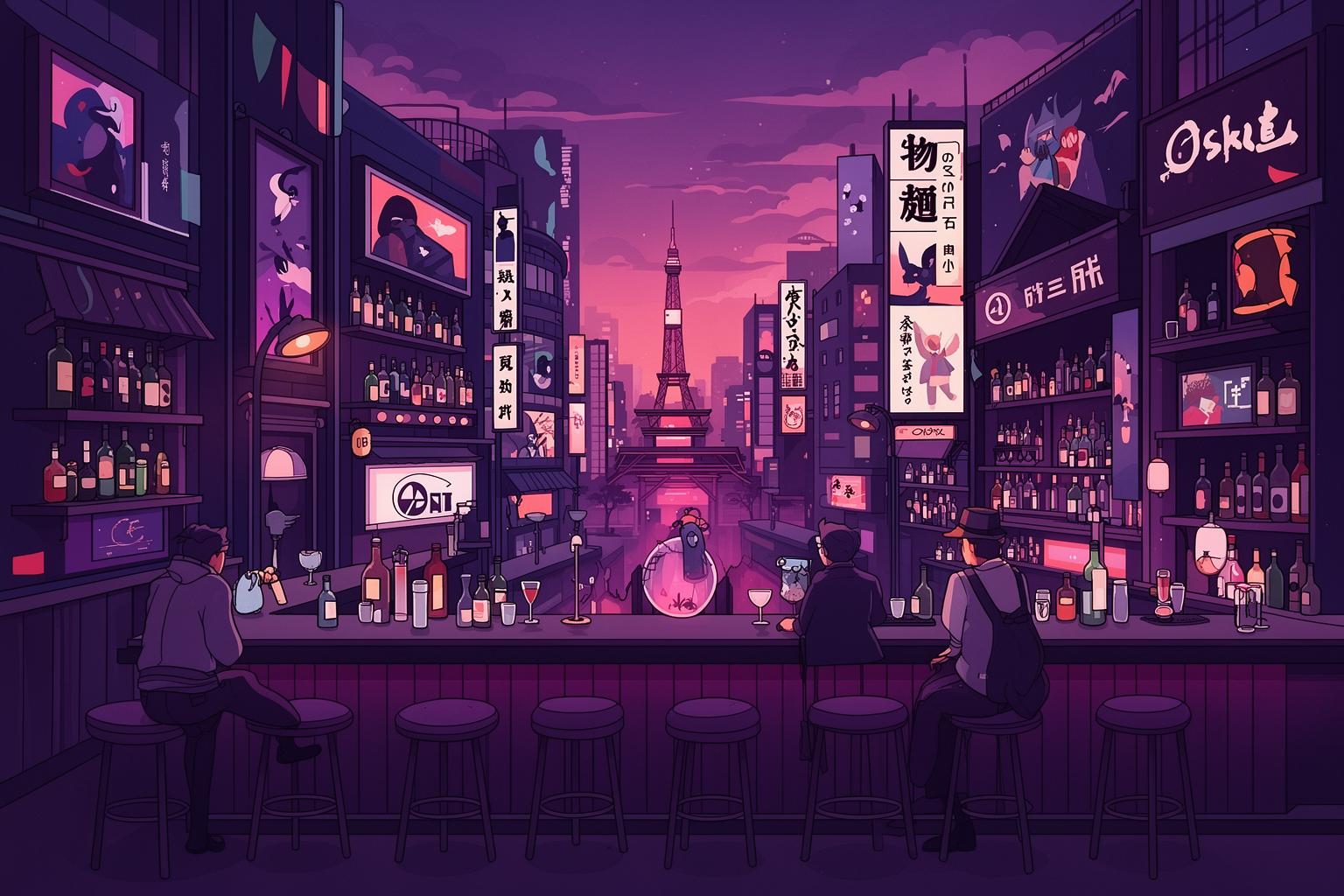
Step inside, and you’ll find the layout almost always follows the same formula, a proven design for encouraging conversation. The centerpiece is the counter, a polished wooden stage where the Mama-san presides. This is where you, as a newcomer, should aim to sit. It’s the best seat for the action and your direct line to the host. Behind her, shelves packed with hundreds of liquor bottles, many tagged with handwritten labels. This is the famous “bottle keep” or botoruki-pu system, a key concept we’ll explore later. The rest of the space is usually small and cozy, decorated with items that feel personally chosen rather than professionally designed—photos of regular customers on a fishing trip, a vintage movie poster, a calendar from the local sake distributor. You might find a few small, low tables or a couple of plush, vinyl-upholstered booths in the back, generally taken by groups of regulars. And somewhere, often in a corner treated like a shrine, rests the karaoke machine. This isn’t the sleek, tablet-controlled system from a dedicated karaoke chain. It’s more likely an older, all-in-one unit with a thick, heavy songbook that feels like a sacred text, its pages worn thin by countless hopeful singers searching for their anthem.
The Financial System: It’s Not Pay-as-You-Go
This is where many foreigners get confused. You don’t just walk in, order a beer, pay, and leave. The snack bar runs on a different economic model, based on membership and hospitality rather than simple transactions. First, there’s typically a cover charge, or cha-ji. This can range from a few hundred yen to several thousand, covering your seat, the otoshi snack, and access to karaoke. Think of it as a club entry fee for the night. Once inside, you can order drinks individually, but the more common and economical method, especially for regulars, is the bottle keep system. You purchase a full bottle of whiskey, shochu, or bourbon—your name is written on a tag, and it stays on the shelf behind the bar, waiting for you. For the next several months, whenever you come by, you pay only the cover charge and for your mixers (water, soda, ice, etc.). This system is ingenious. It fosters loyalty, turning you from a passing customer into a member with a tangible stake in the establishment, and provides a strong incentive to return. It says, “This is your bottle, in your bar. You belong here.” It’s a subtle yet profound shift in the customer-business relationship, transforming a commercial space into something personal and shared.
The Unspoken Rules of the Snack Bar Universe
Entering a snack bar for the first time can feel like stepping onto a stage without a script. The rules are unwritten, and the etiquette is learned through observation. Yet these social codes are exactly what make the experience so rich and reveal much about the Osakan spirit. It’s a performance of community, and once you know your role, you’re no longer merely an audience member but part of the cast.
You Are a Guest, Not Just a Customer
This is the key principle. In a typical bar, your interaction is transactional. You order, pay, and consume. At a snack bar, however, you enter the personal realm of the Mama-san. You are her guest, and your behavior should reflect that. This means you don’t simply shout an order. You greet her, engage in conversation. You don’t ignore the people next to you. The counter is designed to break down barriers, not build them. The expectation is that you will participate. This reflects a broader Osakan cultural trait: a preference for direct, human-to-human connection. Business in Osaka has traditionally been built on relationships, not just contracts. A snack bar is the evening school where this social skill is practiced. You chat with your neighbors, inquire about their work, compliment the Mama-san on her earrings. You are actively helping to create a warm, communal atmosphere. Silently staring at your phone is the ultimate social blunder; it’s like ignoring the host at a dinner party.
Everyone is Family (For the Night)
One of the most striking and delightful things about an Osaka snack bar is how quickly social barriers disappear. You might sit next to a 65-year-old construction company owner and a 28-year-old office worker. In everyday life, their paths might never cross. But within ten minutes, the company owner may be pouring you a drink from his bottle, asking about your hometown, while the office worker shares pictures of her dog. This swift formation of a temporary “family” is quintessential Osaka. There’s a general mindset that life is too short for formality. People are curious, straightforward, and skilled at friendly interrogation. They want to know your story. This isn’t just idle chat; it’s community weaving. The Mama-san often serves as the spark, making introductions: “This is Kenji-san, he runs the takoyaki stand down the street. This is Emily, she’s from America!” Suddenly, you have context and connection. This contrasts with the often more reserved and hierarchical social dynamics you may find in Tokyo, where introductions are more formal and mingling across social levels can be limited.
The Karaoke Machine is a Sacred Altar
Karaoke in a snack bar is not the same as yelling into a microphone in a private room with friends. It is a communal ritual with its own commandments. First, thou shalt not monopolize the microphone. It’s a shared resource. You sing a song, then pass the book. Second, thou shalt cheer for everyone. It doesn’t matter if the singer is painfully off-key and destroying a classic ballad. You clap, wave your hands, maybe even sing along to the chorus. The goal isn’t a flawless performance; it’s participation and mutual support. This is deeply Osakan. It’s a city that values enthusiasm over polish, effort over innate talent. Making a fool of yourself with enthusiasm is far more admired than being too cool to try. Third, song choice matters. You’re not just singing for yourself; you’re singing for the group. Choosing a song everyone knows—an old enka classic or a Showa-era pop hit—is a gift to the collective. When the whole bar joins in the chorus, you’ve reached snack bar nirvana. It’s a moment of perfect, uninhibited connection, fueled by cheap whiskey and shared nostalgia.
Osaka vs. Tokyo: The Snack as a Social Hub
To truly understand the cultural significance of the snack bar in Osaka, it’s helpful to compare it with the social scene in Tokyo. While Tokyo certainly has its own version of these small neighborhood bars, their role and prominence feel quite different. The social fabric of the two cities is composed of distinct threads, and the snack bar perfectly exemplifies this contrast.
In Tokyo, a city characterized by its vast scale and corporate culture, socializing tends to be more structured and segmented. After-work drinks often take place in large, efficient izakaya chains with colleagues from your own department, keeping you within your familiar social bubble. The “third place”—a concept referring to a social space separate from home and work—can often feel more impersonal or purpose-driven. People visit specialist coffee shops to work, upscale bars for specific cocktails, or clubs dedicated to particular music genres. Interactions may feel more transactional, and the venues more clearly defined by their commercial purpose.
Osaka, by contrast, follows a different social logic. As a city shaped by merchants rather than samurai, its culture is traditionally more pragmatic, egalitarian, and focused on relationships. The snack bar is the quintessential Osakan third place. It’s a lively, human, and socially inefficient mixer, which is precisely its charm. It isn’t about networking for professional gain; it’s about ningenmi—that lovely untranslatable Japanese word for “human-ness” or “human touch.” In an Osaka snack bar, a small company’s president, a retired schoolteacher, a young freelancer, and a local shopkeeper all mingle as equals. Titles and business cards take a backseat to your personality and your willingness to join a duet. This mirrors the city’s generally flatter social hierarchy, where people value a good sense of humor and conversational ability over impressive job titles.
This kind of organic, cross-pollinating social life can be harder to find in the more stratified environment of Tokyo. The snack bar in Osaka acts as an essential outlet for the pressures of a conformist society. It’s a place where you can be your unfiltered self. The desire for genuine, unguarded connection is a strong undercurrent in daily life here. People want to move beyond small talk and discover who you really are. While a Tokyoite might politely wait for a formal introduction, an Osakan regular in a snack bar is more likely to sidle up, pour you a drink, and ask, “So, what’s your deal?” This frankness, which sometimes might be mistaken for nosiness, is really an invitation: “Let’s skip the formalities and be friends.”
What Foreigners Often Misunderstand
For all their appeal, snack bars are surrounded by misconceptions for newcomers. Their closed-off nature often leads to assumptions that are completely opposite to the reality inside. Recognizing these common misunderstandings is essential to gaining the confidence to finally step through that door.
Misunderstanding 1: “It’s a Seedy or Exclusive Place.”
This is probably the biggest obstacle. You see a basement-level bar with no windows and a sign stuck in time since 1985. Your mind, shaped by Western cultural expectations, might assume it’s a gentlemen’s club, a hostess bar, or some kind of members-only spot linked to the yakuza. While such places exist, the vast majority of neighborhood snack bars are quite different. They are not “seedy” in the sense of offering paid companionship. The Mama-san is the owner, not a hostess paid to flirt. The closeness is that of a community, not a business transaction. The absence of windows and the closed door isn’t to conceal illegal activity; it’s to create a private, insulated environment. It’s a “safe space” where regulars can escape the outside world, vent about their boss, sing their hearts out, and be themselves without judgment. It seems exclusive because it’s a close-knit community, but like many tight communities, they are often surprisingly welcoming to new members who come with respect and genuine interest. The door is shut not to keep you out, but to keep the charm in.
Misunderstanding 2: “The Pricing is a Rip-off.”
The pricing system of snack bars can be confusing at first and may make you feel like you’re being overcharged. You might have a couple of drinks and a small bowl of nuts and then get a bill for 5,000 yen. The immediate reaction is often, “What? I got ripped off!” This reflects a misunderstanding of what you’re actually paying for. You aren’t just covering the cost of two highballs and some snacks. You’re paying for a bundle of intangible services. You’re paying for the Mama-san’s time, her conversation, her emotional effort to ensure everyone is enjoying themselves. You’re paying rent on your seat for several hours. You’re paying for unlimited use of the karaoke machine. You’re paying for the atmosphere, the community, and the overall experience. The cover charge is your admission to this one-of-a-kind social theater. Viewed this way, the bottle keep system becomes a terrific deal. You’re investing in a long-term social experience. Seeing it strictly as a per-item transaction misses the whole point. It’s more like a subscription to a social club, not a corner shop for liquor.
Misunderstanding 3: “I Can’t Go Alone or if I Don’t Speak Perfect Japanese.”
This is a common worry. The idea of entering a small room full of strangers when you don’t speak the language fluently can feel daunting. But in many ways, going to a snack bar alone is the best way to enjoy it. Going with a group of foreign friends creates an English-speaking bubble; you’ll enjoy each other’s company but won’t truly blend into the room. Going solo makes you approachable. You become a mystery to be explored, a new character in the night’s unfolding story. Regulars and the Mama-san will be curious. And while some Japanese is definitely helpful, fluency isn’t required. What you need most is a positive attitude. Simple phrases, willingness to use translation apps, a smile, and above all, readiness to participate are your greatest assets. The single best communication tool in a snack bar is the karaoke book. Pick a universally known English song—The Beatles, Queen, John Denver—and sing it with all your heart. It’s a gesture that says, “I want to be part of this.” Your imperfect Japanese will be met with patience and encouragement; refusing to engage, however, is the only real language barrier.
How to Take the Plunge: Your First Snack Bar Adventure
Okay, you’re convinced. You’re ready to exchange confusion for connection. But how do you go from being an intrigued outsider to a welcomed guest? Taking the first step is the toughest part, but with the right mindset, you can navigate your maiden visit with ease and discover a hidden gem that might become your home away from home.
Finding the Right Place
Not all snack bars are alike, and some are more beginner-friendly than others. The best way to ensure a good first experience is to be invited by a Japanese friend or colleague. This is the golden ticket. Your friend can handle introductions and explain the local customs, providing a soft landing. If you’re going alone, however, you’ll need to do some scouting. Explore neighborhoods known for drinking, like Tenma, Fukushima, or the alleys of Umeda. Look for hints. A bar with a fully opaque door and no price list outside might be reserved for hardcore regulars. A place with a small window, a menu posted outside, or a sign that says “Karaoke & Drink” in English is likely more welcoming to newcomers. Trust your instincts. Does the place radiate a warm, if slightly worn, charm, or does it feel intimidatingly silent? Start with one that seems a little less daunting.
The First Visit: Opening Moves
Take a deep breath and slide the door open. The first thirty seconds are vital. All eyes will turn to you. Smile. Give a confident “Konbanwa!” (Good evening!). Don’t linger awkwardly by the door. Move to an empty seat at the counter. The Mama-san will greet you. This is your chance to introduce yourself. You can say, “Hajimemashite. Hitori desu.” (Nice to meet you. I’m alone.) A key question to ask is, “Shisutemu wa dou nattemasu ka?” (What’s your system?). This shows respect and acknowledges that it’s not a typical bar. She will explain the cover charge. Order a simple first drink, like a beer or a highball. As she serves you, she’ll probably ask where you’re from and what you’re doing in Japan. This is the start of the conversation. Be open, friendly, and curious about her and the other patrons.
Breaking the Ice and Becoming Part of the Scenery
Now, your goal is to shift from a novelty into a participant. The easiest way is through small, thoughtful gestures. After a while, you might ask the Mama-san what she’s drinking and offer to buy her one. You could do the same for the person next to you. This simple act immediately signals that you’re there to socialize. Get involved with the karaoke. Even if you don’t sing right away, watch others. Applaud their performances. When your neighbor returns to his seat after a spirited song, say, “Jozu desu ne!” (You’re really good!). When you feel ready, take the plunge and pick a song. It doesn’t matter if you’re a great singer. Your willingness to join in is what earns respect. As the night continues, conversations will flow more easily. You’ll learn about people’s jobs, their families, their favorite Hanshin Tigers players. You’re no longer just a foreigner in a bar; you’re a temporary member of a small, fleeting community.
More Than a Bar, It’s Osaka in a Bottle
When you leave at night and step back onto the quiet street, the city feels transformed. The mysterious, closed doors you once passed no longer appear as barriers. Instead, they become opportunities, each holding a unique miniature universe of stories, songs, and connections. The snack bar is a microcosm of Osaka itself. It may seem loud, a bit chaotic, and slightly intimidating from the outside, but once inside, you discover a heart of genuine warmth, unpretentious humor, and a deep, genuine interest in those around you. It’s where the famous Osakan friendliness goes beyond a marketing cliché; it is a living, breathing tradition, refined through nightly rituals of shared drinks and communal singing. It’s a place where communication matters most—the ability to share a laugh, listen to a concern, and connect on a human level. In a world that grows increasingly digital and isolated, the Osaka snack bar remains a stubborn, beautiful relic of analog community. It reminds us that the most meaningful connections often happen not through screens, but over a shared bottle of whiskey, a bowl of rice crackers, and a heartfelt rendition of a classic rock song. Finding “your” snack bar means finding your place in the city, gaining a local support network, and truly feeling the rhythm of everyday life. So next time you spot one of those enigmatic doors, don’t just pass by. Take a chance. Push it open. You might just discover you’re home.