

“I just paid 800 yen for this coffee,” you might say to a friend in Tokyo, expecting a simple nod or an “Oh, that’s a bit pricey.” Say the same thing in Osaka, and the response is a whiplash of energy. “800 yen?! Were the beans hand-carried from a mountaintop by a golden eagle? Nande ya nen!” This, my friends, is your baptism into the world of tsukkomi. It’s the verbal jab, the playful correction, the lightning-fast retort that serves as the backbone of daily conversation here. It’s not just for the stand-up comedians on TV; it’s what you’ll hear from the grandma selling takoyaki, the salaryman next to you at the bar, and your own neighbors. This isn’t just about humor; it’s a fundamental communication tool, a social litmus test, and one of the biggest cultural divides between Osaka and the rest of Japan. Understanding tsukkomi is understanding the city’s very soul. It’s the reason Osaka feels so intensely alive, so relentlessly engaging, and for some, so wonderfully, chaotically home.
Discover even more of Osaka’s unique energy by exploring its renowned kuidaore culture, where every mealtime is as spirited as a tsukkomi retort.
What Exactly is Tsukkomi? More Than Just a Punchline
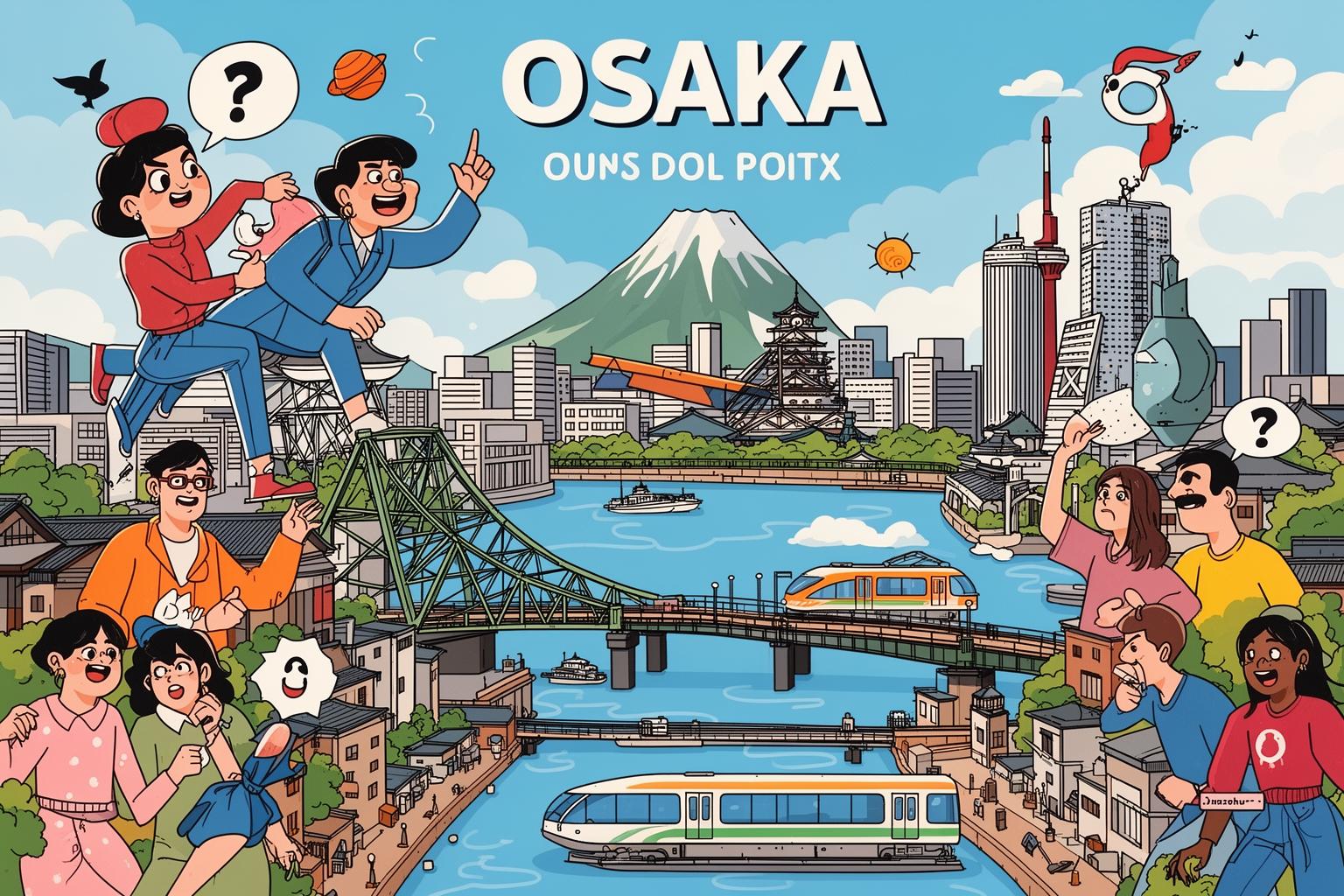
At its essence, conversation in Osaka often resembles a two-person comedy act called manzai. One person is the boke, who delivers silly, absurd, or slightly off remarks. The other is the tsukkomi, the “straight man,” whose role is to highlight the absurdity with a sharp, witty retort. A classic tsukkomi phrase is “Nande ya nen!” roughly meaning “Why?!” or “What the heck?!” But reducing it to just a punchline misses the full meaning. A tsukkomi is proof of active listening. It signals, “I’m not merely hearing you; I’m engaged with what you’re saying, and it’s interesting enough to respond to.” In a culture that can often feel reserved, the tsukkomi acts as a spark of conversational energy—a bridge. Imagine you trip on a perfectly flat pavement. In many places, a concerned “Are you okay?” is the usual response. In Osaka, however, you’d more likely hear a rapid-fire “Oi, where are you looking?! The sky isn’t going anywhere!” followed immediately by a sincere “You good?” The joke comes first; it breaks the tension and builds a playful connection before showing concern. It’s a test of social skill. The person receiving it is expected to laugh it off, perhaps with a self-deprecating remark, completing the conversational exchange. It’s a performance, a word dance where the rhythm matters more than the individual steps.
The Unspoken Rules of the Game: Reading the Air
This isn’t a free-for-all roast. The art of tsukkomi follows a complex, unspoken set of rules based on timing, tone, and relationship. A tsukkomi from a close friend feels like a warm hug wrapped in a playful slap. The same words from a superior at work could feel like a humiliating dressing-down. Reading the air—kuuki wo yomu—is essential. The aim is to generate shared laughter, not to hurt. It’s a high-wire act. You must instantly gauge the situation: Is this person in the right mood? Is my comment clever enough? Will it come across as funny or just mean? The speed at which Osakans make these judgments is astonishing. It’s a skill honed over a lifetime of this conversational style. The exchange is like a volley. The boke gently tosses a conversational tennis ball, and the tsukkomi smashes it back with impeccable comedic timing. A delayed or feeble response, or worse, no response at all, lets the ball drop. This can be seen as disinterest, coldness, or even a social snub. That is why silence can be so awkward in Osaka. In Tokyo, a pause in conversation can be a moment for thoughtful reflection. In Osaka, it’s often a void desperately waiting to be filled with a joke. This constant pressure to engage is what makes the city so vibrant, but also, for some, so exhausting.
Who Thrives in Osaka’s Tsukkomi Culture?
The Quick-Witted and Verbally Skilled
If you enjoy the excitement of banter and the swift exchange of a friendly debate, you’ll find your community in Osaka. People who think quickly and relish a verbal sparring match will immediately feel at home. The city values cleverness. Making a friend laugh with a perfectly timed tsukkomi is a social currency more prized than a polite compliment. Extroverts and those unafraid to speak their minds often thrive here. You don’t need to be a comedian, but you must be an eager participant. A foreign resident who masters a simple “Honma ka?” (“Really?”) or “Akan ya n!” (“That’s no good!”) with the right playful tone will be warmly welcomed and met with hearty laughter. It shows you’re not just living in the city; you’re embracing its true, underlying language of connection through humor.
The Socially Insightful
This atmosphere is a haven for those with high emotional intelligence. It’s for people who can see beyond the literal meaning of words and recognize the intent behind them. When an old lady at the market says, “That’s a weird shirt you’re wearing, you look like a traffic cone,” she isn’t criticizing your style. She’s opening a door. She’s saying, “I see you. You’re interesting. Talk to me.” Someone who can smile and respond with, “Gotta stay visible for safety!” will have made a lifelong friend. Understanding that a tease is an invitation, not an insult, is essential. It allows you to skip dull small talk and jump straight into genuine human connection. Those who appreciate this shortcut to intimacy will feel a deep sense of community here.
Admirers of Authenticity and Directness
If you’ve ever been frustrated by the layers of politeness and indirectness (tatemae) common in other parts of Japan, Osaka will feel like a breath of fresh air. A tsukkomi is, by nature, direct. It’s an honest, unfiltered reaction. While wrapped in humor, it’s fundamentally a truthful response to something absurd. There’s a refreshing absence of pretense. People often say what they think, using humor to soften the blow. This creates an atmosphere of striking candor. You rarely have to guess what an Osakan is thinking; they’ll likely tell you and then make a joke about it. For those who value straightforward talk and genuine reactions over carefully curated politeness, Osaka’s communication style is not just enjoyable—it’s a profound relief.
Who Might Struggle? The Potential Pitfalls
The Literal Thinker
If you interpret language purely logically and literally, you’re in for a lot of confusion. Osaka conversation is filled with irony, exaggeration, and playful falsehoods meant to be challenged. For example, if you tell a colleague you’re going to Kyoto for the weekend, they might respond, “Kyoto? Why would you go to that boring, stuck-up city?” They don’t genuinely dislike Kyoto. It’s a boke, a setup. They’re expecting you to defend it and engage in a playful exchange. A literal reply like, “Actually, Kyoto has many important historical sites and is a designated UNESCO World Heritage site,” will be met with a blank look. You’ve misunderstood the game—you’ve brought a textbook to a rap battle. To get by, you need to recognize the absurdity and play along rather than analyze it.
The Highly Sensitive or Easily Offended
Let’s be straightforward: the humor can get personal. It might target your clothes, your accent, something you just did, or a story you just shared. The tsukkomi laser zeroes in on the individual. While rarely meant to be cruel, it can feel like a personal attack if you’re unaccustomed to it. If your immediate reaction to teasing is hurt or embarrassment, you may find daily interactions exhausting. In Tokyo, a colleague would probably never comment on your new, slightly-too-bright tie. In Osaka, they’ll spot it from across the room and shout, “Whoa, that tie is so bright I need sunglasses!” It’s a performance for everyone to enjoy. If you can laugh and take a bow, you’ve won. If you shrink away in shame, you’ve broken the social contract, and people may hesitate to tease you further, leading to a different kind of isolation.
Those Accustomed to Formal Politeness
If your idea of politeness involves deference, indirectness, and avoiding personal topics, Osaka’s culture may come across as blunt, coarse, and even rude. The usual conversational buffers you expect are simply absent. People will ask direct questions, offer unsolicited opinions, and tease you within minutes of meeting. This isn’t disrespect; it’s a different way of showing respect. In Osaka, lively, humorous banter is a sign of respect. It means they consider you strong enough to handle it and worthy as a conversational partner. Treating you with formal, distant politeness can almost feel like an insult, suggesting they don’t find you interesting enough to joke with. This reversal of politeness expectations is often the most difficult aspect for newcomers to understand.
How to Navigate Tsukkomi as a Foreigner
Start by Observing
Before diving in, become a keen observer of the scene. Watch local TV, especially the ubiquitous manzai comedy shows. Listen to how people speak in restaurants, along the shotengai shopping arcades, and on the train. Pay attention to the rhythm—the sharp burst of the tsukkomi following the winding setup of the boke. Notice the smiles and laughter that ensue. You’ll start to recognize patterns in the cadence and the kinds of jokes that hit home. Passive listening is your training ground, helping you build a mental map of the conversational terrain before you attempt to navigate it yourself.
Learn the Magic Phrase: “Nande ya nen!”
This is your master key to Osaka communication. “Nande ya nen!” is the versatile tool of tsukkomi. Use it when someone says something unbelievable, absurd, or just plain silly. The great thing is, you don’t need to be perfect. In fact, a foreigner using it with a bit of an accent often comes across as charming and funny. It’s a low-risk, high-reward move. When your friend complains about being too broke to go out but then shows off their new limited-edition sneakers, a timely “Nande ya nen!” with a laugh is the ideal, expected response. It shows you understand—you’re in on the joke.
Don’t Be Afraid to Be the Boke
Here’s a secret: as a non-native, you’re in the perfect position to be the boke. You’re not expected to grasp every nuance of the language or culture. This is your advantage. Your grammatical errors, cultural slips, and slightly off questions make ideal setups for a native Osakan to deliver a playful tsukkomi. Don’t be embarrassed by mistakes—embrace them as openings for conversation. When someone jokingly corrects you, your role is simple: laugh. Laugh at their joke, and laugh at yourself. By doing so, you complete the exchange smoothly. You’ve played your part in the routine and built a connection without needing to be a comedy expert.
Find the Affection in the Jab
This is the key mindset shift. You need to reinterpret what might initially feel like criticism. The sharp remarks about your singing at karaoke, the jokes about how slowly you eat—these aren’t insults. They signal inclusion. In Osaka, being ignored is far worse than being teased. A tsukkomi shows that someone feels comfortable enough with you to drop formalities. It’s their way of giving you a friendly pat on the back, saying, “You’re one of us now.” When you start recognizing the warmth behind the wit and the affection inside the jab, the city of Osaka will feel less like a sensory assault and more like a lively, welcoming, endlessly entertaining family.
The Deeper Meaning: Why Tsukkomi is the Heartbeat of Osaka
This style of communication didn’t just emerge spontaneously; it is deeply embedded in Osaka’s history. As Japan’s historic merchant hub, life in Osaka was fast-paced, competitive, and pragmatic. Quickly establishing trust and assessing business partners was crucial for survival. The drawn-out, ceremonial courtesies of the samurai class or Kyoto’s imperial court had no place here. Conversations needed to be efficient, direct, and genuine. Humor, especially the boke-tsukkomi interplay, became the key social glue. It enabled people to swiftly evaluate each other’s intelligence, character, and camaraderie. It served as a way to test limits while building connection simultaneously. This spirit endures today. The tsukkomi is more than mere humor; it’s a tool for fostering community. It instantly breaks down barriers between strangers, creating a shared moment of laughter that says, “We’re on the same team.” It explains why asking a stranger for directions often becomes a five-minute comedy act. It clarifies why Osaka’s reputation for friendliness stands apart. This isn’t passive, polite friendliness. It’s active, engaged, and demanding. It invites you to be present, alert, and join the dance. To live happily in Osaka is to learn those steps.








