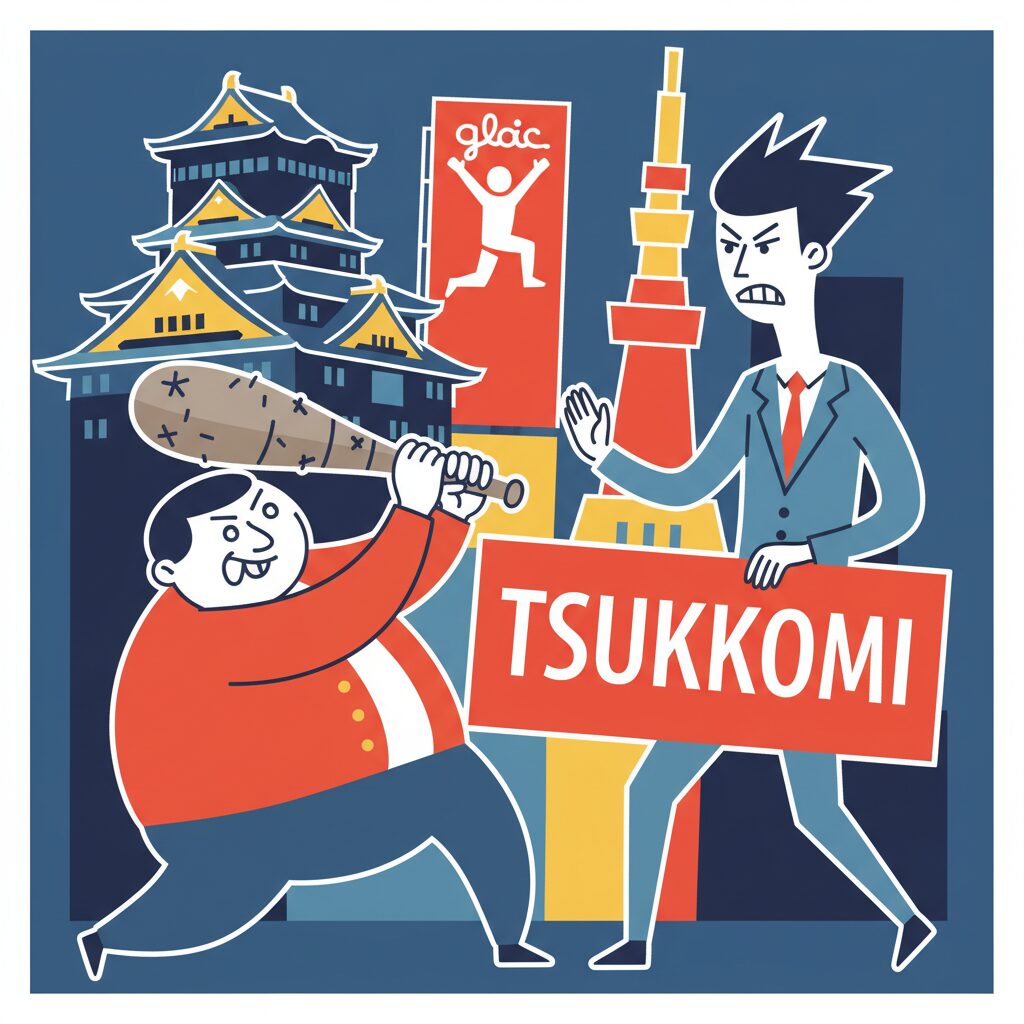
Ever been in an Osaka convenience store, minding your own business, and the cashier looks at your two onigiri and one bottle of tea and says, with a dead-serious face, “Big party tonight, eh?” You freeze. Is he making fun of you? Is this a trick question? You manage a nervous laugh, pay, and flee, replaying the moment in your head. Welcome to Osaka, where daily conversation isn’t just about exchanging information—it’s about landing the punchline. This city moves to a different beat, a rhythm of setup and retort, of playful jabs and sharp comebacks. It’s a world away from the reserved politeness you might find in Tokyo. Here, a conversation with a stranger isn’t a success unless someone laughs. This isn’t rudeness; it’s an invitation. It’s a test to see if you’re on the same wavelength. Understanding this constant, low-level comedy routine is your key to unlocking the city, to moving beyond being a visitor and starting to feel like you actually belong here. This is the world of `boke` and `tsukkomi`, the fundamental building blocks of Osakan social life. It’s a language spoken in shops, on train platforms, and in offices, and learning to speak it, or at least recognize it, will change everything about your life in this city.
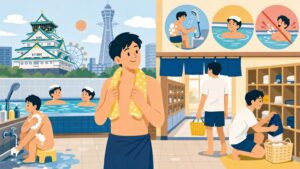
Embracing Osaka’s playful spirit often means immersing yourself in unexpected local experiences, which is why exploring affordable local sento can be an ideal way to connect with the city’s genuine lifestyle.
The Unspoken Rules of Manzai in the Supermarket Aisle
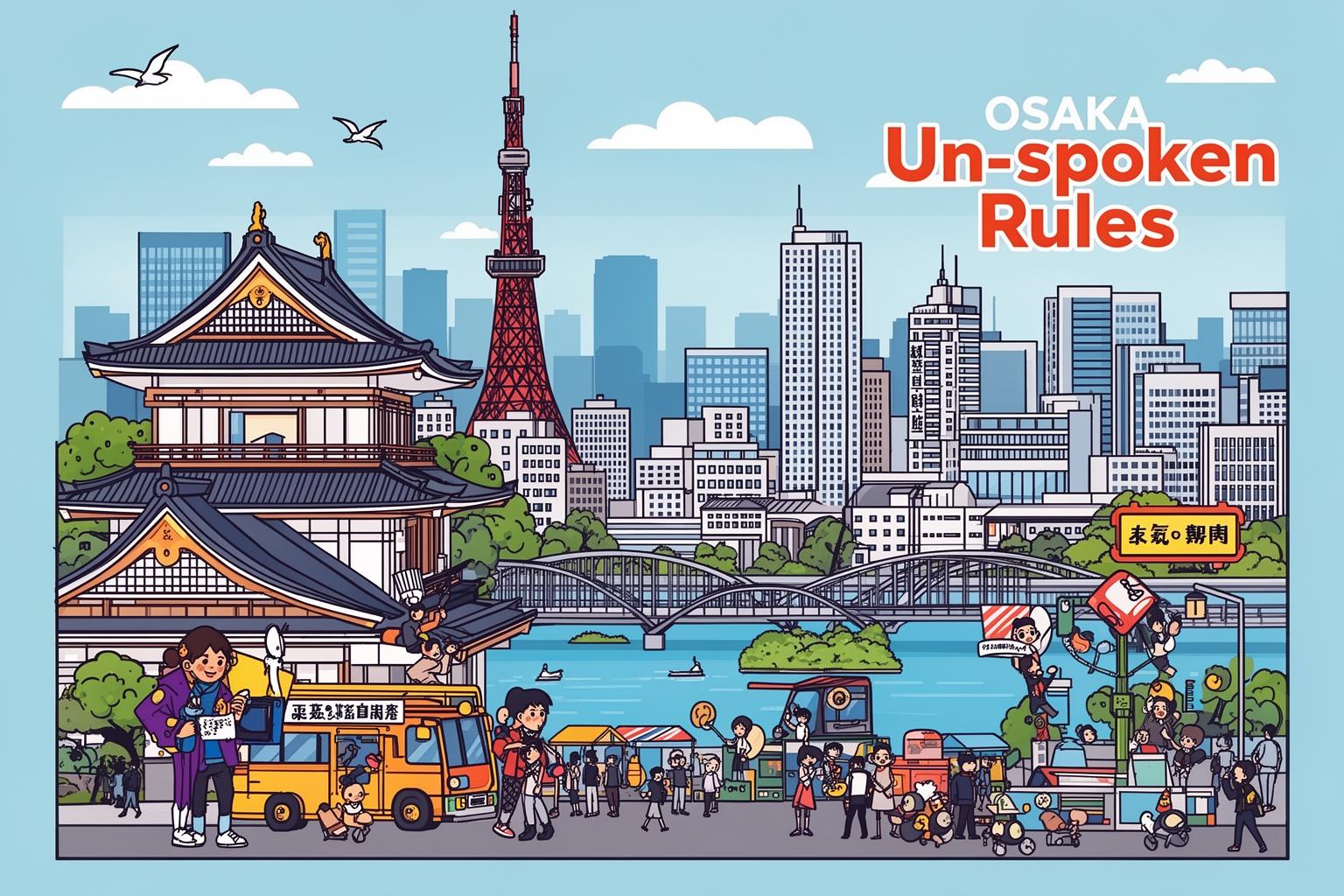
In much of Japan, social interaction centers on creating harmony by minimizing conflict. You speak politely, avoid imposing yourself, and keep things smooth. In Osaka, harmony is built through shared laughter. The whole city acts as an informal stage for `manzai`, a traditional form of Japanese stand-up comedy featuring two roles: the `boke`, or the comic fool, and the `tsukkomi`, the sharp-witted straight man who corrects them. This dynamic isn’t limited to TV comedians; it’s the underlying script in nearly every conversation. It’s the operating system of Osaka. Not grasping this dynamic is like trying to use a computer without knowing how to click a mouse. You’ll observe things happening, but won’t understand why, and certainly won’t be able to join in.
What Exactly are Boke and Tsukkomi?
Let’s break it down. The `boke` is the setup. Their role is to say or do something absurd, out of place, or just wrong on purpose. It’s a playful act designed to open the door for comedy. Imagine standing at a takoyaki stand in Namba when it starts to rain. The person next to you might turn and say, “Ah, perfect weather for swimming.” That’s the `boke`. He knows it’s not actually good swimming weather. He’s tossing you a conversational ball, expecting you to return it.
This is where the `tsukkomi` comes in. The `tsukkomi` delivers the punchline. Your role is to highlight the absurdity of the `boke`. You snap the conversation back to reality with a sharp, witty comeback. A typical reply to the swimming remark might be, “Nande ya nen!” which loosely means “What the heck!” or “Why would you say that?!” You might also say, “You’d catch a cold!” or “Only if you’re a duck!” The exact words matter less than the act of responding. It shows you got the joke, appreciate the humor, and are actively engaging in the social exchange. It’s a duet. The `boke` serves, and the `tsukkomi` returns. Together, you create a brief moment of shared amusement.
Why Silence is the Ultimate Social Faux Pas
What happens if you don’t respond? If the person says, “Perfect weather for swimming,” and you just offer a tight-lipped smile and look away? In Tokyo, that might be taken as a polite way to end an unwanted interaction. In Osaka, it’s social death. It’s awkward. It leaves the `boke` hanging, their conversational gift dropped on the floor. It might be seen as you being cold, uninterested, or worse, thinking you’re above their joke. An Osakan might walk away thinking, “Wow, what a stiff.” They weren’t trying to annoy you; they were trying to bond with you in the most Osakan way possible. The `tsukkomi` is a sign of life. It’s feedback that says, “I’m listening, I’m with you, we’re in this together.” Not giving it is like letting a phone ring without answering. The silence is deafening.
Reading the Room: When and How to Play the Game
This verbal exchange occurs everywhere, all the time. It’s not limited to bars or comedy clubs. The city itself is a 24/7 improv stage, and you’re always a potential cast member. Learning to recognize the cues and respond appropriately is a skill you build over time, much like figuring out the intricate subway system. At first, it can feel confusing and overwhelming, but gradually you begin to notice the patterns and navigate it with confidence.
The Everyday Stage: Where You’ll Encounter Boke-Tsukkomi
Stay alert. You’ll come across these moments in the most ordinary places. The woman running the vegetable stand at Kuromon Market might lift a giant daikon radish and say, “This one’s strong enough to be a baseball bat.” That’s your cue. The security guard at a building in Umeda could glance at your company ID and joke, “Oh, the president! Welcome back, sir.” Your coworker might notice you adding sugar to your coffee and quip, “Trying to make candy in there?” These aren’t serious remarks. They are all `boke`. They’re little comedic gifts, wrapped in absurdity, waiting for you to unwrap them with a `tsukkomi`.
Another classic example is the exaggerated compliment that’s really a friendly jab. If you wear a very loud shirt, an Osakan friend won’t say, “That’s an interesting shirt.” Instead, they’ll say, “Wow, I can see that shirt from space! Do you need batteries for it?” The intent isn’t to insult your taste. It’s to get a laugh. A perfect `tsukkomi` would be, “Yep, it’s solar-powered. You’re just jealous of my clean energy style.”
Your Role as a Foreigner: To Boke or to Tsukkomi?
So how do you, as a non-native, jump into this fast-paced verbal tennis game? Here’s an essential tip: start as the `tsukkomi`. It’s much easier and safer to be the reactor rather than the instigator. Crafting a good `boke` from scratch requires a deep understanding of cultural context and linguistic nuance. A poorly executed `boke` can come off as strange or, worse, offensive. On the other hand, everyone appreciates a good `tsukkomi`. It’s a supportive role, helping to make the other person’s joke successful.
Here’s your basic `Tsukkomi` Starter Pack for survival:
- “Nande ya nen!” (なんでやねん!): The Swiss Army knife of `tsukkomi`. It can mean “Why?!”, “No way!”, “What are you talking about?!”, or “Don’t be ridiculous!” The key is in the delivery. Say it with a bit of laughter and a slight tone of exasperation. It’s almost always the right response.
- “Akan!” (あかん!) or “Akan yaro!” (あかんやろ!): This means “That’s no good!” or “You can’t do that!” Use it when someone suggests something absurd. If the takoyaki vendor “accidentally” tries to give you twenty pieces instead of eight, you can wave your hand and say, “Akan, akan!”
- “Honma ka?” (ほんまか?): “Really?” or “Seriously?” This one works best delivered with a healthy dose of theatrical skepticism. Raise an eyebrow. Give them a once-over. When your coworker claims to have run a marathon on his lunch break, a disbelieving “Honma ka?” is the perfect reply.
- The Physical Tsukkomi: For people you know better, a light, playful tap on their arm or shoulder while delivering your line is a classic `manzai` move. Don’t actually hit them; it’s a pantomime of exasperation. A simple wave of the hand, as if dismissing their nonsense, also works perfectly.
You don’t need perfect grammar or a flawless accent. The charm of `tsukkomi` lies in the effort itself. Osakans love it when foreigners try to join the game. Even a simple, laughing “No, no, no!” in English does the trick. It shows you’re not just a passive observer—you’re an active participant. You get it.
Osaka vs. Tokyo: A Tale of Two Conversations
The cultural divide between Osaka and Tokyo is most evident in these subtle, everyday exchanges. It’s not that Tokyoites are cold or unfriendly, but their social priorities differ. Their style of communication is tailored for a distinct purpose. Grasping this difference is essential to understanding what makes Osaka so special.
The Tokyo Transaction: Efficiency and Politeness
In Tokyo, a typical service encounter exemplifies quiet efficiency. You enter a bakery, point to your choice, say “kore kudasai” (this please), pay, receive your item, and exchange polite “arigatou gozaimasu.” The aim is a smooth, seamless transaction with minimal unnecessary conversation. Social harmony is upheld through a shared understanding of roles and respect for personal space. The dialogue is functional, serving the transaction’s purpose and nothing beyond. It is marked by a clean, elegant precision, rarely becoming a stage for spontaneous humor.
The Osaka Interaction: Entertainment and Connection
Now, imagine the same bakery scene in Osaka. Upon entering, the owner might immediately comment on the weather, your shoes, or the bag you’re carrying. “Whoa, that’s a big backpack! You carrying all your hopes and dreams in there?” That’s the opening `boke`. As you select your bread, they might say, “Don’t get that one, it’s my least favorite,” with a playful wink. When you pay, they might jokingly short-change you by 10 yen, watch your reaction, then laugh and hand over the correct coin. The entire exchange is sprinkled with little moments of performance. Here, the transaction is merely the excuse for the interaction, not its sole purpose. In Osaka, “service” often carries the unspoken expectation of a brief chat, a quick joke, a shared moment of humanity. This is what people mean when they say Osaka is “friendly.” It’s not just a vague warmth; it’s an active, performative kindness that draws you in through humor.
Common Misunderstandings and How to Navigate Them
This communication style, so familiar to locals, can be challenging for newcomers. It often breaks the social norms you’ve learned elsewhere in Japan or in your home country. What is intended as a friendly gesture can easily be misunderstood as an insult if you’re unprepared.
“Are They Making Fun of Me?” – Teasing as a Sign of Affection
This is the key point. An Osaka local points out that you have a bit of rice on your cheek. A coworker teases you about your clumsy Japanese. A shopkeeper jokes that your choice of souvenir is strange. Your first reaction might be embarrassment or even offense. You might assume they are being rude or mean-spirited. In 99% of cases, you’d be mistaken. This teasing is a `boke` setup. It’s a way of including you. By gently making fun of you, they are treating you like a local, like a friend. They feel comfortable enough to drop the formal politeness usually reserved for strangers and outsiders (`soto` people). They are inviting you into their inner circle (`uchi`). The right response is not to become defensive but to engage and make a `tsukkomi`. If someone teases your Japanese, you might reply, “It’s the latest dialect from my hometown! Very trendy!” They will appreciate it. Seeing their teasing as a compliment requires a mindset shift but is crucial for thriving in Osaka.
“Why Are They So Loud and Direct?” – The Logic Behind the Volume
Compared to the softer, more indirect speech typical in many other parts of Japan, Osaka-ben can sound loud, fast, and surprisingly direct. This is not aggression; it’s simply part of the communication style. Comedy depends on good timing and clear delivery. A `boke` needs to be obvious, and a `tsukkomi` needs to have impact. The whole performance demands a certain level of energy and volume. People aren’t shouting at you; they’re projecting to ensure the joke is heard. This directness also cuts through ambiguity. An Osakan is more likely to tell you exactly what they think, for better or worse, often softened with humor. While it may be jarring at first, many foreigners come to appreciate this honesty. You rarely have to guess what an Osaka person is thinking; they’ll probably find a funny way to tell you.
The Ultimate Goal: From Stranger to “One of Us”
Learning to navigate the world of conversational comedy is more than just an entertaining party trick. It is the single most powerful tool for forging genuine connections and friendships in Osaka. It serves as the passcode that unlocks the city’s heart.
Graduating from Basic Tsukkomi
After spending some time in the `tsukkomi` trenches and feeling more assured, you can challenge yourself with the final frontier: initiating your own `boke`. This represents the advanced level and marks your graduation into Osaka life. It demonstrates that you don’t just grasp the culture—you actively contribute to it. Try it in a low-pressure setting. At a restaurant, when the waiter brings a tiny appetizer, you might widen your eyes and ask, “Is this the main course? I’m so full!” When you see a friend with a new haircut, you could say, “Did you lose a fight with a lawnmower?” The key is to deliver it with a perfectly straight face, then break into a smile. A successful `boke` that prompts a hearty `tsukkomi` from a local is a moment of pure triumph. It’s proof that you have truly arrived.
Humor as the Social Glue
In the end, `boke` and `tsukkomi` are much more than just ways to exchange jokes. They are the social glue of the city, a ritual that continuously reinforces connection and shared identity. They transform the anonymous clerk at the FamilyMart into someone who greets you with a familiar joke every morning. They break the ice with a new team at work. They defuse tense moments with a well-timed, self-deprecating remark. In a city proud of its merchant heritage, every interaction is an opportunity to build relationships, and humor is the primary currency. So next time a stranger in Osaka says something utterly ridiculous, don’t be confused or offended. Take a breath, smile, and deliver your best “Nande ya nen!” You’re not just responding to a joke—you’re speaking the language of Osaka.