Mention the name Nishinari to someone from Osaka, and you’ll likely get a knowing glance, a slight pause, maybe even a quiet warning. “Be careful over there.” In a country celebrated for its order and pristine public spaces, Nishinari is often painted as the exception, a corner of the canvas that’s frayed and smudged. It’s the neighborhood whispered about, the one defined by what it lacks rather than what it possesses. Coming from Tokyo, where every surface seems buffed to a high gloss and every interaction feels curated, the very idea of a place so openly raw was a culture shock in itself. The stories you hear are of poverty, of danger, of a Japan that’s been left behind. But a story told by an outsider is rarely the whole truth. It’s a reflection, distorted and simplified. The real question isn’t whether the stories are true, but what they leave out. What is the rhythm of daily life in a place that refuses to be polished? Who are the people who call these streets home, and what does their existence say about the true character of Osaka? To understand Nishinari is to peel back the polished veneer of modern Japan and look at the gears that still turn underneath, gritty and unfiltered. It’s a study not in urban decay, but in urban resilience.
Contrasting Nishinari’s rough authenticity, a closer look at Minamikawachi’s rural soul further illuminates the multifaceted community spirit that characterizes Osaka.
The Air You Breathe: Deconstructing the Nishinari Vibe
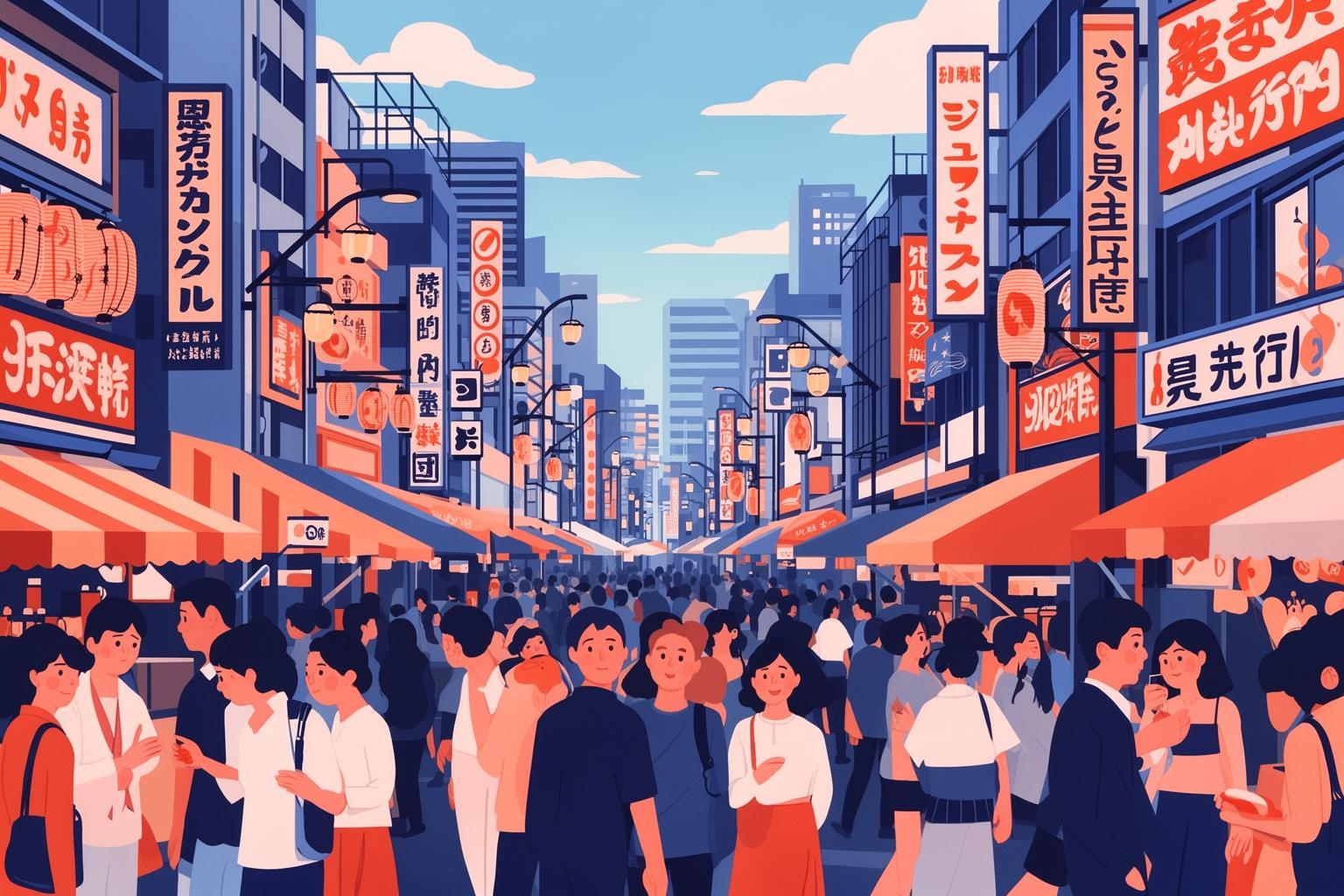
The moment you step off the train, it’s clear you’re somewhere different. There’s a sensory shift, an instant adjustment to your expectations of a Japanese city. The air feels heavier, thick with the scent of grilled offal, cheap cigarettes, and the sweet, slightly cloying aroma of inexpensive detergent. This sharply contrasts with the perfumed, climate-controlled atmospheres of most major Japanese stations. Nishinari declares itself with a blunt honesty that can be startling—a trait that is quintessentially Osaka, yet without any pretense.
A Tale of Two Stations: Shin-Imamiya vs. the Rest of Osaka
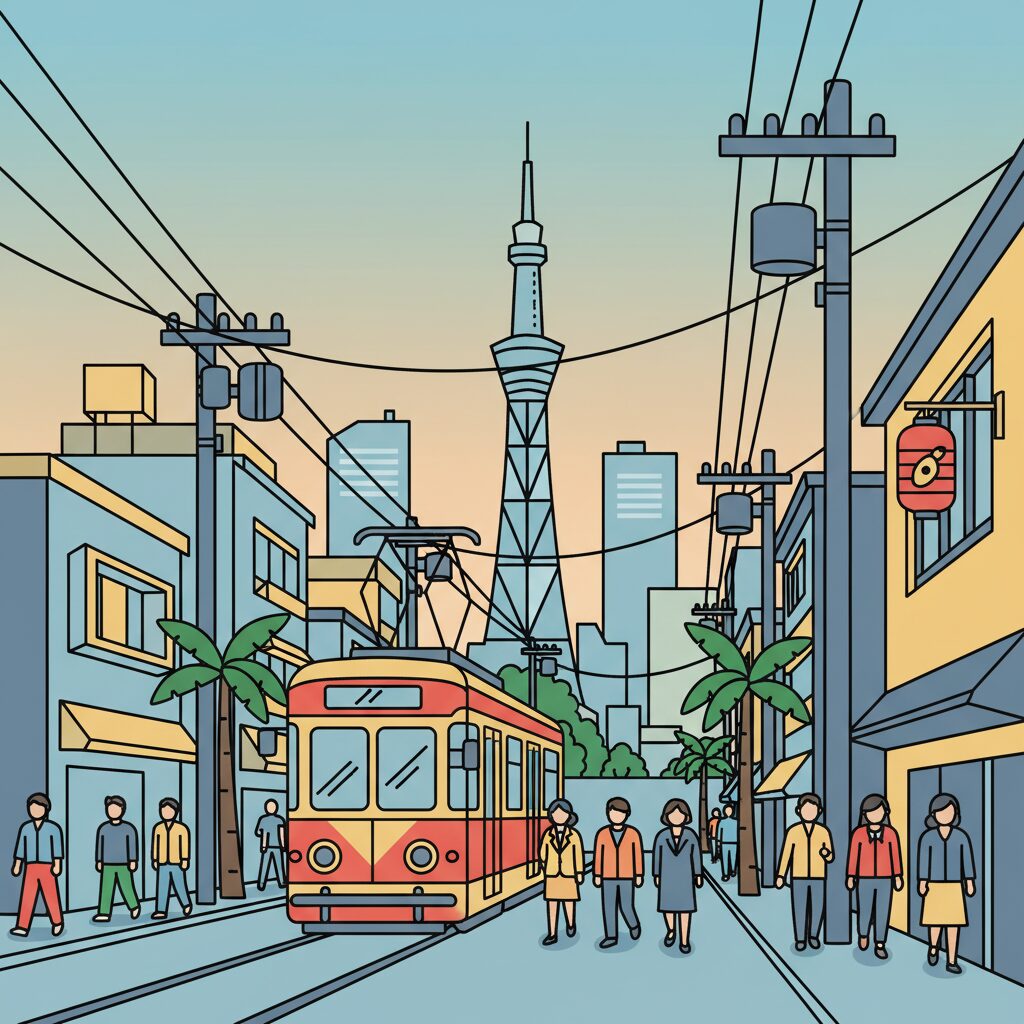
Get off at Shin-Imamiya or Dobutsuen-mae, the two primary entrances to Nishinari. Here, there are no gleaming department stores connected to the station, no pop-up shops selling artisanal sweets. Instead, you’re met by a chaotic ballet of daily life unfolding outdoors. Older men in worn work clothes nurse cans of chu-hai on public benches, their faces lined with the stories of countless early mornings. Vending machines, their buttons faded by the sun, offer drinks for as little as fifty yen. The advertisements promote pachinko parlors, 24-hour diners, and legal aid services rather than luxury brands.
In contrast, the grand, cathedral-like space of Osaka Station in Umeda makes you a consumer, directed by elegant signage toward endless retail options. That environment is designed to encourage spending and aspiration. In Shin-Imamiya, you are simply a person in a place. The setting is focused purely on function: guiding you from the train to the street, to work, to an affordable meal, to a small room you can pay for. This absence of commercial polish is often mistaken for neglect or danger. In Tokyo, such an unadorned space would be an anomaly, a failure in urban design. But in Nishinari, it’s intentional. This is a place where function shapes form, where life isn’t a spectacle to be consumed, but a reality to be navigated. It’s the city’s engine room, not its showroom, and it makes no apologies for the grease and noise.
The Sound of the Streets
Nishinari’s soundscape is as unique as its visuals. Step away from the main roads, and the roar of traffic gives way to a symphony of human activity. You hear the sharp click-clack of shogi pieces in a curbside game, the low murmur of conversation seeping from open doors of standing bars, the metallic rattle of a bicycle weaving through pedestrians. Arguments, laughter, and the off-key crooning of a man singing to himself fill the air. It is worlds apart from the polite, hushed tones of a Tokyo suburb.
Absent is the corporate soundtrack typical of modern Japan. There are no endlessly repeating jingles for electronics stores, no saccharine pop music piped into every corner. The soundscape is natural, created by the people who live there. This fosters a sense of intimacy and immediacy. You are not a passive observer in a branded environment; you are an active participant in a living community. This raw auditory experience is central to Osaka’s character. The city has always been louder, more expressive, and less intent on maintaining a serene facade than its eastern counterpart. Nishinari is simply the most concentrated embodiment of this fact—a place where the sounds of life are allowed to exist free from moderation or monetization.
The Economic Engine Room: Work, Money, and Daily Sustenance
To truly understand Nishinari, you need to grasp how money functions here. It’s a micro-economy centered on cash, immediacy, and the relentless chase for kosupa, or cost performance. The neighborhood’s entire ecosystem exemplifies the art of stretching a yen, a philosophy that resonates deeply with Osaka’s pragmatic spirit but is practiced here out of sheer necessity. This isn’t a place of long-term investments or career ladders; it’s about daily calculations, where survival means making it through to the next day.
The Day Laborer’s Dawn: Airin and the Rhythm of Work
At Nishinari’s core is the district known as Kamagasaki, or more commonly, Airin. This area is the historical and spiritual hub of Japan’s day labor market. Ignoring its influence means missing the essence of the ward. Long before sunrise, the streets around the Airin Labor and Welfare Center come alive. Men, mostly middle-aged and older, assemble in the pre-dawn cold. They aren’t idling; they are waiting. Vans and small trucks arrive, and foremen announce the day’s jobs: construction, demolition, road work. A quick deal, a nod, and groups of men climb in, heading out to sites across the vast Kansai metropolis.
This daily routine is the neighborhood’s economic heartbeat. It’s founded on the simplest contract: a day’s work for a day’s pay. The payment is immediate, cash handed out at shift’s end. This sharply contrasts with Tokyo’s salaryman culture, characterized by monthly paychecks, intricate benefits, and lifetime employment promises. The Airin model is the opposite of that stability—precarious yet direct and free from corporate red tape. There’s a raw honesty to it. This pragmatic, straightforward work ethic amplifies a broader Osakan trait. In a city of merchants, a deal is a deal, and work is about real results, not just clocking hours at a desk. The men of Airin embody this spirit in its purest form.
The 100-Yen Economy
The morning wages directly fuel the neighborhood’s distinctive economy in the afternoon. Nishinari is a landscape of remarkable affordability, where a few coins secure a hot meal and a place to rest. This is most famously reflected in the ubiquitous 100-yen vending machines, offering everything from coffee to soup. But it goes far beyond that. Tiny eateries, often without seating, serve bowls of udon or soba for less than 200 yen. Stalls sell horumon-yaki (grilled offal), an inexpensive but flavorful protein source, for just a few hundred yen a plate.
The undisputed champion of the Nishinari budget is Super Tamade, a local supermarket chain famous for its psychedelic neon lights and unbelievably low prices. Here, bento boxes sell for under 200 yen, and daily necessities come at a fraction of prices found elsewhere. To foreigners, this may seem like a curiosity, a symbol of “weird Japan.” But for locals, it’s not a novelty; it’s a lifeline. This entire economic system responds directly to the community’s needs. It’s a closed loop: day labor provides cash, and local businesses offer sustenance at prices that cash can cover. This obsession with value is pure Osaka. While a Tokyoite might pay extra for a brand or trendy ambiance, an Osakan takes great pride in hunting down the best deal. In Nishinari, this mindset is not just cultural—it’s a vital survival strategy, a testament to the city’s unpretentious, practical approach to life.
Community Unfiltered: Bonds, Rules, and a Place to Belong
Beneath the surface of economic struggle and rough appearances, Nishinari nurtures a kind of community increasingly rare in hyper-modern, atomized Japanese cities. It’s not a polished community of homeowner associations and PTA meetings. Instead, it is a raw, unscripted, and deeply human network of interdependence, grounded in shared space and unspoken understandings. It’s a community born of necessity, but a community nonetheless.
The Unspoken Rules of the Sidewalk
In most of Tokyo, the street functions as a corridor, a space to be passed through as efficiently as possible with minimal interaction. In Nishinari, the street is more like a living room. People don’t just move through; they inhabit the space. Throughout the day, you’ll see older residents sitting on upturned crates or plastic stools outside their small apartments or shops. They watch, they smoke, they chat with neighbors passing by. This isn’t idleness; it’s a form of passive community engagement that sustains a constant, low-level social fabric. Everyone knows who lives where, who is new, and who might be in trouble.
This public presence generates a unique set of social codes. The primary rule is a kind of respectful detachment. You don’t ask about someone’s past—their origins, the family they left behind, or why they ended up here are off-limits topics. The past is a private realm. The focus remains on the present. Yet, this privacy coexists with a gruff, practical kindness. If someone stumbles and falls, hands quickly reach out to help them up. If a regular at a local eatery doesn’t appear for a few days, someone will check on them. It’s a support system stripped of sentimentality. It’s a community that understands sometimes the greatest kindness is offering help without asking any questions. This stands in stark contrast to Tokyo’s formal, often distant politeness, where assisting a stranger can feel like breaking protocol.
Beyond the Stereotypes: Art, Youth, and New Shoots of Growth
It is a serious error to see Nishinari as a static relic, a place caught in the past. The very factors that have defined it for decades—low cost of living and minimal social oversight—are now drawing new life. The neighborhood is undergoing a slow, quiet transformation, not through top-down gentrification, but via organic growth from the margins. Backpackers and international travelers, attracted by the rise of affordable guesthouses, now share the streets with day laborers, their rolling suitcases adding a new rhythm to the morning soundscape.
More importantly, an increasing number of young Japanese artists, musicians, and creators are discovering a refuge in Nishinari. The low rents give them freedom from the financial strain typical of cities like Tokyo, allowing them to focus on their work. They are opening small galleries, studios, and performance spaces in old, repurposed buildings. They are not attempting to “save” or “fix” Nishinari. Instead, they are drawn to its authenticity, lack of pretense, and the freedom it offers from mainstream pressures. Walk through the long, covered Tsurumibashi Shotengai, and you’ll witness this blend in action. Old shops selling pickles and work boots sit beside a small café run by a young couple or a vintage clothing store catering to a new generation. This resilience and capacity for understated reinvention is a hallmark of Osaka. The city has always been a place for entrepreneurs and individualists—a place where one can carve out a unique niche. Nishinari is proving fertile ground for the 21st-century expression of that spirit.
What Foreigners Get Wrong: Navigating Nishinari with Open Eyes
Nishinari is possibly the most misunderstood neighborhood in Japan, often seen through a thick filter of fear, rumor, and sensationalism. For any foreigner living in or considering a move to Osaka, overcoming these preconceptions is essential to grasping the full scope of the city. The discrepancy between reputation and reality is significant, and closing that gap means reevaluating your assumptions about safety, poverty, and community in Japan.
Is It Dangerous? The Reality of Safety
This is the question everyone asks first and deserves an honest response. Is Nishinari dangerous? The answer is nuanced. If danger means a departure from the almost surreal orderliness typical of Japan, then yes, it might feel “dangerous.” You’ll encounter men drinking openly on the street during the day, people sleeping on cardboard, and individuals visibly struggling with mental health or addiction issues. These sights can be startling or intimidating if you’re unprepared.
However, if danger means a high likelihood of violent crime, the reality is quite different. Violent crime targeting strangers is extremely rare, just as in other parts of Japan. The main risks in Nishinari are petty theft and the chance of inadvertently getting caught up in a drunken dispute. The key is situational awareness rather than fear. People often mistake visible social problems for a direct threat to personal safety. The elderly woman who has run her tobacco stand on the same corner for four decades feels secure. The backpacker staying in a local hostel feels safe. The “danger” of Nishinari is often the discomfort of facing a reality Japan tends to conceal. It’s the shock of witnessing flaws beneath the flawless surface, not an actual threat of harm. You are far more likely to encounter gruff indifference or quiet curiosity than hostility.
A Place of Last Resort or a Place of Choice?
Another common misunderstanding is assuming everyone in Nishinari is there because they have nowhere else to go. While the area undeniably serves as a safety net for those marginalized by society, it is a mistake to see it solely as a place of last resort. For many residents, living in Nishinari is a deliberate choice.
It is a choice to live free from the crushing pressure of Japanese social expectations. Here, you are not judged by your employer, the university you attended, or your family’s status. The relentless pressure to conform, maintain appearances, and participate in countless small social rituals all vanish at the ward’s borders. For some, this freedom is worth more than a stable career or a larger suburban apartment. It’s the freedom to remain anonymous, eccentric, and undisturbed. This fits with the rebellious, anti-authoritarian streak that has long defined Osaka culture. While Tokyo represents the center, the establishment, and the rules, Osaka is its counterpoint: the merchant city, the pragmatist’s town, the place where it’s okay to be a little different. Nishinari is the ultimate expression of that spirit. It’s a refuge for those who, for whatever reason, have opted out of the mainstream. It’s not just a place people end up in; it’s a place people choose to gain freedom.
Nishinari is neither a postcard nor a horror story. It is one of the most profoundly human places in Japan. It acts as a mirror, reflecting parts of society we often prefer to ignore: the aging population, the precarious nature of work, and those who don’t fit neatly into expected roles. Walking its streets with an open mind provides a powerful lesson in urban realities. It urges you to abandon simplistic narratives and embrace a more complex, nuanced view of the country. It reveals that strength is not always found in shine and polish but in the stubborn resilience of a community that endures on its own terms. Ultimately, understanding Nishinari is key to understanding Osaka’s tough, pragmatic, and deeply compassionate soul. It is the city’s heart, pulsating with a raw and unapologetic rhythm.