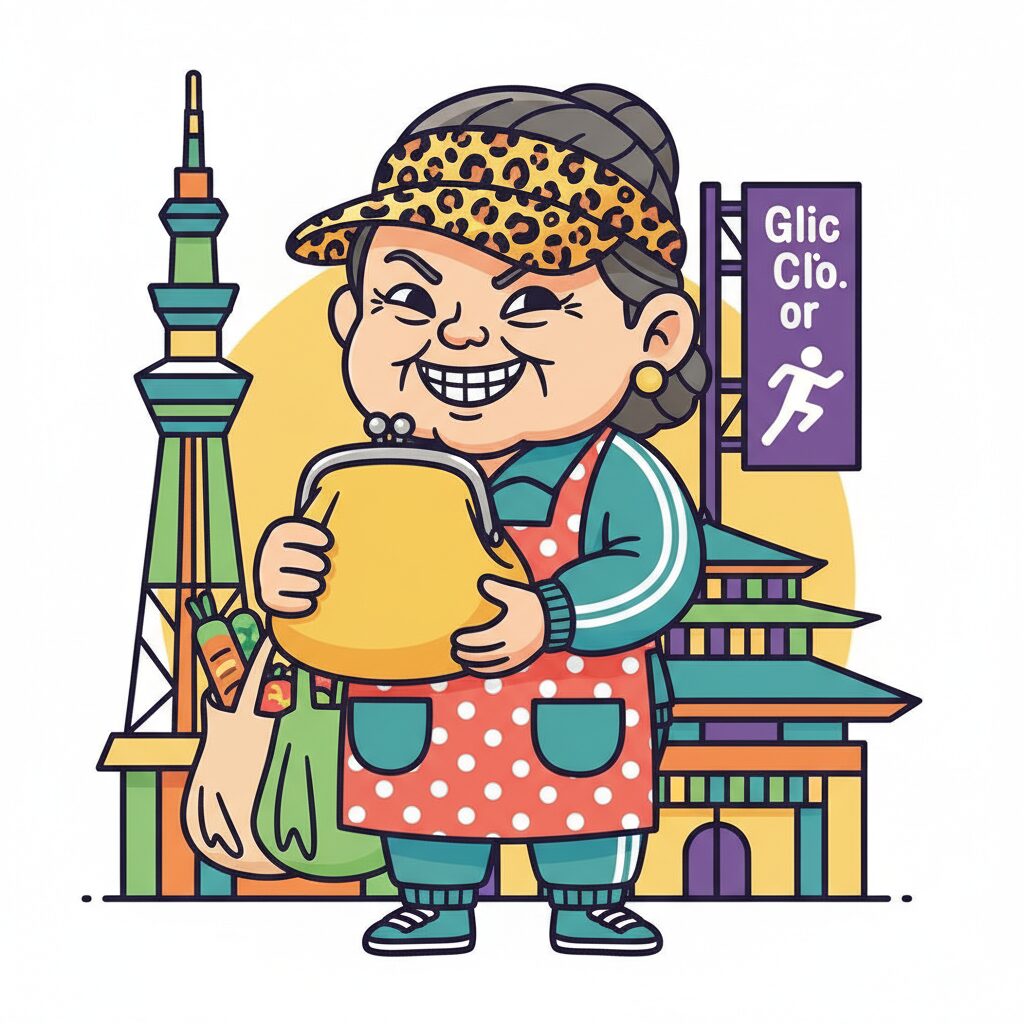
Ever wonder why your Osaka neighbor gets a genuine, sparkling thrill from telling you they saved 15 yen on a pack of bean sprouts? Or why the checkout line at the supermarket buzzes with a kind of competitive energy just before closing time? You’re not just seeing people save money. You’re witnessing a core piece of the Osaka identity in action: the spirit of ‘kechikuse.’ It’s a term you’ll hear, a mindset you’ll feel, and something that, at first glance, is often misunderstood. Foreigners, and even many Japanese from other regions, might translate ‘kechi’ as simply ‘stingy’ or ‘cheap.’ But that’s like calling a gourmet chef a cook. It misses the art, the pride, and the deep cultural history that bubbles beneath the surface.
In Osaka, ‘kechikuse’ isn’t a negative trait to be hidden. It’s a game, a skill, and a badge of honor. It’s the pragmatic philosophy of getting the absolute best value for your yen, your time, and your effort. This isn’t about hoarding wealth; it’s about the sheer satisfaction of a smart transaction. This way of thinking permeates every corner of daily life here, from the way people shop for groceries to how they choose a restaurant for Friday night, and even how they communicate with each other. It’s a worldview forged in the fires of commerce, a legacy of a city built not by samurai and aristocrats, but by savvy, fast-talking merchants. To truly live in Osaka, to understand its rhythm and its people, you have to understand the art and soul of being smartly ‘kechi.’
Embracing Osaka’s ‘kechikuse’ philosophy also invites you to explore the city’s playful side, where the sharp and witty local tsukkomi humor adds a lively counterbalance to its value-driven spirit.
The Merchant’s DNA: Where ‘Kechikuse’ Comes From
To understand Osaka, you need to look back in history. For centuries, while Edo (modern-day Tokyo) served as the political and samurai government center, Osaka stood as Japan’s unquestioned economic powerhouse. It earned the nickname ‘Tenka no Daidokoro’—the Nation’s Kitchen. Rice, sake, textiles, and goods from across the country flooded into Osaka’s warehouses and were traded on its exchanges. Unlike the stern-faced warriors who valued honor above all in Edo, Osaka was shaped and run by the ‘shōnin,’ the merchant class.
For an Osaka merchant, success wasn’t about noble birth or artistic talent. It was about being clever, practical, and efficient. It meant recognizing value where others didn’t, negotiating with a sharp mind and a friendly smile, and making every coin work as hard as possible. Waste was the enemy. A bad deal was a personal failure. A great deal was a triumph to celebrate. This commercial mindset remains deeply ingrained in the modern Osakan psyche. While a Tokyoite’s cultural background might prioritize appearance, propriety, and maintaining a dignified front (‘tatemae’), an Osakan’s instincts focus on the bottom line, tangible results, and the honest truth (‘honne’).
This historical distinction is key to understanding much about the city today. The straightforward, no-nonsense communication style, the enjoyment of a friendly bargain, and the obsession with ‘cost performance’ all stem from an era when survival and status depended not on connections but on financial savvy. That’s why ‘kechikuse’ isn’t about being poor or stingy; it’s about upholding a legacy of resourcefulness and commercial acumen. It’s a proud heritage.
‘Kechikuse’ in Action: The Daily Shopping Grind
Nowhere is the ‘kechikuse’ spirit more vibrant and evident than in the daily ritual of shopping. To the uninitiated, it may appear chaotic. To locals, it’s a carefully choreographed performance.
The Supermarket Battlefield
Forget quiet, orderly aisles. An Osaka supermarket, especially on sale days, becomes a stage for economic strategy. The first weapon in any shopper’s kit is the ‘chirashi,’ a paper flyer slipped into mailboxes, outlining the day’s loss leaders and special discounts. Shoppers study these with the focus of a general plotting a campaign. They know which store offers the cheapest eggs on Tuesday and who has the best pork belly deal on Friday. It’s typical for households to make stops at two or three supermarkets in one trip to pick the best bargains from each.
Then comes the magic hour: the time sale. As closing time nears, employees appear with bright red discount stickers, slashing prices on prepared foods like bentos, sushi, and fried dishes. This is when the real game begins. Shoppers, looking casual, circle the 惣菜 (sōzai, prepared food) section, waiting for prices to drop from 20% off to 30%, and finally to the prized 半額 (hangaku, 50% off) sticker. There’s an unspoken code—no pushing, but a swift, confident move when the moment arrives. Scoring a half-price tonkatsu bento isn’t just about saving 300 yen. It’s about winning. It’s a tale to proudly share with family at home.
Haggling with a Smile: The Shotengai Experience
If supermarkets are battlegrounds, then the ‘shotengai’ (covered shopping arcades) are lively marketplaces where relationships and deals are crafted. These arcades, such as the renowned Tenjinbashi-suji, are the beating heart of Osaka commerce. Here, the price tag is often just the starting point of a conversation.
The key phrase is “Chotto makete?” (Can you give me a little discount?). It’s offered with a smile, not as a demand. It’s an invitation to engage. The shop owner might laugh and shave 50 yen off, or respond, “If you buy three, I’ll give you a better price!” Or better yet, throw in an ‘omake’—a little extra for free. Maybe an additional potato, an imperfect tomato, or a piece of candy for your child. This exchange is essential. It’s not a battle but a dance. It transforms a mere transaction into a human connection. You’re not just a customer; you’re a neighbor, a regular, someone who values their goods. This kind of interaction is rarely, if ever, seen in Tokyo’s polished department stores.
‘Mottainai’ as a Guiding Principle
At the core of this is the Japanese concept of ‘mottainai,’ a sense of regret over waste. In Osaka, this feeling is heightened and reshaped. It’s not simply about avoiding food waste. It’s about making the most of every single thing you own. An Osakan ‘oba-chan’ (auntie/elderly woman) can look at a daikon radish and see not just the root for simmering, but the leaves for stir-fry and the peel for a crunchy ‘kinpira’ side dish. Nothing is discarded. Every yen spent must deliver maximum utility and enjoyment. This practical mindset embodies the ‘kechikuse’ spirit, turning a simple philosophy into a tasty, money-saving reality every day.
Beyond the Wallet: How ‘Kechikuse’ Shapes Social Life
The most captivating aspect of ‘kechikuse’ is how it reaches well beyond shopping, permeating the very essence of social interactions. It serves as a perspective through which Osakans interpret the world.
‘Cospa’ is King: Evaluating Everything
Living in Osaka for any length of time, you’ll inevitably encounter the term ‘cospa,’ a Japanese-English blend of ‘cost performance.’ ‘Cospa’ represents the ultimate yardstick of value. Whether it’s a meal, an outing, or a product, everything is assessed by a straightforward criterion: Does the quality, enjoyment, and satisfaction justify the price paid? This isn’t about being cheap. A 10,000 yen meal can offer fantastic ‘cospa’ if the ingredients are exceptional, the service flawless, and the experience unforgettable. Conversely, a 1,000 yen ramen that is bland and disappointing has poor ‘cospa.’
This explains why Osaka is a haven for food lovers who appreciate a bargain. The city abounds with restaurants providing outstanding quality at astonishing prices, because they know this is what their customers expect. It also sheds light on the popularity of ‘tabehoudai’ (all-you-can-eat) and ‘nomihoudai’ (all-you-can-drink) plans. These deals eliminate the risk of poor ‘cospa.’ You know exactly what you’re paying, and the value is transparent. When an Osaka local recommends a restaurant, they won’t just say “It’s delicious.” They’ll add, “It’s delicious, and you won’t believe how affordable it is!” Price is an integral part of the quality.
The Honest Compliment: ‘Yassui!’
Picture yourself having just purchased a new jacket. In Tokyo, a friend might compliment you by saying, “That’s a beautiful jacket” or “That brand is very stylish.” In Osaka, a common and enthusiastic compliment is an exuberant “Yassui!” (It’s so cheap!). To outsiders, this might feel off-putting. Are they implying I look cheap? Quite the opposite. They’re praising your savvy as a shopper. They’re saying, “Wow, you found such a great item at such an excellent price! You’re incredibly clever and smart.”
This frank talk about price functions as a form of social bonding. People proudly reveal how much they paid for something when they scored a good deal. It sparks conversations about where the item was bought, how the sale was discovered, and a shared celebration of triumph over high costs. It’s a form of communication refreshingly direct and sincere, cutting through the usual social taboos around money.
‘Warikan’ and the Pragmatism of Friendship
Splitting the bill, or ‘warikan,’ is widespread throughout Japan, but in Osaka, it often carries a distinctive emphasis on precision and fairness. While in some social groups, seniors may be expected to cover juniors, or there may be complicated calculations of ‘who paid last time,’ Osakans usually prefer a neat, straightforward split, sometimes down to the exact yen. This isn’t due to a lack of generosity. Rather, it’s founded on a strong sense of fairness and mutual respect.
An exact split guarantees no one feels burdened or indebted to another. It maintains the relationship as equal and transparent. Friendship centers on enjoying each other’s company, not financial obligation. When someone from Osaka chooses to treat you, it’s a deliberate and heartfelt act. It’s not a vague social expectation but a genuine gesture of generosity. This practical approach removes social stress and lets everyone relax and enjoy themselves, confident that the final accounting will be fair and simple.
Common Misunderstandings: What Foreigners Get Wrong
The ‘kechikuse’ spirit is a delicately balanced cultural trait, and newcomers can easily misunderstand it. Let’s dispel a few of the most common myths.
Myth: Osaka People are Stingy and Greedy
This is the most widespread and inaccurate stereotype. The crucial difference lies in the emotion involved. True stinginess (‘kechi’ in its purely negative meaning) is about the reluctance and discomfort associated with spending money. It is miserly and joyless. The Osaka ‘kechikuse’ spirit, however, is about the joy of saving money and obtaining excellent value. It represents a positive, proactive approach. The aim isn’t to hoard cash; it’s to enrich life by managing resources wisely.
When it comes to generosity, Osakans may be among the most giving people you’ll ever encounter, but they express it differently. Their generosity is often practical. They might not give you an expensive, brand-name present, but they’ll arrive at your door with a large bag of vegetables they snagged for a bargain at the local market. They’ll treat you to a huge, delicious meal at a spot with fantastic ‘cospa’ that they’re proud to have found. Their generosity involves sharing the rewards of their savvy with those they care about.
Myth: They are Rude and Materialistic
Their straightforwardness about money can be perceived as rudeness by those used to more indirect communication. However, in Osaka, this directness is a form of honesty. By addressing practical details openly, they cut through unnecessary niceties and maintain transparency. They reject the notion that money is a taboo or impolite topic. For Osakans, money is merely a practical part of life, and discussing it openly is efficient and clear.
This is not materialism in the sense of craving luxury brands for status. On the contrary, an Osakan is more likely to take pride in a high-quality, functional, no-name item bought at a bargain than in a flashy designer bag purchased at full price. Their emphasis is on the intrinsic value of an object, not the status it conveys. It’s a materialism grounded in practicality and appreciation for things that are well-made, useful, and reasonably priced—not vanity.
Living the ‘Kechikuse’ Life: Tips for Residents
So, how do you adjust to and even enjoy this distinctive aspect of life in Osaka? It’s about changing your mindset from being a passive consumer to becoming an active participant in your neighborhood’s economy.
First, embrace the ‘shotengai.’ Don’t just hurry through. Take time to chat with the vendors. Ask what’s fresh today. Try a little friendly bargaining. You’ll not only get better deals but also build relationships that make you feel part of the community. These shopkeepers are rich sources of local knowledge and expertise.
Keep an eye on those supermarket flyers. Learn the weekly pattern of sales. It might seem minor, but planning your shopping around the daily specials is an easy way to engage in this city-wide practice. You’ll save money and gain a quiet sense of accomplishment.
Don’t be afraid to talk about value. When you’re out with friends, it’s fine to suggest a place because you know it offers great ‘cospa.’ They’ll appreciate your thoughtfulness. And when you find a great deal, celebrate it. Share your success. By doing so, you’re not just discussing money; you’re speaking the local language of value, community, and shared wisdom. Living in Osaka means realizing that a good deal is more than just a discount—it’s a connection, a story, and a way of life.