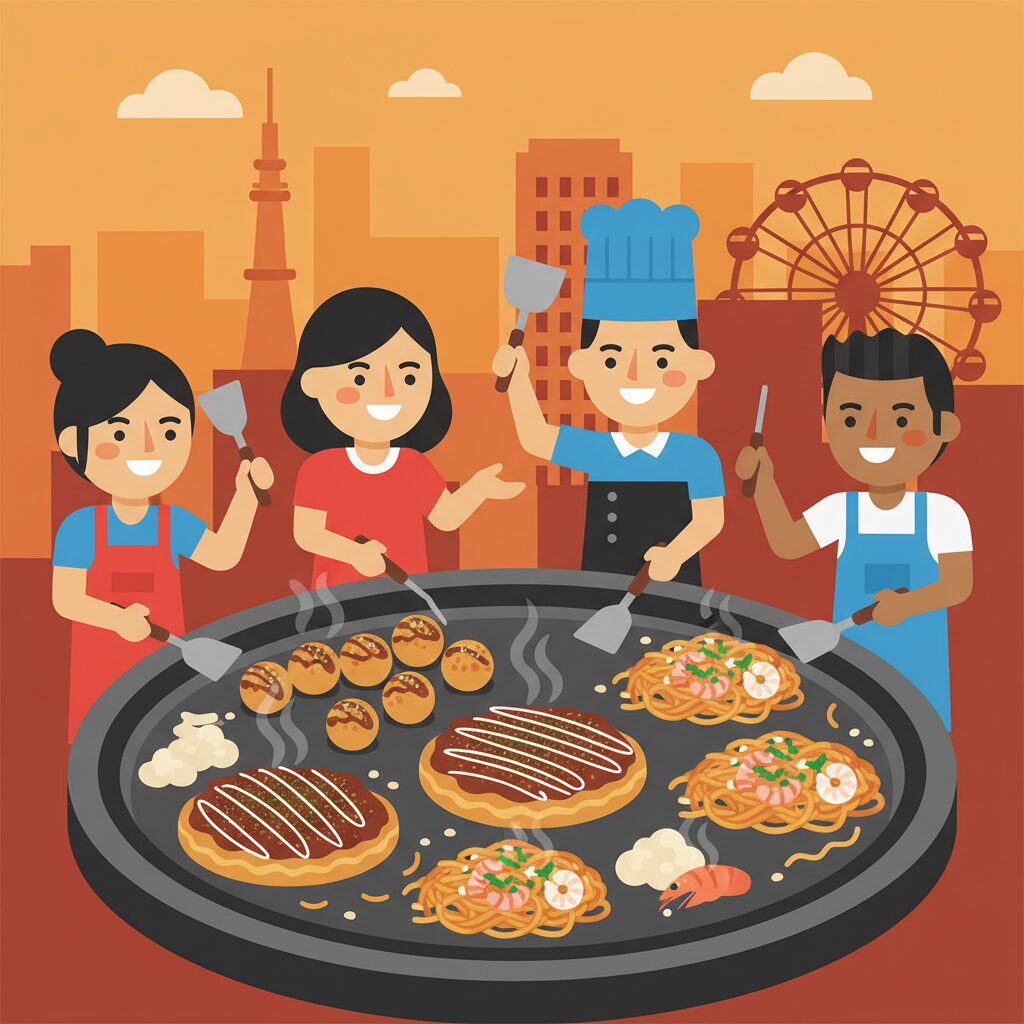
Moving to Osaka from Tokyo, I thought I understood Japanese food. I was an event planner, for crying out loud. I’d coordinated catered sushi platters that were edible art and navigated the delicate politics of bento box hierarchies. Tokyo dining is a world of precision, polish, and quiet appreciation. Then I got invited to my first “takopa” in a shoebox apartment in Namba, and I realized I didn’t know a thing. A takopa, short for takoyaki party, wasn’t about appreciating a finished product. It was a loud, messy, chaotic process of creation. Batter splattered, octopus bits flew, and everyone was jabbing at a sizzling hot plate with sharp metal picks, shouting advice, and laughing. It wasn’t dinner; it was a contact sport. And it was the most Osaka thing I had ever seen.
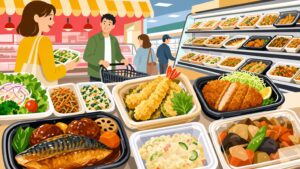
This is the heart of Osaka’s konamono, or “flour-based thing,” culture. It’s not just about okonomiyaki and takoyaki as food. It’s a social ritual, a philosophy of communal, hands-on fun that defines the city’s spirit. It’s brilliantly inclusive, designed to bring everyone together around a single hot griddle. But what happens when the very foundation of this culture—flour, pork, and complex sauces—collides with the dietary needs of a global community? How do you join Osaka’s most quintessential party when you’re gluten-free or follow a Halal diet? This isn’t just a question about ingredients. It’s about belonging. It’s about cracking the code to Osaka’s social heart without compromising your health or faith. And as I learned, it’s not only possible, it’s a journey that reveals the true, adaptable, and deeply generous nature of this city. Your first step is knowing where to find the building blocks for your culinary adventure, and a well-stocked supermarket is your best friend.
For another vivid glimpse into Osaka’s irreverent charm, check out the playful banter of Osaka shopkeepers to see how local wit shapes everyday life in the city.
What is “Konamono” Anyway? It’s More Than Just Flour

First, let’s clarify the terminology. Konamono literally means “flour things.” It refers to a broad, comforting category of Japanese dishes where the main ingredient is a batter made from wheat flour. The most famous examples you’ll find in Osaka are Takoyaki, those delightful batter balls containing a piece of octopus, and Okonomiyaki, a savory pancake layered with cabbage, meat, or seafood, then generously topped with sauce and mayonnaise. There are also variations, such as Negiyaki, a thinner pancake filled with green onions, or Ikayaki, a simple squid pancake commonly sold at festival stalls. In Tokyo, these dishes are usually served perfectly in specialty restaurants. In Osaka, they are an integral part of everyday life — they are Tuesday night dinner, the highlight of a weekend gathering, and the default answer to “What should we do tonight?”
This represents the first major cultural gap for many newcomers, especially those from Tokyo. In the capital, a home party often means ordering high-quality food or preparing dishes meant to impress, focusing on presentation and a sense of formality. In Osaka, the phrase “Let’s have a party” almost always means a takopa (takoyaki party) or an okopa (okonomiyaki party). This isn’t about saving money, even though Osakans are famously practical with their finances. It’s rooted in the belief that the best food is the food you make together. The joy isn’t in eating perfectly round takoyaki; it’s in the challenge of flipping them, the laughter when you make mistakes, and the shared triumph when you finally get a few just right. It’s interactive, collaborative, and deeply egalitarian. Everyone, from the company CEO to the newest intern, stands equal around the hot plate.
The Osaka Mindset: “Why Buy It When You Can Make It Better at Home?”
To understand konamono culture is to grasp the Osaka mindset. There’s a fierce, almost humorous pride in doing things yourself. Step into any electronics store in Osaka, and you’ll find an entire section devoted to takoyaki makers of every shape and size, ranging from simple electric plates to gas-powered professional setups. Having a takoyaki maker in an Osaka home is as common as owning a rice cooker. It’s not a novelty; it’s essential gear.
This DIY spirit carries over to the recipe itself. While pre-made konamono flour mixes are available, many Osakans swear that their own blend is better. The debates are legendary and form a central part of the party ritual. How much dashi (broth) do you add to the batter? Do you use water or milk for a richer taste? Do you incorporate grated yamaimo (mountain yam) for fluffiness? Should the cabbage in okonomiyaki be finely shredded or roughly chopped? There’s no correct answer, just “my rule.” Every family, every individual, has their secret technique, their special ingredient, and their unwavering belief in their method. They will passionately defend their choice to mix red pickled ginger straight into the batter or to include tempura scraps for extra crunch. This isn’t stubbornness; it’s a form of identity. In a city that values individuality and directness, your okonomiyaki recipe is your signature.
This sharply contrasts with the more conformist expectations you might encounter in Tokyo, where there’s often a “right” way to do things. Osaka embraces personal flair. It’s a city that encourages tinkering, experimentation, and making things uniquely your own. The goal isn’t to replicate a restaurant’s perfect dish. The goal is to create your dish, surrounded by your people. The process is what matters. The bond formed over the sizzling griddle is the true reward.
The Dietary Dilemma: When Konamono Culture Clashes with Modern Needs
This is where the appealing, inclusive idea of a konamono party meets a very modern obstacle. For those with dietary restrictions, an invite to a takopa can spark a wave of anxiety. Let’s explore the hidden difficulties. The batter, by definition, contains wheat flour, which is a deal-breaker for anyone with celiac disease or gluten intolerance. Yet, the issue extends well beyond just the flour.
The savory, dark sauces drizzled on top are a tricky area. Okonomiyaki and takoyaki sauces are complex blends, often based on Worcestershire sauce, with key flavorings including regular soy sauce (shoyu), which contains wheat. Many also include pork extract (ポークエキス) as a flavor enhancer, rendering them unsuitable for a Halal diet. Additionally, the dashi broth in the batter can pose problems. While traditional dashi is made from kombu (kelp) and katsuobushi (bonito flakes), the convenient instant dashi powders (dashi no moto) commonly used in many households may contain additives, including non-Halal ingredients. Then there are the fillings. The classic okonomiyaki, butatama, features slices of pork belly, an ingredient that is off-limits to many and central to the dish’s identity.
So, as a foreigner living in Osaka, you’re excited to be invited into a local home—an expression of genuine friendship. Then the invitation arrives: “We’re having an okonomiyaki party!” Anxiety kicks in. Should you decline and risk offending your hosts? Should you attend but not eat, creating an uncomfortable atmosphere? Or should you try to explain your complex dietary restrictions and risk being perceived as a difficult or demanding guest? Many foreigners face this moment, feeling excluded from a tradition that seems so integral to belonging in the city. It can feel like being shut out of the best party around.
Hacking the Party: Your Guide to a Gluten-Free and Halal Konamono Bash

But here’s the secret that took me, a rigid Tokyo planner, some time to uncover: Osaka is a city of problem-solvers. The local mindset isn’t about strict tradition; it’s about practical solutions that maximize enjoyment for everyone. The idea that someone at the party can’t eat is seen as a problem, and Osakans love taking on a good challenge. The key is to approach it with the right tools and attitude. You can absolutely host or join a konamono party that caters to everyone—you just need to hack the system.
The Flour Foundation: Beyond Wheat
This swap is the simplest. The gluten-free flour scene in Japan has grown tremendously in recent years. Your top weapon is rice flour, or komeko (米粉), which is available in any major supermarket. Some brands even produce special komeko blends for okonomiyaki. When using plain rice flour, the texture can be slightly chewier or denser than wheat flour. The trick is to add a bit more liquid (dashi or water) than the original recipe suggests and incorporate grated yamaimo if you can find it; it adds a wonderful lightness and airiness that mimics gluten’s texture. Alternatively, pre-made gluten-free okonomiyaki mixes are available online or in specialty health stores. These mixes are great because they balance starches and leavening agents perfectly. Don’t hesitate to experiment. Remember the Osaka “my rule” mindset? Creating a new gluten-free batter isn’t sacrilege—it’s innovation.
The Flavor Engine: Crafting Safe and Savory Sauces and Dashi
Here, you need to become a label detective. Sauces and dashi are essential for authentic taste, but they can hide many pitfalls.
Sauces and Condiments
The famous Otafuku and Bull-Dog brand sauces are delicious, but their standard versions often aren’t gluten-free or Halal. Your mission is to deconstruct and rebuild.
For a gluten-free option, the main culprit is soy sauce. Your solution is Tamari (たまり醤油), a soy sauce usually made without wheat. Always check the label, but it’s your best choice. You can make a simple, tasty gluten-free okonomiyaki sauce by mixing gluten-free Worcestershire sauce (some brands exist), ketchup, and a splash of Tamari. A little sugar or honey balances the flavor.
For a Halal option, watch out for alcohol (アルコール) and pork extract (豚 or ポーク). Many sauces contain mirin or other alcohols for flavor. Look for Halal-certified soy sauce, which is becoming more common. To replace mirin’s sweetness in homemade sauce, use simple sugar syrup or a touch of grape juice. Always read the ingredient list on any pre-made sauce. If you see the characters for pork, put it back. Often, the safest and most satisfying choice is to make your own sauce—it’s surprisingly easy and lets you control every ingredient.
Don’t forget the mayonnaise! Japanese Kewpie mayo is the gold standard, with generally safe ingredients. However, some mayonnaise brands use alcohol-based vinegar, so check the label if you want to be extra cautious.
The Dashi Base
Avoid the convenience of instant dashi powder unless you can confirm all its ingredients. Many contain amino acids and extracts that may not be Halal. The best way is the traditional method: making dashi from scratch is very simple. Soak a piece of kombu kelp in water for a few hours (or gently heat without boiling). For a richer flavor, add katsuobushi (dried bonito flakes) after removing the kombu, let steep for a minute, then strain. This dashi is naturally gluten-free and Halal-friendly. For a vegan alternative, shiitake mushroom dashi is a delicious, umami-rich option.
The Main Event: Fillings and Toppings for Everyone
This is where creativity shines. Okonomiyaki literally means “grilled as you like it,” an open invitation to customize.
For Takoyaki, the classic filling is octopus (tako), which is perfectly Halal. But don’t stop there—cubed cheese, corn, shrimp pieces, edamame, and bits of mochi are all popular and delicious alternatives. Set up a buffet of fillings and let everyone create their own combos.
For Okonomiyaki, replace pork belly slices with many other options. A seafood mix (シーフードミックス) of squid, shrimp, and scallops is a classic variation. Thinly sliced beef or chicken works too—just make sure it’s Halal-certified. For vegetarians, load up on cabbage and add mushrooms, cheese, kimchi, or tenkasu (tempura scraps, usually just fried flour batter) for texture. The dish is a blank canvas. As long as you have the batter and cabbage base, anything goes. Toppings like katsuobushi, aonori (green seaweed powder), and beni shoga (red pickled ginger) are generally safe for both gluten-free and Halal diets.
Hosting vs. Attending: Navigating the Social Dynamics
Knowing the ingredient hacks is only part of the challenge. The other part is handling the social situation with the classic Osaka blend of directness and warmth.
If You’re the Host
When hosting Osakans and accommodating dietary needs, don’t view it as a burden. Treat it as an enjoyable challenge. Announce, “Tonight, we’re experimenting with gluten-free takoyaki!” or “Let’s try making a Halal okonomiyaki even better than the original!” This shifts the accommodation into a shared culinary adventure, something any Osakan will eagerly embrace. They appreciate novelty and friendly challenges. The key is preparation and clear communication. Use separate, clearly labeled bowls for different batters. If you’re using one large hot plate, designate one side for gluten-free or Halal, and the other for the regular version. Use differently colored spatulas or serving utensils. This straightforward, practical approach will be greatly appreciated. It shows you care, not by making a fuss, but by efficiently solving the issue so everyone can focus on the main event: enjoying themselves.
If You’re the Guest
Here, you need to drop any Tokyo-style reserve. In Tokyo, bringing your own specific ingredients to a dinner party might be seen as a slight against the host. In Osaka, it’s viewed as smart and collaborative. If you’re invited to a takopa, be direct and honest. Call your friend and say, “I’d love to come! I can’t eat gluten, so I’ll bring my own special rice flour and tamari sauce for my portion. We can even let everyone try it!” This isn’t rude; it’s helpful. You’re actively contributing to the solution and showing you’re invested in the party’s success. An Osaka host’s main goal is for everyone to eat, drink, and have fun. By offering to bring your own ingredients, you help them achieve that goal. They won’t see it as an inconvenience; they’ll see you as a team player, which is highly valued. You’re not causing a problem; you’re offering a solution. This direct, can-do attitude is the quickest way to earn respect and friendship in Osaka.
The Real Taste of Osaka is Connection, Not Cabbage
After spending several years here, I’ve hosted and attended countless konamono parties. I’ve witnessed takoyaki made with rice flour, okonomiyaki stuffed with Halal chicken and cheese, and sauces crafted from scratch using tamari and dates. Not once did any of it feel less authentic. If anything, it felt truer to the genuine spirit of Osaka. The city’s identity isn’t locked into a fixed recipe from the past. It’s found in its boundless ability to adapt, its practical creativity, and its loud, unwavering insistence that everyone can join the fun.
The real flavor of konamono isn’t the wheat or the pork. It’s the sound of spatulas clattering on the hot plate. It’s the scent of sizzling batter mingled with the sound of a bad joke being shared. It’s the slightly burnt, imperfectly shaped pancake you made yourself, shared with friends laughing so hard they can barely eat. It’s a culture of joyful imperfection. By adapting the ingredients to suit your needs, you’re not just making a meal you can enjoy. You’re actively engaging in the very heart of Osaka’s culture: taking something simple, making it your own, and using it to forge a connection. You’re proving that the griddle is big enough for everyone.