Walk away from the gleaming, vertical world of Umeda’s skyscrapers or the neon-drenched canyons of Namba. Push past the tourist-clogged arteries and find the real pulse of Osaka. You’ll find it under a roof. A long, often utilitarian, sometimes beautifully retro-futuristic roof that covers a street. This is the shōtengai, the covered shopping arcade, and in Osaka, it’s not just a place to buy groceries. It’s the city’s living room, its circulatory system, and for a surprising number of people, the front yard to their home. The question that hangs in the air, thick as the smell of grilled eel from a corner shop, is what’s it actually like to live here? To have the soundtrack of your life be the rattle of a shop shutter, the sizzle of tempura, and the constant, rolling chatter of a community at work and play. Foreigners often see these arcades as charming relics, a fun-fair of takoyaki stands and cheap clothes. They see a backdrop for a vacation photo. But to understand Osaka, you have to understand that for many, this isn’t a destination. It’s the entire neighborhood. It’s a choice to trade serene, predictable quiet for something much more alive, chaotic, and profoundly human. It’s a decision to live inside the city’s engine, not next to it. Before we dive into the sensory overload and the unwritten social rules, let’s ground ourselves in the geography of this lifestyle. The most epic example, the granddaddy of them all, is Tenjinbashisuji Shōtengai, a sprawling, 2.6-kilometer artery of pure, uncut Osaka energy.
This vibrant urban tapestry comes alive even more when you explore the unique appeal of konamono festivities, which illustrate the rich, communal heartbeat behind Osaka’s bustling arcades.
The Arcade Isn’t a Street, It’s Your Hallway
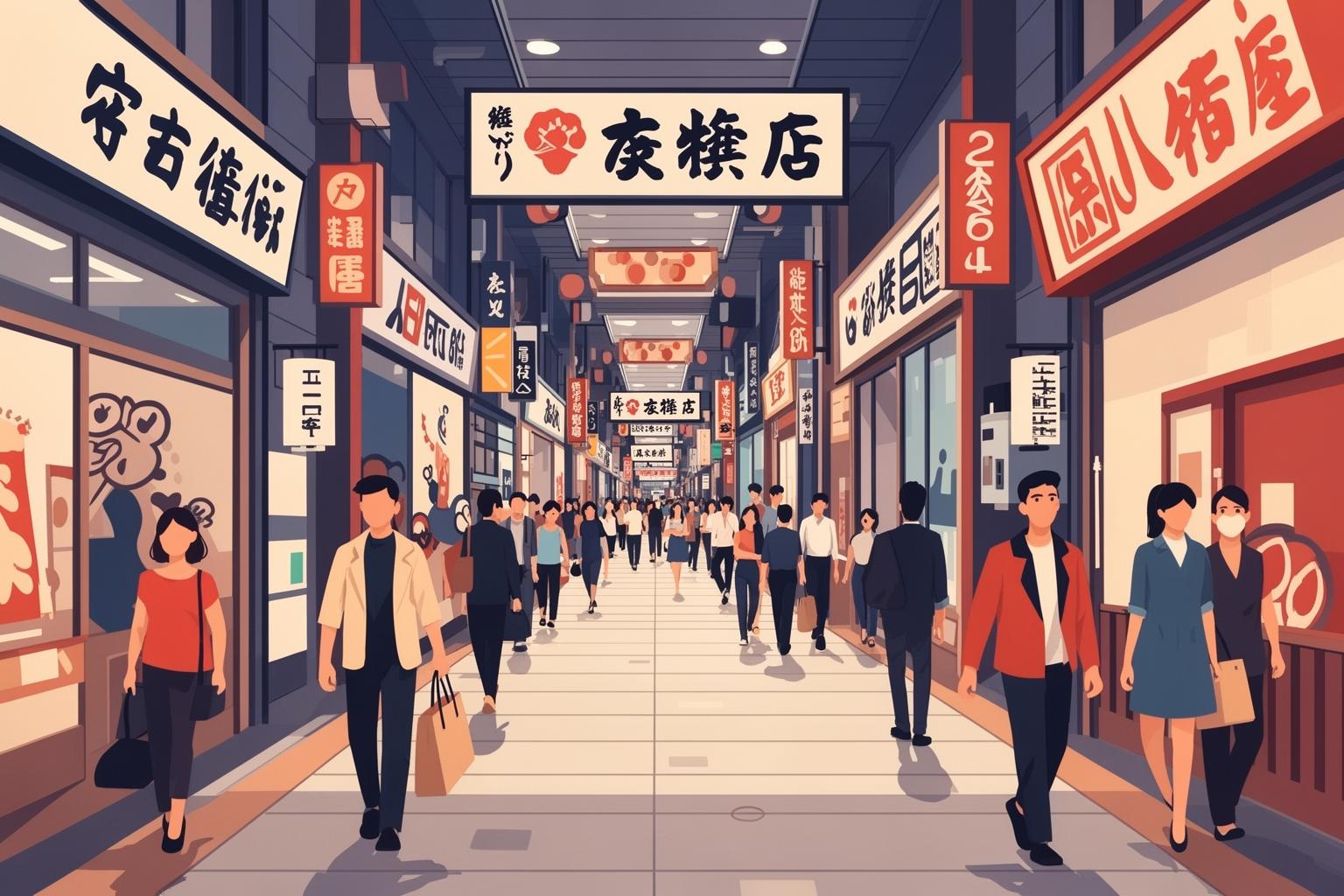
In Tokyo, and indeed across much of modern Japan, a clear, sharp boundary separates commercial areas from residential ones. There’s the station zone, a lively center filled with shops and restaurants, and then just a ten-minute walk away, you enter a realm of deep, almost sacred silence, where the only noises are the hum of air conditioners and the soft whisper of bicycle tires. Apartment buildings stand like quiet guardians, with life unfolding behind closed doors. Osaka defies this separation. Here, the boundary isn’t merely blurred; it’s completely erased and replaced by countless small, independent businesses. To live in a shōtengai neighborhood is to embrace your home as part of a larger, semi-public entity. The arcade itself acts as a vast communal corridor. The roof plays a crucial role. When it rains—and during Japan’s rainy season, it can feel like a continuous month of steady drizzle—life carries on uninterrupted. People move from the butcher to the baker to the 100-yen shop without ever opening an umbrella. Children play, and elderly folks gather on benches. The arcade offers a stable, climate-controlled space where life unfolds openly. Your daily routine synchronizes with this rhythm. The day begins not with an alarm clock but with the metallic creak of the fishmonger’s shutter rolling up nearby, followed by the rhythmic thud of wooden crates hitting the ground. Lunchtime brings a surge of sound and aroma as office workers and housewives fill the space, creating a vibrant hum that resonates through the floorboards. The late afternoon turns into a golden hour when the osōzai-ya—shops selling prepared side dishes—display their freshest croquettes, tempura, and simmered vegetables. This signals the start of everyone’s dinner preparations. Instead of doing a weekly grocery haul at a sterile, oversized supermarket, you embark on a daily exploration. You pick what looks fresh at the vegetable stand, ask the butcher about the best cut of the day, and grab a block of fresh tofu from the woman who’s been making it in the same spot for four decades. Your kitchen pantry stretches beyond your front door for half a kilometer in both directions. This blend of living and commerce is embedded in the architecture itself. Many apartments are literally situated on the second or third floors above the shops. These are the modern descendants of the old shōka-jūtaku, traditional merchant homes where families lived upstairs and ran their businesses below. Although newer apartment buildings have emerged on the edges, the heart of shōtengai life remains this vertical integration. It’s a model of urban density that feels both ancient and astonishingly efficient. The result is an extraordinarily convenient lifestyle, but it requires a shift in how “home” is understood. Home isn’t a quiet refuge sealed off from the outside world. Rather, it’s a private space linked to a very, very public hallway where the entire neighborhood gathers.
Sound, Smell, and the Osaka Definition of “Quiet”
Let’s be brutally honest. If your idea of domestic bliss involves deep, meditative silence, avoid renting an apartment in an Osaka shōtengai. You will be miserable. What a Tokyoite or Westerner might call a cacophony of noise pollution, an Osakan refers to as nigiwai—a lively, bustling atmosphere. It’s the sound of a thriving, prosperous community. It stands in stark contrast to sabishii, that lonely, desolate quiet that signals economic decline. People here don’t just tolerate the noise; they thrive on it. It’s a constant, auditory affirmation that life is unfolding all around them. To choose to live here is to choose to be immersed in this sensory experience, for better or worse.
The Soundtrack of Daily Commerce
The soundscape of a shōtengai is intricate and multi-layered. It’s not merely a wall of noise; it’s a symphony of distinct, meaningful sounds that narrate the day’s story. The foundational rhythm is human speech. Osaka-ben, the local dialect, is faster, more melodic, and arguably louder than standard Japanese. In the arcade, it’s the leading instrument. It’s the high-pitched, sing-song call of the vegetable vendor announcing his deals: “Hona, kyabetsu iko hyaku-en ya de! Maido ookini!” (Alright, one head of cabbage for 100 yen! Thanks for your business!). It’s the low, rumbling gossip of the old men gathered outside the barbershop. It’s the sharp, percussive laughter of the women at the pickle stand. Layered over this are the sounds of commerce itself. The rhythmic thwack-thwack-thwack of a butcher’s cleaver. The digital chirp and jingle of a supermarket cash register. The squeak of bicycle brakes. The distant, hypnotic, and uniquely Japanese sound collage of a pachinko parlor, a metallic cascade spilling out every time its automatic doors slide open. And then there are the mechanical sounds. The screech of a delivery truck backing up. The hum of refrigerators from the fish market. The incessant, looping, maddeningly catchy jingles that some stores play to attract customers. This is your daily background music. It seeps through single-paned windows and thin walls. You don’t fight it. You learn to interpret it. That particular clatter signals the bakery is putting out fresh bread. That specific shout means the time-sale on eggs is about to begin. It’s information. It’s the heartbeat of the neighborhood, and your own life starts to sync with it.
An Olfactory Map of Your Block
Equally powerful as the sound is the smell. Your nose becomes a primary tool for navigating your day. Early morning, the air may carry the clean, salty brine of the fishmonger hosing down his stall. By mid-morning, it shifts to the yeasty, sweet aroma of the local bakery. Around 11:30 AM, the air thickens with savory notes of lunch preparation: the rich, smoky scent of grilled eel (unagi), the sharp tang of soy sauce and dashi from an udon shop, the heavy, comforting odor of deep-frying oil from the tempura place. Living here means you can never fully escape the smell of food. It clings to the air, a constant reminder of the arcade’s primary purpose: to nourish the neighborhood. This can be delightful. It’s a daily, real-time menu of what’s available, stimulating your appetite and shaping your dinner plans. But it’s also unavoidable. If you live above a curry shop, your laundry drying on the balcony will carry the faint, ghostly scent of cumin and turmeric. If your window opens over a yakitori stall, the smell of grilling chicken will be a permanent presence in your apartment. For many, this is part of the charm, a sign of life and good food. For others, it can feel intrusive. It’s a degree of sensory intimacy with your neighbors’ businesses that the modern, sanitized urban experience has sought to erase. In the Osaka shōtengai, that intimacy is the very essence.
You’re Not a Customer, You’re a Neighbor
In a vast, impersonal supermarket in Tokyo, interactions are purely transactional. You pick your items, pay a cashier who barely meets your gaze, and leave. This cold efficiency defines modern retail. In contrast, in an Osaka shōtengai, such a model is culturally harmful. Here, commerce is rooted in relationships. The shopkeepers aren’t employees; they’re proprietors. They are your neighbors. When you live there, you stop being just another anonymous customer. You become part of the intricate, delicate web of go-kinjo-zukiai—the art of neighborly relations.
The Unspoken Social Contract
When you buy vegetables from the same family stall every other day, a change takes place. The transaction turns into a conversation. It begins with a simple “Maido!” (“Thanks, as always!”) and a nod. Soon, they learn your preferences. They know you like your tomatoes firm. They’ll start setting aside the best produce for you or offer a tip: “The spinach is especially good today, but wait until tomorrow for the cucumbers; they’ll be better.” This isn’t just an upsell; it’s advice, a sign of inclusion. You’re no longer an outsider. You’re a regular. With this status come certain perks. The most common is omake, a small extra added for free. A few extra potatoes, a sprig of green onions, a piece of fruit for your child. It’s not a discount. It’s a gift. It’s the shopkeeper’s way of saying, “I see you. I appreciate you. We’re in this together.” This social contract goes beyond the exchange of goods and money. Your local shopkeepers become the neighborhood’s caretakers. They notice if an elderly resident hasn’t visited in days. They’ll hold a package if you’re not home. They’re the neighborhood watch, the gossip network, and the social safety net all in one. They form the human infrastructure of the community.
The Price of Community
Yet, this closeness comes at a cost: your anonymity. You cannot remain a quiet, private person who moves through the neighborhood unnoticed. Your presence is recorded. Your comings and goings are observed. The butcher will ask about your vacation. The dry-cleaner will remark on your new haircut. For someone from a Western culture that values individualism and privacy, this may feel intrusive initially. It seems like everyone knows your affairs. And to some extent, they do. But the motivation behind this is rarely malicious gossip. It’s about connection. It’s a way of affirming that you belong to the community’s fabric. Ignoring a shopkeeper’s greeting or responding curtly is considered oddly antisocial. You’re expected to engage, even briefly. You must master the art of the short, friendly chat. It’s a skill. It involves slowing down, making eye contact, and acknowledging the humanity of the person selling you a mackerel. This is perhaps one of the biggest misconceptions about Osaka. The city’s renowned friendliness isn’t random or bubbly; it’s a deeply pragmatic and customary social lubricant, refined over centuries of commerce. In a world where your reputation with the fishmonger matters, you learn to be pleasant. Friendliness benefits business and strengthens community. Living here means you’re not merely an observer of this culture; you’re an active participant. You have a role to fulfill.
Finding Your Home Above the Marketplace
If the sensory immersion and social demands haven’t deterred you, the next challenge lies in navigating the practicalities of renting in a shōtengai neighborhood. The housing options are as diverse and quirky as the shops themselves, and finding the right place calls for a different approach than searching for a typical, cookie-cutter apartment.
The Real Estate Reality
Properties listed in or near a shōtengai generally fall into two main groups. The first includes older, often post-war buildings that are structurally part of the arcade itself, with apartments situated directly above the shops. These units are full of character—and quirks. You might encounter oddly shaped rooms, paper-thin walls, outdated wiring, and a noticeable lack of elevators. Rent tends to be much cheaper, but you’re paying for location and convenience rather than modern luxury. These are the spots where the arcade’s vibrations are felt most intensely. The second group consists of more modern, purpose-built apartment blocks or manshons located on side streets just a short walk from the main arcade. These provide a middle ground: you benefit from the convenience of the shōtengai but enjoy better soundproofing, newer amenities, and a bit more distance from the constant hustle. Rent will be higher, and you might sacrifice some of the gritty, authentic charm, but for many, it strikes the perfect balance between chaos and comfort.
Weighing the Pros and Cons
Deciding requires an honest evaluation of your tolerance and priorities. The benefits are clear: convenience is absolute. Your refrigerator effectively becomes the entire market. Almost anything you need daily—lightbulbs, prescription medications, or a hot meal—is just a two-minute walk away, all shielded from weather. There’s a strong sense of safety and community; the streets never lie empty, with watchful eyes always present. For those mindful of budgets, rent in the older apartments can be quite affordable, and the ability to purchase fresh, inexpensive ingredients daily can help reduce food costs considerably. On the other hand, there are real disadvantages that could be deal-breakers. Noise isn’t occasional—it’s constant. The smells, while often tempting, permeate the air. Older buildings come with higher risks of maintenance problems and pests, drawn by the many food-related businesses. Privacy, too, is a fluid concept—your neighbors may know your schedule better than you do.
What to Look For
If you choose to dive in, exercise Osakan-level pragmatic scrutiny. Visit potential apartments at different times of the day. The quiet Tuesday afternoon you first see it will be very different from a hectic Saturday morning. Stand inside and listen. Can you hear conversations from the street below? Do you feel the vibrations from the nearby train station? Check the business directly beneath your unit. A bookstore presents a very different dynamic than an izakaya open until 2 AM. Examine the windows. Are they single- or double-paned? This matters greatly for noise and temperature regulation. Inquire about the building’s garbage disposal rules, which can be complicated in mixed-use structures. Essentially, you’re not just renting an apartment—you’re renting a small part of a complex, living ecosystem. You need to ensure its unique rhythms suit your own lifestyle.
Why the Shōtengai Explains the Osaka Soul
Ultimately, the shōtengai is more than just a convenient place to live; it is a tangible reflection of Osaka’s history and cultural identity. To grasp why people choose this lifestyle, and why these arcades persist so steadfastly despite modern retail trends, is to understand the city itself. This is not merely a shopping preference; it represents a worldview.
The Merchant’s DNA
For centuries, Osaka has been Japan’s commercial hub. It was the tenka no daidokoro, the Nation’s Kitchen, where rice and goods from across the country were gathered, stored, and traded. This heritage fostered a culture deeply grounded in the realities of shōbai—business. It’s a culture that is pragmatic, unsentimental, and value-driven. The shōtengai is the contemporary heir to this tradition. It is a fiercely competitive environment. Vegetable stands, fishmongers, and tofu shops survive not on nostalgic appeal but by offering better quality, fresher products, or more competitive prices than the nearby supermarkets. Osakans are known for being discerning and demanding customers, possessing an innate radar for kosupa (cost performance). They seek good deals but also want to chat with the owner, get recommendations, and feel engaged in a fair, human exchange. The shōtengai perfectly sets the stage for this everyday drama of commerce and community.
A Culture of Connection
This merchant mentality explains the direct, straightforward communication style that sometimes surprises outsiders. There is less of Tokyo’s delicate, formal politeness and more down-to-earth, candid interaction. The lively back-and-forth banter or good-natured haggling over a few oranges isn’t a sign of conflict but a form of connection—human to human. The clichés about Osaka people being friendly and open are accurate, but this friendliness is practical, born from a culture where your livelihood and quality of life rely on maintaining strong relationships with those you encounter daily. Choosing to live under the arcade is an embrace of this outlook. It rejects the anonymous, isolating trends of modern urban life and favors a life that is a bit louder, messier, more fragrant, and far more connected. This lifestyle isn’t for everyone, but for those who thrive on its energy, it offers the most authentic way to experience the vibrant, beating heart of Osaka.