

The air in an Osaka supermarket has its own rhythm, a pulse that changes with the hour. Walk in at 2 PM, and you’ll find a gentle, calm cadence. Aisles are wide, shoppers meander, and the loudest sound might be the cheerful jingle for a brand of soy sauce. It’s pleasant, predictable, an ocean of domestic tranquility. But come back at 7:30 PM. The tide has turned. The air is electric, charged with a hunter’s focus. People aren’t just shopping anymore; they’re orbiting. They glide with a predatory grace, their gazes fixed on the deli section, the fresh fish, the bento boxes. This isn’t chaos. This is the overture to one of Osaka’s most sacred and practical daily rituals: the `hangaku` hunt. For the uninitiated, it can feel like stepping into the middle of a silent, highly strategic battle. For those who understand its flow, it’s the key to unlocking the city’s pragmatic soul and a much, much cheaper dinner. This nightly transformation from serene grocery store to competitive arena for discounted goods tells you more about the Osaka mindset than any history book ever could. It’s a city built by merchants, people who have for centuries understood the art of the deal, not just from the seller’s side, but from the buyer’s, too. Getting a good price isn’t a sign of being poor; it’s a sign of being smart. It’s a victory. In Tokyo, you might impress someone by talking about an expensive meal at a Ginza restaurant. In Osaka, you’ll get nods of genuine respect for boasting about the mountain of fried chicken and premium sashimi you scored for under 500 yen. This guide isn’t just about saving money. It’s about understanding the unwritten rules of this city, learning to move with its currents, and finding your place in the daily drama of the discount sticker. Welcome to the real Osaka, where the clock is always ticking, and the prize is a half-price bento box.
In addition to the nightly thrill of the hangaku hunt, many locals embrace depachika dining strategies as a savvy way to craft their everyday meals.
The Art of the Sticker: Decoding the Language of Discounts

Before you can join the hunt, you need to learn how to read the signs. The language of supermarket discounts is expressed through brightly colored stickers, applied with a speed and precision that can be mesmerizing. These aren’t just labels; they’re declarations—signals that the game is afoot. The most coveted of all is the `hangaku` (半額) sticker, a glorious symbol meaning 50% off. It’s the grand prize, the trophy at the end of the quest. Yet the path to `hangaku` is often marked by lesser, but still valuable, indicators.
You’ll encounter stickers showing 20円引き (20 yen off), 50円引き (50 yen off), or even 100円引き (100 yen off). These are the early skirmishes—a sign the store is starting to manage its inventory. Then come the percentages: 20% off, 30% off. These carry more weight. They signal a turning point: the product’s time is running out, and the store is becoming more motivated. A 30% off sticker on a pack of premium wagyu beef is not to be ignored. It might not represent the final price, but it’s a strong contender.
The stickers themselves are part of the visual appeal. Often bright yellow or fiery red, they’re designed to shout “LOOK AT ME!” from across the aisle. The staff member wielding the sticker gun, often a seasoned expert with encyclopedic knowledge of the store’s stock, moves with purpose. The thwack-thwack-thwack of the pricing gun is the evening rush’s drumbeat. Watching them work is like watching a performance. They know they are being observed. A small crowd might gather—a silent audience of hopefuls—waiting to see which items will be blessed with the magical red sticker. The psychology is simple but powerful. A sticker is a tangible, visible reward. It transforms an ordinary package of gyoza into a prize. You didn’t just buy dinner; you earned it. This tangible proof of your cleverness is something you carry home—a small badge of honor from the daily economic battlefield.
The Osaka Mindset: Why a Good Deal is a Great Story
To truly understand the importance of the `hangaku` hunt, you need to know Osaka‘s core identity. Historically, this city was known as tenka no daidokoro, the Nation’s Kitchen. It served as Japan’s commercial center, where rice, sake, and countless other goods were traded. Commerce, value, and practicality are not merely economic concepts here; they form the very foundation of the culture. The spirit of the shrewd merchant—one who can spot a bargain and make a profit—persists in the everyday shopper who can recognize a 50% off sticker from meters away.
This marks a key contrast with Tokyo. In Tokyo, there is often more emphasis on appearance and maintaining a certain public image. Although Tokyoites appreciate discounts, the openly enthusiastic pursuit of them is less of a public spectacle and might be considered somewhat undignified. In contrast, Osaka embraces it as a point of pride. It shows that you’re practical, sensible, and not someone who wastes money. Conversations on trains, in cafes, or among neighbors often buzz with stories of a successful `hangaku` find, told with the same excitement as recounting a concert or sporting event. “You won’t believe it,” an `obachan` might whisper conspiratorially to her friend, “They had the fatty tuna sashimi, the good stuff, at half price. I bought two packs!”
This isn’t about being cheap; it’s about being smart. The Osaka dialect abounds with expressions that celebrate this mindset. `Meccha ee yan!` (That’s awesome!) is the perfect response to tales of a great deal. There is a deep respect for `gouriteki`, meaning rational, logical thinking. Why pay 1,000 yen for something when with patience and timing you can get it for 500 yen? To an Osakan, paying full price unnecessarily is simply poor judgment. In this merchant city, everyone is in the business of living well and wisely. The `hangaku` hunt is the ultimate embodiment of this philosophy—a daily exercise in valuing what’s smart and practical, where every successful purchase is a vote for savvy living.
The Rhythm of the Hunt: Timing Your Supermarket Strike
Mastering the `hangaku` hunt is all about timing. Each supermarket operates with its own unique rhythm, yet common patterns can be observed throughout the city. Learning these patterns is like understanding the tides. Knowing when to arrive, when to wait, and when to act is the key skill of a successful hunter. The day can be divided into three distinct phases.
Phase 1: The Afternoon Warm-Up (3:00 PM – 5:00 PM)
This marks the opening act. As the afternoon progresses, the first wave of discounts begins to surface. These are usually modest, often ranging between 10% and 30% off. The targets are perishable items with a very short shelf life. Think of fresh bread baked earlier that morning, or delicate salads and sandwiches prepared for lunch that didn’t sell out. This is also the time when you might see the earliest markdowns on sushi or sashimi sliced earlier in the day.
The mood during this phase is relaxed. The hunters are mainly local homemakers, perhaps picking up ingredients for that evening’s meal. There’s no urgency. You have time to browse and weigh your options. Is that 20% off pack of pork cutlets a good enough deal, or should you wait for something better later? The Afternoon Warm-Up is a low-pressure phase. It’s an ideal time for beginners to get a feel for the process without the hustle of the evening crowds. You can observe which sections get discounted first and start forming a mental map of your local store’s approach.
Phase 2: The Evening Rush (6:00 PM – 8:00 PM)
As offices empty and people start their commute home, the supermarket undergoes a transformation. This is prime time—the main event. During this period, the iconic `hangaku` stickers make their big appearance. The staff knows this is their best chance to sell prepared foods before closing time, so the discounts become serious.
Key targets are the `osouzai` (prepared side dishes), bento boxes, and remaining fresh fish, meat, and sushi. These items absolutely must be sold by night’s end. The crowd becomes a diverse mix: salarymen in suits seeking a quick, inexpensive dinner; university students on a budget; and dedicated `hangaku` hunters who have been waiting for this exact moment. The energy is tangible. People aren’t rushing, but the pace definitely quickens. It’s during this phase that you’ll see the “hovering” phenomenon. Shoppers subtly position themselves near the deli counter, feigning interest in other items while keeping a sharp eye on the staff member wielding the sticker gun. It’s a delicate balance of proximity and patience. You must stay close enough to act the moment a sticker goes on, but not so close as to seem aggressive. The unspoken rule: once the sticker is applied, the item is fair game. Hesitation will cost you.
Phase 3: The Final Countdown (9:00 PM onwards)
For most supermarkets, this is the last call. The selection has been picked over, leaving only the leftovers. However, for the dedicated or desperate, this phase can reveal the most legendary deals. The store’s sole goal is now to clear shelves by closing time. You might see a second round of stickers, a 50% off item getting an additional discount, or bundle deals like “three packs of croquettes for 200 yen.” It’s a high-risk, high-reward scenario. Your desired bento box is likely gone, but you could score an entire fried fish, a family-sized portion of potato salad, and a pack of spring rolls for the price of a coffee. The crowd at this stage consists of true night owls: late-shift workers, hardcore bargain hunters, and locals popping in for a final look. It’s a gamble, but the thrill of snagging an incredible last-minute deal keeps them coming back.
Choosing Your Battlefield: A Guide to Osaka’s Supermarket Tiers
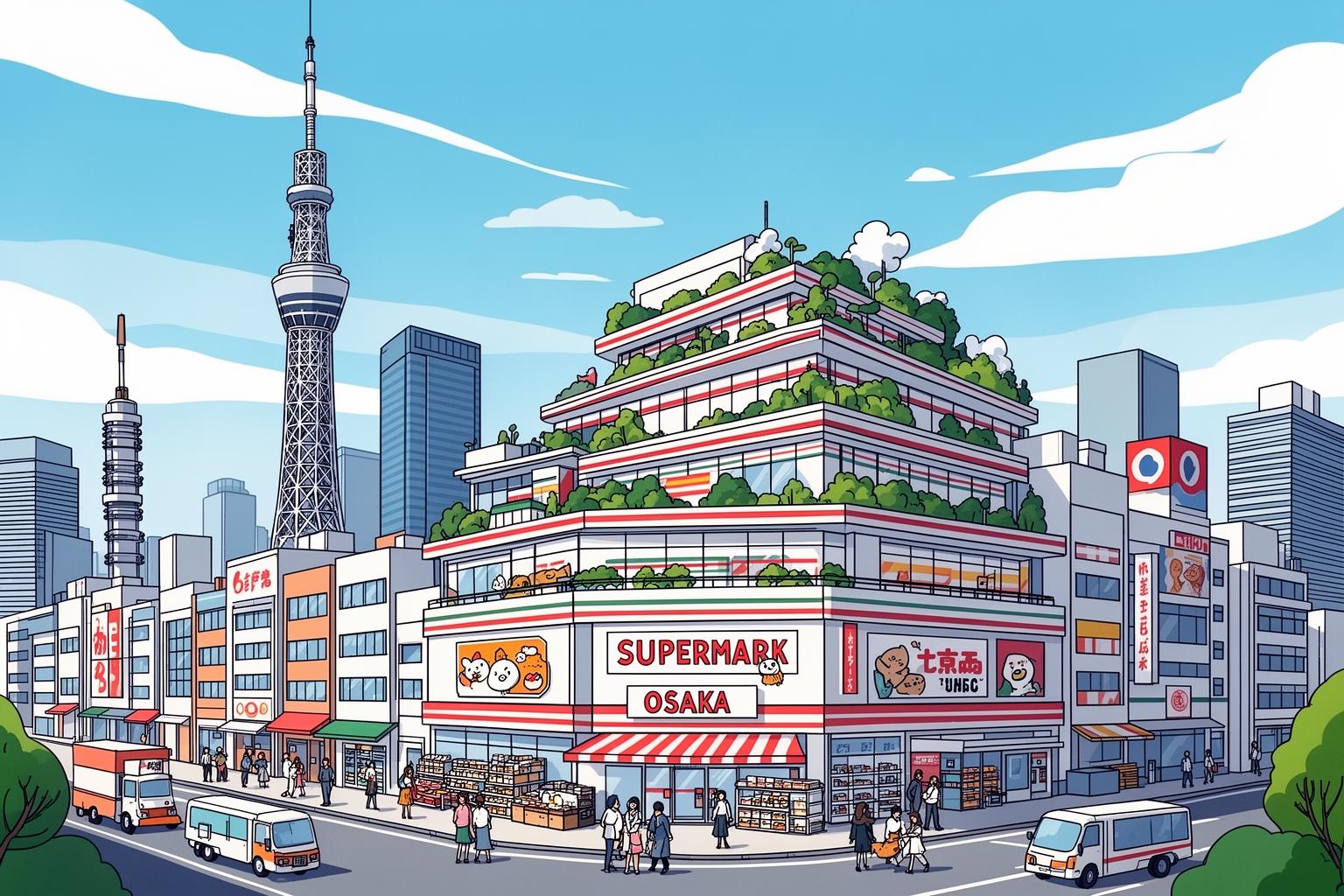
Not all supermarkets are the same in the world of `hangaku`. Each chain has its own character and unique approach to discounting. Understanding this landscape is essential for planning your strategy. Your choice of battleground can influence both the quality of your prize and the level of competition.
The Icon: Super Tamade (スーパー玉出)
No conversation about Osaka bargain hunting is complete without mentioning Super Tamade. With its flashy, 24/7 pachinko-parlor-style neon lights, Tamade stands as an unapologetic temple of discount culture. It’s loud, chaotic, and unmistakably Osaka. Tamade’s business model relies on aggressive, sometimes astonishingly low prices. Their famous “1 yen sales” on select items are legendary. When it comes to `hangaku`, Tamade is a wild frontier. Because many locations operate 24 hours, their discount timing can be unpredictable, but also more relentless. The quality might not be gourmet, but the prices are unbeatable. Shopping at Tamade is a raw, visceral experience. It’s not for the faint-hearted, but if your goal is to maximize quantity while minimizing cost, Tamade is your sanctuary.
The All-Rounder: Life (ライフ) & Mandai (万代)
Life and Mandai represent the reliable, mid-range Japanese supermarket. They are clean, well-organized, and strike a solid balance between quality and price. Their `hangaku` culture is more structured and predictable. Discounts usually start around the same time each evening. The quality of their prepared foods, bento boxes, and especially their sashimi is a significant step above the deep discounters. This makes their `hangaku` items a genuine prize. Scoring a 50% discount on a fresh, beautifully arranged sashimi platter from Life feels like a refined victory. The competition here is more civilized than at Tamade, but still intense. You’ll be up against savvy shoppers familiar with the store’s layout and staff schedules.
The Premium Player: Hankyu Oasis & Ikari Supermarket (阪急オアシス & いかりスーパー)
These are the upscale players in Osaka’s grocery scene. They cater to a more affluent clientele, offering imported goods, organic produce, and premium cuts of meat. One might assume such stores are above the fray of discount stickers, but that would misunderstand the Osaka spirit. Even here, the `hangaku` hunt remains alive and well. The atmosphere is far more subdued—no jostling or aggressive hovering. But make no mistake, when the staff member with the sticker gun appears, eagle-eyed shoppers quietly and gracefully converge. A 50% discount at Hankyu Oasis or Ikari is the holy grail of bargain hunting. We’re talking gourmet roast beef, artisanal cheese platters, and restaurant-quality salads for half price. Success here debunks the myth that bargain hunting is only for those on a tight budget. It proves that in Osaka, the love of a good deal transcends all social and economic boundaries. Everyone is part of the game.
The Unspoken Rules of the ‘Hangaku’ Arena
Like any cultural ritual, the `hangaku` hunt comes with its own code of conduct. These unwritten rules distinguish the clumsy amateur from the seasoned expert. Adhering to them will not only boost your chances of success but also earn you the quiet respect of your fellow hunters.
The Hovering Technique
This is the fundamental skill. You cannot be too obvious, nor can you be too distant. The aim is to linger with purpose. Casually inspect the tofu packages near the bento section. Straighten up and read the label on a bottle of salad dressing. Find a believable reason for being near the high-value targets. You are waiting for the critical moment, and proper positioning is crucial. It’s a game of patience and spatial awareness.
Respect the Sticker Staff
The staff member wielding the pricing gun is the most important person in the room—the arbiter of your fate. Do not crowd them or pester them with questions like “When will you discount this?” They have a job to do and a system to follow. Annoying them will get you nowhere. A slight nod, a brief moment of eye contact, and a quiet acknowledgment of their authority is the right approach. They see you, they understand why you’re there. Be patient, be respectful, and let them carry out their ritual.
Know Your Goal
Enter the supermarket with a plan but be ready to adapt. Are you seeking a complete meal for tonight? Then focus on the bento and `osouzai` sections. Are you shopping for ingredients for tomorrow’s meals? Then keep an eye on the fresh meat and fish counters. Having a goal keeps you from getting distracted. However, the spirit of `hangaku` demands flexibility. You might have come for chicken, but if you spot a beautiful piece of salmon at 50% off, the plan can change. The best hunters are opportunistic.
The Basket Check
This subtle yet vital tactic provides important intelligence. As you move through the aisles, discreetly glance into others’ shopping baskets. What are they holding? If three people suddenly carry the same discounted sushi pack, it signals that discounts have started in that section. It’s a form of non-verbal communication, a communal sharing of information. It tells you where the action is happening now, allowing you to adjust your position and join the rush before it’s too late.
More Than Money: What the ‘Hangaku’ Hunt Really Teaches You About Osaka
After all is said and done, the `hangaku` hunt is about much more than just saving a few hundred yen. It offers a glimpse into the very soul of Osaka, showcasing a culture that highly values pragmatism. The question is not “Can I afford this?” but rather “Is this the smartest way to buy this?” This practical, waste-averse mindset forms a key part of the local identity. It’s a clear rejection of vanity and an embrace of substance.
Moreover, the hunt serves as a unique form of everyday entertainment. It’s a low-stakes treasure hunt, played out every evening in hundreds of spots across the city. The excitement isn’t just in the savings; it’s in the pursuit. It’s in timing your move perfectly, positioning yourself just right, and grabbing the last discounted tonkatsu pack the moment the sticker goes on. This small, daily win delivers a satisfaction that money alone can’t provide.
Lastly, it cultivates a strange but powerful sense of community. Though you’re technically competing with those around you, there’s a shared understanding and a collective experience. Everyone is a player in the same game, bound by the same rules and driven by the same goal. A nod between two successful hunters as they cross paths in the aisle signifies mutual respect. You both mastered the game. By taking part in this ritual, you’re doing more than just grocery shopping. You’re engaging with the city’s living history as a hub of commerce. You’re connecting with the pragmatic, clever, and communal spirit of its people. When you feel the supermarket’s nightly pulse quicken and sense a thrill of anticipation, you’ll realize you’re not just living in Osaka anymore. You’re beginning to become a part of it.








