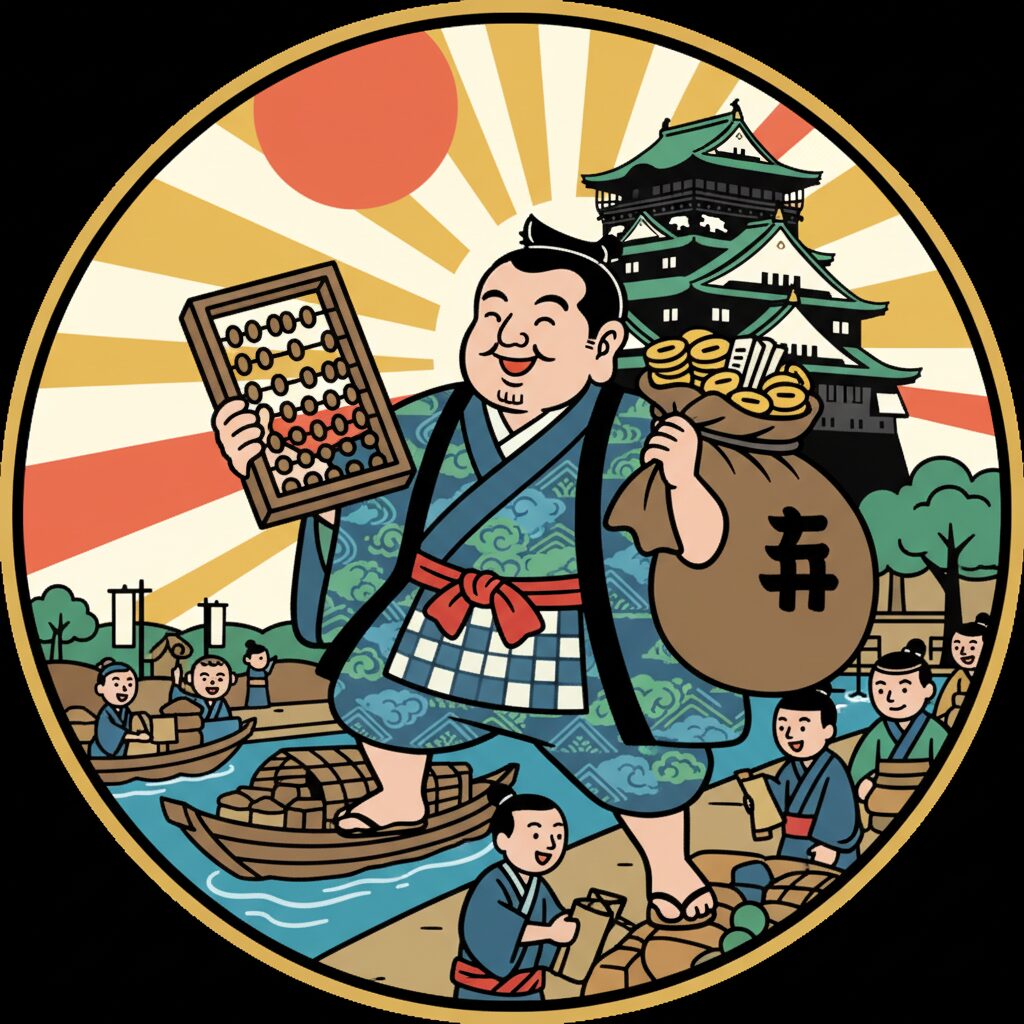
Hola! Sofia here. Let me paint you a picture. My first big meeting in Osaka. I’d come from a series of polite, almost whispered consultations in Tokyo, where proposals were reviewed in hushed tones and decisions were deferred pending internal consensus. I walked into the Osaka office, a sleek space buzzing with an energy that felt less like a corporate headquarters and more like a trading floor. Before my tea was even poured, the CEO, a man with a booming laugh and eyes that crinkled at the corners, leaned forward, looked at my proposal, and said, “This number is a bit… ambitious, don’t you think? Let’s find a spot where we’re both happy.” There was no offense, no awkwardness. It was just… the start of the dance. In that moment, I realized that to understand Osaka, you don’t go to the castles or the shrines first. You have to understand the deal. You have to understand the ‘Akindo’ (商人) spirit.
This isn’t just some dusty historical term. The merchant soul is the city’s operating system, the code running behind every transaction, from billion-yen corporate mergers to the friendly haggle over a bag of oranges at the local market. It’s a mindset forged over centuries in a city that wasn’t built by samurai or shoguns, but by traders, brokers, and artisans. It values practicality over pretension, relationships over rigid rules, and a good deal over decorum. Forget what you think you know about Japanese business culture, with its layers of subtlety and unspoken rules. Osaka plays by a different book, one written in the language of commerce, humor, and mutual prosperity. This spirit is the key to unlocking not just how to do business here, but how to truly live here, to understand the rhythm and the reason behind this incredible city.
Embracing the lively merchant ethos of Osaka not only transforms major business deals but also shines through in everyday moments, such as discovering affordable living tips at local supermarkets.
The DNA of the Deal: What is ‘Akindo’ Spirit?
To truly understand what drives Osaka, you need to delve into the ‘Akindo’ spirit. It goes beyond simply being a skilled salesperson; it’s a life philosophy centered on common sense, efficiency, and creating value. This mindset is deeply embedded in the city’s essence, reflected in its history, unique dialect, and social customs. Outsiders might perceive it as pushy or overly money-focused, but that’s just a superficial impression. In reality, it’s far deeper, more nuanced, and, once you grasp it, a lot more enjoyable.
More Than Just Money: It’s About the Win-Win
One of the first things you’ll hear in Osaka is the familiar greeting, “Mokkari-makka?” which roughly means, “Making a profit?” The typical response is, “Bochi-bochi denna,” or “So-so.” To a newcomer, this may sound blunt or intrusive, like walking into a London office and being asked, “How’s your bank balance?” You’d likely be shown the door. But here, it’s not a literal question about finances. It’s a social ritual, a tradition from a time when merchants within the same community checked in on each other. It’s akin to asking, “How’s life treating you?” through a commercial lens. It assumes a common objective: prosperity. Your success doesn’t undercut mine; in fact, a thriving business community benefits everyone.
This highlights the heart of the ‘Akindo’ ethos: it’s about a win-win outcome. The aim of negotiation isn’t to crush your opponent and take everything, but to reach a ‘chodo ii’ (ちょうどいい), or “just right” point where both sides feel content. They’re thinking ahead to the next deal, and the one beyond that. A fair reputation and fostering mutual benefit are the most valuable currencies in this city. A business that squeezes every last yen from one deal might win today, but won’t have partners tomorrow. This long-term mindset is essential. Osakans are playing the long game, weaving a network of trust and interdependence that supports them through good times and bad.
The Roots of the Rhythm: A City Built on Trade
Why Osaka? Why not Tokyo or Kyoto? The answer lies in history. For centuries, Osaka was known as the ‘Tenka no Daidokoro’ (天下の台所), or the “Nation’s Kitchen.” It served as the central hub where rice, sake, and goods from across Japan were gathered, stored, and distributed. The famed rice brokers of Dojima established what many regard as the world’s first futures market. Unlike Edo (Tokyo) or Kyoto, known for stoic samurai and rigid court customs, Osaka was a city of doers, makers, and merchants. Status was earned not by birthright, but by business savvy—the ability to read markets, manage risk, and build networks.
This historical backdrop is crucial. It fostered a culture where practicality took precedence over ceremony. If rules or traditions got in the way of a good deal, Osakans would find ways to bypass them. This pragmatism remains strong today. You see it in the efficient subway system layout, the straightforward attitude of shopkeepers, and the focus on ‘cospa’ (cost performance) that influences everything from lunch deals to real estate. In Osaka, being called ‘kechi’ (stingy) may be an insult, but being recognized as a shrewd, smart spender who values worth is high praise. This isn’t about being cheap; it’s about being wise—a survival instinct passed down through generations of merchants who thrived by their financial savvy.
Reading the Room: Osaka Negotiations in Action
So, you’re sitting in the meeting room. You’ve got your pitch ready, your financials sorted, and you’re prepared to meet your Osaka counterpart. This is where cultural differences become strikingly clear—and sometimes even amusing. The unwritten rules here are quite different. The pace is quicker, communication is more straightforward, and the entire interaction feels more like an energetic collaboration than a formal presentation.
Straight to the Point: Skipping the Formalities
In many parts of Japan, especially Tokyo, business follows a nuanced, multi-step process. You start with the ‘aisatsu’ (greeting), the carefully ritualized exchange of ‘meishi’ (business cards), the long-winded talk about the weather or the season, and then a gradual, almost hesitant move toward the main topic. This process is all about building harmony and steering clear of confrontation.
Now, most of that goes out the window in Osaka. While basic politeness remains important, Osakans prioritize efficiency. They see a long, drawn-out preamble as wasting everyone’s time. Time is money, after all. That’s why the CEO I met jumped straight to discussing price. He wasn’t being rude; he was respecting both my time and his own. He was signaling, “I’m serious about this, so let’s focus on what matters.” For foreigners accustomed to the Tokyo approach, this can feel like being tossed into the deep end. It may seem like you’ve skipped several steps and broken some unspoken protocol. You haven’t—you’ve just entered the Osaka express lane. The best way to respond is with equal directness and a willingness to engage. They’ll respect you for it.
The Art of Bargaining: More Than Just a Market Thing
Negotiation in Osaka isn’t considered rude but rather a form of dialogue. It’s expected and viewed as a sign that both sides are genuinely engaged and eager to find the best outcome. Offering a price and having it accepted immediately might even raise suspicion. Did I price it too low? Do they not value the deal? The back-and-forth is where trust is forged.
I discovered this while trying to book a venue for a small event. I stated my budget, and the manager responded with a figure about 20% higher. In my past experience, I might have walked away. But embracing my inner Osakan, I smiled and said, “That’s a great price, a very strong offer. However, my budget is a bit tighter. Could there be any flexibility if we book on a weekday?” The manager’s expression brightened. We were now in negotiation mode. We exchanged ideas about catering, staffing, and payment schedules. Eventually, we settled on a price slightly above my original budget, but it included additional services that provided great value. Both of us won. The negotiation itself built the relationship. He saw I was serious and understood value; I saw he was a flexible partner, not a rigid vendor.
The “Chotto Makete” Spirit
This professional haggling has roots in everyday life. Stroll through any ‘shotengai’ (shopping arcade) like the one in Tenjinbashisuji, and you’ll hear the phrase: “Chotto makete?” (ちょっと負けて?) — “Can you give me a little discount?” It’s said with a smile, almost playfully challenging. It isn’t an aggressive demand; it’s an invitation to engage. The shopkeeper might reduce the price by a few yen or toss in a free ‘omake’ (small bonus). This same spirit applies in business settings. The language may be more formal, but the essence is the same. It’s about testing limits and finding that sweet middle ground. Showing a willingness to ask—and to give a little in return—demonstrates your understanding of the local culture of ‘gori-teki shiko’ (合理的思考), or rational thinking.
Beyond the Boardroom: How ‘Akindo’ Shapes Daily Life
The merchant spirit doesn’t remain confined to the office; it permeates every facet of life in Osaka, shaping how people form relationships, communicate, and even enjoy themselves. It cultivates a society that is deeply human, prioritizing personal connection and genuine interaction over strict formality. Grasping this is essential to feeling at home here.
Relationships Over Contracts: The Power of a Handshake
While contracts are naturally part of business, there is a strong belief in Osaka that a person’s character and solid relationships are the ultimate guarantees of a deal. A lengthy, 100-page contract with an untrusted partner holds less value than a simple handshake with someone you trust. This can often confuse Westerners, who are typically taught to “get it in writing.”
Building this trust requires time and effort outside formal meetings. It develops over sizzling plates of okonomiyaki, lively conversations in a standing bar in Umeda, or a round of golf. This is not merely “optional networking”—it is the main event. During these informal moments, your Osaka partners are evaluating you. Are you honest? Do you have a sense of humor? Can you hold your own in conversation? They want to do business with people they genuinely like and respect. I’ve witnessed multimillion-dollar deals shift not based on spreadsheets but on a shared laugh over a spilled beer. Business here is personal. Your reputation and reliability as a person are your greatest assets.
Humor as a Business Tool
In many corporate cultures, humor is viewed as unprofessional and distracting from serious business. In Osaka, humor is a social lubricant and a powerful tool. It serves to break the ice, ease tension, and build rapport more effectively than any PowerPoint presentation. Self-deprecation is especially valued. An Osaka CEO might open a meeting by joking about his receding hairline or a recent goofy company mistake. This is not a sign of weakness but confidence, signaling, “I don’t take myself too seriously. We are equals here. Let’s relax and solve this problem together.”
If you can’t take or make a joke, connecting will be difficult. Osakans are known for their ‘tsukkomi’ and ‘boke’ comedy style—rapid exchanges between a straight man and a silly one. This style often carries over into business. Someone might make an outrageous comment just to see if you’ll respond with a witty comeback. Participating in this banter shows you’re sharp, attentive, and culturally tuned in. It’s a test, and passing it can open doors that strict formality would keep closed.
Osaka vs. Tokyo: A Tale of Two Business Cities
The contrast between Osaka and Tokyo goes beyond a simple friendly rivalry; it represents a fundamental difference in worldview, particularly in business practices. Both cities are economic powerhouses, but they function on different wavelengths. Recognizing this distinction is crucial for any foreigner trying to navigate Japan.
The Bureaucrat vs. The Merchant
Tokyo’s culture is heavily shaped by its history as the seat of the shogunate, later the imperial government, and the national bureaucracy. This has cultivated a business environment that prioritizes process, consensus, and hierarchy. The concept of ‘nemawashi’ (根回し), the informal process of preparing the ground and securing agreement from everyone before making a formal decision, is essential. Decisions tend to move slowly, as they must pass through multiple levels of authority. The individual is subordinate to the group, and maintaining harmony is the foremost objective.
In contrast, Osaka is known as the city of merchants. Its culture values speed, decisiveness, and personal accountability. The boss is frequently empowered to make decisions immediately. The emphasis is not on achieving perfect consensus but on obtaining good results quickly. They prefer making a decision and adjusting later rather than getting caught in endless meetings. This ‘top-down’ approach can be very refreshing for Westerners accustomed to faster decision-making. In Osaka, you’re more likely to get a clear “yes” or “no” on the spot rather than a “we will discuss this internally and get back to you.”
Communication Styles: Implicit vs. Explicit
These historical differences also influence communication styles. Tokyo’s communication is famously high-context and implicit. What isn’t said often holds more meaning than what is. You need to ‘kuki wo yomu’ (空気を読む), or “read the air,” to grasp the true message. A non-committal “I will think about it” is frequently a polite way of saying no.
Osaka communication, on the other hand, is refreshingly explicit. People tend to speak their minds, for better or worse. If they dislike your idea, they will likely tell you directly, explaining why. This can initially feel confrontational, but it is actually a sign of respect. They believe honest feedback is more valuable than superficial harmony, as it allows problems to be identified and resolved quickly. Once you adapt, this directness becomes a major advantage. You always know where you stand. The feedback isn’t personal; it’s about the business. Debate and disagreement are viewed as healthy aspects of the process, not threats to relationships.
Practical Tips for Navigating the Osaka Business World
Thriving in Osaka’s business culture calls for a slight adjustment in your approach. It’s about balancing professionalism with personality, and preparation with adaptability. Here are a few key points to remember.
Do Your Homework, But Stay Flexible
Arrive well-prepared. Understand your numbers, costs, market, and your absolute bottom line. Osakans are savvy businesspeople who will quickly notice if you haven’t done your research. They value thorough preparation and a solid grasp of the facts. Yet, don’t let your preparation make you inflexible. Your detailed proposal is often just the beginning of the conversation. Be ready to adapt, explore creative solutions, and negotiate on terms you hadn’t anticipated. The aim is to craft a deal together, not to expect your initial offer to be accepted without question.
Prioritize Building the Relationship
Dedicate time to forging personal connections. If invited out for dinner or drinks, accept the invitation. This is not merely an optional activity; it is an essential part of the job. During these occasions, avoid discussing business unless your host initiates it. Instead, share stories about your hobbies, family, travels, and what you appreciate about Japan. Ask about their lives with genuine interest. This is how you move from being a faceless foreign representative to a trusted human partner. It lays the foundation for all prosperous business relationships in Osaka.
Embrace a Bit of Banter
Relax your demeanor. Drop the overly formal, stiff attitude. Smile, laugh at their jokes, and don’t hesitate to make fun of yourself a little. Learning a few key phrases in the local dialect, Osaka-ben, like “Meccha ee yan” (めっちゃええやん – That’s really great!) or “Nande ya nen” (なんでやねん – Why on earth? / You’ve got to be kidding me!), will earn you immediate respect and warmth. It demonstrates your effort to connect on their level. Showing personality is not a weakness; it’s an asset.
Highlight the Value Proposition
Finally, always present your proposal in terms of mutual benefit and long-term value. Focus less on immediate costs and more on how your partnership will foster sustained success for both sides. Osakans are perceptive and can spot a one-sided deal from afar. They seek partners who will help them grow and who they can rely on over time. Show them you’re not just after quick profits. Show them you’re committed to building something enduring, together. That is the heart of the Osaka deal.
The Heartbeat of the City
Living in Osaka means embracing the rhythm of the ‘Akindo’ spirit. You can hear it in the roar of the crowd at a Hanshin Tigers baseball game, the lively calls of vendors in Kuromon Market, and the smart, efficient way people move through the bustling city streets. It’s a culture grounded in pragmatic optimism, where challenges are viewed as puzzles to solve and relationships hold the greatest value. It can be loud, direct, and intense, yet it’s also warmly honest and vibrantly alive. By understanding the merchant’s heart that pulses through this city, you not only learn how to do business in Osaka—you learn how to belong. And that is the best deal you could ever make.