
Walk into almost any small, family-run business in Osaka between 6:45 and 8:00 a.m., and you will hear it. It’s a sound as fundamental to the city’s morning as the clatter of shutters rolling up or the smell of coffee brewing in a corner kissaten. It’s a cheerful, slightly retro-sounding jingle, followed by the booming, familiar voices of television hosts. At first, as a newcomer, you might dismiss it as random background noise, just another television program. But after a week, a month, you start to notice the pattern. The vegetable stand on your corner, the tiny dry cleaner, the local bakery, the taxi driver’s dashboard monitor—they are all tuned to the exact same channel, watching the exact same show. This isn’t a coincidence. This is a ritual. You are listening to the unofficial heartbeat of the city waking up: a local morning news show called Ohayo Asahi Desu, or “Good Morning, Asahi.” This program is more than just a source of news and weather; it is a foundational piece of Osaka’s cultural infrastructure, a shared experience that subtly choreographs the daily lives of millions. It’s one of the first and most profound things you learn when you stop being a tourist and start actually living here. It’s a key that unlocks a deeper understanding of how this city operates, how its people connect, and why it feels so fundamentally different from the polished, reserved energy of Tokyo. To understand Osaka, you must first understand its morning soundtrack.
The city’s vibrant pulse is further reflected in its deeply rooted danchi communities, which add another layer to the cultural richness that defines Osaka.
The Ubiquitous Soundtrack of an Osaka Morning

To truly understand how pervasive Ohayo Asahi Desu is, you need to experience it firsthand. Imagine this: It’s 7:15 a.m. in a neighborhood like Tenma or Nakazakicho. You enter a small coffee shop, the kind that’s been run by the same elderly couple for forty years. A tiny television, perched on a high shelf behind the counter, is already on. On the screen, a cheerful weatherman points at a map of the Kansai region, his voice a familiar, comforting baritone. The shop owner, while carefully pouring hot water over coffee grounds, glances up at the screen and nods in agreement with the forecasted afternoon shower. This isn’t just background noise; it’s a shared reference point, a communal utility like the clock on the wall or the sugar on the table.
Next, walk down the street to the local laundromat. Amid the steady hum and tumble of the dryers, another television, mounted in the corner, broadcasts the same program. A segment about a new type of ramen in Namba is playing, and a woman waiting for her clothes to dry watches intently, perhaps making a mental note to try it later. Her morning routine is passively synchronized with the coffee shop owner’s and with thousands of others across the city. The taxi you hail to get to the station? The driver has a small screen on his dashboard, and you can bet Ohayo Asahi Desu is on, delivering traffic updates that are hyper-local and immediately useful. This shared media experience sharply contrasts with Tokyo, where morning media tends to be a far more individualized affair—earbuds in, smartphone out, each person isolated in their own digital world. In Osaka, the morning broadcast often functions as a public utility, part of the communal soundscape. Choosing to tune into this specific show is a conscious expression of local identity—favoring the familiar, the regional, and the relevant over the polished, national programs produced in Tokyo studios.
More Than a News Show: It’s a Community Hub
The reason Ohayo Asahi Desu resonates so strongly is that it feels less like a formal news broadcast and more like a city-wide morning gathering. The content is carefully tailored for the people who live here. The news highlights local issues, the sports segment devotes extra attention to the Hanshin Tigers baseball team, and the lifestyle features highlight shops and restaurants genuinely accessible to the average resident. This builds a powerful, city-wide shared context that fuels daily interactions. When the show airs a quirky segment about a talking parrot in a pet shop in Sakai, it becomes common public knowledge. Later that day, you might hear a shopkeeper mention it during small talk with a customer: “Did you see that parrot on Asahi this morning? Wild, right?” It’s a small interaction, seemingly trivial, but these moments, multiplied thousands of times, weave the social fabric of the city. They serve as subtle reminders that “we are all here, in this place, experiencing the same thing.”
This shared experience acts as a powerful social lubricant. In a city known for being open and conversational, the show provides a constant stream of neutral, easy-to-discuss topics. It lowers the barrier for strangers to engage because there’s an unspoken understanding of a shared frame of reference. This helps clarify a key aspect of the Osaka personality that outsiders often notice but may misunderstand. The well-known “friendliness” of Osakans isn’t just a spontaneous personality trait; it’s a skill built on a foundation of shared culture. The show delivers a daily dose of that culture directly into homes, shops, and businesses. It ensures that when you step outside your door, you’re not merely an individual navigating a metropolis; you’re part of a vast, loosely connected community that, at the very least, knows what the horoscope for Leos said that morning.
“Chau Chau!” – The Language and Humor of the Show
One of the key reasons the show remains so popular is its unapologetic use of Osaka-ben, the local dialect. This choice goes beyond mere style; it serves as a political and cultural statement. Unlike the clear, standard Japanese (hyojungo) typically heard on national broadcasts from Tokyo, the hosts of Ohayo Asahi Desu speak in the authentic manner of Osaka residents. They include expressions like meccha (very), honma (really), and the well-known chau chau (a rapid-fire way of saying “no, that’s not it at all!”). Their speech is quicker, more melodic, and more emotionally expressive than standard Japanese. For locals, hearing their own dialect on television is affirming. It signals that their way of speaking—and by extension, their way of life—is valued and central, not just a regional oddity.
The humor on the show is also unmistakably Osakan. It’s warm, gently self-mocking, and often rooted in the clever, rapid-fire dialogue of manzai comedy, a style perfected in this city. The hosts aren’t distant, polished news anchors; they come across like your amusing aunt and uncle. They laugh heartily, make mistakes, and playfully tease one another in a way that feels utterly sincere. This approach makes the show highly approachable and relatable. For foreigners trying to understand the local culture, watching Ohayo Asahi Desu is an invaluable experience. You’re not only catching up on current events but also absorbing the rhythm of the local language, the distinctive flavor of its humor, and the unspoken codes of social interaction. You’re learning what people in Osaka find funny, what matters to them, and how they communicate with one another. It’s a cultural immersion course that airs for an hour and fifteen minutes every weekday.
What This Means for Daily Life in Osaka
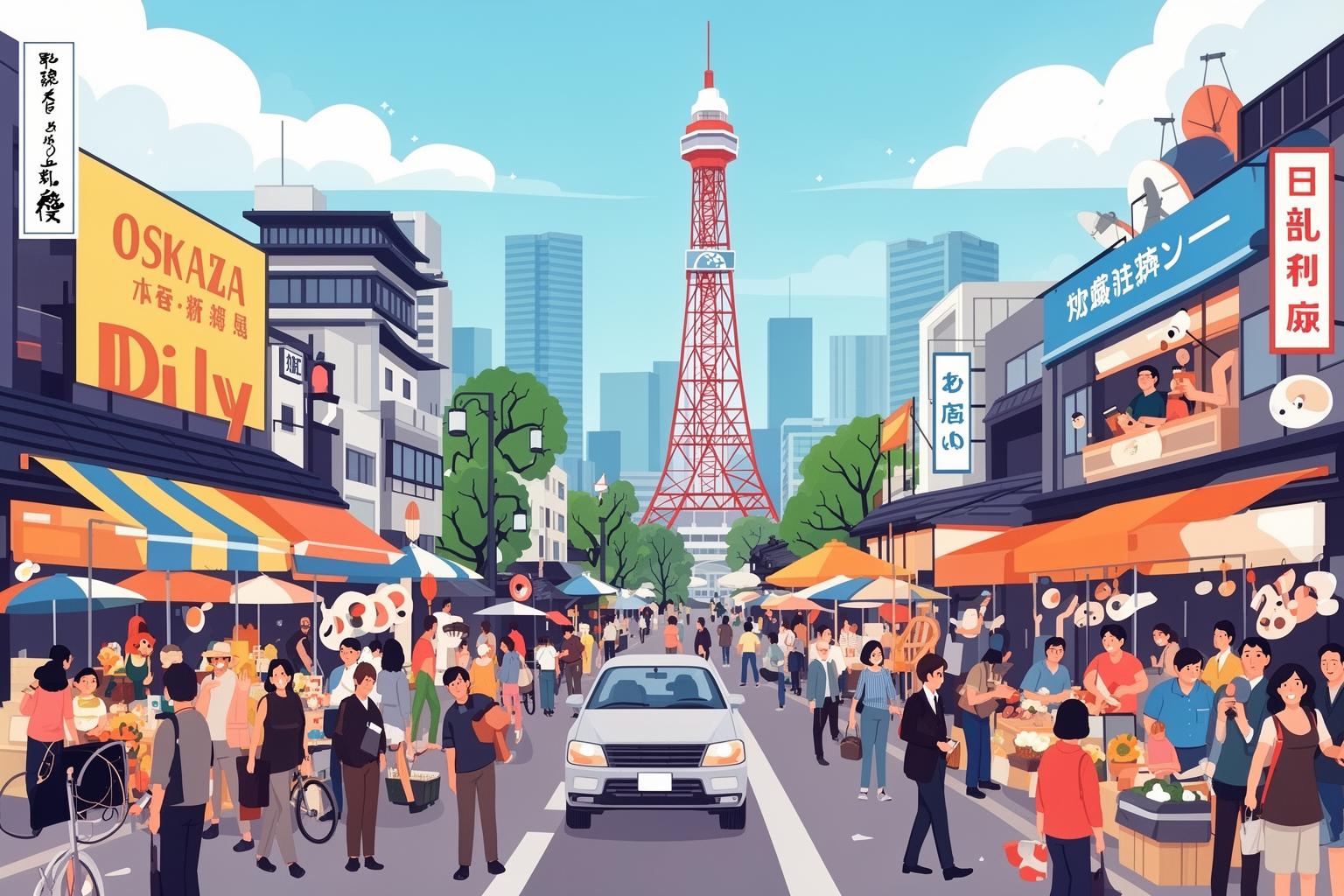
Grasping the phenomenon of Ohayo Asahi Desu is more than just trivia; it holds practical significance for anyone living in Osaka. It enables you to decode the rhythm of everyday life. When you realize that a large part of the city receives the same information package between 7 and 8 a.m., you begin to notice its influence everywhere. The conversations you overhear on the train, the specials listed on a local restaurant’s blackboard, and the overall mood of the city about the weather—all are shaped by this shared morning ritual. It establishes a baseline of common knowledge that makes the vast metropolis feel more like a small town.
This is an important point that many foreigners, especially those from Tokyo, often overlook. In Tokyo, social interactions tend to be more formal and segmented. You engage with colleagues at work, friends within your social circle, but conversations with strangers or casual acquaintances happen less frequently. In Osaka, those boundaries are more blurred, and the shared context provided by a show like Ohayo Asahi Desu contributes to that dynamic. It offers a constant, low-stakes reason for connection. For a non-Japanese resident, casually mentioning something from the show can be a powerful way to connect. It signals that you’re not merely an outsider observing the city; you’re part of its daily life, tuned into the same frequency. It’s a simple way of saying, “I’m part of the conversation, too.”
The Asahi Rhythm vs. The Tokyo Silence
The deepest insight from Ohayo Asahi Desu emerges when compared with the morning experience in Tokyo. A morning ride on Tokyo’s Yamanote Line exemplifies public solitude. Despite the train being crowded, it is often eerily quiet. Nearly every passenger is absorbed in their own world, immersed in a smartphone screen with noise-canceling headphones. The public space serves as neutral ground to be crossed as efficiently and with as little disruption as possible. The soundtrack of a Tokyo morning is a personally curated playlist.
In contrast, the Osaka morning, especially before the commute, is distinctly different. Walking through a shotengai (covered shopping arcade), the sound of Ohayo Asahi Desu emanates from televisions in the fishmonger’s, butcher’s, and pharmacy. The broadcast extends beyond private homes and becomes part of the neighborhood’s semi-public ambiance. This reveals a different spatial philosophy. In Osaka, the boundary between public and private is more fluid. A shopkeeper’s television is not merely for their own amusement; it serves as a beacon, a node in a city-wide network of shared experience. It’s a passive invitation to connect, signaling that this space is not simply a sterile commercial zone but a living part of the community.
What a foreigner might initially dismiss as mere “noise” is, in reality, a complex social signal. It broadcasts a sense of belonging. It is the city communicating with itself, reinforcing its identity each morning. This is not to imply one city’s way is better than the other, but rather that they are profoundly distinct. Choosing to live in Osaka means choosing to engage, even passively, in a more communal, audible, and interconnected way of life. Tokyo’s silence offers a kind of anonymous freedom; Osaka’s sound offers a lively, noisy sense of belonging.
Conclusion: Tuning into the Heartbeat of the City
Ultimately, Ohayo Asahi Desu is much more than a mere morning show. It acts as the city’s metronome, setting the pace for the day to come. It serves as a daily affirmation of a unique Kansai identity, a subtle form of cultural resistance against Tokyo’s centralizing influence. It functions as a social glue, offering a shared context that nurtures the city’s well-known open and conversational spirit. The cheerful theme song resonating through the streets is not just a tune; it is the overture to the intricate, humorous, and deeply human drama of everyday life in Osaka.
For anyone seeking to grasp what drives this city and shapes its people, my advice is straightforward: rise early. Visit a local coffee shop, order a “morning set,” and simply listen. Don’t worry if you don’t catch all the words. Just take in the sounds, the tone, the laughter. Observe how other customers glance at the screen. You are witnessing a fundamental ritual of Osakan life. When that theme song stops sounding like random noise and instead feels like the familiar, comforting melody of your city waking up, you’ll know you’re no longer a visitor. You’re beginning to discover your own rhythm within the vibrant, noisy, and wonderful pulse of Osaka.