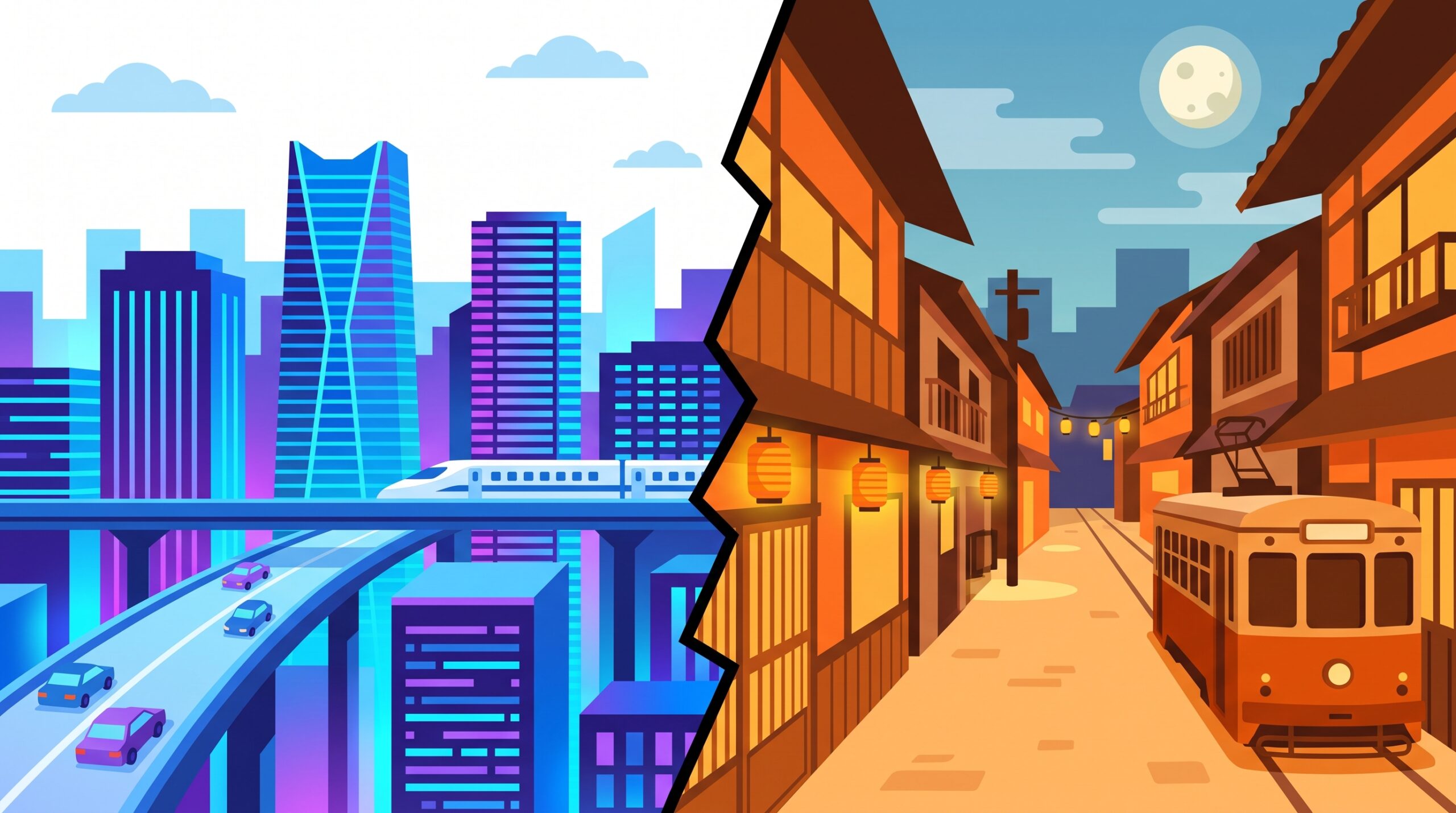
Moving to Osaka is not just moving to a single city. It is making a choice between two distinct, vibrating worlds. You step off the train. The air hits you differently depending on where those train doors open. Osaka is a metropolis, sure. But it breathes like a collection of tight-knit villages that somehow grew into a sprawling concrete jungle. For foreigners looking to plant roots here, the first and most crucial decision you will make is geographical. Are you a Kita person, or are you a Minami person? This is not just a question of geography. It is a question of soul. It defines how you will spend your weekends, how much you will pay for rent, and how you will interact with your neighbors on a random Tuesday morning.
You learn quickly that Osaka is not Tokyo. Tokyo is a polite nod. Tokyo is silence on the morning commute. Osaka is a loud conversation across the aisle. Osaka is the lady at the local supermarket giving you an extra potato just because you tried speaking Japanese. But when you decide to live here, you face a divide. Kita means north. Minami means south. In Osaka, these words represent entirely different philosophies of living, working, and surviving. To understand this divide is to understand Osaka itself. Forget the glossy tourist guidebooks. Forget the sightseeing itineraries. We are looking at the pavement, the apartment blocks, the guarantor companies, and the daily grind. We are looking at what it actually takes to build a life here. Here is the map of the city to get your bearings before we dive into the deep end of the local real estate waters.
Choosing Your Osaka Home: Kita vs. Minami
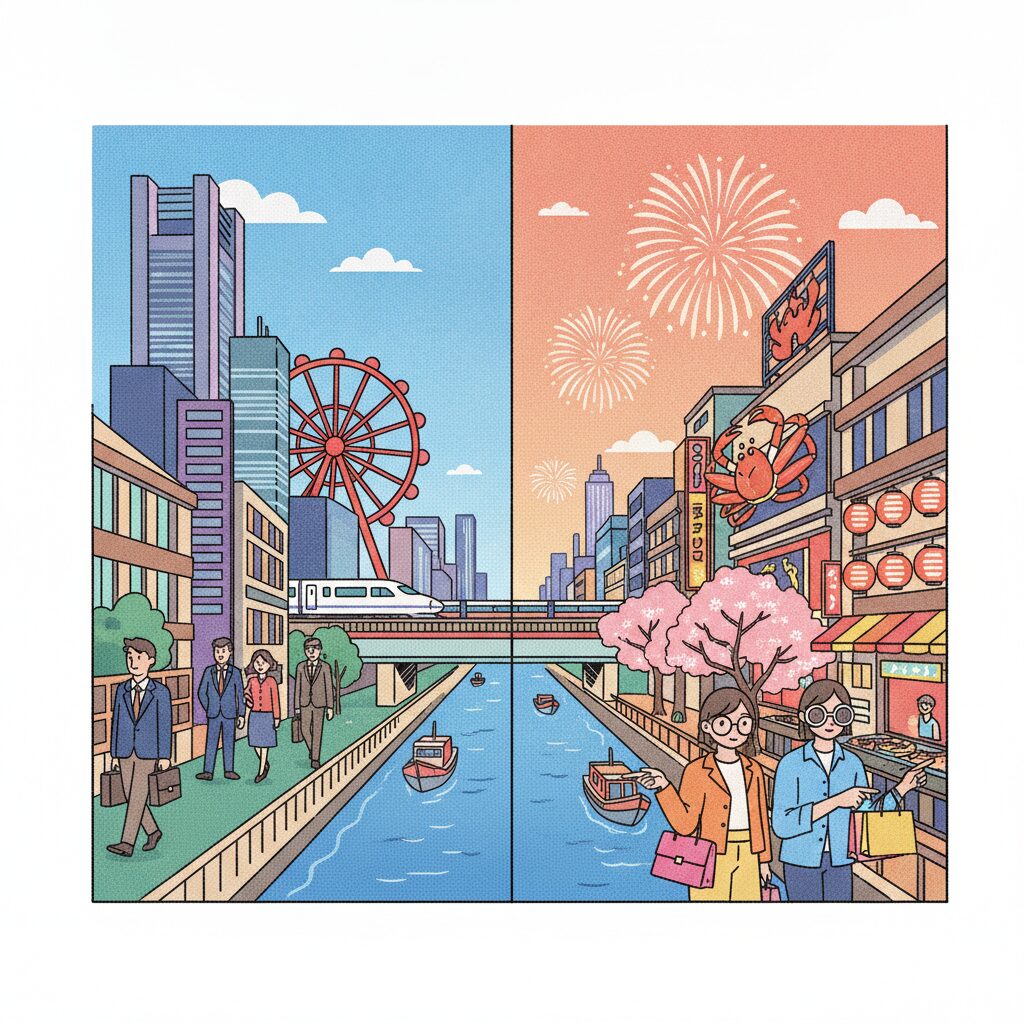
The cultural divide between northern and southern Osaka is something that locals feel deeply. It’s an unspoken rule of the city. Kita, centered around the massive transit hub of Umeda, showcases the polished, business-oriented side of Osaka. This is where major corporations erect their glass towers and where underground labyrinths house upscale boutiques and stylish cafes. People in Kita walk a bit faster and dress a touch sharper. The vibe leans toward Tokyo’s sophistication, yet it maintains a distinct Kansai warmth, preventing it from feeling cold or sterile.
On the other hand, there’s Minami. Focused around Namba, Shinsaibashi, and Tennoji, Minami is the vibrant, chaotic heart of traditional Osaka culture. This is the Osaka depicted in films—raw, loud, and unapologetically authentic. Minami is where comedy thrives, where neon lights reflect on the Dotonbori canal, and street food vendors shout their prices into the night. Fashion here is bolder, and interactions more direct. If a stranger strikes up a conversation while you wait for a crosswalk, it’s most likely in Minami.
For a foreign resident, choosing between these two areas shapes your daily experience. It influences the grocery stores you shop at—Kita offers imported cheese at Hankyu Oasis or Ikari Supermarket, while in Minami you navigate crowded aisles at Super Tamade, surrounded by flashing neon signs and incredibly affordable produce. Your choice impacts your commute, weekend entertainment, and significantly, your rent. Japanese real estate is notoriously challenging for outsiders, and understanding the character of these neighborhoods is your first defense in finding a landlord and a community that welcome you and suit your lifestyle.
Living in Kita (North Osaka): Vibe, Costs, and Lifestyle
Living in Kita feels like being at the heart of a well-oiled machine. It includes Kita-ku, Fukushima-ku, and parts of Yodogawa-ku. The infrastructure here is unmatched. Residents of Kita enjoy immediate access to JR Osaka Station, Hankyu Umeda, and Hanshin Umeda, allowing travel to Kyoto in thirty minutes or Kobe in twenty. For expat professionals who need to commute for work or simply want maximum convenience, Kita sets the gold standard.
The lifestyle is refined. You’ll discover countless craft beer bars, upscale restaurants, and serene, leafy parks hidden behind towering skyscrapers. The streets are exceptionally clean, and bicycle parking is strictly regulated. It’s a very comfortable environment for foreigners seeking a modern, cosmopolitan lifestyle while enjoying the benefits of living in Japan’s second-largest metropolitan area. However, that level of polish comes with a cost. Kita is generally the most expensive area to rent in Osaka. Landlords here are often corporate, and their screening of foreign applicants can be rigorous, requiring flawless documentation and stable corporate incomes.
Top Neighborhoods for Foreign Residents in Kita
Fukushima is a culinary hotspot and a favorite among young professionals. Located just one stop from Osaka Station on the JR Loop Line, it boasts an incredible variety of traditional standing bars alongside upscale bistros. The streets are narrow, winding, and safe at all hours. Many foreign tech workers and English teachers, who have moved beyond their entry-level salaries, choose Fukushima for its mature yet vibrant atmosphere.
Nakazaki-cho offers a completely different vibe. This neighborhood somehow survived wartime bombings, preserving a maze of pre-war wooden row houses called nagaya. These buildings have been repurposed into vintage clothing shops, independent coffee roasters, and art galleries. Living near Nakazaki-cho means enjoying the laid-back, bohemian feel of a small town while just a ten-minute walk from Umeda’s towering department stores. Renting an older renovated house here is possible, though highly competitive and often requiring Japanese fluency to negotiate with private, long-time landlords.
Tenma lies on Kita’s eastern edge and is known for having Japan’s longest covered shopping arcade. It bridges the polished atmosphere of Kita with the grit of Minami. At night, Tenma transforms into an alcohol-fueled wonderland filled with affordable izakayas and lantern-lit alleyways. For foreigners who want northern convenience but crave the lively, working-class energy of traditional Osaka, Tenma is an ideal compromise.
Average Rent Prices in Kita-ku and Adjacent Wards
As the commercial hub, Kita’s rent prices reflect its high demand. As of 2026, the housing market remains tight. For a standard 1K apartment—a single room with a separate small kitchen—expect to pay between 70,000 and 95,000 JPY monthly in Kita-ku proper.
If you require more space, a 1LDK, which has a separate living room and bedroom, will range from 120,000 to 180,000 JPY, depending on the building’s age and proximity to the station. Newer buildings in Umeda or Fukushima carry a premium. To save money while still staying in the northern area, many foreigners look just across the river to Yodogawa-ku, near Shin-Osaka or Juso, where rents drop by about twenty percent, with 1K apartments around 60,000 JPY.
Living in Minami (South Osaka): Vibe, Costs, and Lifestyle
If Kita represents a corporate boardroom, Minami is like a bustling pub on a Friday night. Spanning Chuo-ku, Naniwa-ku, and Tennoji-ku, Minami is where Osaka’s identity as a friendly, food-obsessed, and slightly chaotic city takes shape. Life here revolves around the street level—wandering through the endless arcades of Shinsaibashi, savoring fresh takoyaki in Americamura, and navigating the dense crowds of Namba.
For foreign residents, living in Minami means embracing the noise and accepting that your neighborhood may be lively even at three in the morning. It also often brings a stronger sense of community. Minami’s immigrant population is highly visible and well integrated into the local economy. On the streets, you’ll commonly hear Chinese, Korean, Vietnamese, and English spoken. The usual strict social norms of Japanese society feel a bit more relaxed here—people jaywalk, and bicycles dart through crowds with boldness. It’s a thrilling, exhausting, and wonderfully affordable place to call home.
Top Neighborhoods for Foreign Residents in Minami
Horie is frequently likened to Brooklyn. Situated just west of Shinsaibashi, it is the heart of Osaka’s streetwear, designer furniture, and café culture. Despite its proximity to the city’s hustle and bustle, Horie’s streets are surprisingly quiet and tree-lined. It draws a stylish, younger crowd, and foreigners appreciate Horie for its modern, fashionable vibe without the corporate formality found in Umeda.
Daikokucho is a neighborhood rarely featured in travel guides but serves as a major hub for foreign residents. Located in Naniwa-ku, just south of Namba, Daikokucho is known for its affordability. It boasts a high concentration of language schools and a large international community. The area is filled with budget-friendly supermarkets, including the iconic Super Tamade, alongside international grocery stores selling spices and ingredients rare elsewhere in the city. The buildings may be older, and the streets less polished than Horie, but in terms of livability and affordability, Daikokucho is unmatched.
Tennoji acts as the anchor of the deep south and has seen significant revitalization recently, symbolized by the towering Abeno Harukas building. It offers a fantastic blend of old and new, with modern shopping malls and expansive parks located next to Shinsekai, a retro, slightly gritty neighborhood known for its fried skewers and vintage game centers. Tennoji is especially popular with foreign families due to its spaciousness, beautiful green spaces like Tennoji Park, and excellent access to both the city center and southern suburbs.
Average Rent Prices in Chuo-ku, Naniwa-ku, and Tennoji
Your money stretches further in Minami. While areas like Shinsaibashi or Horie can be pricey, the surrounding wards provide great value. In Naniwa-ku, a comfortable 1K apartment typically costs between 55,000 and 70,000 JPY per month.
If you’re searching for a 1LDK in Minami, prices usually range from 90,000 to 130,000 JPY. The building’s age is a significant factor here, as Minami has many older constructions from the 1980s and 1990s. If you don’t mind slightly outdated bathrooms or the absence of auto-lock security at the entrance, you can find remarkably affordable housing. Just keep in mind that cheaper rent in Minami can sometimes mean living closer to noisy highways, elevated train tracks, or nightlife districts.
Kita vs. Minami: Which Area Fits Your Lifestyle?
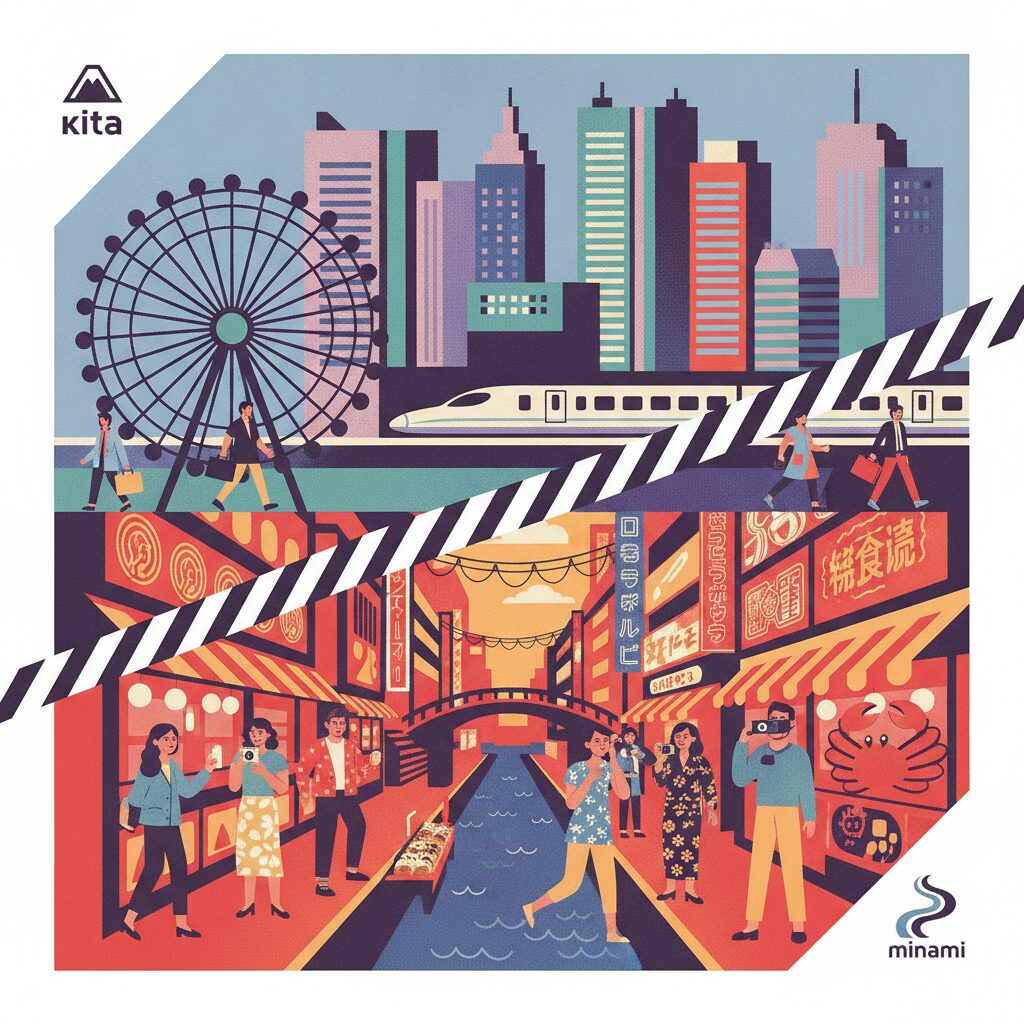
Choosing between the two ultimately depends on an honest evaluation of your personality and daily routine.
You should live in Kita if your job demands a polished professional image or if you often travel by bullet train for work. Kita suits those who enjoy quiet Sunday mornings, value modern, high-security apartment buildings, and are willing to pay extra for a lifestyle that is orderly and refined. Kita is for the planner—a resident who wants the best of Japanese modernity at their fingertips.
You should live in Minami if you want to step outside and immediately feel the city’s energy. Minami is ideal for those who enjoy spending evenings at local izakayas, want their rent money to go further, and don’t mind occasional noise from sirens or late-night revelers. Minami is for the extrovert—a resident who wants to learn the local dialect, befriend the bartender, and experience the raw reality of working-class Osaka.
Both neighborhoods offer incredible experiences but appeal to very different sensibilities. Choosing a neighborhood that doesn’t match your personality is the quickest way to feel out of place in Japan.
Navigating Foreigner-Friendly Housing in Osaka
Finding a neighborhood you like is just the first step. Actually securing an apartment as a foreigner in Japan remains a challenging task, even in a city as welcoming as Osaka. The obstacle is rarely personal animosity; it is almost entirely driven by systemic risk aversion. Landlords worry about language barriers when explaining garbage sorting rules and fear tenants breaking leases early to return to their home countries. Understanding this perspective is key to overcoming it.
Share Houses vs. Private Apartments
For many newcomers, share houses provide the best entry point. A share house in Japan is not simply a group of people renting a house together; it is a professionally managed property where you rent a private bedroom but share the kitchen, bathrooms, and common areas. The initial costs are very low, and the units are fully furnished. Most importantly, management companies specifically cater to foreign residents, meaning the screening process is minimal, and no guarantor is needed. Share houses in areas like Namba or Umeda also offer an instant social network, which is essential when you first arrive.
However, the lack of privacy eventually leads most long-term residents to seek private apartments. Renting a private apartment involves working with real estate agents. When you visit an agency, be prepared for them to call landlords on your behalf. You will often hear the phrase “gaikokujin desu ga,” meaning “they are a foreigner, but…” followed by a defense of your character and income. Don’t take any rejections personally; it’s a numbers game. You may be turned down by five landlords before one accepts your application.
Understanding Initial Costs and Guarantor Companies
The initial costs of moving into a private apartment in Osaka can easily total four to five times your monthly rent. It’s important to understand the breakdown. There is the security deposit, called shikikin. Then there is the notorious key money, known as reikin, which is a non-refundable gift to the landlord simply for the privilege of renting their property. Additionally, agency fees, fire insurance, and lock replacement fees apply.
The biggest challenge, however, is the guarantor. In the past, landlords required a Japanese citizen with a stable income to cosign your lease. Nowadays, the system has shifted toward guarantor companies. These companies charge an initial fee, usually half a month’s rent, plus an annual renewal fee. In return, they guarantee the rent to the landlord if you default.
By 2026, the situation has slightly improved. Several guarantor companies now cater specifically to foreign residents and offer multi-language support. However, they still require a substantial amount of paperwork, including proof of employment, a domestic emergency contact, and a Japanese bank account.
Essential Tips for Securing Your Apartment in Japan
Securing a home is a delicate balance between navigating bureaucracy and managing personal presentation.
First, recognize the chicken-and-egg dilemma inherent in Japanese bureaucracy. To rent an apartment, you need a bank account and a phone number. However, to get a bank account and phone number, you must have a registered address. The usual way to break this cycle is by using a temporary address, such as an Airbnb or a friend’s residence, to obtain a voice-over-IP phone number or a travel SIM. You then use that number to apply for the apartment. Once the apartment is secured, you register the address at the ward office, which then allows you to open a proper bank account to pay your rent.
Second, approach your visit to the real estate agent as you would a job interview. In Japan, the agent serves as your advocate to the landlord. If you arrive in sweatpants and appear disorganized, the agent is unlikely to advocate strongly on your behalf. Dress neatly, be exceptionally polite, and demonstrate your understanding of Japanese cultural norms. For example, showing that you know how to separate combustible and non-combustible garbage will allay much of the landlord’s concern.
Finally, be transparent about your lifestyle with the agent. If you are a musician who practices at home or plan to frequently have friends over, inform them. Noise complaints are the primary source of disputes in Japanese apartment buildings. Older Osaka buildings, particularly in Minami, often have walls as thin as paper. Being honest upfront helps the agent find a building with better soundproofing or a landlord who is more tolerant.
Osaka is a city that rewards the bold and resilient. The housing search will test your patience—you’ll fill out forms until your hand cramps and navigate arbitrary rules. But once you receive your keys, whether to a sleek tower in Kita or a retro walk-up in Minami, you’ll be living in one of the most vibrant, genuine, and fiercely loyal cities in the world. The effort is worth it. Welcome to Osaka.