Step out of Nankai Namba Station, and the city hits you full force. You’re at the crossroads of Osaka’s southern heart, a concrete canyon carved by department stores, high-end hotels, and rivers of people flowing towards the neon glow of Dotonbori. It’s polished, it’s loud, it’s exactly what the guidebooks promised. But turn your back on that main artery, slip down a side street past a pachinko parlor, and take another left where the pavement darkens. The air changes. The sound shifts from a broad roar to a concentrated sizzle and clatter. You’ve just crossed an invisible border into Ura Namba, the “Backside of Namba.” This isn’t a destination you find on a map; it’s a network of veins and capillaries pumping the real lifeblood of the city. For anyone trying to decipher Osaka, to get beneath the surface of takoyaki stands and towering crab signs, this labyrinth of tiny bars and eateries is the Rosetta Stone. It’s here, in the cramped, smoky, and overwhelmingly vibrant world of the standing bar, that the city’s unwritten social contract is on full display. Why do Osakans, famous for their love of all things new and flashy, gravitate to these gritty, decades-old corridors? The answer reveals more about their mindset than any landmark ever could.
As your evening deepens, the allure of authentic late-night shime eats beckons as another key to unlocking the underground culinary treasures of Osaka.
The Anatomy of Chaos: What is Ura Namba?
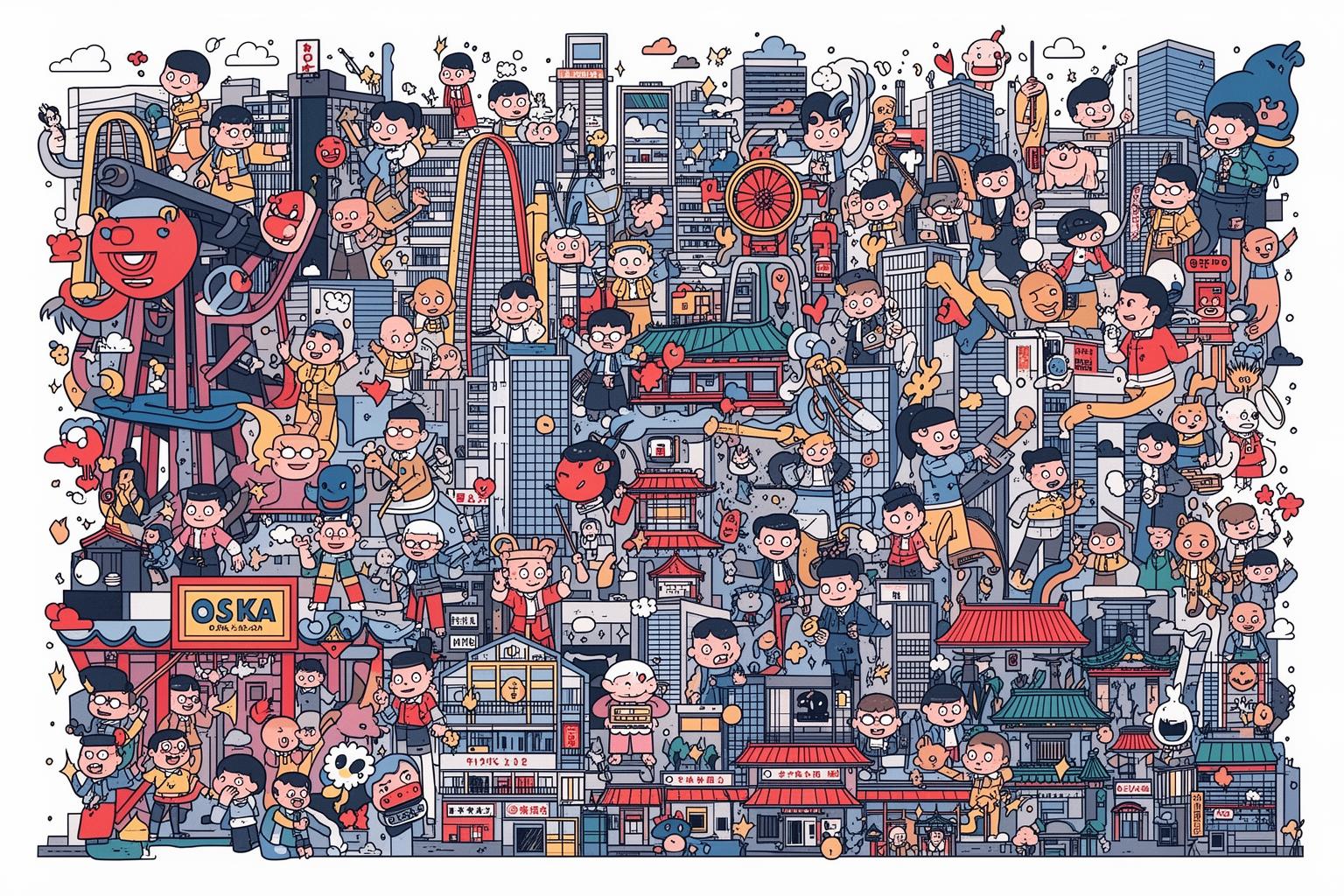
First, let’s clarify: Ura Namba is not an official district. It won’t appear on any government map. It’s a nickname, a feeling, a shared understanding that defines the maze of alleys nestled between the Nankai railway tracks and the Kuromon Market. Historically, this area was a mix of post-war black markets and simple eateries catering to laborers from the nearby market and train station. That heritage remains strong. The architecture is a chaotic blend of Showa-era buildings, hastily added extensions, and modern signboards attached to aging facades. Exposed electrical conduits snake across walls like metallic ivy, and the air is thick with competing scents of grilled offal, simmering dashi, and stale beer. It’s the complete opposite of a carefully planned Tokyo neighborhood like Ginza or Omotesando. There’s no curated style, no grand blueprint. It’s a place that evolved naturally, fueled by necessity and Osaka’s relentless spirit of commerce.
Strolling through these alleys feels like entering a living museum of mid-century urban grit. The ground is often slick with unknown liquids, lanterns cast a warm but unflattering light, and the noise is a constant, lively buzz. You’ll find a chic wine bar with a minimalist concrete facade squeezed between a grimy yakitori joint with a grill always smoking and a tiny oden spot where the owner has been simmering the same broth for forty years. This visual and sensory clash isn’t seen as a flaw; it’s the essence. It’s a statement that substance beats style, that authenticity lies not in perfection but in the beautiful, chaotic mess of reality. This is the first lesson Osaka teaches: don’t judge a place by its polished exterior, because the true value often lies just behind the worn curtain.
Tokyo Logic vs. Osaka Reality: The Unspoken Rules of the Bar
For those unfamiliar, especially someone used to the more organized social settings of Tokyo, an Ura Namba bar can feel daunting. Many of the top spots are tachinomi—standing bars—often accommodating no more than ten or fifteen people squeezed shoulder-to-shoulder. There are no tables to hide behind, nor clear lines to wait in. It appears to be pure chaos. Yet beneath this surface lies a highly sophisticated system, an unspoken choreography that enables these places to function not only as bars but also as vibrant social hubs. This system is founded on a completely different set of principles than its Tokyo equivalent.
Personal Space is a Luxury, Connection is a Necessity
At a typical Tokyo standing bar, personal space, while limited, is still observed. Patrons usually face the bar, keep to themselves, and interact minimally. It’s often a spot for a quick, efficient, solitary drink before catching the last train. In Ura Namba, the situation is reversed. The cramped conditions are an intentional feature, not a flaw. The constant, unavoidable physical contact—an elbow brushing yours, a shuffle to let someone pass—serves an essential function: it breaks down social barriers. You are physically drawn into a shared experience.
Within minutes of ordering a beer, the salaryman to your right will likely lean over and ask, “That looks good, what is it?” or the woman on your left will point to your dish and say, “You should try the doteyaki here, it’s the best.” This isn’t seen as intrusive; it’s the usual way to start a conversation. In Osaka, sharing space naturally means sharing conversation. This is the practical side of the “friendliness” cliché. It’s not an abstract warmth; it’s a direct, almost assertive form of social interaction based on the idea that a stranger is just a friend you haven’t bought a drink for yet. Replying with a short, polite answer and returning to your phone would be the truly odd behavior. The expectation is to engage, share, and become part of the bar’s temporary, lively family for the next twenty minutes.
The Art of the Quick Exit: Understanding Hashigo-zake
Another key difference is the evening’s rhythm. The goal in Ura Namba is rarely to linger in one place for hours. The culture centers on hashigo-zake, literally “ladder drinking,” or what we’d call bar hopping. The economic model of these venues encourages this behavior. Drinks are inexpensive, and the food is served in small, affordable portions. You don’t order a full meal. Instead, you pick one or two signature dishes—a couple of skewers, a small bowl of stewed beef tendon, some pickled vegetables—and a drink. You finish, pay, and move on.
This creates a wonderfully fluid and dynamic social atmosphere. The crowd at any given bar is constantly shifting, bringing fresh energy and new conversations. This isn’t due to a lack of loyalty; it’s about delighting in variety and discovery. The pleasure lies in the journey itself—stepping back into the alley, senses alive, and deciding which glowing lantern to follow next. It might be a sake bar specializing in rare brews from Shimane, a stall serving only tempura, or a lively izakaya where highballs flow freely. This transient nature keeps things exciting and prevents the social stagnation that occurs when the same group occupies the same space all evening. It’s a practical Osaka mindset: why settle for one great experience when you can have three or four in a single night for the same cost?
Reading the Air, Osaka Style: Communication in the Alleyways
Successfully navigating Ura Namba requires adopting a new style of communication—one that prioritizes direct, efficient, and trust-based interaction over formal pleasantries. The pace is rapid, the environment noisy, and there’s little room for the subtle, layered indirection often found in other parts of Japan. Here, clarity and honesty reign supreme.
The Menu is Just a Suggestion
Step into a typical Ura Namba bar, and you might find a menu hastily written on a piece of cardboard or pasted as fading strips on the wall. However, you’ll quickly notice many regulars rarely glance at it. Instead, they engage in a quick, back-and-forth exchange with the taisho (master) or simply point to a simmering pot and grunt their approval. This is because the true menu is a conversation. The best way to order is often by asking the master, “Nani ga oishii?” (What’s delicious?) or pointing to your neighbor’s dish and saying, “Are hitotsu” (One of those).
This isn’t merely about getting a recommendation. It’s an act of placing your trust in the establishment and those around you. It shows you’re open to the experience, not just there to complete a transaction. The reward is often an exceptional off-menu item, a seasonal dish prepared in small batches, or simply the ideal pairing for your drink. This method builds a connection, however brief, with the staff. They stop being anonymous servers and become your guides for the evening. Their brusque, no-nonsense manner may feel intimidating, but it stems from pride in their craft and a desire to provide the best possible experience without any unnecessary frills.
Paying Your Way: The Cash-on-the-Tray System
Nothing perhaps better captures Ura Namba’s unique social code than the payment system used in many standing bars. Rather than running a tab, you’re often given a small tray or bowl. You place a few thousand-yen bills in it, and as you order, the staff takes the exact amount from the tray, leaving your change behind. There’s no cash register, no credit card machine—just a simple, honor-based system unfolding openly.
From an outsider’s perspective, this might seem surprisingly casual or prone to mistakes or dishonesty. Yet it works perfectly every night because it’s grounded in mutual trust and shared responsibility. It silently communicates, “We’re all adults here. We trust you to be honest, and you trust us to be the same. Let’s not let complicated things like bills spoil a good time.” It’s incredibly efficient, removing the need to flag someone down for the check. When you’re ready to leave, you simply pick up your remaining change and go. This system perfectly embodies the Osaka mindset: pragmatic, a bit rough around the edges, but ultimately fair, efficient, and deeply human.
What Ura Namba Reveals About the Osaka Mindset
When you spend enough time in these back alleys, you come to realize you’re not just drinking and eating. You’re partaking in a living cultural performance, a nightly ritual that reinforces the city’s core values. Ura Namba is a microcosm of Osaka itself—a place that values pragmatism, community, and a good deal above all else.
Pragmatism Over Polish
Everything about Ura Namba shouts practicality. The bars are small because it’s more affordable and creates a cozier, more manageable environment. The decor is minimal because funds are better allocated toward quality ingredients. The service is swift and straightforward because the aim is to serve as many satisfied customers as possible. This embodies the spirit of the akindo, the merchant, applied to hospitality. Osakans have a strong appreciation for kosupa—a blend of “cost” and “performance.” They are not cheap, but they are savvy. They seek the best value for their yen, and Ura Namba delivers. A pristine, elegantly designed bar with mediocre food at high prices would not survive here. But a slightly worn spot with world-class grilled chicken skin for 150 yen a skewer will have a line out the door each night. This relentless focus on substance is a defining trait of the city, standing in sharp contrast to the often appearance-driven consumerism of Tokyo.
A Community of Strangers
Above all, Ura Namba highlights Osaka’s deeply communal spirit. In a metropolis of millions, these tiny bars serve as crucial micro-communities. For the thirty or forty minutes you stand at the counter, you become part of a fleeting tribe. Your job, background, or status all fade away. You’re simply another person enjoying a drink, sharing a laugh with the construction worker on your right and the advertising executive on your left. These places act as social equalizers. The shared experience of squeezing into a tiny space, shouting orders over the noise, and recommending dishes to newcomers creates a temporary but strong bond.
It is in these moments that you truly grasp what people mean when they say Osaka is friendly. It’s a friendliness born from shared context and a willingness to blur the lines between ‘me’ and ‘us.’ It forms the foundation of daily life here. For a foreigner trying to live in Osaka, an evening of hashigo-zake in Ura Namba is more instructive than any textbook. It teaches you how to engage directly, how to see value beyond a pretty facade, and how to cherish the simple yet profound joy of sharing a small space with a handful of strangers who, for a brief time, no longer feel like strangers at all. This is the city’s beating heart, hidden in plain sight, waiting for anyone ready to step into the chaos and order a drink.