The first thing that hits you isn’t a sight, but a sound. A low, percussive rumble that vibrates through the soles of your shoes, a rhythmic tremor that seems to rise from the concrete itself. It grows into a deafening roar, the clatter of steel on steel, as a train on the JR Loop Line screams overhead. Then, silence, punctuated only by the sizzle of fat dripping onto hot coals and the low murmur of conversations spoken in the thick, expressive Kansai dialect. You’re standing under the tracks, in the literal shadow of the city’s transit system. This is the world of ‘gaado-shita’—literally, ‘under the girder’—and it’s here, in these dark, smoky, and often cramped corridors, that the true, unfiltered soul of Osaka beats its loudest. Forget the gleaming department stores of Umeda or the neon-drenched fantasies of Dotonbori for a moment. This is not a postcard. This is a living, breathing diary of the city, written in steam and smoke and cheap beer. It’s a world away from the silent, curated perfection many imagine when they think of Japan, and for anyone trying to understand what makes Osaka tick, it’s the most honest classroom you’ll ever find.
Amid the raw ambiance of Osaka’s underside, exploring how Osaka train identities connect commuters and local culture adds another dimension to the city’s vibrant character.
The Unspoken Language of the Counter

Step into a gaado-shita ‘tachinomi,’ or standing bar, and the first thing you’ll notice is the complete lack of personal space. There isn’t any. You’re shoulder-to-shoulder with a salaryman loosening his tie, a construction worker still dusted with the day’s labor, and a young couple on a budget date. This isn’t a design flaw; it’s the whole point. In Tokyo, a bar often serves as a quiet refuge, a place to be alone, together. You can sit for an hour, nurse a drink, and exchange nothing more than a polite nod with the bartender. In Osaka, that kind of silence feels like a void. The enforced closeness at the gaado-shita counter is an incubator for interaction. It’s almost impossible not to strike up a conversation with the person next to you.
This is where the cliché of ‘friendly Osaka’ takes root, but it’s not the kind of scripted, customer-service friendliness found elsewhere. It’s a practical, situational warmth that comes from shared circumstances. A conversation might begin with a simple, “What’s that you’re eating? Looks good.” Before long, your neighbor has pushed a skewer of grilled chicken skin your way, insisting you try it. The owner, or ‘taisho,’ will likely chime in, teasing the regular for his generosity or bluntly asking where you’re from—something that might feel abrupt in Tokyo. This isn’t small talk. It’s a performance, a rapid-fire exchange of banter called ‘tsukkomi,’ where gentle jabs and witty retorts form the currency of connection. You’re not just a patron; you’re a temporary member of a tiny, transient community, forged for an hour over cheap sake and grilled offal. The unspoken rule is simple: since you’re sharing the space, you might as well share the experience.
A Symphony of Noise and Necessity
The constant rumbling of the train overhead is more than mere background noise; it fuels the very existence of these areas. The land beneath elevated tracks is often owned by railway companies and is generally considered less desirable. The vibrations, noise, and lack of direct sunlight all add up to one crucial benefit for a small business owner: affordable rent. This economic reality forms the foundation of gaado-shita culture. It’s a sanctuary for independent entrepreneurs, where someone with a great recipe and a strong work ethic can open a shop without needing a huge corporate budget.
This explains why the gaado-shita scene is so wonderfully diverse and stubbornly resistant to gentrification. It’s a chaotic network of tiny, specialized shops. You might find a bar serving only one type of sake, a grill specializing exclusively in chicken hearts, or a deep-fry expert with a family-secret batter recipe. But it’s not limited to food and drink. Nestled between smoky izakayas are stores defying modern retail trends: a tiny hardware shop packed from floor to ceiling with every imaginable screw and bolt, run by an elderly man who knows his stock inside and out; a repair shop for old radios and vacuum cleaners; a cluttered storefront selling second-hand power tools. These businesses meet the practical needs of the neighborhood rather than catering to tourists’ fancies. They directly reflect Osaka’s heritage as a city of merchants and makers—commerce here is gritty, straightforward, and intensely personal. The noise of the train isn’t an annoyance; it’s the heartbeat of a working city, a constant reminder that this place is built on industry and practicality, not just appearances.
Where ‘Kechinbo’ Meets Generosity
In Osaka dialect, there’s a word, ‘[kechinbo](https://www.weblio.jp/content/%E3%81%91%E3%81%A1%E3%82%93%E3%81%BC%E3%81%86],’ often translated as ‘stingy’ or ‘cheap.’ Outsiders sometimes use it to stereotype Osakans as tight-fisted. But to truly understand Osaka, you need to grasp the real meaning of kechinbo. It’s not about spending the least amount of money possible; it’s about demanding the best value for the money you do spend. It’s a philosophy of practical economics, a refusal to be overcharged, and a deep appreciation for a good bargain. Gaado-shita embodies this philosophy.
Here, you can find beer shockingly cheap, and a plate of yakitori that costs less than a cup of coffee elsewhere, yet the quality is never sacrificed. The food is simple, honest, and expertly crafted. This is the Osakan deal: top quality at a low price. Anything less is an insult to both customer and proprietor. This mindset encourages a special kind of generosity. While prices stay low, you often receive a little extra, an ‘omake.’ It might be an additional piece of karaage on your plate, a small dish of pickles you didn’t order, or the taisho topping off your sake glass until it spills into the saucer. This isn’t a shrewd marketing strategy. It’s a gesture of goodwill, a sign of appreciation. It’s the human side of the transaction. In a high-end Tokyo restaurant, service is flawless, invisible politeness. In an Osaka gaado-shita, service is the gruff owner remembering your name and pouring a larger drink because you’re a regular. It’s a relationship built on the mutual respect for a good deal—a concept central to the city’s identity.
Decoding the Gaado-shita Map: From Umeda to Shin-Imamiya
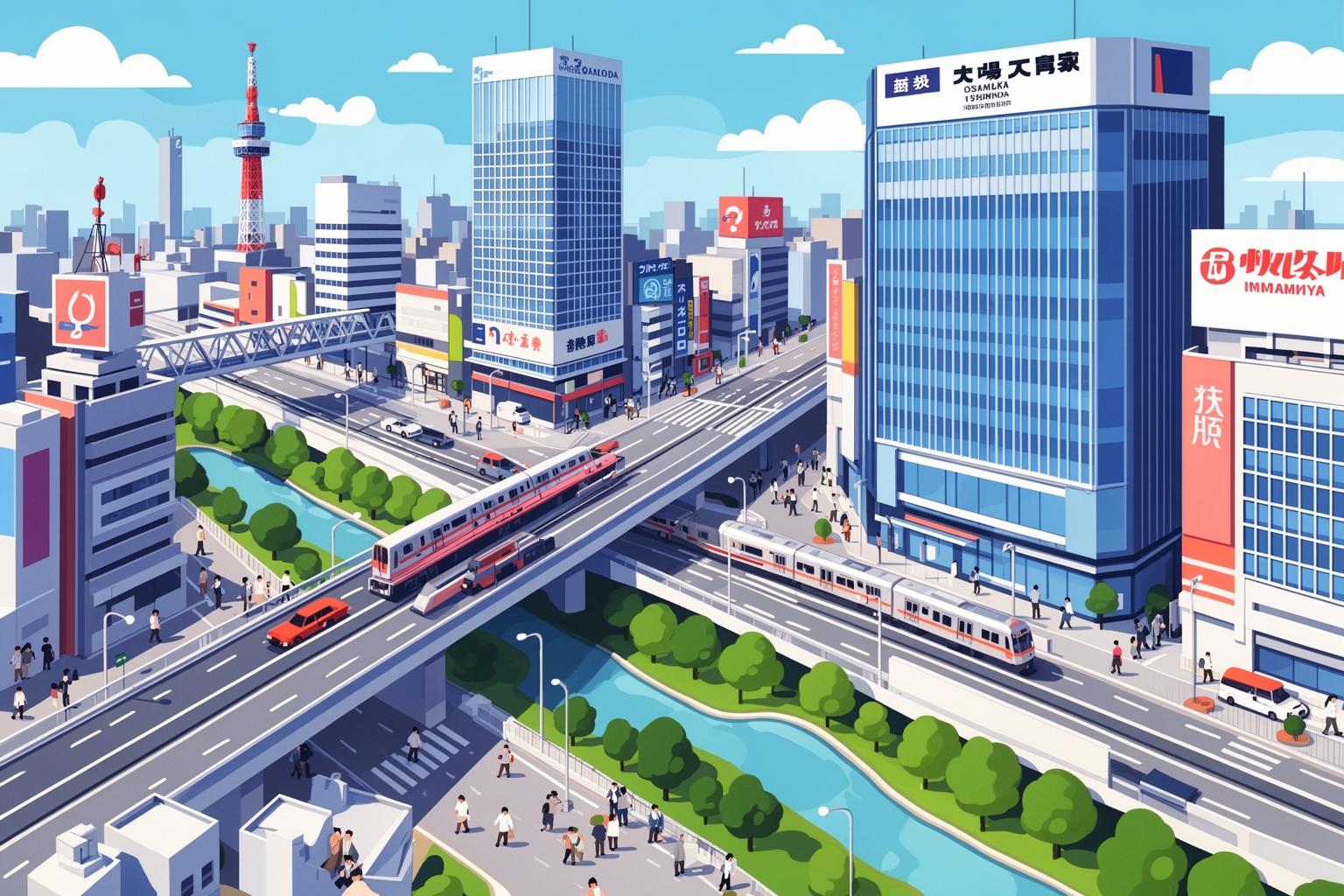
Not all gaado-shita are created equal. These gritty corridors serve as a social and economic map of Osaka, with each cluster reflecting the unique character of its surrounding neighborhood. To explore them is to grasp the city’s many faces.
Tenma
This is the quintessential gaado-shita wonderland. Just a short walk from the business hub of Umeda, the area beneath the tracks around Tenma Station is a sprawling, chaotic labyrinth of stand bars, sushi counters, and international eateries. The air is thick with the smoke of countless grills. It’s loud, boisterous, and endlessly vibrant. Tenma embodies Osaka’s love for a good party—a place where hierarchies dissolve after the first beer and the shared pursuit of ‘yasui, oishii’ (cheap and delicious) becomes a communal sport.
Fukushima
A few stops west of Umeda, Fukushima offers a more refined, slightly more modern interpretation of the gaado-shita experience. Here, classic yakitori joints stand alongside trendy Italian bistros and craft beer bars, all nestled within the familiar arches under the tracks. Fukushima illustrates how the gaado-shita concept can evolve, attracting a younger crowd and chefs who creatively reinvent the cheap-eats formula. It’s where the gritty soul of old Osaka meets a more contemporary palate.
Kyobashi
If Tenma is a party, Kyobashi is a pressure-release valve. This is salaryman central, a raw, unfiltered gaado-shita zone that feels like a time capsule from the Showa Era. The bars are divey, the menus straightforward, and the atmosphere brims with the energy of workers unwinding after a long day. It’s less about culinary exploration and more about the ritual of cheap drinks and familiar comforts. Kyobashi is unapologetically old-school, a stronghold of the working man’s Osaka.
Tsuruhashi
Head southeast on the Loop Line to Tsuruhashi, the heart of Osaka’s Koreatown. Here, the gaado-shita is an intoxicating sensory overload. The aroma of grilled meat—yakiniku—is overwhelming and magnificent. The corridors are packed with Korean barbecue restaurants, kimchi stalls, and shops selling Korean goods. Tsuruhashi’s gaado-shita reflects Osaka’s long history as a crossroads of cultures, a city that has always been more open and integrated than many other parts of Japan. It’s a testament to the city’s embrace of bold, powerful flavors and the communities that bring them.
Shin-Imamiya
This is the deep end. The area beneath the tracks around Shin-Imamiya and the neighboring Nishinari ward offers the rawest and most challenging gaado-shita experience. This district is one of Japan’s prominent day-laborer hubs, and the establishments here serve a community living on the margins. The bars are spartan, the prices the lowest in the city, and the atmosphere can be intimidating to outsiders. But to overlook it is to ignore a fundamental truth about Osaka. This is a place of survival, raw humanity, and a fierce, protective community spirit. It’s the city with its guard completely down, revealing a side of Japan that defies all stereotypes.
More Than Just a Drink: The Psychology of In-Between Spaces
Why are these spaces so essential to understanding Osaka? Because they serve as psychological ‘in-between’ zones. They are neither the structured formality of the office nor the private refuge of home. Hidden beneath the massive, rumbling infrastructure of the city, they exist as liminal areas where the usual rules of Japanese society seem to be suspended. This is where ‘honne‘—one’s true feelings—can be freely expressed, protected from the polite façade of ‘tatemae’—the public persona.
The physical environment acts as a catalyst for this change. The low ceilings and narrow walls foster a sense of intimacy and secrecy. The deafening roar of passing trains offers an unusual kind of privacy, a curtain of noise that allows for loud laughter and candid conversation. Within this cramped, chaotic space, social hierarchies become blurred. A department manager might share a drink with a delivery driver, their corporate ranks made irrelevant by the shared enjoyment of a cold beer and a hot skewer. This temporary egalitarianism is uniquely Osakan.
A common misconception among foreigners is to view this environment as merely dirty, loud, or rundown. They notice the grime on the walls, the confined spaces, and the lack of polished aesthetics, and completely miss the point. The dirt is not a sign of neglect; it is the patina of authenticity. The chaos is not a defect; it is the vibrant energy of genuine human connection. These places are not designed for Instagram; they are designed for life. They are practical, efficient, and profoundly human, prioritizing community and value over superficial appearances—a fitting metaphor for the city of Osaka itself.
Navigating the Unwritten Rules
Exploring the world of gaado-shita is one of the most rewarding ways to understand Osaka, but it’s helpful to be aware of the unspoken etiquette. This isn’t about strict rules, but about respecting the flow of these unique places.
First, be mindful of the pace. Particularly in a tachinomi, the business depends on turnover. Enjoy your food and drink, but avoid lingering for hours when there’s a line forming outside. The spirit is often a quick drink and bite before moving on to the next spot or catching the train home.
Second, space is limited. Keep your belongings compact. Don’t place your bag on an empty stool—that’s a seat for another guest. Be ready to shuffle and make room for others. It’s a shared space, and everyone is expected to be considerate.
Third, bring cash. Many of these long-standing establishments accept cash only. Fumbling for a credit card will quickly reveal you as a newcomer. Having small bills and coins at hand shows respect for the fast-paced environment.
Finally, be open. You don’t need to be fluent in Japanese, but a simple ‘Oishii!’ (Delicious!) to the taisho or a nod to the person next to you can go a long way. Don’t be put off by a gruff exterior; it often hides a deep pride in their craft. Engage with the space, and it will engage with you. In the rumbling, smoky heart of the gaado-shita, you won’t just find a good meal—you’ll discover the real Osaka.