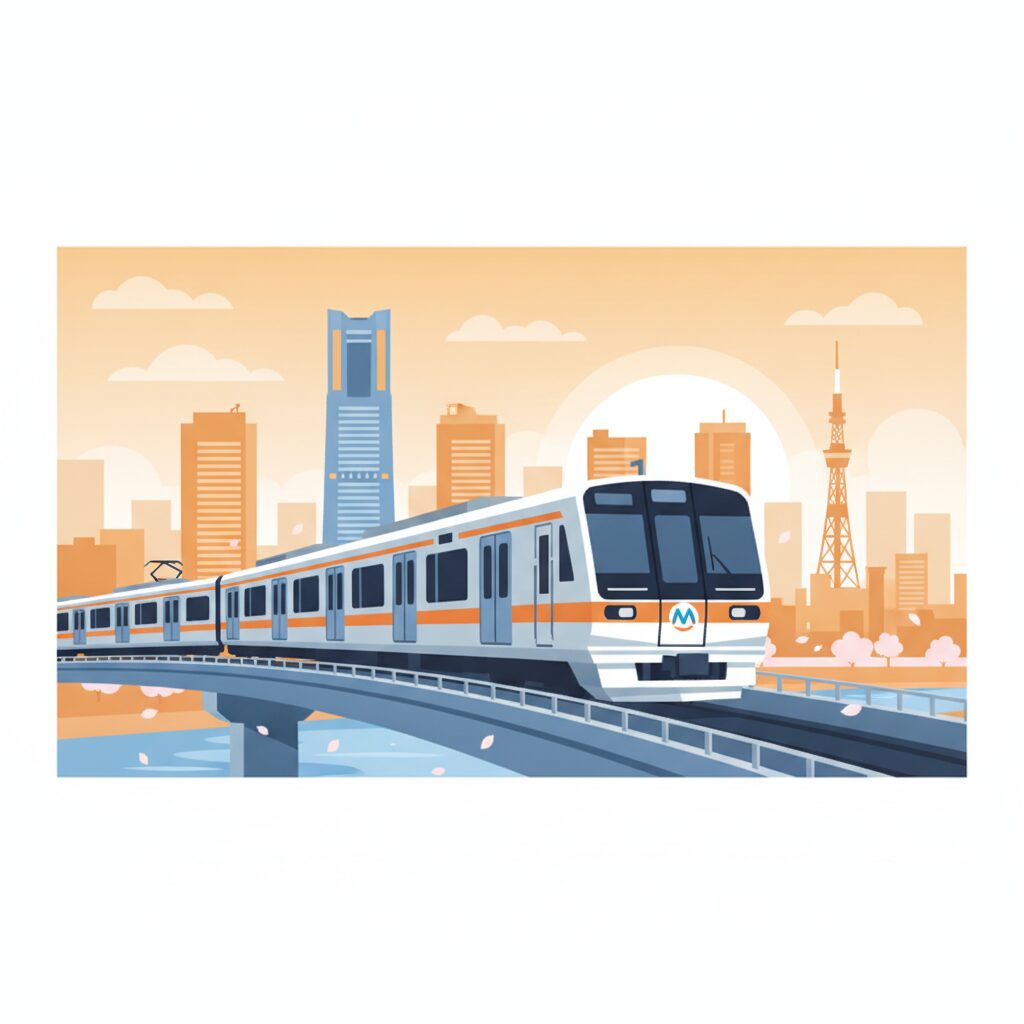
When you first move to Japan, you learn the station names. Shinjuku, Shibuya, Ueno. You tell people you live in Kichijoji or Shimokitazawa. Your identity gets pinned to a dot on the map, a single stop on the sprawling JR or Metro network. That’s Tokyo. It’s a city of stations, a constellation of brightly-lit hubs connected by the unfeeling, efficient arteries of Japan Railways. But Osaka? Osaka doesn’t work that way. Here, your identity isn’t the station. It’s the line. The whole damn line.
Ask someone from Osaka where they’re from, and you might not get a neighborhood name. You’ll get a railway. “I’m Hankyu.” “I’m a Hanshin guy.” “We live out on the Nankai line.” These aren’t just directions. They’re declarations of identity, social signifiers packed with unspoken meaning about class, culture, and your entire approach to life. In Tokyo, the train is a utility that gets you from A to B. In Osaka, the private railway lines are the architects of your world. They didn’t just lay tracks; they built department stores, baseball stadiums, theme parks, and residential towns, curating a complete lifestyle for their passengers. Choosing a place to live in Osaka isn’t just about rent or commute time. It’s about choosing your tribe. Forget the zodiac; tell me if you ride the Hankyu, Hanshin, or Nankai, and I’ll tell you who you are.
Embracing a distinct local vibe while riding Osaka’s iconic train lines also means uncovering hidden pleasures like back-alley izakayas in Ura Namba that perfectly capture the city’s offbeat character.
The Hankyu Kingdom: Sophistication, Shopping, and Suburban Dreams
If Osaka had its version of old money, it would travel along the Hankyu line. The trains themselves tell the tale. Draped in a deep, gleaming maroon, the color evokes vintage wine more than public transit. Inside, the seats are upholstered with a golden-olive mohair fabric that feels luxuriously soft. This isn’t merely a train; it’s a rolling drawing room. Riding the Hankyu offers an experience of curated elegance, a daily reminder that you belong to something a bit more refined.
The Hankyu Lifestyle
The Hankyu identity is rooted in aspirational consumerism and quiet suburban pride. The undisputed centerpiece of this culture is the Hankyu Umeda Department Store. It is more than just a shopping destination; it stands as a cultural institution. Its window displays are renowned, intricate artworks that shift with the seasons. The basement food hall, the depachika, is a treasure trove of exquisite sweets and gourmet treats. Carrying a Hankyu paper bag signals status, subtly showing you appreciate the finer things in life. It’s the kind of place from which your mother-in-law expects a gift.
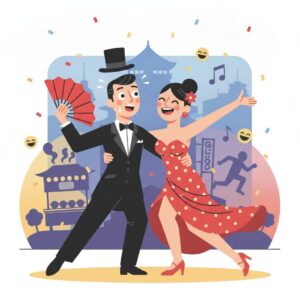
This refined culture extends well beyond shopping. The Hankyu Corporation famously founded the Takarazuka Revue, the all-female musical theater troupe celebrated for its lavish, romantic productions. For over a century, Takarazuka has been a cornerstone of the Hankyu brand, embodying an idealized vision of grace and beauty. Living along the Hankyu line, especially on the branch that leads to the troupe’s home theater, means living within the cultural orbit of this unique institution. It’s worlds apart from the gritty, boisterous Osaka that dominates popular imagination.
Where You’ll Live
The Hankyu lines—the Kobe, Takarazuka, and Kyoto lines—extend into some of the Kansai region’s most desirable residential neighborhoods. Think of places like Ashiya, a tranquil enclave of old money and sprawling homes situated between Osaka and Kobe. Or Nishinomiya-kitaguchi, a station frequently ranked among the most sought-after places to live in Japan. It perfectly embodies the Hankyu suburban ideal: clean, orderly, green, with excellent schools and, naturally, a massive Hankyu Gardens shopping mall attached to the station. It’s no accident this setting inspired the famous anime The Melancholy of Haruhi Suzumiya; it captures the essence of an idealized, comfortable Japanese suburb.
The Hankyu Mindset
A “Hankyu person” is often regarded as more polished, perhaps a bit more reserved than those from other lines. They value image and presentation. Their pride is quiet yet steady. There is an unspoken belief that their lifestyle is the “correct” one. They rarely voice it aloud, but there can be a subtle condescension toward the rowdier energy of the Hanshin line. It’s Osaka’s equivalent of someone bringing a bottle of French wine to a party rather than a six-pack of beer. They’re not necessarily snobs, but they operate on a different cultural wavelength. They represent the part of Osaka that aspires to a level of sophistication more commonly linked with Tokyo — though they’d never admit it.
The Hanshin Line: Grit, Tigers, and Downtown Energy
If Hankyu is a glass of Bordeaux, Hanshin is a pint of draft beer slammed onto the counter. It’s the railway of the people, pulsing with a raw, unapologetic, working-class energy. The trains are practical rather than fancy. The route runs parallel to Hankyu’s Kobe line but feels like an entirely different world. Stations are closer together, the tracks wind through dense, gritty neighborhoods, and the air is thick with the cheers and groans of Japan’s most passionate sports fans.
The Hanshin Lifestyle
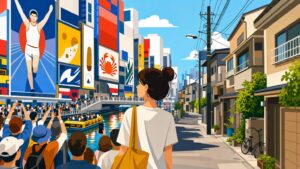
Life along the Hanshin line revolves around one thing: the Hanshin Tigers baseball team. This isn’t just fandom; it’s a religion. Owned by the railway company, the team is the vibrant core of Hanshin’s identity. Their home, Koshien Stadium, is a sacred ground. When the Tigers win, the whole line erupts in celebration. When they lose, a shared gloom settles in. Every conversation in the local izakaya starts with last night’s game. The iconic victory ritual sees costumed fans diving into the murky Dotonbori Canal—a tradition so entrenched that police are present on game nights not to stop it, but to control it.
The Hanshin Department Store in Umeda perfectly embodies this identity. While its Hankyu neighbor specializes in luxury brands, the Hanshin store is famous for two things: its vast, phenomenal food hall packed with everyday treats and standing-room-only snack bars, and the largest official Tigers merchandise shop you’ll ever find. It’s a temple of practicality and passion. You don’t go to Hanshin to be seen; you go to enjoy great food and gear up for the game.
Where You’ll Live
The neighborhoods along the Hanshin line are straightforward and deeply local. Places like Amagasaki, an industrial city just across the border in Hyogo Prefecture, have a reputation for being a bit rough around the edges, yet they boast fierce local pride and a strong sense of community. The streets are lined with small, family-run shops, factories, and densely packed homes. It’s less about manicured lawns and more about shared alleys. Living here means being part of a tight-knit community where everyone knows each other, and loyalty to the local team is a given.
The Hanshin Mindset
The “Hanshin person” represents the classic Osaka character: loud, direct, emotional, and fiercely loyal. There’s no pretense. What you see is what you get. They value community and shared experiences over individual status. A Hanshin person would rather share a cheap plate of takoyaki and laughter with friends than dine formally at an upscale restaurant. Their pride isn’t quiet; it’s shouted from the stands of Koshien. They view the Hankyu lifestyle as stiff and artificial. For them, the Hanshin way is the authentic way, rooted in the city’s sweat and soul.
The Nankai Line: Gateway to the South, Old Osaka, and the Airport Run
Nankai is the wildcard among the big three. It lacks the monolithic, curated identity of Hankyu and the fanatical unity of Hanshin. Instead, it’s a vast, eclectic network serving as both a lifeline to Osaka’s deep history and a modern gateway to the world. Its terminus is in Minami’s chaotic heart, at Namba Station, a stark contrast to the more corporate Umeda. Nankai feels older, somewhat worn at the edges, and in many ways, more diverse.
The Nankai Lifestyle
The Nankai identity is fragmented. For many, it’s simply the Airport Line. The sleek, futuristic Rapi:t train, reminiscent of a sci-fi anime, transports travelers and airline staff to and from Kansai International Airport (KIX), lending that part of the line a transient, international vibe. But travel further south, and you encounter a very different world.
This is the line of Old Osaka. It serves industrial cities like Sakai, whose history predates Osaka itself, and coastal towns with fierce, independent traditions. The most vivid example is the Kishiwada Danjiri Matsuri. This festival features teams of men pulling massive, intricately carved wooden floats (danjiri) at breakneck speeds through narrow streets. It’s perilous and exhilarating, a raw display of community power and daredevil pride—the complete opposite of the delicate Takarazuka Revue. The Danjiri spirit—passionate, reckless, and deeply traditional—embodies the southern end of the Nankai line.
Where You’ll Live
The Nankai corridor offers a wide range of living experiences. There’s the dense urban sprawl around Namba, the historic yet industrial feel of Sakai, and the working-class coastal towns like Kishiwada and Izumisano. Housing is often more affordable than along the Hankyu line, attracting a diverse mix: multi-generational families rooted there for generations, airport workers, and a significant population of immigrants and foreign laborers. It’s a place where tradition and modernity, local life and global transit, coexist in a sometimes uneasy but always fascinating blend.
The Nankai Mindset
There isn’t a singular “Nankai person.” Instead, there are pockets of strong local identity. Someone from Kishiwada takes pride in their festival, not necessarily the Nankai brand. A resident of Sakai might connect more with their city’s long history as a merchant town. The Nankai mindset is less about a lifestyle marketed by a corporation and more about the unique character of the place you call home. It’s pragmatic, grounded, and deeply local. Perhaps the least self-conscious of the three lines, it’s too occupied with everyday life, festivals, and catching flights to worry about projecting a curated image.
Why This Matters: The Unspoken Social Map
This isn’t merely trivia for train enthusiasts. This railway tribalism forms a fundamental layer of Osaka’s social geography, shaping real-life choices and perceptions. In more traditional circles, the train line you grew up on can influence everything from job interviews to marriage prospects. An old-school Hankyu family might quietly worry if their daughter brought home a boyfriend from the “rough” Hanshin line. It serves as a shorthand for class and cultural values.
When searching for an apartment, real estate agents often highlight the line as a key selling point. Saying “This is a great Hankyu property” instantly conveys a certain standard of neighborhood, school district, and price range. The Umeda station complex perfectly embodies this divide. Although the Hankyu and Hanshin department stores and train terminals are physically connected, they represent separate kingdoms. You can sense the cultural shift as you move from one to the other—from the quiet, perfumed atmosphere of Hankyu’s cosmetics floor to the lively energy of Hanshin’s food hall.
In contrast, the JR Osaka Loop Line serves as the city’s functional backbone, an essential connector used by everyone. Yet, no one says “I’m a Loop Line person.” It lacks soul. As a public entity, it didn’t need to create a culture to attract riders; it simply had to provide a service. Private railways, however, had to craft a world, a dream, a lifestyle. They had to persuade you not only to ride their trains but to live your life by their rules, in their towns, and shop at their stores.
Finding Your Line
For a foreigner living in Osaka, grasping this invisible map is essential to understanding the city’s rhythm. This isn’t a strict caste system, and the boundaries are becoming less defined as people move around for work and convenience. However, the cultural influence of each railway remains strong. When you decide where to settle, you’re making a choice that extends beyond the four walls of your home.
Do you seek order, refinement, and a quiet, comfortable lifestyle? The Hankyu kingdom might be calling you. Are you attracted to passionate communities, straightforward fun, and the roar of a baseball crowd? You might be a Hanshin person at heart. Or do you want to connect with the diverse, historic, and raw energy of southern Osaka, a place that feels both ancient and globally connected? Then the Nankai line could be your route.
So next time you’re on a platform in Osaka, take a moment to observe. Notice the color of the train, the ads inside, the people boarding and disembarking. You’re not just witnessing a commute. You’re seeing tribes gather and scatter along the steel arteries that shape the life and soul of this remarkable city.