So, you’ve heard the stories. The ones about Japan’s after-work drinking culture, the nomikai. Maybe you’ve even lived it. The calendar invite that appears a month in advance. The frantic checking of seating charts to understand the power dynamics. The rigid start times, the choreographed toasts, the pre-set food courses that feel less like a meal and more like a contractual obligation. It’s a system, a ritual, a cornerstone of corporate life, especially in Tokyo. It’s structured, it’s predictable, and for many non-Japanese, it can feel like a performance you never got the script for. You smile, you pour drinks, you navigate the unspoken rules. It’s part of the deal. But then, you come to Osaka, and the script gets tossed out the window. One evening, as you’re packing up, a colleague claps you on the shoulder. “You busy? Wanna grab a quick one?” There’s no email. No reservation. No agenda. The plan is that there is no plan. This, right here, is the soul of Osaka’s social life. It’s a culture not defined by boardrooms and hierarchies, but by the buzzing, chaotic, and wonderfully human energy of its back alleys. And there’s one place that embodies this spirit more than any other: Ura-Namba. Tucked behind the polished facade of Namba’s main shopping districts, it’s a labyrinth of tiny bars and eateries, a living monument to spontaneity. To understand Osaka, you need to understand the Ura-Namba mindset. It’s not just a location; it’s a social philosophy. It’s the reason why making friends feels different here, why business feels more personal, and why an ordinary Tuesday can unexpectedly become the best night of the week.
The everyday humor that permeates Osaka’s spontaneous social scene is well captured by its distinctive practice of tsukkomi, which adds a layer of witty banter to the city’s relaxed vibe.
Deconstructing the Tokyo Nomikai: A Symphony of Structure
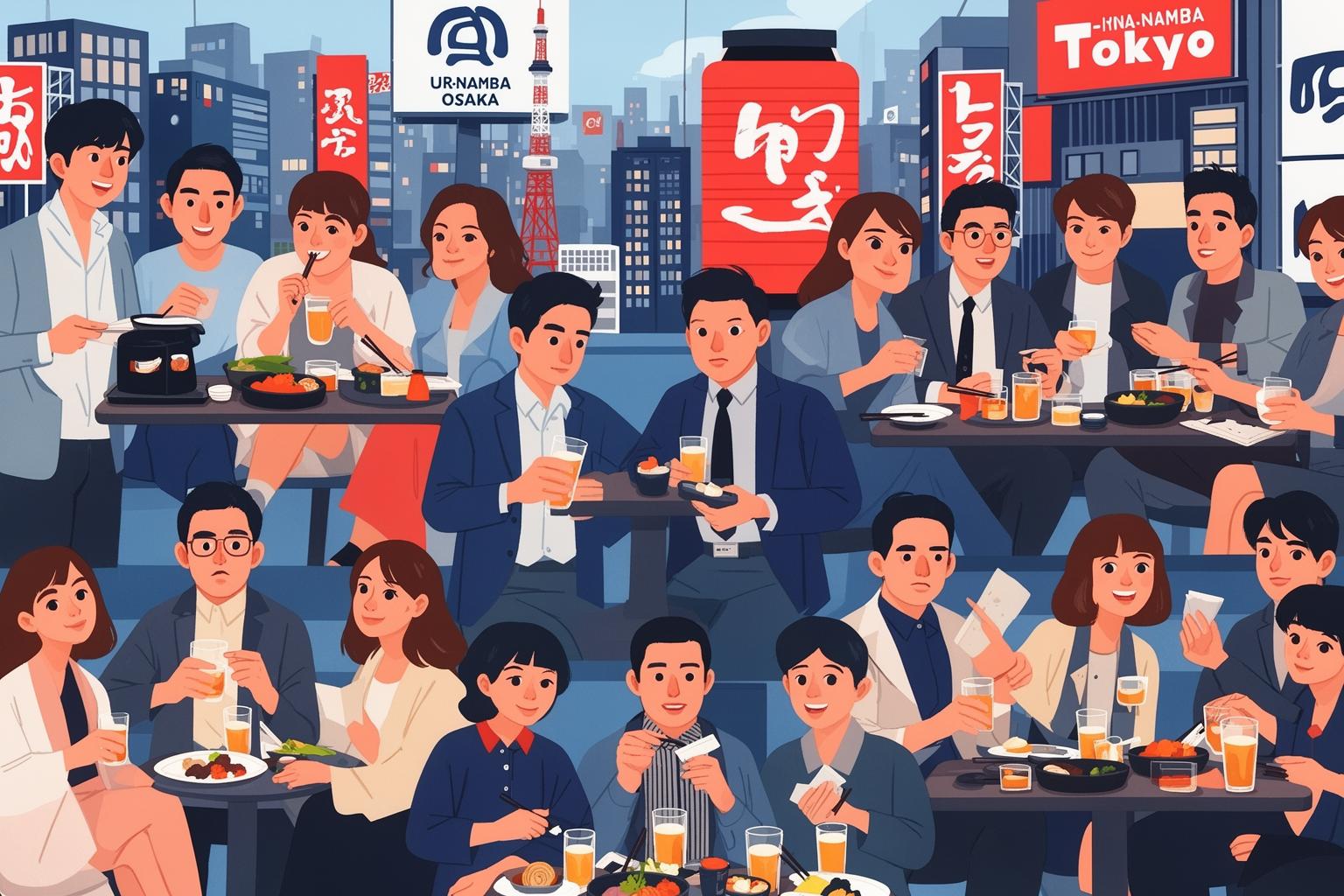
To truly appreciate the beautiful chaos of Osaka, you first need to understand the order it defies. The Tokyo-style nomikai is a masterclass in social engineering. It’s an institution, a well-oiled machine designed to reinforce the very corporate structures it’s supposed to offer a break from. The process starts weeks, sometimes a month, ahead with a formal invitation, often sent via a meticulously crafted email outlining the time, place, budget, and purpose. The venue is carefully selected—a private room in a respectable izakaya, large enough to host the entire team, section, or department. This isn’t about discovering a trendy new spot; it’s about securing a controlled environment.
Upon arrival, the ritual continues. There’s an unspoken but strict seating arrangement. The most important person, the highest-ranking manager or director, occupies the head of the table, farthest from the door. This seat is known as the kamiza. The lowest-ranking employees, the newcomers, sit closest to the door, in the shimoza, responsible for signaling servers and distributing drinks. It’s a physical representation of the office hierarchy. The evening begins not with a casual “cheers,” but with a formal speech from the boss, followed by a synchronized kanpai. Then begins the ritual of pouring drinks. You never, ever pour your own. You constantly watch your superiors’ glasses, ready to refill them the moment they drop below halfway, holding the bottle with two hands as a sign of respect. They, in turn, pour for you. It’s a reciprocal act that reinforces the group’s hierarchy and interdependence.
The meal itself is often a predetermined enkai course. A series of dishes arrives at set intervals, ensuring everyone eats the same meal at the same time. The conversation, while more relaxed than in the office, often revolves around work. It’s a space for nomi-nication—a blend of nomu (to drink) and communication—where difficult feedback can be softened by alcohol, or where team-building is consciously pursued. The night follows a schedule. There’s the main party, the ichijikai. Then, someone inevitably announces the nijikai, the second party at a nearby karaoke bar or pub. Then perhaps a sanjikai, a third stop for ramen. Leaving early is frowned upon. It can be perceived as a sign of disrespect or a lack of dedication to the team. The Tokyo nomikai, in essence, is work in another form. It’s a tool for preserving harmony, reinforcing hierarchy, and creating consensus in a society that prioritizes the group over the individual. It’s beautiful in its precision but allows little room for spontaneity or personal preference.
The Osaka Counter-Offer: Spontaneity as a Social Currency
Now, let’s flip the coin. In Osaka, after-work invitations aren’t scheduled events—they’re sparks. It’s 5:45 PM, the workday ends, and the atmosphere shifts. Someone leans in and says, “How about it? Let’s grab a beer.” This isn’t a plan for next Thursday; it’s right now. The question is a check on the immediate moment. This spontaneity isn’t a glitch in the system; it’s the whole operating system. It’s social currency that prioritizes genuine, in-the-moment connection over long-term, structured planning. A pre-planned, mandatory-attendance event feels like a burden, while a sudden invitation feels like a true desire to connect.
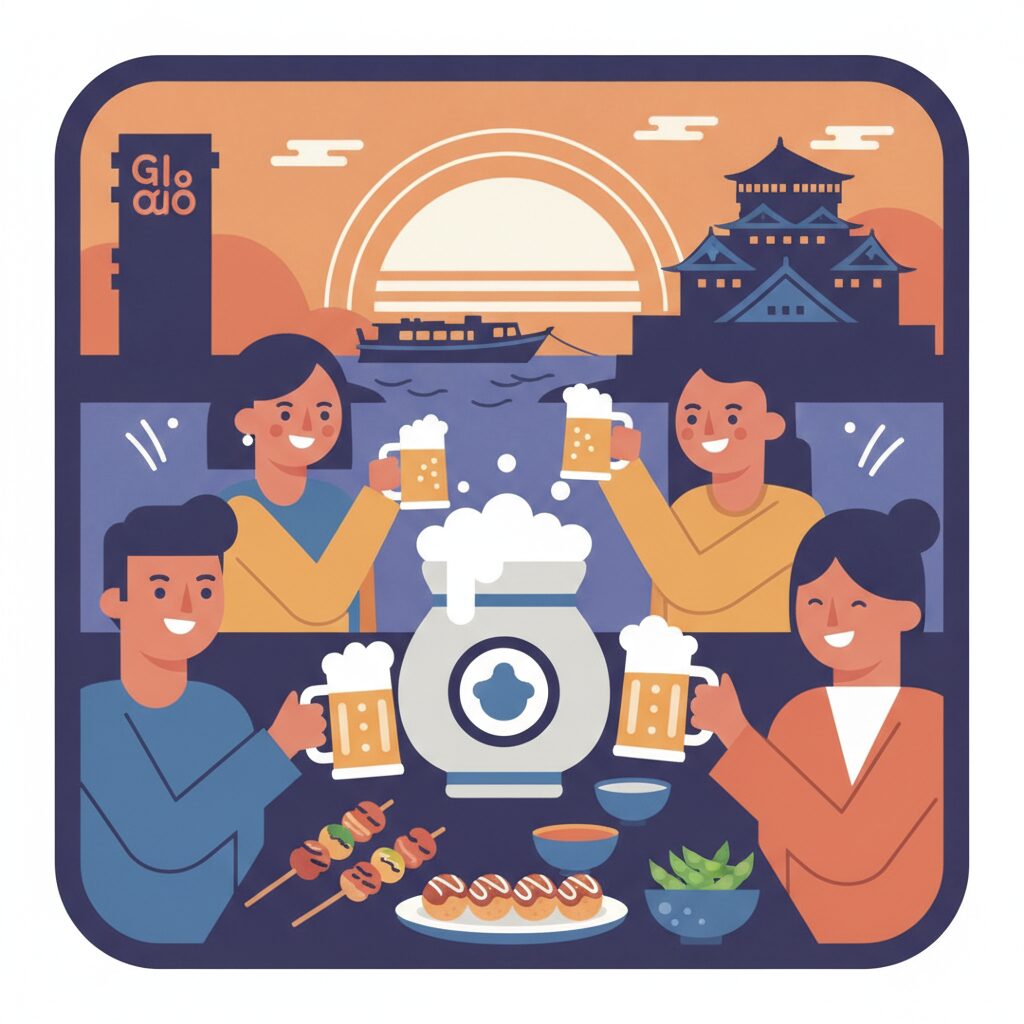
This culture is physically supported by the city’s infrastructure. Osaka is filled with thousands of tachinomi, or standing bars. These are not grand venues—often just a counter, a couple of beer taps, and a small kitchen, with space for maybe ten or fifteen people standing shoulder-to-shoulder. The tachinomi fuels Osaka’s spontaneity. No reservation is needed to stand. No large group required. You can drop in alone or with a friend, have a single draft beer and some grilled chicken skewers, and be out in twenty minutes. The commitment is incredibly low. This setup completely changes the social dynamic. You’re not tied to a two-hour course meal. You can decide on a whim to have one drink and head home, or let that one drink turn into a multi-stop adventure.
This leads to the cherished Osaka pastime of hashigozake, or bar-hopping. An evening isn’t about settling into one spot; it’s a journey. You start at a tachinomi with a cheap beer, move on to a tiny sushi bar for a few pieces of fresh tuna, then wander down an alley following the smell of grilled meat to a yakitori joint. Each stop brings a new scene, a new flavor, a new conversation. This approach to a night out is fluid, democratic, and deeply personal. The evening is shaped by mood and impulse, not by a prearranged schedule. The focus is on discovery and freedom. For foreigners who find the strict structure of the Tokyo nomikai intimidating, this feels like a breath of fresh air. It’s an open invitation to join the city’s social life on your own terms, one spontaneous beer at a time.
Welcome to Ura-Namba: The Epicenter of the Effect
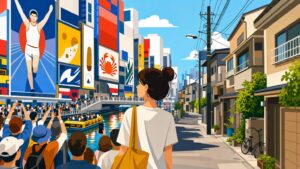
If you want to witness this philosophy in action, head to Ura-Namba. The name literally means “Back Namba,” and that’s exactly what it is. While tourists and shoppers fill the shiny arcades of Shinsaibashi and the grand promenades near Namba Station, the true pulse of the area lies in the maze of narrow alleys behind the main streets. This isn’t a planned entertainment district; it developed naturally, a chaotic cluster of small businesses filling the city’s gaps. There are no grand entrances here. You duck beneath a low-hanging noren curtain, slide open a creaky door, and squeeze into a space that feels more like a friend’s crowded kitchen than a restaurant.
The sensory experience is thrilling in the best way. The air is thick with the smoky aroma of grilling yakitori and the sharp, appetizing scent of sizzling tempura oil. Red paper lanterns cast a warm, welcoming glow on the worn pavement. Hand-painted signs, not polished digital menus, advertise the day’s specials in bold calligraphy. You’ll hear the clatter of plates, the sizzle of grills, and the constant hum of conversation and laughter spilling out from every doorway. It feels alive, unpolished, and unapologetically human. It stands in stark contrast to the polished, tranquil, and carefully curated dining scenes found in Tokyo skyscrapers.
The establishments themselves are hyper-specialized and designed for movement. You won’t find many places with extensive menus. Instead, there’s a tiny bar serving only gyoza and beer. Nearby, a standing sushi counter with just five seats. Around the corner, a spot specializing in different kinds of tempura sold by the piece. This specialization encourages hashigozake. You don’t stay at one restaurant all night; you build your own multi-course meal by hopping between these masters of their craft. You get sushi from the sushi master, yakitori from the grill master. This approach celebrates expertise and offers customers ultimate freedom. Ura-Namba is more than a collection of bars; it’s a living ecosystem driven by spontaneity. It physically rejects the idea that a good time must be pre-planned.
The Anatomy of an Ura-Namba Night Out
What does this actually look like in practice? Imagine this: It’s a Wednesday. You finish work, and a colleague you get along with says, “I’m heading to Namba for a drink, want to come?” There’s your entry point. You arrive at Namba Station and dive into the backstreets. There’s no destination in mind. You just stroll.
Your first stop is guided by your senses. You spot a small crowd spilling out of a brightly lit bar. It’s a tachinomi. You squeeze your way to the counter. The menu is simple, handwritten on strips of paper taped to the wall. You order a draft beer—a nama—and point to a plate of glistening sashimi. You’re standing elbow-to-elbow with a salaryman on your left and a couple of young women on your right. The closeness makes conversation almost inevitable. A simple “That looks good, what is it?” can spark a twenty-minute chat. You finish your beer, pay your 800 yen in cash, and step back onto the street.
Next, you wander deeper into the maze. You smell garlic and butter. You follow it to a tiny spot with a teppan grill, where a chef is searing mushrooms and scallops. You grab a highball and an order of grilled squid. You’re in and out in fifteen minutes. The night becomes a series of these delightful, low-pressure encounters. Maybe you find a wine bar the size of a walk-in closet, run by an old woman who recommends a glass of koshu wine. Maybe you end at a standing udon shop for a final, comforting bowl of noodles before catching the last train.
Throughout this journey, key elements define the experience. There are no reservations. You go where there’s space. The financial commitment is minimal; many of these stops fall under the senbero category, a beloved term meaning you can get drunk for 1,000 yen (a few drinks and a snack). The freedom is total. If you don’t like a place’s vibe, you just leave. If your friend wants to head home, they do, and you keep going on your own. This isn’t a single event; it’s a fluid flow of experiences. The joy comes from the unplanned discoveries, unexpected conversations, and the feeling that the night belongs truly to you.
Why the Hierarchy Melts Away in Osaka’s Alleys
This informal social style is deeply rooted in Osaka’s history as a city of merchants (akindo), a sharp contrast to Tokyo’s origins as Edo, the bureaucratic and military capital of the samurai. In a merchant town, success wasn’t determined by birthright or rank in a strict feudal hierarchy. It was determined by skill, charisma, negotiating ability, and a reputation for being practical and effective. Business was done face-to-face, built on trust and mutual benefit. This commercial spirit fostered a culture that is inherently pragmatic, direct, and egalitarian.
This mindset is baked into the nomikai culture. In the cramped, chaotic space of an Ura-Namba tachinomi, there is no kamiza. The boss might be squeezed into a corner near the kitchen, while the newest employee has the best spot at the counter. The physical space dismantles office hierarchy. When you’re all standing together sharing a plate of fried chicken, the titles on your business cards start to seem irrelevant. Focus shifts from professional roles to personal connection. Communication becomes more straightforward. The cautious, layered language of tatemae (one’s public face) gives way to honest, direct banter of honne (one’s true feelings). Osaka’s famous comedic style, the back-and-forth of boke (the funny one) and tsukkomi (the straight man), flourishes here. Teasing your boss isn’t career-ending; it signals a comfortable, familiar relationship.
Foreign residents often misunderstand this. They may see the absence of formal deference as disrespect, or the direct, teasing humor as rude. But in Osaka, this is the language of inclusion. When colleagues stop treating you with formal politeness and start joking with you, it means you’re in. They treat you not as a foreign guest but as one of their own. Respect isn’t shown through rigid formality; it’s shown by dropping pretense and engaging as a genuine equal. It’s a form of respect earned through participation, not just granted by title.
Beyond Ura-Namba: How the Mindset Permeates Osaka Life
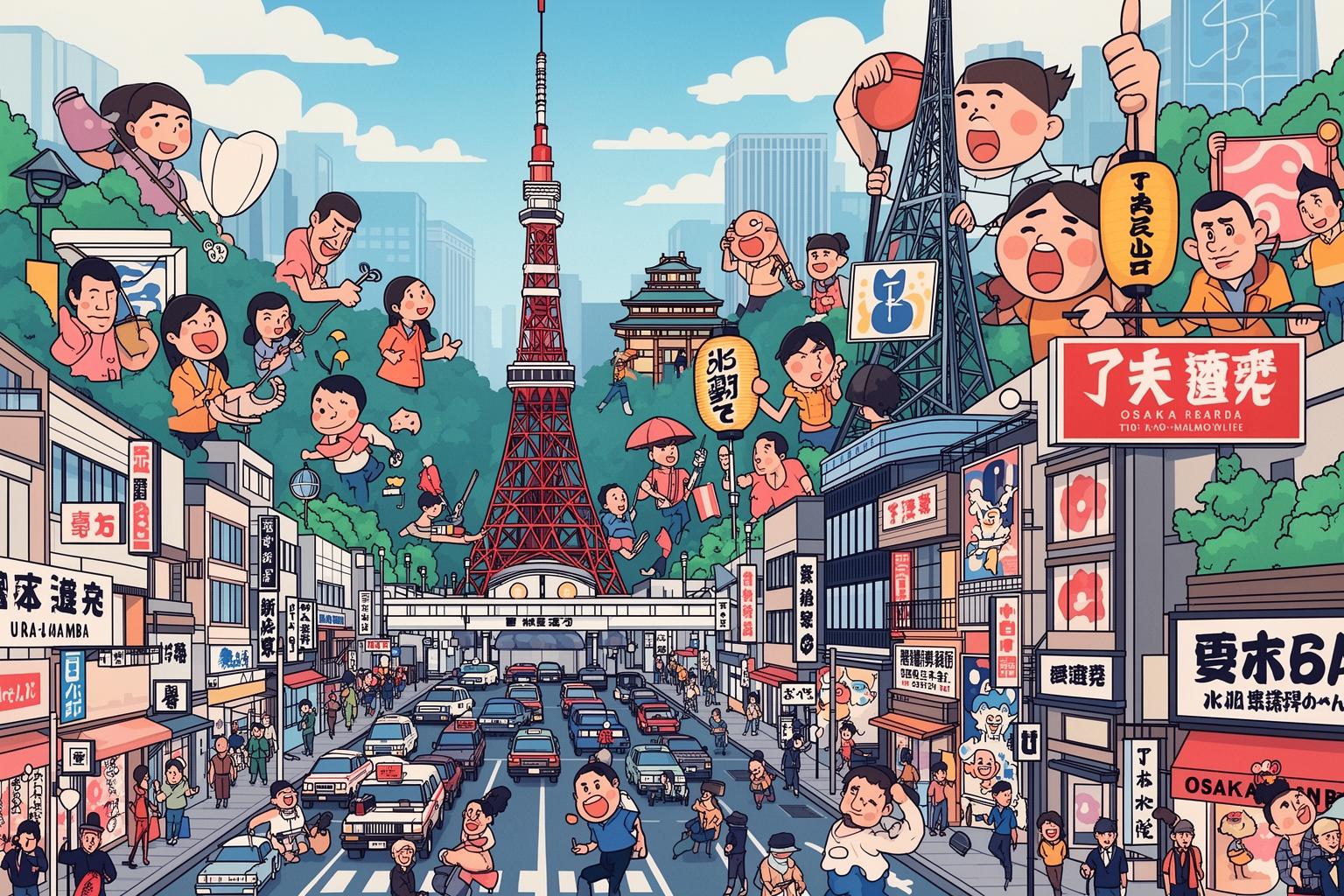
The “Ura-Namba Effect” extends beyond a single neighborhood; it embodies a city-wide spirit. Similar spontaneous, human-scale energy thrives in many pockets throughout Osaka. Travel north to Tenma, where you’ll find an extensive maze of covered shopping arcades and backstreets filled with even more tachinomi and izakaya than Namba. It feels grittier, more local, and exists as a world of its own. Or head east to Kyobashi, a major transit hub where office workers flood out of the stations into a dense cluster of standing bars, some having operated for generations. Even in quieter residential areas, the local shotengai (shopping arcade) often acts as the community’s living room, featuring a handful of small, welcoming izakayas where the owner knows everyone by name.
These spots are the city’s connective tissue, blurring the boundaries between work life, social life, and community into one seamless experience. It’s common to be having a drink at your neighborhood bar and suddenly meet the dry cleaner, who then introduces you to the florist. In that moment, you’re not merely a resident but part of a neighborhood network. This sharply contrasts with Tokyo, where life often feels segmented into work friends, hobby friends, and neighborhood acquaintances, with little overlap. In Osaka, these circles constantly intersect in the informal, communal spaces of the city’s bars and eateries.
For non-Japanese residents, this makes the city feel remarkably welcoming. It reduces the barriers to forming a genuine social life. You don’t need formal introductions or exclusive invites. All you have to do is show up, pull up a stool at a local bar, order a drink, and welcome the chance for conversation. This ongoing, casual mingling of people from all walks of life is what transforms Osaka from a megacity into a tapestry of interconnected villages. The Ura-Namba mindset is about more than just drinking; it reflects a fundamental belief in the power of casual, spontaneous human connection.
Practical Advice for the Foreign Resident
Navigating this wonderfully chaotic social scene can be eye-opening, but having a few tips helps. Consider this your starter guide to embracing the Osaka style of socializing.
First and foremost, embrace the power of “Yes.” When a colleague, neighbor, or new acquaintance invites you for a quick drink right now, your default response should be yes, if possible. Even if you only have thirty minutes, that half-hour can be more valuable for building a relationship than a dozen planned lunches. It shows that you’re open, flexible, and willing to join in the local rhythm.
Second, don’t overthink the plan. The whole point is that there isn’t one. Don’t ask “Where are we going? How long will we stay? Who else is coming?” The answer to these is likely “I don’t know, let’s find out.” Just go with the flow. The fun is in the uncertainty. Let your friend or colleague take the lead, or be bold and suggest wandering until a place catches your eye.
Third, a little language goes a long way. You don’t need to be fluent—just master a few key phrases. Otsukaresama desu is the universal greeting after a day’s work. Chotto ippai yatteku? or Nomi ni ikimasenka? are ways to say “Wanna go for a drink?” Koko de ippai dake means “Just one drink here,” handy for setting expectations if you have an early morning. And a simple Kore, oishii! (“This is delicious!”) can be a great conversation starter.
Fourth, cash is still king. While bigger establishments take cards, the heart of this culture—the tiny tachinomi and old-school izakayas—are often cash-only. Always carry a decent amount of yen. It keeps things quick, straightforward, and avoids awkward moments when it’s time to pay.
Finally, don’t be afraid to go solo. This may be the most important tip. Exploring areas like Ura-Namba or Tenma alone isn’t sad or lonely; it’s an act of discovery. Bar owners and regulars are often curious and friendly towards solo patrons, especially non-Japanese ones. Going alone makes you more approachable and open to serendipitous encounters. It’s the fastest way to find your favorite spot and start feeling like a true local.
The Flip Side: When You Crave Structure
Let’s be honest: for all its appeal, this culture of constant spontaneity can sometimes be exhausting. There will be evenings when you don’t want to stand in a crowded bar, shouting over the noise. There will be moments when you prefer a comfortable chair, a quiet table, a reliable reservation, and a meal that isn’t interrupted by deciding where to go next. Sometimes, predictability is a comfort rather than a burden.
And that’s completely fine. Osaka has you covered. The key isn’t that Osaka’s approach is objectively “better” than Tokyo’s, but that its prevailing social rhythm is fundamentally different. If you’re seeking that structure, it’s easy to find. The upscale neighborhoods of Umeda and Kita-Shinchi are home to sophisticated restaurants and bars that accept reservations and offer a more formal, curated dining experience. You can reserve a private room, order a full-course meal, and enjoy a quiet, well-planned evening with friends. After all, the city is a metropolis; it encompasses a great variety.
Understanding the Ura-Namba Effect means understanding your options. In Tokyo, spontaneous nights out can feel like the exception. In Osaka, they’re the default. This means you have a broader range of social experiences readily available. You get to choose. Do you want the excitement of an unplanned adventure tonight, or the comfort of a fixed destination? Having that choice is a luxury. It allows you to tailor your social life to your mood, your energy, and your desires on any given day. It’s about knowing the city offers both the symphony and the jazz solo, and you decide which one you want to enjoy.
So, What Does This Tell You About Living in Osaka?
Ultimately, the casual, spontaneous, and delightfully chaotic spirit of Osaka’s nomikai culture perfectly mirrors the city itself. This is a city that values substance over style, practicality over protocol, and authentic human connection over performative politeness. Built by merchants rather than samurai, that heritage influences everything from how business is conducted to how people share a beer. Residents tend to be more direct, expressive, and quick to laugh, cherishing a good deal, a good story, and a good time.
Life in Osaka feels more grounded and accessible. The invisible barriers often present in other, more formal cities seem lower here or perhaps more permeable. It’s easier to strike up a conversation with a stranger, simpler to be welcomed into a social circle, and more natural to feel like an active participant in the city’s daily rhythm rather than just an outsider. The steady flow of people in and out of tachinomi bars symbolizes the city’s social fluidity. There’s always room for one more.
For a foreigner settling here, this can be truly liberating. It means your social life isn’t confined to your workplace or established groups; instead, it grows organically, one conversation at a time, within the vibrant, welcoming spaces that lie at the city’s heart. This is the true essence behind the often-repeated cliché that “Osaka people are friendly.” It’s not a passive, polite friendliness—it’s an active, engaging warmth. It’s an open invitation at the end of a long day to forget the schedule, wander into alleyways, and see where the night leads. It’s the city looking you in the eye and asking, “You busy? Wanna grab a quick one?” And in Osaka, the answer is almost always yes.