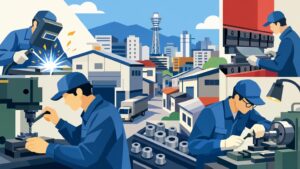
Take the Kintetsu Nara Line east from the neon chaos of Namba. Watch the scenery through the window. The department stores and gleaming office towers of central Osaka start to shrink, replaced by a dense, low-slung landscape of tiled roofs and concrete apartment blocks. The vibe shifts. It gets quieter, but also somehow busier. You start to hear it, even over the rhythm of the train on the tracks—a faint, persistent hum. A rhythmic clang. The high-pitched whine of a machine tool. You’ve left the consumer heart of Osaka and entered its industrial soul: Higashi-Osaka, the city of the machikoba.
This isn’t the Japan you see in travel brochures. There are no geishas gliding down ancient lanes or robots serving coffee in futuristic cafes. This is a city built on work. A place where three-story family homes are squeezed next to single-room workshops, where the smell of cutting oil hangs in the air like a local perfume, and where the word ‘Made in Japan’ isn’t just a label on a product—it’s a way of life, forged in a million tiny neighborhood factories. For a foreigner trying to understand what makes Osaka tick, to get beneath the surface of the loud, friendly stereotypes, Higashi-Osaka is ground zero. It’s here, amidst the grit and the gears, that you find the raw, unfiltered spirit of the city. This is where you learn that Osaka’s famous energy doesn’t just come from its nightlife; it comes from the relentless, creative pulse of making things.
For those intrigued by the relentless pulse behind Higashi-Osaka’s factories, exploring Osaka’s industrial soul reveals how honest craftsmanship and enduring work ethics shape the very spirit of the city.
The Workshop at the End of the Street
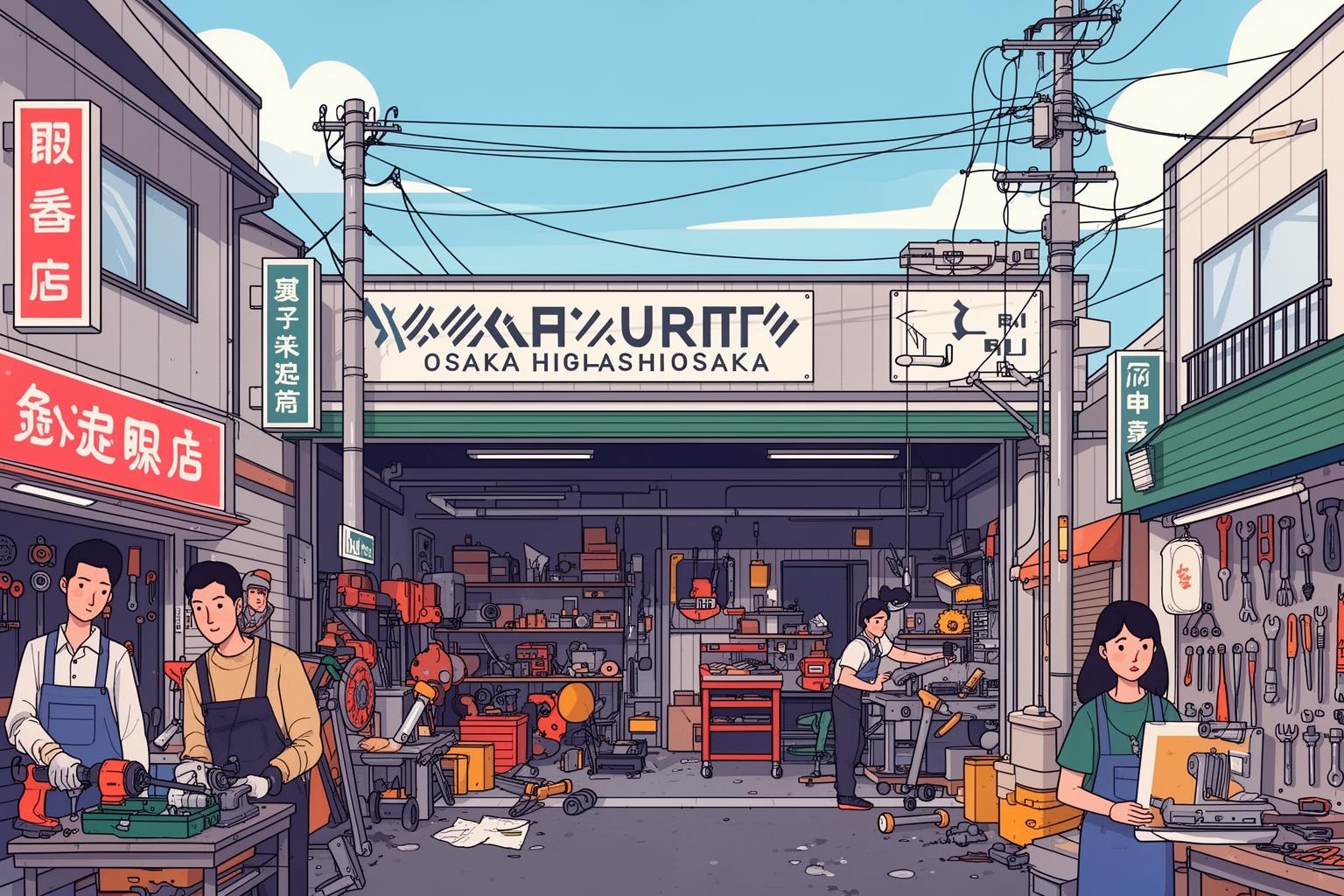
To truly grasp the essence of Higashi-Osaka, you must first set aside Western concepts of zoning. There’s no distinct boundary separating residential areas from industrial ones; it’s all one beautiful, chaotic blend. You might find a carefully maintained bonsai garden in front of a house, with the roll-up metal door of a factory wide open right next door, revealing a man in a grease-stained jumpsuit bent over a massive lathe, sending curls of gleaming metal onto the concrete floor. Children on their way home from school weave their bicycles through parked delivery trucks loaded with mysterious components. The soundtrack of daily life is a symphony of machinery, interspersed with the laughter of kids and the calls of the local tofu vendor making his rounds.
This is not urban decay; it’s urban synergy. The city boasts the highest density of small and medium-sized enterprises (SMEs) in all of Japan, and these businesses are not just commercial entities—they are woven into the fabric of the neighborhood. Many are family-run and handed down through generations. The family lives upstairs, the factory operates downstairs. Work and life aren’t separate; they are deeply, inseparably connected. This close proximity creates a distinct culture. You don’t just work alongside someone; you live beside them. You see them at the neighborhood supermarket, your children attend the same school, and you worship at the same local shrine. This deep integration forms the foundation of Higashi-Osaka’s community spirit, a stark contrast to the anonymous, segmented existence of a Tokyo salaryman commuting two hours to a sterile office park.
The Pride of the Unseen Part
So, what exactly are all these small factories producing? That’s the magic of the place. They’re not manufacturing iPhones or Sony PlayStations. Instead, they excel as the masters of the unseen, the craftsmen behind anonymous components. One machikoba might focus solely on producing a single, high-precision screw with a distinctive thread. Another might dedicate itself entirely to plating metal parts with a specialized anti-corrosive coating. A third could be a global leader in making a tiny, specialized spring that’s absolutely vital for advanced medical equipment.
The Artisan of the Anonymous
Here, the Osaka mindset truly comes into view. In Tokyo, status is often linked to the major brand name on your business card—Mitsubishi, Sony, Toyota. But in Higashi-Osaka, pride is rooted in sheer skill. The owner of that screw factory, let’s call him Yamamoto-san, could be a worldwide expert in his niche. Engineers from Germany might fly in to consult with him. Yet his factory remains a modest, cluttered workshop, and he still wears the same blue work uniform he’s had for forty years.
His pride doesn’t lie in a brand; it lies in perfection. He knows that without his screw, that multimillion-dollar machine simply won’t work. He is a vital link in a global chain, but he has no interest in the glamour of the finished product. His world revolves around machine tolerances, steel quality, and the satisfaction of flawlessly executing his craft. This quiet, profound confidence permeates the city—a confidence based on what you can do, not who you work for. It’s a rejection of superficial prestige in favor of tangible, measurable excellence.
Speaking the Language of the Lathe
This emphasis on function over form extends to how people communicate. Osaka residents are often described as direct, and in the machikoba community, this directness is a professional necessity. There’s no time for flowery, indirect language or endless consensus-building typical of corporate Japan. When working with precise measurements and potentially hazardous machinery, communication must be clear, concise, and unambiguous.
A conversation between two factory owners might sound startlingly blunt to outsiders. “That’s no good. The tolerance is off. Do it again.” It’s not meant to be rude; it’s about upholding the highest possible standard. The relationship is strong enough to withstand—and actually demand—such honesty. This pragmatism defines Osaka. It’s a city that values results. Get to the point, solve the problem, and move on. This efficiency-driven way of communicating might be mistaken for impatience, but it’s really about a mutual understanding that the work itself is what matters most.
A Community Forged in Shared Purpose
The most captivating aspect of Higashi-Osaka is that it’s more than just a collection of individual workshops; it’s a vibrant, interconnected industrial ecosystem. The factories are linked through a complex network of interdependence, founded on decades of personal relationships and trust. This is where the stereotype of a “friendly” Osaka truly comes to life.
Your Neighbor, Your Supplier, Your Friend
Picture this: Yamamoto-san finishes a batch of his specialty screws. Instead of packing them to be shipped to a distant warehouse, he loads them onto a handcart and wheels them just two blocks down to Suzuki-san’s factory. Suzuki-san’s company assembles small mechanical components and relies on Yamamoto-san’s screws. After a brief chat and a shared cup of green tea, Suzuki-san’s team begins their work. Once their component is complete, it may go to another factory nearby for polishing, then another for final inspection.
This is a hyper-local supply chain. Business is often conducted with a handshake, and invoices are settled at month’s end. If Yamamoto-san encounters a problem with a supplier, he doesn’t submit a formal complaint; he simply walks over and discusses it directly. This system thrives on reputation. Everyone knows everyone else. You can’t afford to do shoddy work or be unreliable, because your name is your most valuable asset. This fosters an extraordinary level of mutual support and accountability. When a large, urgent order arrives, the entire neighborhood network springs into action. People work late, assist one another, and share resources. It’s more than business; it’s a collective effort. This stands in sharp contrast to the often ruthless and impersonal nature of global capitalism. Here, community and commerce are inseparable.
The Social Life of the Factory Floor
The social fabric is woven in the moments between work. At noon, the machines quiet down and the streets fill with workers heading to lunch. They don’t choose chain restaurants. Instead, they flock to small, family-run shokudo (diners) or kissaten (traditional coffee shops). In a place like this, the elderly woman behind the counter knows everyone’s usual order. The air is thick with the aroma of grilled fish and miso soup, accompanied by the sound of lively Kansai-ben.
Conversations blend shop talk, baseball scores (often bemoaning the Hanshin Tigers), and local gossip. This is where information flows, deals are informally struck, and community bonds are strengthened daily. The lines between colleague, client, and neighbor completely blur. This is the “work-life integration” I mentioned, in its most genuine form. It’s a lifestyle centered around a shared place and common purpose, fostering a sense of belonging that feels increasingly rare today.
Innovation from the Ground Up
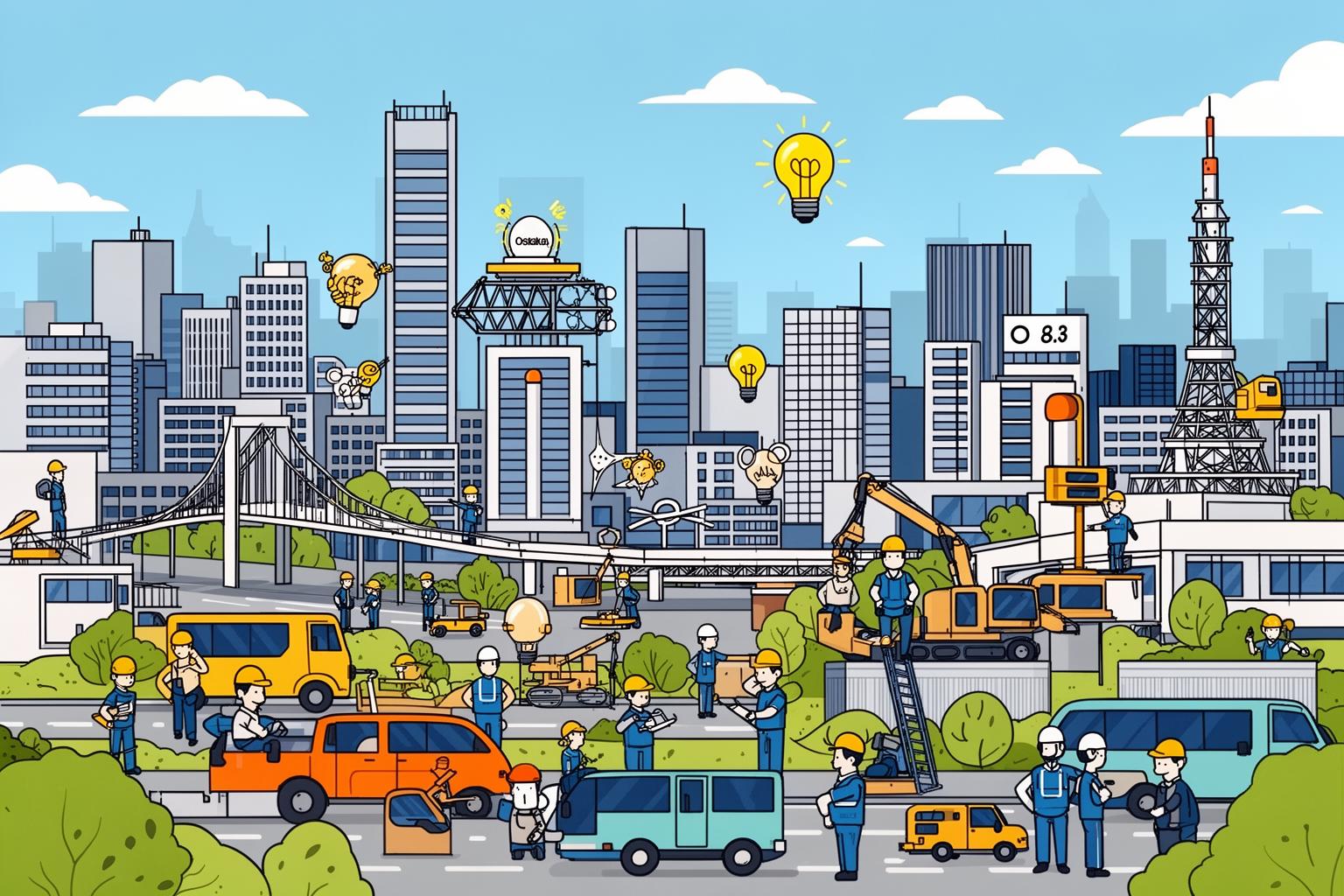
It might be easy to view these aging workshops as remnants of a bygone industrial era. However, that would be a significant misjudgment. The machikoba of Higashi-Osaka are not trapped in the past; they are experts in adaptation and innovation. This embodies the naniwa konjo, the famous Osaka spirit of determination, resilience, and refusal to give up.
From Humble Parts to Outer Space
The most iconic example of this spirit is the story of the Maido-1 satellite. In the early 2000s, a group of factory owners in Higashi-Osaka, worried about the future of their industry, decided to take a bold step. They declared, “If the government can launch big rockets, we can build our own satellite.” It might have sounded like a joke, but they were serious.
A consortium of about 100 local companies, many small operations, combined their remarkable skills. The company that polished metal for medical tools crafted the satellite’s gleaming shell. The workshop that made parts for electronics took on the circuit boards. Over several years, through sheer determination and collective ingenuity, they built a fully functional, 50-kilogram satellite. In 2009, it was successfully launched into orbit by the Japanese space agency, JAXA. The name “Maido-1” is pure Osaka. “Maido” is a common, cheerful greeting used by Osaka merchants, meaning roughly “Thanks for your business!” or “What can I do for you?” Naming the satellite this way perfectly reflects their down-to-earth, slightly cheeky pride.
The Maido-1 story is more than just an interesting anecdote. It stands as a perfect metaphor for Higashi-Osaka. It demonstrates how advanced technological expertise and world-class skill can thrive in the most unpretentious settings. It proves that innovation doesn’t only happen on gleaming Silicon Valley campuses; it happens in cluttered workshops, fueled by craftsmen passionate about problem-solving.
What the Machikoba Spirit Means for You
As a foreign resident in Osaka, you might never step inside a machikoba. So why does all this matter? It matters because this industrial heritage is the foundation of much of Osaka’s distinctive culture. Understanding Higashi-Osaka helps you grasp the essence of the entire city.
It sheds light on the pragmatism and straightforwardness you observe in its people. Osaka is a city that prioritizes substance over style, function over form. It clarifies the direct communication style that can sometimes seem abrupt. It’s not about rudeness; it’s about being clear and efficient. Most importantly, it reveals the strong sense of community. The deep-rooted bonds in Osaka aren’t simply about being “friendly”; they emerge from a long history of mutual dependence and shared identity. People look out for each other because, for generations, their survival and success relied on it.
If you choose to live in one of Osaka’s eastern wards, you’ll be entering this world. You’ll encounter a side of Japan far removed from the polished perfection of Kyoto or the overwhelming scale of Tokyo. You’ll live in a neighborhood with a vivid energy, a place of production and purpose. You’ll come to appreciate the sounds and smells of industry not as noise and pollution, but as signs of a healthy, thriving community. You might find that a simple “Konnichiwa” to the person tinkering with a machine in an open-fronted workshop leads to a fascinating conversation and a deeper connection to your new home.
Living here teaches you to view the world differently. You learn to look beyond the humble exterior to recognize the remarkable skill within. You begin to understand that the most vital parts of any great machine are often the smallest and least visible. In a world obsessed with brands, logos, and virtual experiences, Higashi-Osaka stands as a powerful, tangible reminder that real things are still crafted by real people, with exceptional skill, boundless ingenuity, and genuine heart. That unpretentious, powerful spirit is the true, hidden engine of Osaka.