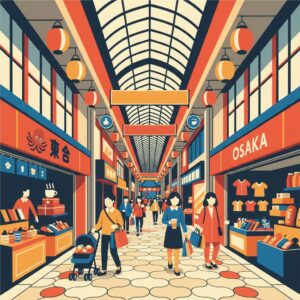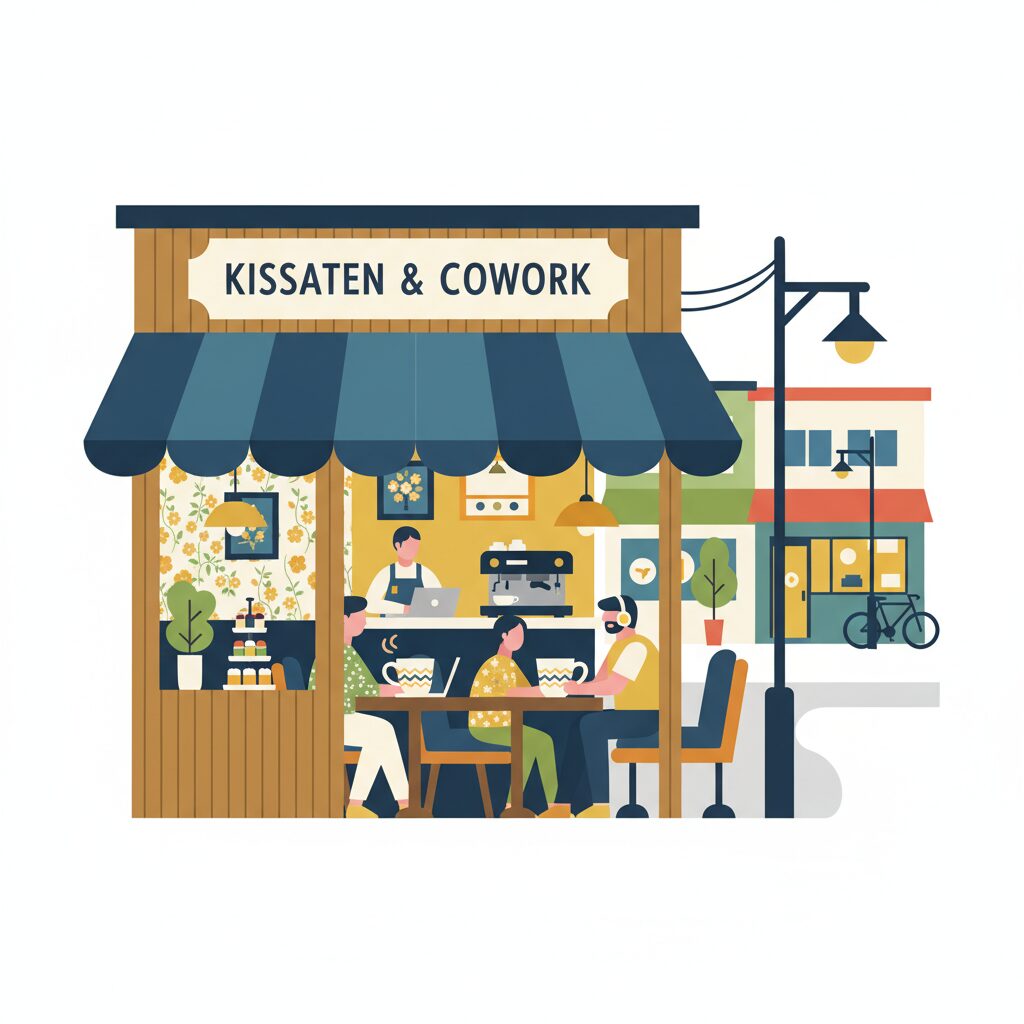
You see it first in the gleam of polished concrete and blond wood. You walk into a modern coworking space in Umeda, a temple of minimalist design and billable hours. The air hums with the silent, focused energy of laptops and lattes. It’s clean, it’s efficient, it’s global. You could be in Berlin, or Brooklyn, or Singapore. It’s a space designed for transactions—you pay for Wi-Fi, for power, for a chair that won’t ruin your posture. It’s a perfectly functional, perfectly anonymous solution to the modern problem of where to work. But then, you turn a corner, duck into the covered arcade of a shotengai—one of Osaka’s sprawling, beautifully chaotic shopping streets—and you step through a doorway into another world. The light changes, dropping from fluorescent glare to a warm, amber glow. The air is thick with the ghosts of a million cigarettes and the rich, dark aroma of siphon-brewed coffee. The seats are cracked vinyl or worn velvet, the tables are scarred with the history of countless elbows and coffee cups, and behind the counter, a man who looks like he was carved from the same dark wood as the walls methodically polishes a glass. This is the kissaten. And in Osaka, this is not just a coffee shop. It’s the original coworking space, the original social network, and the beating, stubborn heart of the community. In a world rushing toward sanitized, scalable solutions, the question isn’t just why these places survive. The real question, the Osaka question, is what essential human function do they serve that their modern counterparts have forgotten how to provide? This is not a story about nostalgia. It’s a deep dive into the practical, economic, and social infrastructure that holds this city together, one cup of coffee at a time.
Just as these kissaten serve as the original social network, the city’s traditional sentō (public bathhouses) play a similar, vital role as community hubs in Osaka’s neighborhoods.
The Anatomy of a Shotengai Kissaten: More Than Just Coffee and Toast
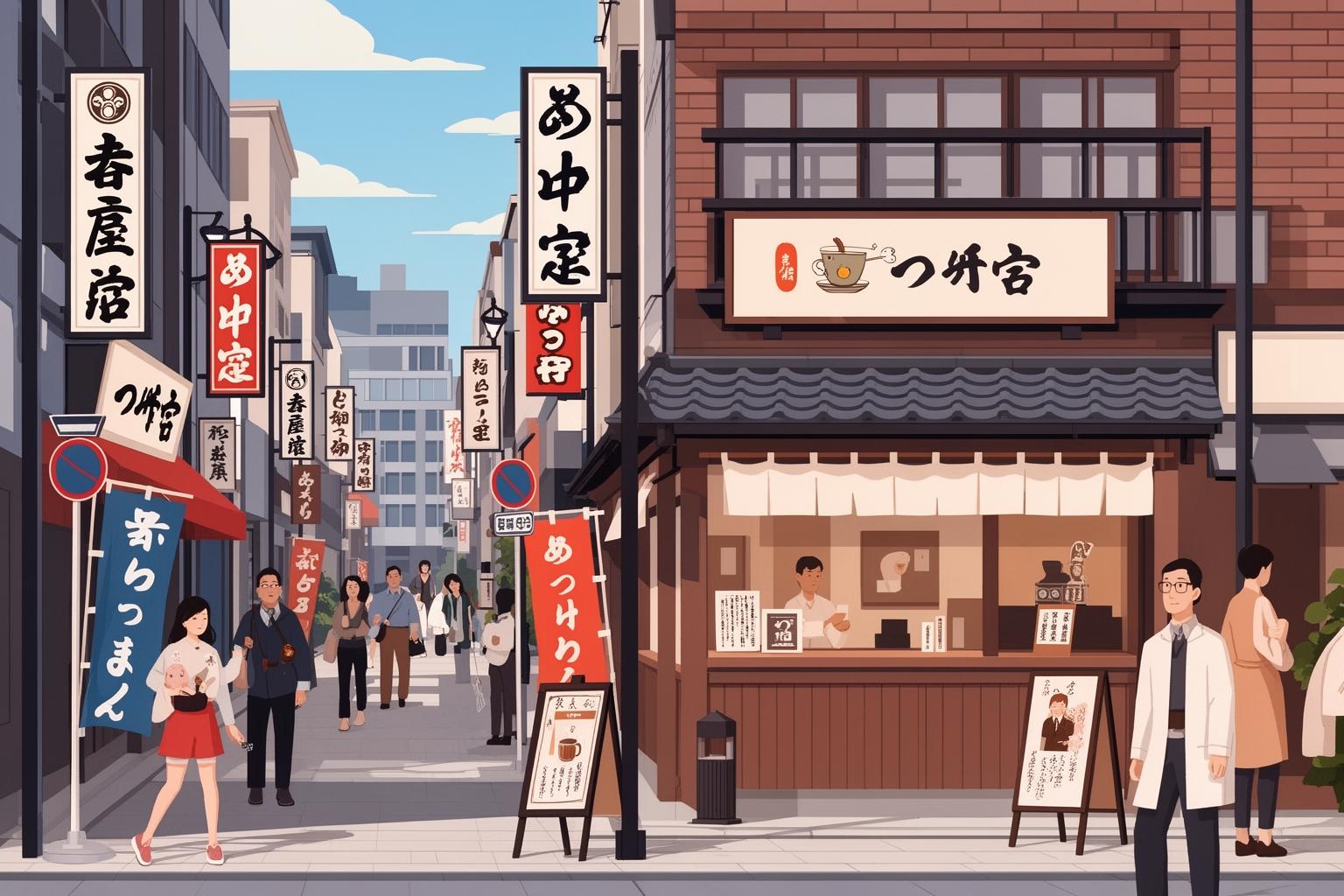
To truly understand Osaka, you must first grasp the ecosystem of the shotengai, where the kissaten serves as its anchor tenant, town hall, and confessional booth. It operates under a logic completely distinct from the transactional nature of a modern café. Every detail, from the man behind the counter to the worn furniture, forms part of a complex social machine. This is a place designed not for transient customers but for lasting members.
The ‘Master’ as the Community Hub
The pivotal figure in any authentic kissaten is the ‘Master.’ He is neither a mere ‘barista’ nor a ‘manager.’ The Master is a proprietor, an institution, a steadfast presence in the lives of his regular patrons. He has often stood behind that same counter for thirty, forty, or even fifty years. He knows not just your coffee order, but the names of your children, the status of your business, and the health of your elderly mother. He acts as the human router within the neighborhood’s social network—a keeper of secrets and broker of information.
In contrast, staff at modern coworking spaces are interchangeable, trained to deliver polite yet impersonal service scripted by corporate guidelines. They facilitate transactions. The Master, however, facilitates connection. Spend an hour observing him: you’ll see him nod to the vegetable stand owner as she arrives for her mid-morning break, already setting down her customary American coffee. You’ll hear him ask the local electrician, sipping coffee while studying a wiring diagram, if he has time to check Mrs. Tanaka’s faulty air conditioner down the street. He might overhear a young mother lamenting her struggles to find after-school care and casually mention that another regular just left, who runs a small private cram school. He is the community’s nexus. His value extends far beyond the beverage he serves. He is both the community’s memory and its switchboard operator—a role that cannot be automated or scaled.
This fosters an atmosphere of profound stability. In a city, and indeed a world, that increasingly feels transient, the Master’s enduring presence offers comfort. He is a landmark in people’s lives. For outsiders, this can be initially intimidating. The Master might appear gruff or distant, his focus reserved for regulars he has known for decades. But this is not unfriendly; rather, it reflects the natural order of a deeply rooted community. Persistence is essential. Becoming a ‘regular’ is a gradual process of being woven into this social fabric, beginning with a simple, consistent order, a daily greeting, and the patience to let the relationship unfold naturally. When the Master finally asks you a personal question or recalls your order without prompting, it is a quiet rite of passage. You are no longer just a customer—you are part of the place.
The Unspoken Rules of Engagement
Stepping into a kissaten is like entering a private club with unwritten bylaws. The rules are not displayed but absorbed through observation. The primary rule is that this is not a library. Silence is not the aim. The gentle clatter of ceramic on saucer, the murmur of hushed conversations, and the faint sound of daytime television news form the ambient soundtrack. This space is designed for coexistence, not isolation. Headphones are not forbidden but mark you as an outsider—someone wishing to consume the space without engaging in its atmosphere.
Reading the air—‘ba no kuuki wo yomu’—is a vital skill. You learn when the Master welcomes idle chatter and when he is engrossed in work or a deep conversation with a longtime regular. You discern the subtle cues that distinguish a private business meeting at one table from casual gossip at another. You understand it is acceptable to stay for two hours with a single cup of coffee, provided you do not occupy the last available table during a busy lunch rush. This is the implicit contract: in exchange for your patronage, you are granted not just a seat, but a span of time and space with minimal pressure.
One telling artifact of this system is the ‘coffee ticket’ or ‘kōhī chiketto.’ Regulars can buy a book of tickets, usually ten cups of coffee for the price of nine. On the surface, it appears to be a simple discount scheme. But its function is much deeper. Purchasing a ticket book is a statement of intent: ‘I will return. I am part of this community.’ It’s a small investment in the establishment’s stability and a vote of confidence in its future. For the Master, it assures a baseline of steady income, insulating him from the fluctuations of daily foot traffic. For the customer, it transforms the everyday coffee purchase into a subscription to a community. This is the original membership model, built on paper and trust long before digital subscriptions existed.
A Sensory Landscape of Time and Place
The physical environment of a kissaten is a deliberate act of anti-modernism. It resists the bright, sterile, and disposable aesthetic of global café chains. Its design language evokes permanence and patina. The dark, heavy wood of the counter and booths absorbs decades of conversation. The velvet or vinyl upholstery invites you to settle in and stay awhile—a stark contrast to the hard, upright chairs of fast-casual eateries that encourage quick turnover.
The air itself is an archive, often carrying the lingering scent of cigarette smoke—a controversial but historically integral part of the kissaten experience. For generations, these spaces allowed patrons to think, talk, and work with a cigarette in hand. Although more kissaten are now smoke-free to accommodate modern sensibilities, the memory of that atmosphere endures. It recalls an era of slower, more contemplative pursuits.
Consider the tools of the trade. Sleek Italian espresso machines are rare. Instead, you’ll find elegant glass globes of siphon coffee brewers—a method as much about ritual and performance as about the final brew. The process is slow, deliberate, and mesmerizing, signaling that time is not the enemy here. Near the entrance, a rack holds the day’s newspapers, not glossy lifestyle magazines. This signals the kissaten’s role as a place for engagement with current events and local affairs, rather than a retreat into aspirational fantasy. Every detail—the lighting, smells, sounds, and textures—is calibrated to evoke a specific feeling: groundedness, history, and refuge from the relentless pace of the modern city. It is not old from neglect, but old because it is carefully preserved.
The Shotengai Ecosystem: Where Commerce and Community Collide
A shotengai is more than just a cluster of shops; it functions as a living organism. At its core lies the kissaten, which serves as the heart, circulating vital information, gossip, and social connections throughout the entire arcade. To truly grasp the role of the kissaten, one must see it not as an isolated business but as an essential organ within this larger entity. It is the place where the neighborhood’s commercial life and community life seamlessly merge.
The Symbiotic Relationship Between Kissaten and Shopkeepers
For the small, independent business owners who form the backbone of a shotengai, the local kissaten acts as their informal headquarters. It serves as their breakroom, conference room, and human resources department. Step into any shootengai kissaten around 10:30 AM, and you will witness this ecosystem in motion. The butcher, still wearing his apron, might be chatting about beef prices with the owner of a nearby izakaya. The woman from the kimono shop might be sketching a new design while enjoying a lemon tea. The elderly man who runs the tiny stationery store might be taking a short breather, reading the sports section of the newspaper.
These moments are not merely breaks from work; they are where work happens. Informal business negotiations take place here. A deal to supply vegetables to a local restaurant is finalized not through contracts and lawyers, but with a handshake over a table sticky with sugar syrup. When disputes arise, such as over sidewalk space, they are resolved not by formal committees but through the gentle intervention of the kissaten Master and regular customers. Information flows freely: the hardware store owner hears about a new apartment building nearby and stocks up on supplies for incoming residents, while the fishmonger learns of a supermarket’s big sale and adjusts his prices accordingly. This is a hyperlocal, analog information network, with the kissaten acting as its central server.
This setup contrasts sharply with the commercial landscape in cities like Tokyo or the more modern areas of Osaka. In gleaming shopping malls or high-rise districts, businesses operate in isolation. A boutique owner on one floor may never interact with the restaurant manager above. Communication is formal, structured, and managed through hierarchical channels. In the shotengai, however, business is personal, fluid, and relational. The success of one’s shop is intimately tied to the wellbeing of the entire arcade. The kissaten is the space where this collective identity is forged and nurtured daily.
Osaka’s Pragmatism: Why Pay for an Office?
At the heart of Osaka’s mindset lies a pragmatic approach—a keen sense of value that outsiders often mistake for cheapness (`kechi`). The truth is more subtle: it’s about maximizing utility and reducing waste. The kissaten serving as an office embodies this philosophy perfectly. Why would a small business owner, freelance salesperson, or emerging entrepreneur rent an expensive office space when a 500-yen cup of coffee offers a practical alternative?
For the cost of that single coffee, you get a desk, a comfortable chair, and a semi-private area to work for hours. You can meet clients, make phone calls discreetly, and catch up on paperwork. The kissaten acts as a mobile office for countless self-employed and small-scale entrepreneurs citywide. Insurance agents meet with clients, real estate brokers finalize deals, and designers present proofs—all making efficient use of the space. The overhead is low, the location convenient, and the coffee a natural part of the daily routine.
This logic partly explains the continuation of the ‘salaryman sabo’ trope—the office worker who sneaks off to a kissaten to escape the corporate grind for an hour or two. Though sometimes joked about, it reflects a deeper reality. The kissaten offers a vital ‘third space,’ neither the rigid hierarchy of the office nor the distractions of home. It’s neutral ground for thinking, planning, or relaxing. For many, it’s where productivity and clear thought surpass what they achieve at their official workplace. In Osaka, where results often matter more than appearances, this practical use of time is not only accepted but valued as smart work.
A Safety Net of Familiar Faces
Beyond commercial and professional roles, the kissaten plays a crucial social role as a safety net—especially for the elderly, who face increasing isolation in modern cities. For retired individuals living alone, the daily visit to the local kissaten is more than just a coffee run; it’s an essential human check-in. It motivates them to get dressed and leave home, ensuring at least one meaningful social interaction each day.
The Master and regulars form an informal neighborhood watch, aware of who should be there and when. If elderly Mr. Sato, who has come daily for his ‘Morning Service’ at 8 AM for decades, misses two days in a row, it doesn’t go unnoticed. The Master might ask another regular nearby to check on him or make a call personally. This is not a formal system but the natural outcome of genuine, long-standing community ties. It represents a powerful, low-cost, and effective form of social welfare born organically from the shotengai’s structure.
This is a tangible way to understand the cliché that “Osaka is friendly.” It goes beyond casual banter; it reflects a social fabric where people truly look out for one another. This collective responsibility is woven into the DNA of the city’s older neighborhoods. In the anonymous high-rises of Tokyo, neighbors are often strangers, and one could vanish for weeks unnoticed. But in a shotengai community centered around a kissaten, your absence would be felt within hours. The kissaten provides a sense of belonging and security that no government program or modern technology can replicate.
The Kissaten as a Remote Work Precursor: Lessons in Unstructured Productivity
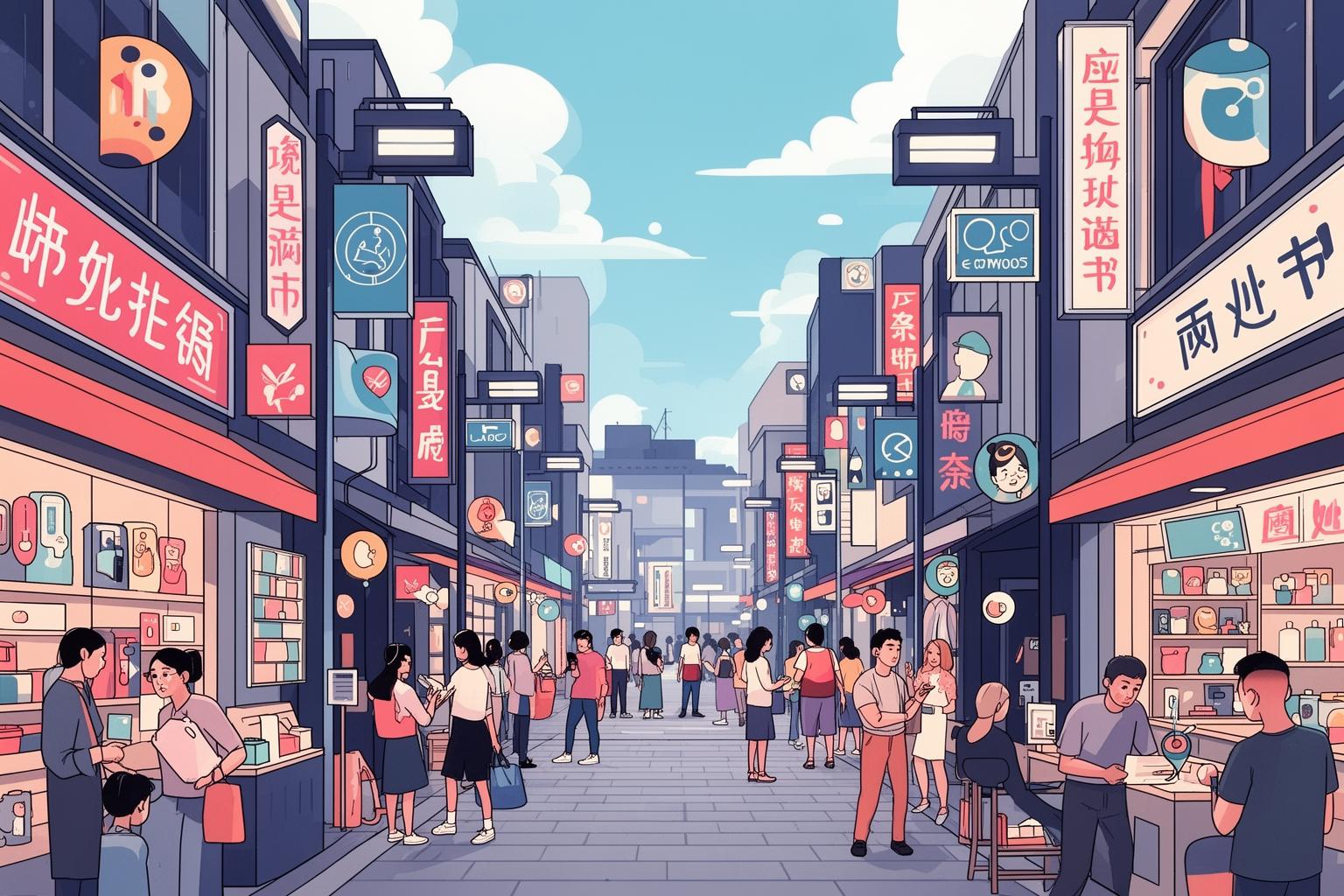
Long before remote work and digital nomadism became global phenomena, the kissaten had already mastered the art of working outside the traditional office. It remains a prime example of how physical spaces can nurture a distinctive form of productivity—one less focused on intense, solitary concentration and more on ambient creativity, thoughtful reflection, and casual social interaction. It offers a compelling counterpoint to the contemporary fixation on distraction-free efficiency.
The ‘Morning Service’ Ritual and the Beginning of the Workday
The ‘Morning Service’ ritual—commonly referred to simply as ‘Morning’—is a fundamental aspect of kissaten culture. For a modest fee, usually between 400 and 600 yen, patrons receive a cup of coffee alongside a light meal, often consisting of a thick slice of toast (`atsugiri tōsuto`), a hard-boiled egg, and a small side salad. This offering is more than an inexpensive breakfast; it marks the unofficial start of the workday for many within the local economy.
For freelancers, independent artisans, and small business owners, a kissaten that provides ‘Morning Service’ is the first stop of the day. It acts as a transitional zone between home and work—a place to gradually ease into the demands of the day ahead. Here, they catch up on industry news through the newspaper, review their notebooks to organize schedules, or simply sit quietly to gather their thoughts before diving into work. It represents the original form of hot-desking: selecting a table, fueling up, and setting up a temporary workplace. Economically, it’s often cheaper than making breakfast at home, but its primary value is psychological. It brings structure and ritual to the otherwise fluid routine of non-traditional workers, serving as a communal starting gun for the day’s efforts.
The Art of ‘Productive Loitering’
One of the kissaten’s most notable departures from modern café culture is its approach to time. At places like Starbucks, there’s an almost tangible pressure to ‘drink and leave’ quickly. Seating is often designed to discourage long stays, the music is lively, and staff frequently clear tables. The business model relies on rapid customer turnover. In contrast, the kissaten embraces loitering.
The unspoken understanding is that a single order grants the right to occupy a seat for an extended period—often two or three hours. This culture of ‘productive loitering’ enables a very different style of work. It’s not suited to frantic, deadline-driven tasks but is ideal for deep, slow-burn activities that traditional offices often overlook: brainstorming, writing, sketching, and strategic contemplation. The absence of urgency to leave allows ideas to develop naturally. Patrons can gaze out the window, watch the life of the shotengai (shopping street) unfold, and let their minds wander in ways not possible in more rigid or time-constrained settings.
This tradition has made kissaten favored studios for many creatives. Numerous manga artists, novelists, and screenwriters have famously used their neighborhood kissaten as their primary working space. The reasonable price, steady coffee supply, and distinctive atmosphere create excellent conditions for creative incubation. Customers aren’t just purchasing coffee; they’re securing a space for their imagination, a fact well understood and respected by the proprietors. The value isn’t calculated by yen per minute but by the sustained loyalty of patrons who view the space as vital to their livelihood.
Distraction as a Feature, Not a Flaw
The prevailing modern vision of a productive workspace is a quiet, sterile enclosure. Noise-cancelling headphones have become standard tools, and open-plan offices are criticized for constant interruptions. The prevailing wisdom claims that deep work demands total isolation. The kissaten culture challenges this notion. Here, distraction is regarded not as a flaw but as a feature. The environment is alive with gentle, low-level sensory input.
The soft murmur of conversations, the clinking of porcelain cups, the rustling of newspapers, and the distant murmur of a television create a kind of ‘human white noise.’ For many, this ambient backdrop is far more conducive to focus than complete silence or artificial white noise. It fosters a feeling of being alone together—partaking in the city’s life without the pressure to engage directly. This background hum reassures, providing a sense that the world continues around you while you focus on your own small sphere.
This surroundings can also spark moments of unexpected inspiration. A passing snippet of conversation might ignite a new narrative idea. Watching the interactions among patrons can offer fresh insights into human nature. The steady, gentle flow of life through the space counters the mental stagnation that can arise from isolated work. It keeps the mind receptive and open. In a kissaten, you’re not cut off from the world to work—you’re immersed in it, often resulting in richer, more inspired outcomes.
Osaka vs. Tokyo: A Tale of Two Third Spaces
The differences between Osaka and Tokyo are frequently discussed in terms of dialect, cuisine, and temperament. However, one of the most insightful ways to understand the two cities is by comparing their ‘third spaces’—the places between home and work. The contrast between a traditional Osaka kissaten and a typical Tokyo cafe encapsulates the deeper cultural, economic, and social philosophies that characterize each metropolis.
Community vs. Anonymity
The key difference lies in the fundamental purpose of the space. The Osaka shotengai kissaten is designed to foster and sustain community. Its success is measured by the density of its social network and the durability of its relationships. It is a space of mutual recognition. When you enter, you are seen, known, and situated within a social context. The space itself is a destination—a place people go to be, not just to purchase something.
In contrast, Tokyo’s predominant cafe model emphasizes efficiency and anonymity. Spaces, particularly in busy commercial areas like Shibuya or Shinjuku, are designed for individual use and quick turnover. Look at the layout: long counters with single seats facing a wall discourage interaction. Power outlets are abundant, but communal tables are scarce. The experience is polished, professional, and entirely impersonal. You could work there daily for a year, and staff would likely never learn your name. This is not a flaw; it is intentional. The system offers a clean, functional, anonymous environment where individuals complete tasks. It serves the transaction, not the relationship.
This reflects a broader social truth. Tokyo is a migrant city, drawing millions from across Japan and worldwide to chase personal ambitions. Anonymity provides freedom, allowing people to reinvent themselves without the restrictions of a close-knit community. Osaka, though also a major metropolis, has a stronger sense of neighborhood identity, where local ties and long-term relationships remain foundational. The kissaten physically embodies this social structure.
The Economic Foundations of Space
These distinct social functions are shaped by concrete economic factors. Real estate in central Tokyo is among the priciest globally. For a cafe to thrive, it must maximize revenue per square foot, necessitating a model of high volume and fast turnover. Every seat needs to generate income as frequently as possible. The kind of leisurely, two-hour stay over a single cup of coffee common in an Osaka kissaten would be financially untenable for a Tokyo cafe in areas like Marunouchi.
In Osaka, especially within traditional shotengai, economic pressures differ. Many kissaten owners have operated from the same location for decades, often owning the property outright. They are not subject to rising monthly rents or landlord demands. This legacy ownership enables a different business philosophy. The Osaka merchant mentality values the long-term benefit of loyal customers over short-term profits from one-off sales. The steady 500 yen daily from a regular patron attending 300 days a year far outweighs the sporadic 2,000 yen from a tourist who never returns. This economic stability permits the kissaten to serve as a low-pressure community space—a luxury Tokyo establishments rarely can afford.
The Foreigner’s Experience: Cracking the Code
For non-Japanese residents, navigating these two environments offers a revealing contrast. In Tokyo, blending in is easy. The city’s anonymity acts as a comfortable veil. You can use cafes and public spaces without grasping any nuanced, unspoken rules. The interaction is straightforward. You will be met with professional courtesy, but likely remain an outsider.
In Osaka, immersing yourself in kissaten culture is more challenging yet much more rewarding. It demands decoding a social code. First, find the right place. Avoid trendy, Instagram-famous cafes. Seek out those barely mentioned online. Look for hand-painted signs, sun-faded plastic food models in windows, and entrances partly hidden by worn ‘noren’ curtains. These are hallmarks of authentic, community-centered establishments.
Becoming a regular is a gradual process of observation and persistence. Start by arriving at the same time a few days each week. Order a simple coffee. Make eye contact with the Master and offer a slight nod. Don’t rush conversation. Allow the rhythm of the space to envelop you. Over time, your presence becomes part of the pattern. The initial barrier is not hostility but intimacy. You enter a space akin to a family’s living room. Once accepted, you gain access to a side of Osaka few visitors experience. You’ll be drawn into conversations, offered advice, and cared for. You transform from a foreigner in a cafe to a neighbor in your local spot. It is a profound change that shifts you from merely observing the city to truly participating in it.
The Future of the Kissaten: Nostalgia or a Sustainable Model?
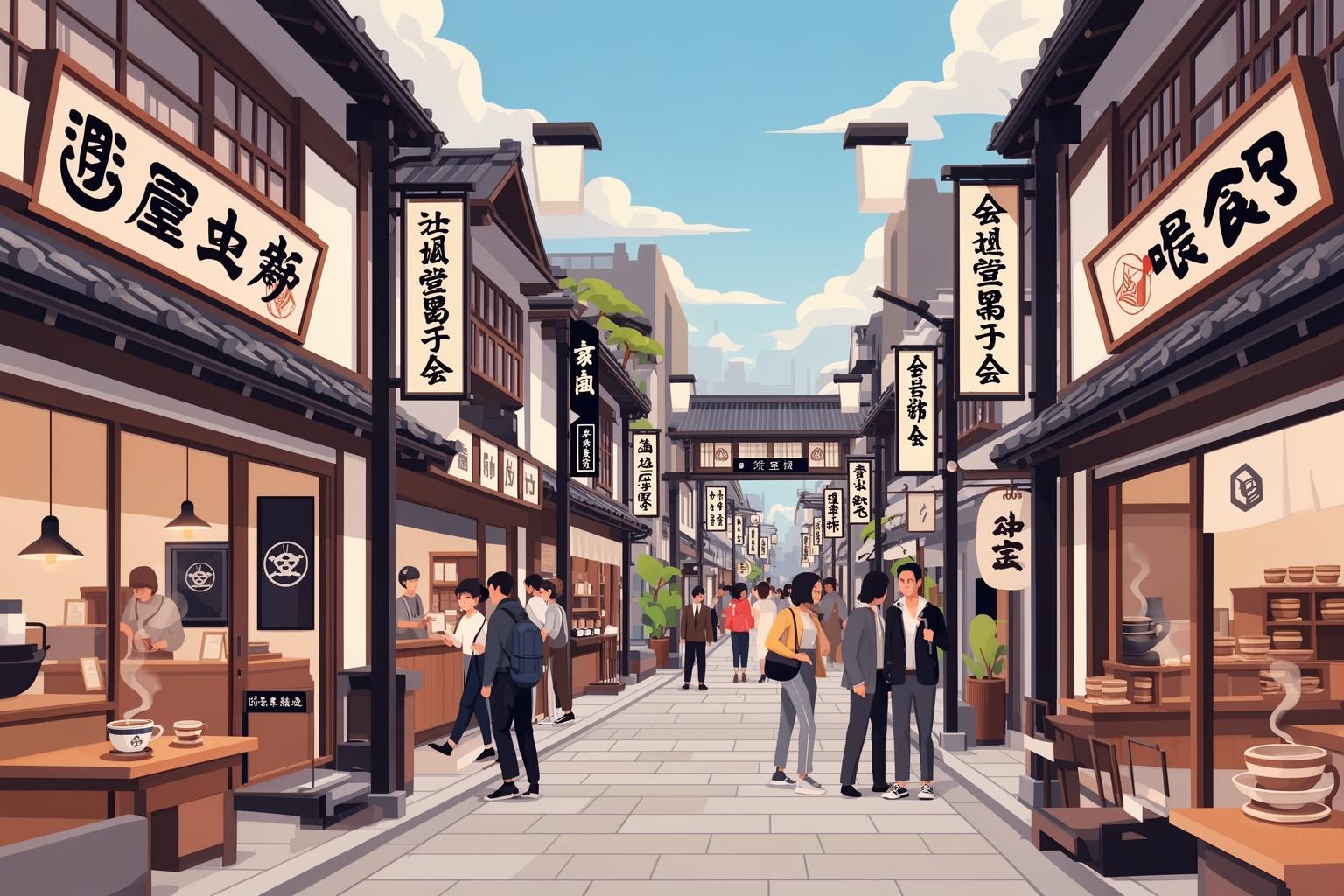
Despite their deep roots and lasting social significance, the traditional kissaten faces an uncertain future. Caught between the forces of modernity, shifting habits of a new generation, and the inevitable passage of time, they stand at a crossroads. The key question is whether they are simply relics of a bygone era destined for gradual decline, or if their core values present a sustainable model for the future of urban community life.
The Challenge of Modernity
The most immediate threat to kissaten is demographic. Many are run by elderly Masters who have spent their entire lives in the business. Their children, having chosen different career paths, often show little interest in inheriting the family enterprise. When the Master retires or passes away, the kissaten often closes permanently, with no succession plan for a business so closely intertwined with the personality and relationships of one individual.
Competition from global and domestic coffee chains also exerts relentless pressure. These chains offer bright, modern spaces, consistent products, free Wi-Fi, and smoke-free environments — all of which appeal to a younger generation. The slow, deliberate pace of the kissaten can feel foreign to those accustomed to speed and convenience. Additionally, the decline of some shotengai, as shopping shifts online or to large suburban malls, erodes the customer base these establishments depend on. As the shotengai declines, so too does its lifeblood.
Changing social norms, particularly regarding smoking, present another major challenge. For decades, the kissaten was a haven for smokers. With stricter public smoking regulations and changing public attitudes, many kissaten have had to ban smoking or close entirely. While this opens them to some new patrons, it can alienate the core group of longtime regulars for whom coffee and cigarettes were an inseparable ritual.
Signs of Adaptation and Revival
Yet, glimmers of hope and signs of resilience emerge. A new generation, tired of the uniformity of global capitalism, is discovering the charm of ‘Showa retro.’ The unique, time-capsule atmosphere of the kissaten has become a source of fascination. Young people seek out these spaces not only for coffee but for the experience, authenticity, and photogenic vintage interiors. This renewed interest has breathed life into some establishments, bringing an unexpected new clientele.
Some kissaten are adapting on their own terms. While they may not install espresso machines, some now offer Wi-Fi. Others have consciously gone smoke-free, attracting families and younger visitors. Many embrace what makes them unique by developing specialties that draw patrons from across the city—a legendary egg sandwich, a towering parfait, or a perfectly crafted cream soda. They are finding ways to balance their historic character with modern customer expectations.
Perhaps most significantly, the global shift toward remote and flexible work, accelerated by the pandemic, has inadvertently underscored the value kissaten have long provided. As people look for ‘third places’ to escape the monotony of working from home, the local kissaten offers a compelling alternative. It provides a change of scenery, a sense of community, and a quiet workspace that is neither a corporate office nor a kitchen table. In this new landscape, the original remote work hub may be poised for a revival.
What We Lose if the Kissaten Disappears
To view the potential loss of kissaten merely as a shift in consumer tastes misses the larger point. The stakes are much higher. The kissaten is more than a business model; it is vital social infrastructure. It houses a neighborhood’s collective memory, serves as a hub for informal exchange of information, and acts as a crucial defense against social isolation.
If these spaces vanish, we lose informal caretakers of the elderly, affordable incubators for small businesses and creative ventures, and neutral ground where people from diverse backgrounds can meet and interact. We lose the physical anchors that give a neighborhood its unique character and sense of place. The social fabric of the city would grow thinner, colder, and more anonymous.
The struggle of the kissaten is, in many ways, a struggle for the soul of the city. It is a battle between viewing the city as a series of efficient, transactional spaces and seeing it as a messy, complex, but deeply human web of relationships. As you walk the streets of Osaka, look beyond the shining new towers and bright, familiar logos. Find a shotengai, open the door to a place that seems unchanged for fifty years, and stay awhile. You might discover that the most authentic and forward-looking vision of urban living has been quietly waiting there all along, behind a haze of smoke and the aroma of dark-roast coffee.