The final Zoom window closes. Your laptop screen, a mirror of your own tired face, finally goes dark. The boundary between your living room and your office, once a clear line drawn by a daily commute, has dissolved into a murky, indefinite space. You’re home, but you never left. You’re finished with work, but the digital hum of deadlines and notifications still echoes in your mind. This is the modern rhythm of remote life, a relentless beat that can leave you feeling disconnected from your own body and your own city. In Tokyo, the solution might be a sleek, minimalist yoga studio or a solo session at a high-tech gym. But here in Osaka, the antidote is older, warmer, and steeped in steam. It’s the neighborhood ‘sentō’, the public bathhouse. This isn’t about a luxurious spa day; it’s a practical, powerful ritual for logging off, a cultural cornerstone that offers a masterclass in the Osakan art of living. It’s where you wash away the digital grime and plug directly into the city’s analog heart.
After savoring the soothing ritual of a neighborhood sentō, you might also discover how Osaka’s vibrant basement food halls offer healthy living strategies to enrich your post-work wellness routine.
The Digital Grind Meets Analog Steam: Why Your Brain Needs a Bathhouse
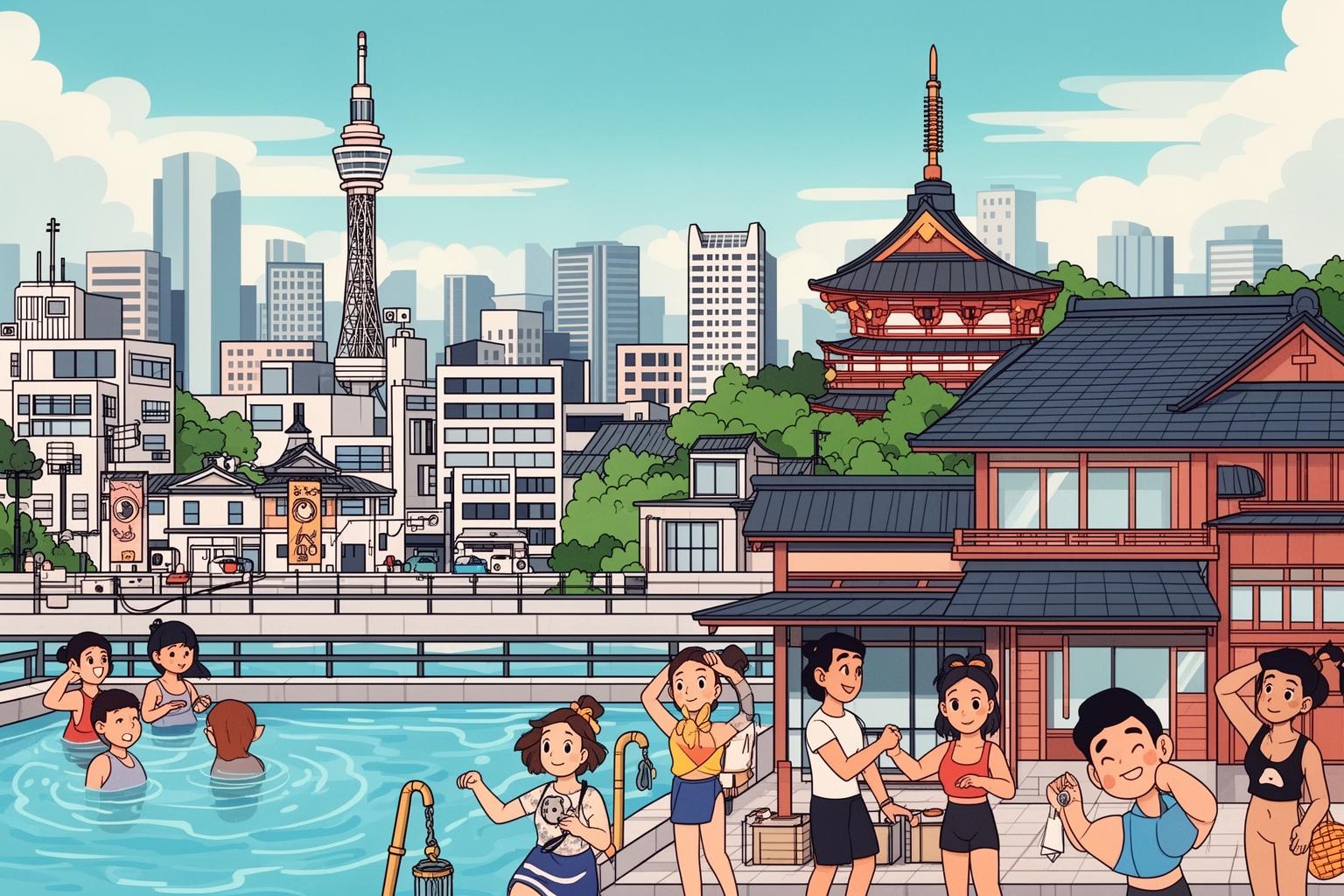
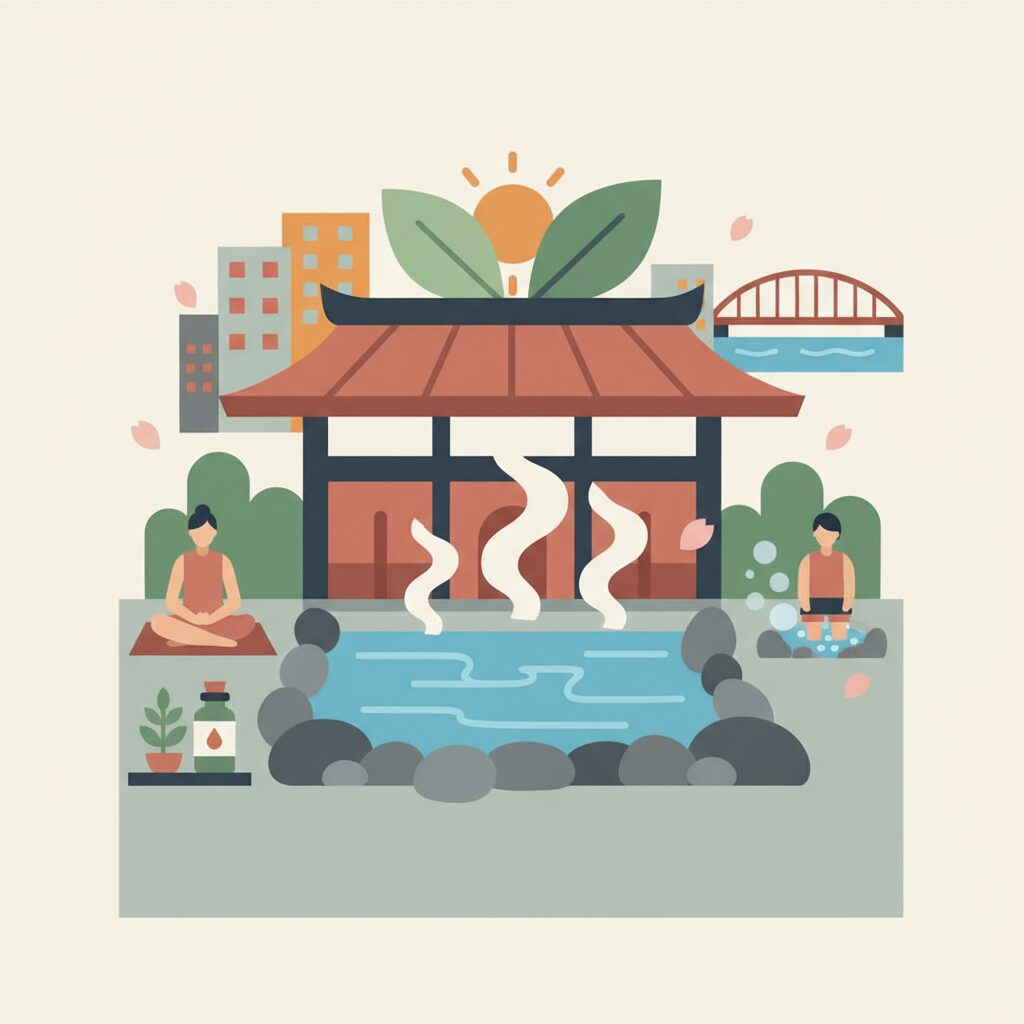
Your day was a whirlwind of pixels and pressure. You gazed at a screen, interpreting social cues through a tiny camera, your posture gradually molding to the shape of your chair. The world turned into a string of notifications and scheduled calls. Now, picture stepping through a fading ‘noren’ curtain into an alternate reality. The air is thick with steam, carrying the fresh scent of soap and cypress wood. The dominant sounds are not keyboard clicks but the gentle splash of water, the deep hum of old pipes, and the murmur of calm conversations. This is the sensory reset that the sentō provides. It’s a full-body revolt against the detached experience of remote work.
In Osaka, wellness isn’t a luxury item to buy. It’s a utility, as essential as electricity or water. The local sentō reflects this philosophy. You won’t find trendy juice bars or curated playlists here. Instead, you’ll find a place that has served its community for generations, with tiled walls featuring a majestic, if slightly worn, Mount Fuji or a tranquil carp pond. This isn’t an escape from reality; it’s a plunge into a deeper, more tangible one. It’s the city’s practical approach to mental health: for a few hundred yen, you can purchase an hour of peace, a complete disconnect that no meditation app can match. The physical act of soaking in hot water compels you to put your phone aside, to stop worrying about that one last email, and to simply be present in the moment. It’s a firewall for your mind, separating the workday from the rest of your life with a barrier of warm, cleansing steam.
“Hadaka no Tsukiai”: More Than Just Getting Clean
In Japan, there’s a concept called ‘hadaka no tsukiai,’ which means ‘naked communion’ or ‘naked relationship.’ It conveys the idea that when you remove your clothes, you also shed social status, titles, and pretense. In the bathhouse, a CEO and a construction worker stand as equals, both bodies embraced by the same soothing heat. This philosophy is embraced throughout Japan, but in Osaka, it takes on a distinct character—louder, livelier, and less restrained.
By contrast, the capital presents a different scene. A Tokyo sentō is often a place of quiet, individual reflection. People keep to themselves, honoring an unspoken space of personal distance, even in a communal setting. The silence operates as a mutual understanding. In Osaka, that quiet is frequently replaced by the cheerful rhythm of the Kansai dialect. You might hear grandfathers arguing about the latest Hanshin Tigers game, friends exchanging neighborhood news, and mothers sharing parenting advice. While you aren’t expected to participate, you’re welcome to listen. The sounds form an essential part of the experience, a reminder that you belong to a living, breathing community.
This reveals a key aspect of the Osakan spirit. The people here thrive on connection. The stereotype of the friendly, outgoing Osakan is no myth; it is a social reality cultivated in shared spaces like the sentō. The lack of formality, the straightforwardness, the easy laughter—all become clear when seen in their natural environment. In Osaka, ‘hadaka no tsukiai’ is not just about vulnerability; it embodies the joy of genuine, unpretentious human interaction. It serves as social glue, with the water as its medium.
The Sentō as a Neighborhood Hub: Osaka’s Living Room
To truly grasp Osaka, you need to view it not as a single sprawling city but as a tightly woven mosaic of fiercely independent neighborhoods, each with its own unique character and rhythm. The local sentō often serves as the heart of these neighborhoods, acting as an unofficial community hub. It’s more than just a place to bathe; it’s a communal living room where the social fabric of the area is continuously woven and re-woven every day.
Step inside, and you’ll witness this ecosystem in motion. The owner, frequently an elderly man or woman, sits on a raised platform called a ‘bandai,’ allowing visibility of both the men’s and women’s entrances. They greet regulars by name, make change for the vintage massage chairs, and watch attentively over their domain. The lobby functions as a social stage. Neighbors, fresh from their bath and wrapped in towels, may linger to catch a sumo match on a small television or share a cold bottle of fruit milk from the cooler. It’s here that information is shared, friendships are nurtured, and the community’s pulse is felt.
This stands in stark contrast to the more transient vibe of many parts of Tokyo. In Osaka, community isn’t an abstract idea; it’s a tangible reality upheld through daily rituals in places like the sentō. Foreigners often mistake Osaka’s roughness for a lack of refinement. But the worn wooden lockers, slightly cracked tiles, and old weighing scales aren’t signs of neglect—they are proof of a place filled with life, cherished and used by generations. These spaces cultivate a profound sense of belonging that is harder to find in a city that is always reinventing itself. The sentō stands as a bastion of continuity, quietly affirming that some things are too valuable, too essential, to change.
Navigating the Waters: A Foreigner’s Practical Guide to the Osaka Sentō
For newcomers, the sentō can feel daunting, full of unwritten rules and the potential for cultural missteps. Yet, in Osaka, the reality is much more forgiving. The key isn’t to master a complex set of rules but to embrace a basic principle: consideration for others. Here’s a practical guide to ease your first visit.
First comes the tattoo question, often the biggest source of anxiety. Historically, tattoos were linked to the yakuza, leading many establishments to enforce outright bans. While some very traditional places still hold to this, Osaka tends to be more relaxed. The city’s pragmatic, less judgmental attitude means many sentō have softened their stance, especially toward foreigners with non-threatening tattoos. Some might ask you to cover them with a small patch; many others won’t comment. The best approach is the Osakan way: be direct. Check their website or simply ask at the front desk. A polite, straightforward question will almost always receive a helpful response.
The procedure itself is straightforward. You pay a modest entry fee, usually around 500 yen, and receive a key to a locker in the changing room. Undress and store all your belongings, including your large towel, in the locker. Bring only a small wash towel and your soap into the bathing area. Before entering any of the tubs, you must wash yourself thoroughly—this is the most important rule. Find an empty washing station, which includes a stool and a faucet. The water in the soaking tubs is for relaxing, not cleaning. Washing first shows respect for the shared space. Sit on the stool to avoid splashing others—a small act of consideration.
Once clean, the real reward begins. Gently ease yourself into the tubs; avoid jumping or splashing. The main tub is typically very hot, offering a deep heat that eases muscle tension. Many Osaka sentō also offer a ‘denki-buro,’ or electric bath, which sends a low-voltage current through the water, creating a tingling, muscle-stimulating sensation. Though unusual, it’s a local favorite and an unforgettable experience. Your small towel should never go into the bath water; instead, most people fold it and place it on their head or set it on the tub’s edge. Relax, soak, and let the day unwind. When finished, a quick rinse is customary. Before returning to the changing room, use your small towel to dry off most of the water to keep the floor dry for others. These small, thoughtful gestures define the entire experience.
Reading the Room: The Unspoken Language of the Bath
Beyond explicit rules lies an unspoken language at the sentō. Although Osaka baths can be social, you are under no pressure to engage in conversation. Quietly enjoying the soak is completely acceptable and common. The key is feeling comfortable in the shared space, whether in companionable silence or lively chatter. You are sharing a vulnerable space, and the etiquette revolves around making that space pleasant for everyone.
A nod or small bow when entering or leaving a tub is a nice gesture. Offering a warm ‘arigatou gozaimashita’ to the owner on your way out is always appreciated. These small acts show you’re not just a customer but part of the community. Watch the regulars—how they interact and move through the space with practiced ease. You’ll learn more about the Osakan mindset observing them for five minutes than reading any guide. You’ll notice their directness, absence of pretense, and deep appreciation for the simple, restorative power of a hot bath. It’s a space that’s ‘ningen-kusai’—a wonderful term literally meaning ‘human-smelling’ but suggesting an earthy, authentic, and unvarnished humanity. In the sentō, you are invited to be just that: unapologetically and comfortably human.
Sentō vs. Super Sentō: Choosing Your Soak
It’s important to recognize the difference between the neighborhood ‘sentō’ and its larger, more commercial counterpart, the ‘super sentō.’ A super sentō is a contemporary, resort-style complex offering a variety of amenities: multiple themed baths, saunas, outdoor tubs (‘rotenburo’), restaurants, massage services, and relaxation lounges with manga libraries. They provide an excellent opportunity for a full day of indulgence and are experiences in themselves. Essentially, they serve as a form of entertainment.
In contrast, the neighborhood sentō serves a practical purpose. It’s the spot you visit on a Tuesday evening after a long day at work. It’s quick, efficient, and deeply embedded in everyday life. The experience is not about novelty or luxury; it’s about upkeep—of your body, your mind, and your bond with the community. Opting for a neighborhood sentō over a super sentō is like choosing a local diner over a themed restaurant. One offers an authentic, lived-in experience, while the other is a curated attraction. This preference for the practical, the genuine, and the well-used over the new and flashy is a fundamental Osakan trait. The city prioritizes substance over appearance, and the unassuming sentō perfectly embodies that spirit.
Finding Your Local Gem: An Osaka Exploration
While I could name a few famous or architecturally notable sentō, the real magic is in discovering your own. The true objective is to find ‘your’ sentō—the one just a ten-minute walk from your apartment, where the owner begins to recognize you. This journey of exploration offers a meaningful way to connect with the city on a deeper level. Explore various neighborhoods and experience their unique characters. A sentō in the retro, Showa-era streets of Nishinari will feel entirely different from one hidden in a quiet residential area of Tennoji.
Begin by spotting the tall chimneys that were once essential for heating the boilers; many still stand today as proud landmarks. Alternatively, watch for the distinctive temple-style roofs (‘miyazukuri’) that adorn many traditional bathhouses. Becoming a regular at a local sentō marks a key step in moving from a temporary visitor to a true local. It’s when you receive a silent nod from another regular, know which locker has the smoothest key, and savor that post-bath bottle of coffee milk that tastes like home. That’s when you’ve genuinely adapted to the rhythm of life in Osaka. You’ve found your neighborhood anchor, your personal refuge from the demands of the outside world.
The Verdict: Why the Sentō is the Ultimate Osaka Life Hack
Let’s go back to where we began: the close of your remote workday, a screen-weary mind, and the feeling of drifting aimlessly within your own home. The sentō offers the city’s solution. It’s a complete reset, a compulsory digital detox that you simply can’t bypass. For the cost of a cup of coffee, you receive an experience that is both deeply personal and strongly communal.
Beyond that, it serves as a living lesson in the culture of Osaka. It shows you the significance of community, the charm found in imperfection, the joy of genuine connection, and the profound wisdom embedded in a simple routine. It’s where the cliché of “friendly Osaka” sheds its tourist-brochure superficiality and reveals its true nature: a culture rooted in the daily affirmation of shared humanity within common spaces. It’s not about displaying friendliness; it’s about living it, naturally and effortlessly. Walking home from the sentō on a cool evening—your skin tingling, your mind calm, and your body glowing with a deep, radiant warmth—you experience it. You feel clean, not just externally, but completely through. You feel connected, not only to your own body but to the steady, rhythmic heartbeat of the city itself. And that is the ideal way to end any workday.