
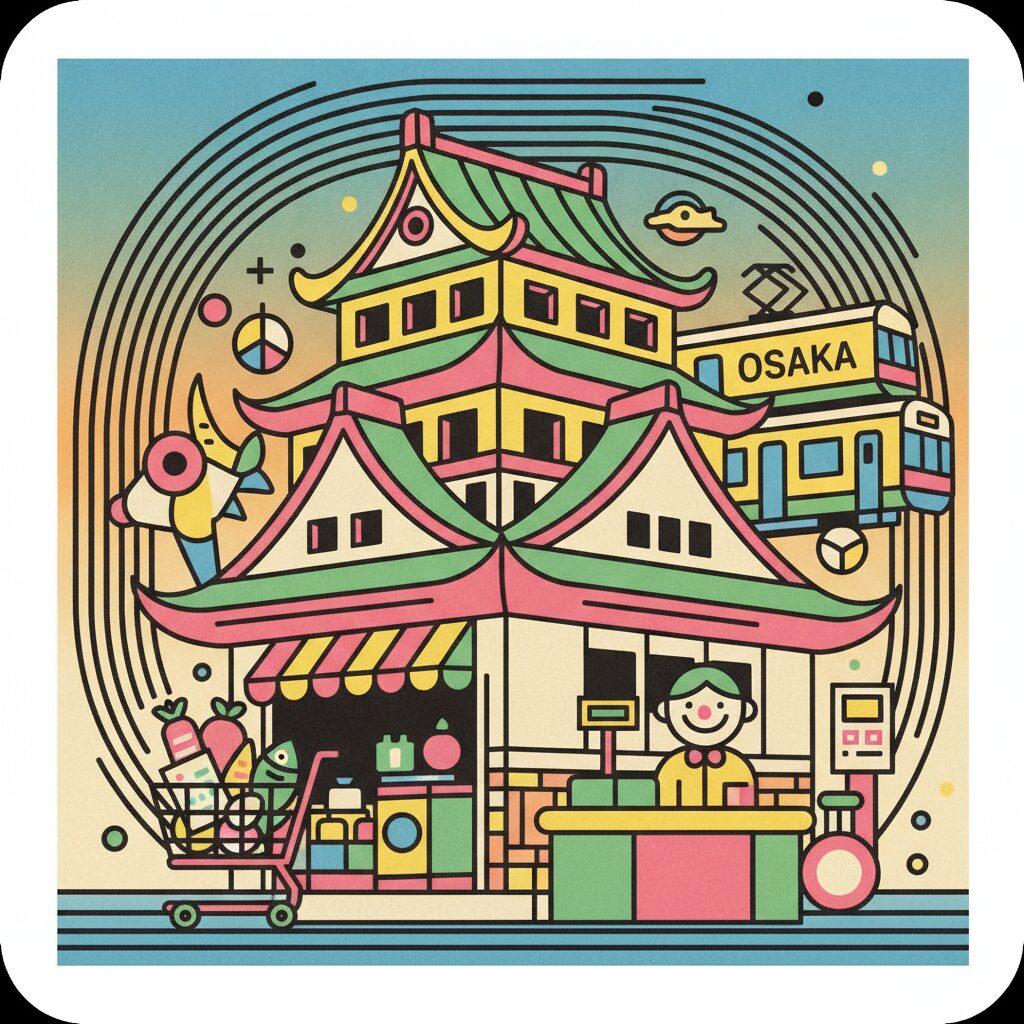
Walk into a Super Tamade for the first time, and your senses will get a workout. It’s a full-frontal assault of neon yellow and screaming red. The lights are blinding, borrowed from a pachinko parlor that lost a fight with a rave. The music is a chaotic mix of tinny J-pop and a relentlessly cheerful store jingle, all cranked to eleven. Aisles are narrow, piled high with products under handwritten signs shouting prices in thick, explosive marker strokes. It feels less like a grocery store and more like a fever dream about a Las Vegas casino designed by someone on a very tight budget. Your first instinct might be to turn around. Your second, if you’re from a place like Tokyo, might be to wonder, “Is this even legal?”
But then you see it. The holy grail. A sign advertising an egg for one yen. A single pack of udon noodles for one yen. A can of coffee, one single, solitary yen. This isn’t a typo. This is the entire point. This is Super Tamade’s sacred pact with the people of Osaka. And it’s not just a marketing gimmick; it’s a masterclass in the city’s entire philosophy. To understand why a supermarket would intentionally lose money on a single item, you have to understand the deep-seated, fiercely proud, and often misunderstood cost-consciousness that fuels this city. Forget the polite, curated perfection of a Tokyo department store basement. Tamade is raw, loud, and unapologetically obsessed with value. It’s the real Osaka, served up under fluorescent lights. This is where you come to learn how the city’s heart truly beats—not in its castles or its tourist traps, but in the relentless, joyful hunt for a bargain.
Yet even as Super Tamade champions Osaka’s relentless quest for bargains, a striking evolution in luxury hotels in Osaka is redefining the city’s post-Expo economic landscape.
Decoding the Tamade Experience
A Symphony of Chaos
Let’s be clear: the aesthetic of Super Tamade is deliberate. Every decision serves one purpose and one purpose only: to show that no money is wasted on unnecessary things. The bare concrete floors? They’re easy to clean and don’t require replacement. The exposed wiring and stark fluorescent tubes? They provide light, and that’s their sole function. The handwritten signs, often on brightly colored paper, feel more urgent and genuine than professionally printed placards. It’s a visual language that shouts “deal.”
In many other cultures, and certainly much of Japan, this lack of polish would be viewed as a sign of low quality or untrustworthiness. But in Osaka, it’s interpreted quite differently. It’s a sign of honesty. The reasoning is straightforward and compelling: a store that spends heavily on interior design, mood lighting, and elegant displays has to recoup those costs somewhere. And that somewhere is your wallet. Tamade’s chaotic presentation promises that every possible yen has been squeezed out of overhead and funneled directly into lowering prices. It’s a rejection of style in favor of function, a deeply embedded Osaka characteristic. The store isn’t pretty, nor does it aim to be. It aims to be cheap, and in that, it becomes beautiful.
The Anatomy of a 1-Yen Sale
The famous 1-yen sale isn’t a free-for-all. It’s a calculated piece of retail brilliance. To earn the privilege of buying that one-yen item, you generally have to spend a minimum amount, usually 1,000 yen, on other groceries. This is known as a loss leader—an item sold below cost to attract customers. But in Osaka, it’s more than a business strategy; it’s a form of entertainment, a game between the store and the shopper.
Securing that 1-yen item feels like a triumph. You’ve figured out and won the system. You leave the store not only with your groceries but with a sense of achievement. You were savvy enough to capitalize on the deal. This taps directly into the Osakan spirit of playful competition and the thrill of the hunt. The items themselves are ordinary—a block of tofu, a small bag of bean sprouts, a fish cake—but their symbolic value is enormous. They signify a successful transaction, a moment when you, the consumer, came out ahead. It turns the chore of grocery shopping into a small adventure. You went, you saw, you conquered… and saved 99 yen on a carton of milk.
More Than Just a Bargain: The Osaka Mindset
Kechi vs. Shimatsu – The Art of Frugality
To grasp Osaka‘s attitude toward money, you need to understand the distinction between two important terms: kechi and shimatsu. Kechi means stingy or miserly and carries a negative connotation, referring to someone who selfishly hoards money and refuses to spend it even when necessary. No one wants to be labeled kechi. In contrast, shimatsu is a high compliment. It signifies being frugal, resourceful, economical, and eliminating waste. It’s about being thoughtful and intentional with your resources. A person practicing shimatsu doesn’t just save money; they manage it wisely.
Super Tamade embodies the spirit of shimatsu. Shopping there isn’t about being cheap; it’s about being smart. It’s about recognizing that an onion is just an onion, whether it’s sold in a flashy yellow building or a stylish, minimalist grocery store. Why pay more for packaging? This way of thinking traces back directly to Osaka’s history as shōnin no machi—the city of merchants. For centuries, this was Japan’s commercial center, where fortunes were won and lost on slim margins. Merchants had to be shrewd, practical, and masters of their finances. They couldn’t afford sentimentality or be influenced by appearances. They valued substance, and that legacy remains alive in the aisles of Super Tamade.
The “Cost-Performance” Obsession
Throughout Japan, you’ll hear the term kosupa, a shortened form of the English phrase “cost performance,” which measures value for money. While this concept is familiar nationwide, Osaka has elevated it to an art form. Here, kosupa is not merely a factor in decision-making; it’s often the single most important one. An Osakan won’t just enjoy a delicious meal; they’ll delight in the fact that it cost only 500 yen. They’ll proudly showcase a new jacket with a triumphant grin, announcing they got it for 70% off.
This stands in sharp contrast to the social norms of a city like Tokyo. In Tokyo, greater emphasis is often placed on brand, status, and presentation. Admitting you bought the cheapest option can feel embarrassing, as if you couldn’t afford the “proper” one. In Osaka, however, you’re not just a thrifty shopper for snagging that deal; you’re a hero. Friends will ask where you found it, impressed by your savvy. This isn’t about being unable to afford more expensive items; it’s about the genuine satisfaction of not needing to. It’s a celebration of economic savvy, and Tamade is its daily festival.
Super Tamade in the Urban Landscape
Not Your Tourist’s Osaka
You won’t find a Super Tamade tucked away among the high-fashion boutiques of Grand Front Osaka or overlooking the scenic Dotonbori canal. These stores are deliberately located in the genuine neighborhoods where people truly live, work, and raise families. They flourish in areas like Nishinari, Tengachaya, and around the gritty, vibrant streets of Shin-Imamiya. These are far from the polished, airbrushed parts of the city that appear in travel brochures.
This is intentional. Tamade serves the communities that rely on it most: students on tight budgets, young couples saving for a home, elderly residents living on fixed pensions, and laborers grabbing an affordable, hearty meal after a long day. Visiting a Tamade offers a glimpse into the raw, everyday reality of Osaka life. It’s worlds apart from the carefully curated experiences found on the tourist trail. It’s loud, slightly chaotic, and undeniably authentic Osaka. It’s the city without its makeup on, and that makes it all the more captivating.
How Locals Actually Shop
No one in Osaka does all their shopping at just one store. That would be inefficient and go against the principles of kosupa. The true Osakan shopper is a savvy hunter. They might start at Tamade because its flyer advertised shockingly cheap chicken breasts and that iconic 1-yen pack of noodles. With those deals secured, they might then visit a local shotengai (shopping street) for fresher vegetables from a trusted vendor, and perhaps stop at another supermarket for a specific brand of soy sauce they prefer.
This multi-stop strategy embodies the essence of shimatsu. It’s about knowing exactly where to find the best value for each item. Tamade acts as the cornerstone of this system—the place you turn to for unbeatable bargains that make up the bulk of your weekly shopping. It’s also a lifesaver when it comes to prepared foods. The bento boxes, fried items, and sozai (side dishes) are famously cheap and surprisingly filling. For someone working late or just not wanting to cook, a 250-yen bento from Tamade isn’t a lonely bachelor meal; it’s a clever, economical choice that saves both time and money for other priorities.
What Foreigners Often Misunderstand
“Is it Safe? Is it Clean?”
For many non-Japanese residents, the first visit to Tamade can feel like a true culture shock. The chaotic environment, the lack of aesthetic polish, and the incredibly low prices might raise the question: is this food safe to eat? The harsh lighting can make produce appear slightly dull, and the sheer quantity of items packed into a limited space can seem overwhelming and disorderly.
Here’s the straightforward truth: relax. Japan enforces exceptionally high, nationwide food safety standards. Super Tamade follows the same health and safety rules as the most upscale department store food hall in Ginza. The visual clutter is a deliberate business tactic, not evidence of poor hygiene. The floors are clean, the refrigerators are cold, and the food is safe. You just need to separate the packaging from the product. Tamade’s genius is in stripping away all unnecessary elements, and for some, that rawness takes some adjustment. It’s not unclean; it’s simply unvarnished honesty.
The “Friendliness” Myth vs. Practical Communication
There is a common stereotype that people in Osaka are friendlier than those in Tokyo. This is an oversimplification. It’s more accurate to say they are more direct, less formal, and more openly expressive. Their communication style is pragmatic and straightforward. This is evident at the Tamade checkout.
The cashier probably won’t greet you with the elaborate, layered honorifics you might hear in a more formal setting. The transaction will be quick, efficient, and to the point. They’ll scan your items rapidly, state the total, take your payment, and give you your change. It’s efficiency in action. This isn’t rudeness; it’s practicality. The aim is to move everyone through the line as swiftly as possible. This directness characterizes Osaka communication. People value honesty and clarity over decorative politeness. They say what they mean and appreciate it when you do the same. In Osaka, wasting someone’s time with unnecessary formalities is viewed as a far greater offense than skipping a few polite phrases.
Living the Tamade Life: A Practical Guide
Your First Mission
Ready to get started? Here’s how to tackle your first Tamade run like an expert. First, check the chirashi (flyer) online or by the entrance. This is your treasure map, highlighting the day’s best deals and the 1-yen specials. Try to go on a weekday if you can; weekends tend to be hectic. Bring your own reusable bags since you’ll often be charged for plastic ones. While most places now accept cards, having cash on hand is always wise in these types of stores—it’s quicker and sometimes preferred.
Move through the aisles with purpose. Grab the items you know are excellent deals. Don’t hesitate to gently push your way through a crowd to reach the discounted tofu. This is a contact sport. When you arrive at the checkout, have your wallet ready. The process will be finished before you realize it. Leave with your bag of groceries and your 1-yen treasure, feeling the glow of a true Osaka victory.
Embracing the Kosupa Lifestyle
In the end, Super Tamade is more than just a place to buy cheap food. It’s a living lesson in a different way of valuing things. It teaches you to look beyond the shiny surface and focus on what’s truly important underneath. As an outdoor enthusiast, I live by this approach. Before heading out for a long hike up Mt. Ikoma or Mt. Kongo, I don’t stock up on expensive energy bars from a trendy outdoor brand. Instead, I’m at Tamade, picking up a few giant onigiri for 80 yen each, a bottle of tea for 60 yen, and maybe a pack of inexpensive peanuts. The fuel is what counts, not the label on the package. The objective is the summit, not impressing fellow hikers with my gear.
Living in Osaka means adopting this mindset. It means finding joy in a good bargain, celebrating thriftiness, and understanding that true wealth isn’t measured by how much you spend, but by how wisely you live. Super Tamade, in all its neon-yellow brilliance, perfectly captures this city’s practical, unpretentious, and cleverly resourceful spirit. Learning to love it is learning to love the very heart of Osaka.








