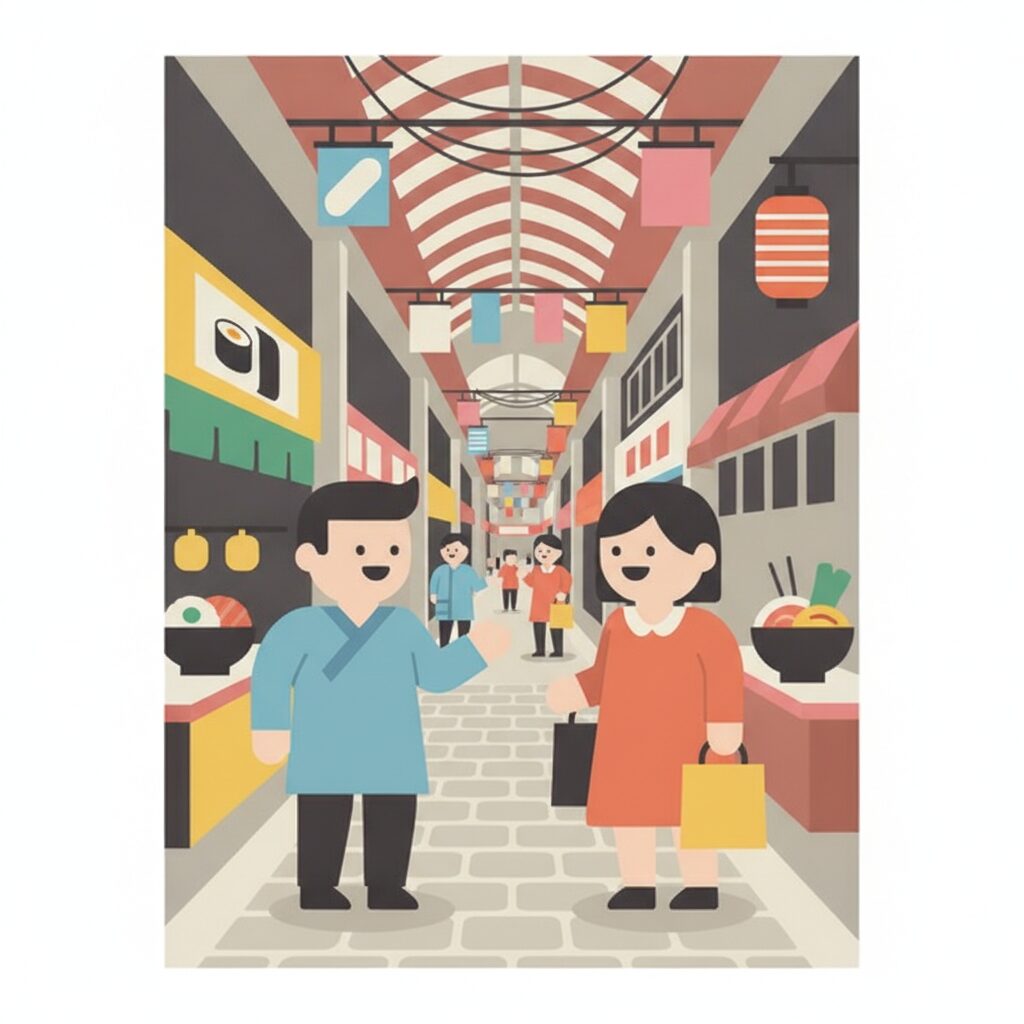
Walk into a shop in Tokyo, and you’re met with a performance of perfect, polished hospitality. It’s a silent, efficient ballet. You select your item, you approach the counter, and a series of perfectly enunciated, deeply respectful phrases are delivered. It’s clean, it’s smooth, and it’s completely impersonal. You are a customer, they are staff, and a thick wall of formal etiquette stands between you. Now, try buying a bag of oranges in an Osaka shotengai. Before you’ve even made your choice, the woman running the stall, her voice a gravelly mix of warmth and mischief, might call out, “You’re lookin’ a bit tired today, ain’t ya? These’ll fix you right up. Sweetest ones we’ve had all year!” You haven’t just entered a shop; you’ve stepped onto a stage. The transaction is secondary. The main event is the conversation, the connection, the glorious, chaotic, human mess of it all. This is the heart of daily life in Osaka, a city that trades in talk as much as it does in goods. The neighborhood shotengai, the covered shopping arcades that snake through the city like vital arteries, are where you see this philosophy in its purest form. It’s not just about buying food; it’s about participating in the life of the city. It’s a daily ritual that explains more about the soul of Osaka than any guidebook ever could.
Osaka’s lively street interactions are mirrored in its cherished kissaten, which have evolved into intuitive community spaces serving as vital social hubs for locals.
The Transaction is Just the Excuse
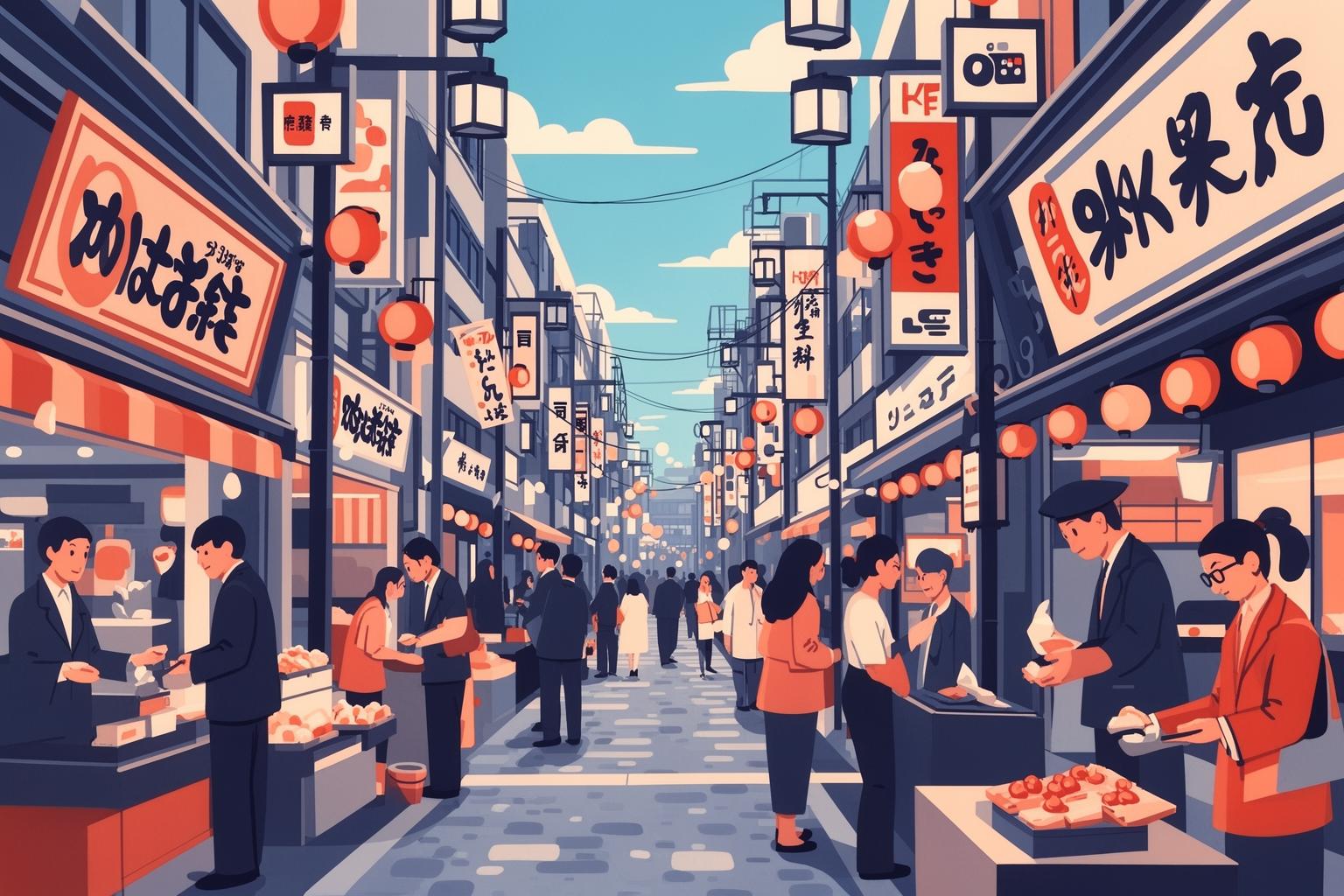
In most parts of the world, especially in Tokyo, commerce aims for efficiency. The interaction between buyer and seller is streamlined to minimize friction. You get what you need, pay, and leave. It’s a sterile process designed for speed and anonymity. In Osaka, however, that friction is the whole point. The act of purchasing is simply a catalyst for social exchange. The chitchat doesn’t lead up to the sale; rather, the sale provides an excuse for the chitchat.
Watch an elderly woman buying daikon radish at a family-run vegetable stand—this exchange perfectly illustrates the philosophy. It starts with the weather, moves on to the shopkeeper’s grandson’s health, detours into a complaint about last season’s cabbage, and only after a good ten minutes does it finally shift to the daikon itself. The shopkeeper asks what she’s making—oden, perhaps? If so, this daikon is better; it holds its shape well, and she should cut it thick. He’s not just selling a vegetable; he’s helping shape her dinner. He’s invested. Such interaction is unthinkable in a brightly lit, sterile supermarket where produce sits silently under fluorescent lights. Here, every item has a story, and the shopkeeper is its storyteller.
For a foreigner, this can be surprising. You’re used to being left alone, browsing in peace. Here, you are noticed, addressed, and engaged. A fishmonger won’t simply point to the mackerel; he’ll hold it up, admire its sheen, say it was caught that morning, and ask how you plan to prepare it. If he disapproves of your method, he’ll suggest a better one. This isn’t an upsell; it’s a sincere, almost paternal, concern for both his fish and your dinner table. The transaction becomes a relationship, however brief, founded on a mutual passion for good food and good living.
The Language of the Arcade: More Than Just a Dialect
Much attention is given to Osaka-ben, the city’s unique dialect. However, the true distinction lies not just in the vocabulary but in the rhythm. The language used in the shotengai is straightforward, casual, and warmly familiar. It skips over the layers of polite, honorific language (keigo) that prevail in other regions of Japan. This isn’t because Osakans are impolite; rather, they value connection more than formality. Formal speech creates distance, and distance undermines a good deal or a friendly conversation.
The classic greeting exchanged between shopkeepers is “Moukarimakka?” which literally translates to “Are you making a profit?” The typical response is “Bochi bochi denna,” meaning “So-so, can’t complain.” A foreigner might misinterpret this as a nosy inquiry into personal finances, but it’s quite the opposite. It’s Osaka’s equivalent of “How are you?”—a conversational handshake, a way to start communication with a shared, knowing nod to their merchant roots. It’s a greeting grounded in a community where everyone’s business is, to some extent, everyone’s business.
The Art of the Tease
At the heart of this communication style is playful teasing, a form of verbal sparring that fosters rapport. It’s an offshoot of the manzai comedy tradition, with its boke (the silly fool) and tsukkomi (the quick-witted straight man), ingrained in the city’s character. A shopkeeper might notice you hesitating between two types of tofu and quip with a smile, “Can’t make up your mind? Don’t worry, they’re both good for you, and you look like you could use it!” In Tokyo, such a remark might violate customer service norms. In Osaka, it’s an invitation. It shows you’re not just a faceless customer but someone worth joking with. The best response isn’t offense, but to join in, returning a gentle jab. “I’ll need the energy to carry all the stuff I’m buying from you!” This banter is a sign of warmth. Silence and formality belong to strangers you don’t care about; teasing means you’re part of the in-group.
The Culture of “Omake”: A Gift with a Purpose
After the chat, jokes, and payment, you’ll often experience the charm of omake. While bagging your groceries, the shopkeeper might slip in an extra potato, a handful of green onions, or a piece of candy. “Here, this is an omake,” they’ll say, offering a little something extra for free. This isn’t a planned discount or a “buy ten, get one free” deal. An omake is a spontaneous act of goodwill. It’s a tangible sign of the relationship you’ve just nurtured. It says, “Thanks for the chat. I enjoyed our time. Please come again.” It’s a reward not for your purchase, but for your engagement. You don’t earn an omake by shopping silently and efficiently; you earn it by being a good conversational partner. It cements the social bond and sparks loyalty that no supermarket rewards card could ever match.
A Merchant’s Mindset in a Modern World
To understand why Osaka functions this way, you need to look back. While Tokyo (then Edo) was a city of samurai, governed by strict hierarchy and formal conduct codes, Osaka was the city of merchants. It was known as the “Nation’s Kitchen” (Tenka no Daidokoro), serving as the commercial center where rice and goods were exchanged. In this environment, success relied not on birthright but on wit, charisma, and the ability to cultivate relationships. Deals were made not through formal ceremonies, but through trust, negotiation, and mutual understanding. This pragmatic, people-oriented merchant spirit still runs deeply through the city’s identity.
Practicality Over Polish
An Osakan prioritizes practical results over perfectly polished procedures. If straightforward talk and friendly bargaining lead to a mutually beneficial outcome, that is the most sensible approach. The Tokyo focus on maintaining an impeccable, unruffled facade (tatemae) can seem inefficient and somewhat absurd to Osakans. Why waste time with layers of polite pretense when you can simply be direct? This often results in the stereotype of Osakans being loud or aggressive. However, it’s not aggression but a commitment to honesty. They’re not aiming to be rude; they aim to be genuine. This straightforwardness extends beyond the shotengai. In business meetings and everyday exchanges, there is a refreshing lack of pretense. People speak plainly, which can be a welcome change once you adjust to its frequency.
The Shotengai as the Neighborhood’s Living Room
These arcades are much more than commercial areas. They function as public squares, the communal living rooms of their neighborhoods. They are places where the boundary between public and private blurs. You’ll find shop owners pulling up a stool to chat with the proprietor across the way. Children use the long covered walkway as a playground on rainy days. Elderly residents pause to exchange the latest gossip, leaning against a pickled vegetable display as if it were their own kitchen counter. This isn’t anonymous urban life—it’s community life lived openly. When you shop here, you’re not just a customer; you’re a temporary resident of this shared space. Your presence is noted, your preferences remembered. The butcher knows you like your pork sliced thin. The baker knows your child’s favorite melon pan. This intricate network of personal, small-scale knowledge transforms a sprawling city of millions into a series of interconnected villages.
How to Join the Performance: A Guide for the Uninitiated
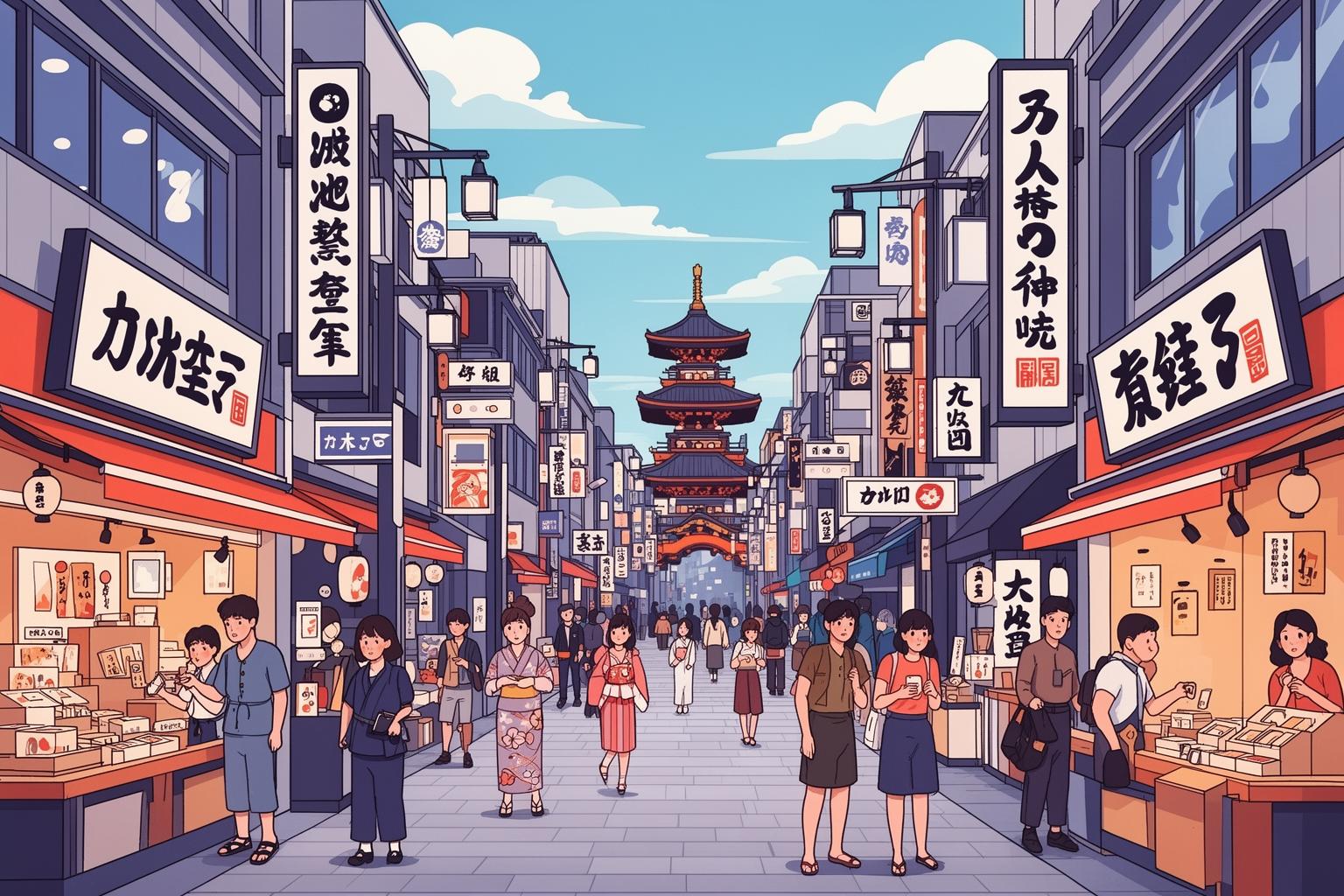
For a foreigner accustomed to the invisible barriers of urban life, the shotengai can feel daunting. The direct questions, the familiar tone, and the assumption of immediate closeness—it can all come across as a social challenge you’re unprepared for. The key is to realize that this isn’t a challenge at all; it’s an open invitation.
Reading the Signals
The most common mistake is confusing familiarity with rudeness. When a shopkeeper asks where you’re from or remarks on your Japanese, they aren’t being judgmental. They are seeking an opening, a conversational thread to pull. They are curious. In a culture that often feels reserved, this is an act of proactive hospitality. Embracing it, rather than withdrawing, is how you close the gap. Smile. Respond to their questions. Ask one of your own. The moment you show a willingness to engage, the atmosphere changes. You stop being a tourist or outsider and become just another person in the neighborhood.
Your Role in the Scene
You don’t need to be fluent in Japanese or a master of manzai comedy to join in. The effort matters most. Start with the basics. A warm “Konnichiwa!” upon entering a shop, and a hearty “Maido!” or “Ookini!” (Osaka’s way of saying “Thank you”) when leaving. Ask a simple question about a product: “Kore wa nan desu ka?” (What’s this?) or “Oishii?” (Is it tasty?). This universally signals your openness to interaction. The shopkeeper will likely take it from there, glad to have a new audience. Don’t hesitate to laugh at their jokes, even if you only partly understand them. Laughter is a universal language, and in Osaka, it’s the most valuable currency. And when offered that omake, accept it with a sincere thank you. It’s the final act in your short play, the closing of a loop of goodwill.
The Enduring Soul of the City
Naturally, the shotengai faces the same challenges as small businesses everywhere. Large supermarkets provide one-stop convenience, and online retailers bring goods right to your doorstep. The younger generation doesn’t always share the same attachment to these daily routines. Some arcades are quieter than they used to be, their paint peeling and fluorescent lights flickering over vacant storefronts.
Still, they endure. They persist because they offer something that cannot be optimized, automated, or delivered in a cardboard box: human connection. The shotengai is the living, breathing essence of Osaka’s spirit. It is loud, pragmatic, deeply human, and founded on the simple yet radical idea that a city is more than just a collection of buildings—it’s a network of people. To shop in a shotengai is to realize that in Osaka, a simple transaction is never just a transaction. It is an opportunity to talk, to laugh, to connect, and to remind yourself that you belong to something greater. It is the art of living, practiced every day, one conversation at a time.