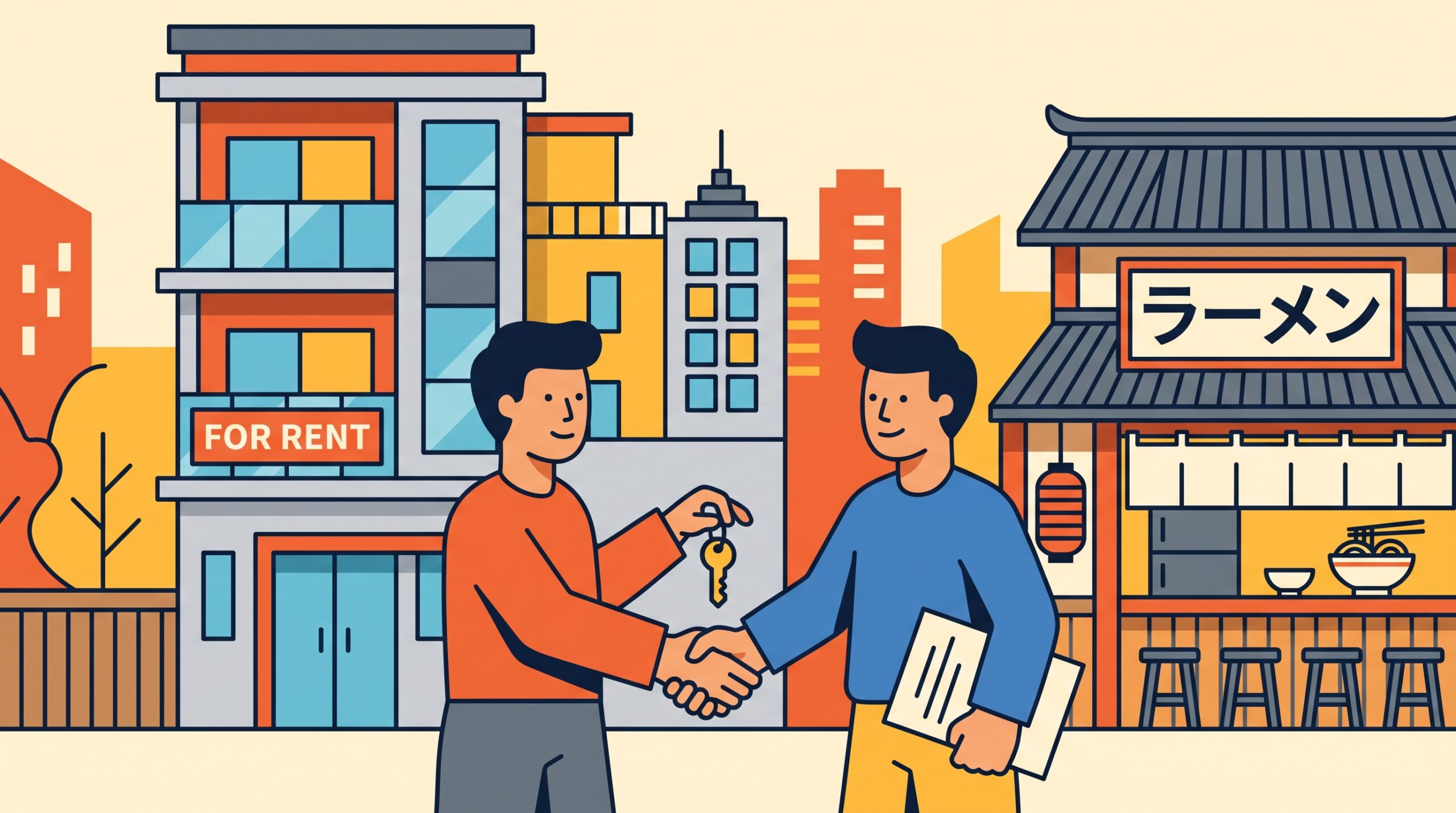
Moving to a new city always brings its share of administrative headaches, but relocating to Japan introduces a completely different layer of cultural complexity. For many expats, international students, and digital nomads arriving in the country, finding an apartment feels less like signing a straightforward business contract and more like being interviewed for adoption into a strict, traditional family. In Western countries, the tenant-landlord relationship is almost purely transactional. You pay a security deposit, you sign a lease agreeing not to burn the place down, you pay your rent on the first of the month, and you might never see the property owner in person. The boundaries are clear, legally defined, and entirely devoid of emotional obligation.
Japan operates on a vastly different wavelength. Housing here is deeply rooted in social harmony, mutual respect, and an intricate web of unspoken obligations. When you rent an apartment in Japan, you are not merely purchasing the right to occupy a physical space; you are asking a local property owner to trust you with a piece of their livelihood and their reputation in the neighborhood. This dynamic can be incredibly intimidating for foreign residents navigating the system for the first time. The sheer volume of paperwork, the unfamiliar fees, and the intense scrutiny can feel overwhelming. You might find yourself wondering why you need to provide a guarantor, why you have to pay a non-refundable gift fee just to move in, or why your trash habits are suddenly a matter of intense public interest.
But when you bring this process to Osaka, the third-largest city in Japan and the beating heart of the Kansai region, the cultural flavor changes once again. Osaka is famous for being Japan’s traditional merchant city. It is loud, pragmatic, deeply human, and fiercely independent. The people here move faster, speak louder, and laugh harder than their counterparts in Tokyo. This regional personality bleeds directly into the local real estate market. Navigating the tenant-landlord culture in Osaka requires understanding not just the rigid rules of Japanese society, but also the warm, direct, and sometimes wonderfully nosy nature of the Kansai people. To thrive here, you need to look past the ink on your lease and understand the unwritten social contracts that govern daily life. This is not about memorizing real estate jargon; it is about learning how to communicate, how to build trust, and how to embrace the unique human connections that make living in Osaka an unforgettable experience.
Understanding the Japanese Tenant-Landlord Dynamic
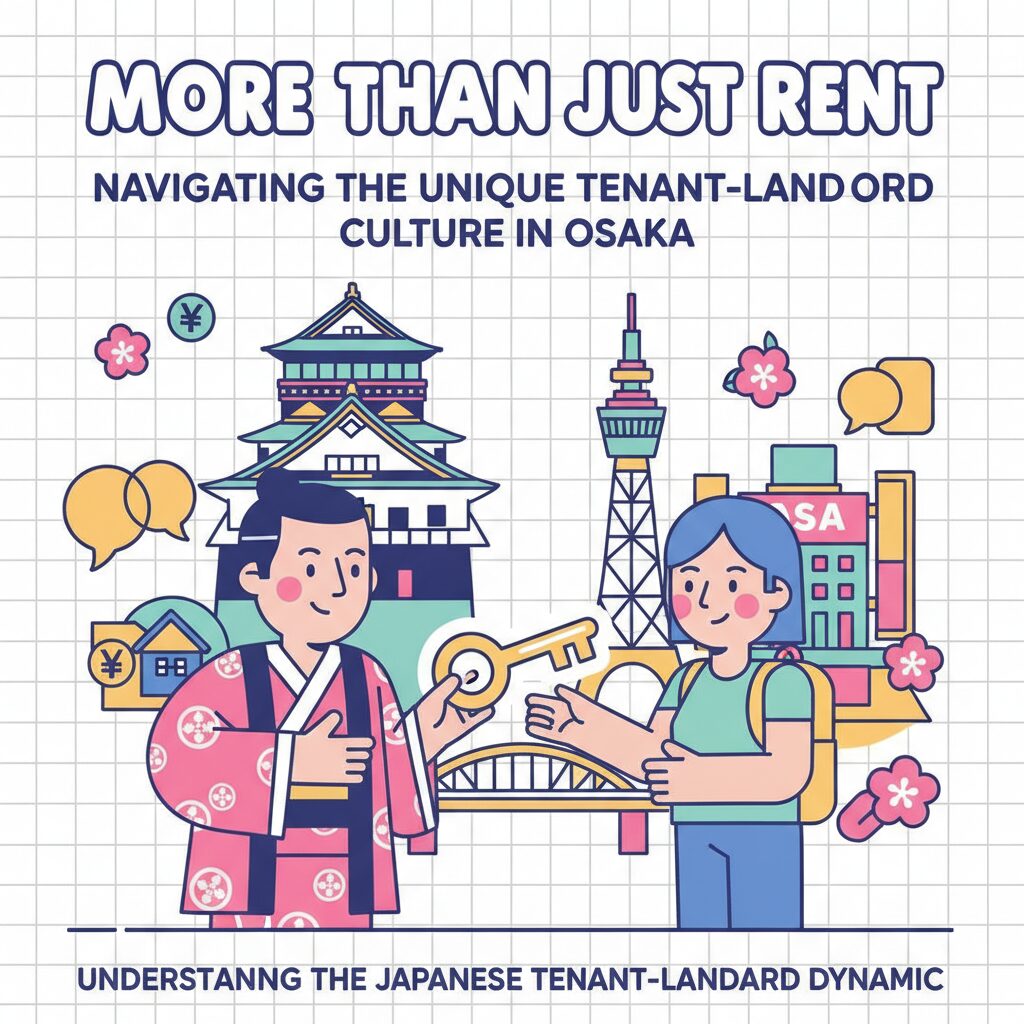
The Cultural Meaning of “Reikin” (Key Money)
Among the financial challenges foreign residents encounter when moving to Japan, none causes more frustration and confusion than Reikin, often translated as Key Money. To those unfamiliar with it, this fee seems like an arbitrary penalty. Unlike a security deposit, which is held to cover potential damages and may be refunded, Reikin is a non-refundable payment given directly to the landlord when signing the lease. It often amounts to one or two months’ rent, disappearing before you even unpack your first box. From a strictly Western financial viewpoint, it seems illogical. Why should you pay a substantial fee just for the privilege of being allowed to pay rent?
To grasp the concept of Reikin, you need to look back in time. The practice is widely believed to have originated after the Great Kanto Earthquake of 1923 and became firmly established during the severe housing shortages after World War II. When intact, livable houses were extremely rare, securing a landlord willing to rent to you and your family was seen as a monumental favor. Paying Key Money was a literal way to express gratitude—a cultural gesture saying thank you for providing shelter when the landlord could have chosen someone else. It acknowledged the landlord’s kindness and authority in a desperate housing market.
Although Japan’s current real estate market no longer faces such postwar scarcity, the cultural momentum behind Reikin remains strong. Today, it serves as a psychological filter. For conservative landlords, applicants who refuse to pay Key Money might be seen as disrespectful of Japanese customs or potential troublemakers. By willingly paying Reikin, you signal that you understand the rules, respect the landlord’s authority, and are financially stable enough to honor housing traditions. While zero-Key-Money apartments are becoming somewhat more common, especially in competitive urban areas targeting young professionals, knowing the historical significance of this fee helps ease the sting of paying it. It frames the payment not as an exploitative charge, but as a traditional entry ticket into a society that highly values social hierarchy and gratitude.
Why Landlords Rely on Guarantors (Hoshousha)
Another major obstacle for foreign residents is the absolute requirement of a Hoshousha, or guarantor. In many Western countries, proving your income, showing a good credit score, and providing a sizable security deposit can secure an apartment. In Japan, however, financial stability alone is rarely sufficient. Landlords want social collateral. A Hoshousha is a person, usually a Japanese citizen with a steady income, who legally agrees to assume all your financial and moral obligations if you fail to meet them. If you leave without paying rent, the guarantor pays. If you accidentally cause a fire, the guarantor pays.
But the guarantor system is about much more than financial security; it is a character reference. In a society that values trust and collective harmony, landlords want assurance that someone respectable is willing to vouch for you. They want to know you are meaningfully connected to the community. For Japanese citizens, this role is typically filled by a parent or close relative. For foreigners, however, finding someone willing to accept this significant legal responsibility is often impossible, leading to the widespread use of guarantor companies.
Even when using a guarantor company, the underlying philosophy remains the same. The landlord is inherently risk-averse. They fear the possibility of a foreign tenant abruptly returning to their home country, leaving unpaid bills and a damaged apartment beyond Japanese legal reach. The guarantor system acts as a safety net—an institutionalized reassurance that the landlord will not be left responsible. Understanding this deep-rooted fear of abandonment and social disruption is essential. When a landlord requests extensive documentation, emergency contacts in Japan, and a thorough background check via a guarantor company, they are not necessarily being xenophobic or overly demanding; they are trying to reconcile their traditional need for social collateral with your status as a newcomer to their society.
Unwritten Rules for Renting in Japan
The Ultimate Test: Strict Garbage Sorting Etiquette
If there is one aspect of daily life in Japan that truly tests your integration into society, it is how you handle household waste. Garbage collection in Japan is highly localized, strictly regulated, and closely monitored. You cannot just toss all your trash into a black plastic bag and throw it into a dumpster whenever you want. Instead, waste must be carefully separated into categories: burnable, non-burnable, recyclable plastics, PET bottles, glass jars, aluminum cans, cardboard, and oversized items. Each category has a designated collection day, often with a specific time window in the early morning during which it must be put out.
This strict system is not just an environmental effort; it functions as a community activity. The local garbage collection point is typically overseen by the Chonaikai, the neighborhood association. These are local residents, often retirees, who take great pride in keeping the streets clean and orderly. They will notice if a transparent bag containing an unauthorized aluminum can is placed out on a burnable garbage day. They inspect the bags, and if the rules are broken, they put a red rejection sticker on the bag and leave it in full view on the curb.
This brings us back to the landlord. If a tenant repeatedly breaks garbage sorting rules, the neighborhood association will not hesitate to report the issue to the property owner. For a Japanese landlord, receiving a complaint from the Chonaikai means a significant loss of face, as it implies they have allowed a disruptive tenant into the community. Therefore, when your landlord or real estate agent spends twenty minutes carefully explaining the garbage calendar, you should pay close attention. Mastering local trash sorting is the most effective way to silently show your landlord and neighbors that you respect the community, their time, and their customs. It proves you are a responsible adult capable of following the unspoken social rhythms of the neighborhood.
Managing Noise Levels and Thin Walls
Japanese society operates on a core principle of avoiding Meiwaku, which means causing trouble or being a nuisance to others. This principle is especially important in apartment living, where the physical structure demands careful consideration. Many apartment buildings in Japan, particularly older or more affordable ones, are made with wooden or light steel frames. The walls between units, and the floors above and below, are often surprisingly thin.
Because the physical barriers against noise are weak, cultural barriers must be strong. There is a deeply ingrained expectation of quiet that settles over residential neighborhoods once night falls. Running a washing machine or vacuum cleaner after eight or nine o’clock at night is seen as a serious breach of etiquette. Playing loud music, hosting noisy dinner parties, or even talking loudly on the phone near an open window can quickly lead to anonymous complaints slipped into your mailbox or, worse, a direct call to your landlord or the police.
For many Westerners used to thick brick walls or a more relaxed attitude toward evening socializing, this quiet culture can feel restrictive. It requires a conscious adjustment in how you move within your home. You learn to walk softly rather than stomping. You close doors gently. You become very aware of your television’s volume. Landlords dread noise disputes because they sour the building’s atmosphere and can drive out long-term, quiet tenants. By actively maintaining peace, you act as a guardian of the building’s harmony—an effort your landlord will deeply appreciate.
Proper Use of Balconies and Common Areas
In many parts of the world, an apartment balcony is seen as a private outdoor extension of the living space—a place to grill, store bicycles, or socialize on a warm evening. In Japan, however, the balcony is primarily a functional space with two very specific purposes: drying laundry in the sun and serving as an essential escape route in case of earthquake or fire.
If you look closely at the partition wall between your balcony and your neighbor’s, you’ll notice it’s usually a thin, flimsy board with a Japanese warning instructing you not to place objects in front of it. This is because in an emergency, you are expected to kick down that board to escape to the neighboring unit. Similarly, you’ll often find a square metal hatch in the balcony floor containing an emergency ladder. Blocking these escape routes with heavy planters, storage boxes, or outdoor furniture is not only frowned upon but violates fire safety regulations.
Additionally, balconies are not meant for socializing. Hanging out and talking loudly on the balcony is a common way to break neighborhood noise rules. Smoking on balconies is increasingly banned by landlords because the smoke drifts into neighboring apartments’ open windows, causing significant Meiwaku. Shared spaces such as hallways, stairwells, and entrance lobbies are also strictly regulated. Leaving personal belongings—even something as small as an umbrella or a pair of shoes—in the hallway outside your door is seen as messy and disrespectful to the shared area. Understanding that your private domain ends firmly at your front door is essential to maintaining good relations with both your landlord and neighbors.
The Osaka Difference: How Kansai Landlords Stand Out
Direct Communication vs. Traditional Politeness
Although the strict rules about garbage, noise, and common areas apply throughout Japan, how these rules are enforced and how you interact with your landlord changes significantly once you enter the Kansai region. Tokyo culture is famously centered around the concepts of Honne and Tatemae, where true feelings are hidden beneath a polite, socially acceptable exterior. A Tokyo landlord might never confront you directly over a minor issue but instead leave a polite yet vaguely worded notice in the shared lobby, hoping you take the hint. The communication can feel distant, hyper-professional, and painfully indirect.
In contrast, Osaka landlords operate on a completely different wavelength. With its rich history of merchants, traders, and street-level commerce, Osaka values straightforwardness, humor, and direct human interaction over rigid traditional politeness. People here prefer Honne; they want to know what you are truly thinking and will openly share their thoughts as well. If you mistakenly leave your garbage out on the wrong day, an Osaka landlord might literally knock on your door, hand the bag back, and deliver a brief, good-natured reprimand on the spot.
This directness can be surprising to foreigners who have studied textbook Japanese and expect an environment of quiet, extreme deference. An Osaka landlord might ask very personal questions about your job, relationship status, or why you pay so much for groceries, purely out of genuine curiosity. Their intent is not to be rude or intrusive; this is their way of breaking down barriers and forging a genuine human connection. They prefer interacting with a real person rather than a faceless name on a lease. Embracing this direct, sometimes delightfully blunt style of communication is key to thriving in Osaka. If you can take a joke, respond honestly, and handle a bit of friendly teasing, you will quickly earn their respect.
“Giri-Ninjo”: The Culture of Duty and Humanity
To truly grasp the essence of Osaka, you must understand the concept of Giri-Ninjo. Though this is a nationwide Japanese value, it is felt particularly strongly in the Kansai region. Giri roughly translates to duty, obligation, and social expectations, while Ninjo represents human emotion, empathy, and compassion. Throughout Japanese history, there has always been a tension between fulfilling strict social duties and acting out of heartfelt kindness.
In Tokyo, the pendulum often swings heavily toward Giri. Rules are rules, contracts are contracts, and exceptions are seldom made. In Osaka, Ninjo often takes precedence. The people here are known for showing more flexibility when a genuine human connection is established. An Osaka landlord might strictly enforce rules in writing, but if they notice a young foreign student struggling with heavy furniture, their Ninjo will take over. They might unexpectedly arrive with tools to help assemble a bed or leave a bag of fresh mandarin oranges on the doorknob just to ensure the tenant is eating well.
This blend of duty and warm humanity means the tenant-landlord relationship in Osaka can develop into something akin to a localized family bond. If you show respect, greet them warmly, and demonstrate your sincere effort to adapt to their culture, an Osaka landlord will often go far out of their way to care for you. They value loyalty and emotional sincerity more than rigid perfection. If you make a mistake, a genuine apology will carry far more weight here than hiding behind legal technicalities. It is a relationship based on mutual emotional investment, making it deeply rewarding for those willing to engage.
Are Osaka Landlords Friendly to Foreigners?
Unfortunately, many foreign residents in Japan face outright rejection when applying for apartments. You might find a perfect place, only for the real estate agent to make a quick call and then regretfully inform you that the owner does not accept foreigners. This experience can sting and easily be dismissed as pure xenophobia. However, understanding the root cause of this hesitation reveals a path forward, especially in Osaka.
Most landlords refusing foreign applicants tend to be older individuals who speak no English. Their refusal usually stems not from malice but from a deep fear of the unknown. They fear situations like burst pipes where urgent communication with a tenant is required, only to meet with a language barrier. They worry about cultural misunderstandings concerning garbage and noise that might disrupt the delicate harmony of their building. Essentially, they are afraid of the stress caused by a communication breakdown.
However, because Osaka landlords value human connection and practicality, they are often more willing to take a chance on foreign tenants if that fear can be alleviated. This is where your personal presentation becomes a powerful asset. If you arrive at a viewing with a loud, cheerful Japanese greeting, demonstrate basic cultural understanding, and smile warmly, an Osaka landlord’s pragmatic side often overrides their initial apprehension. As merchants at heart, they want to rent their apartments. If you can prove through your demeanor and willingness to communicate that you are a good, honest person, many Osaka landlords will happily open their doors to you, disregarding previous reservations.
Practical Tips for Building a Great Relationship
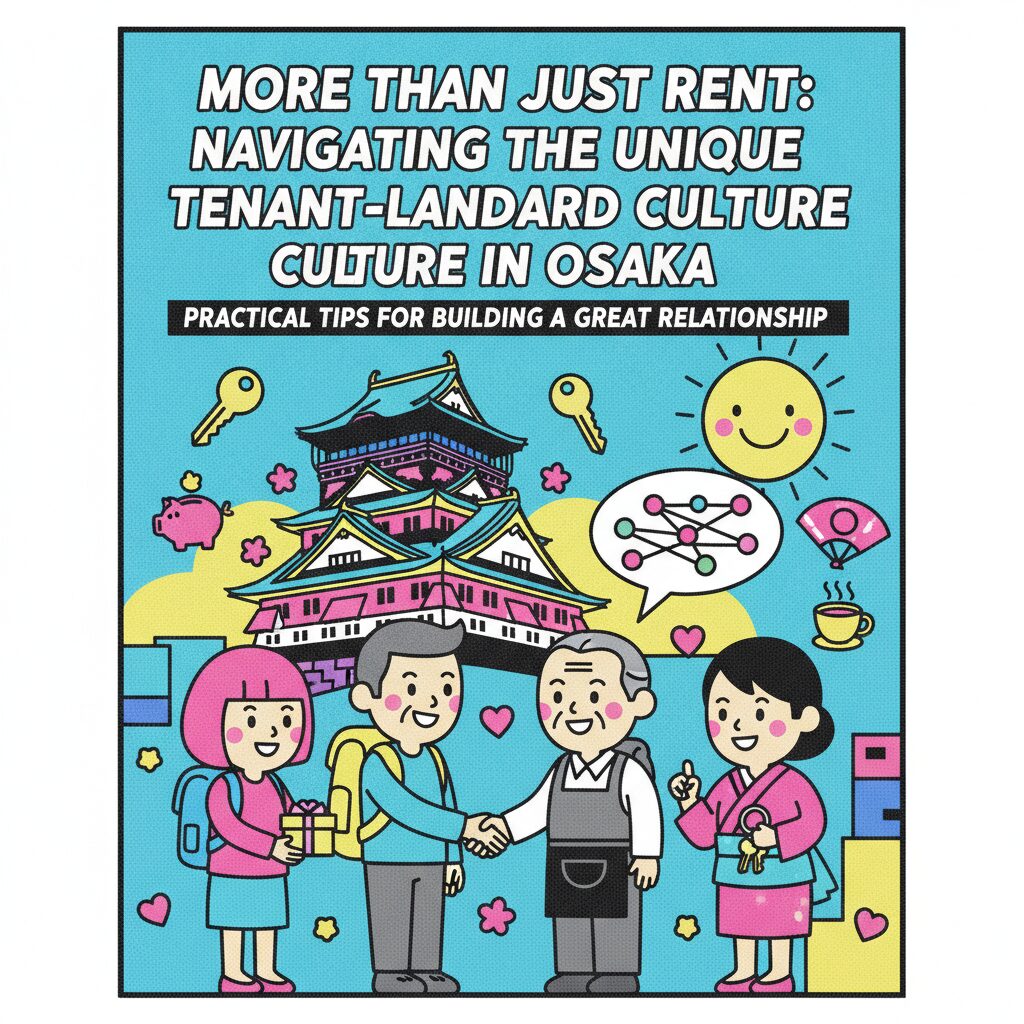
The Move-in Greeting: Why a Small Gift Matters
In Western cultures, moving into a new apartment is often a solitary experience. You might acknowledge a neighbor in the hallway, but formal introductions are uncommon. In Japan, moving in prompts a specific cultural practice known as the Aisatsu, or formal greeting. It is customary, especially in residential areas, to personally visit your immediate neighbors and importantly, your landlord if they live nearby or directly manage the building, to introduce yourself.
This introduction goes beyond a polite nod; it includes presenting a small gift called Omiyage. The gift doesn’t need to be costly or elaborate. In fact, an overly expensive gift can make the recipient uncomfortable and feel obligated. The usual budget ranges from around five hundred to one thousand yen. Ideal gifts are practical and consumable items: a neatly wrapped box of laundry detergent, high-quality dish soap, hand towels, or a box of individually wrapped sweets from your home country.
When giving the gift to an Osaka landlord, this moment is your perfect chance to set a positive tone for your entire tenancy. A simple phrase like, “I am moving in today. I look forward to your kind support,”