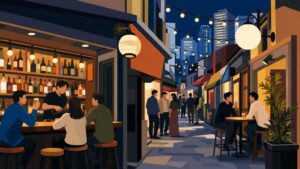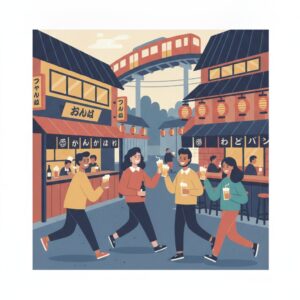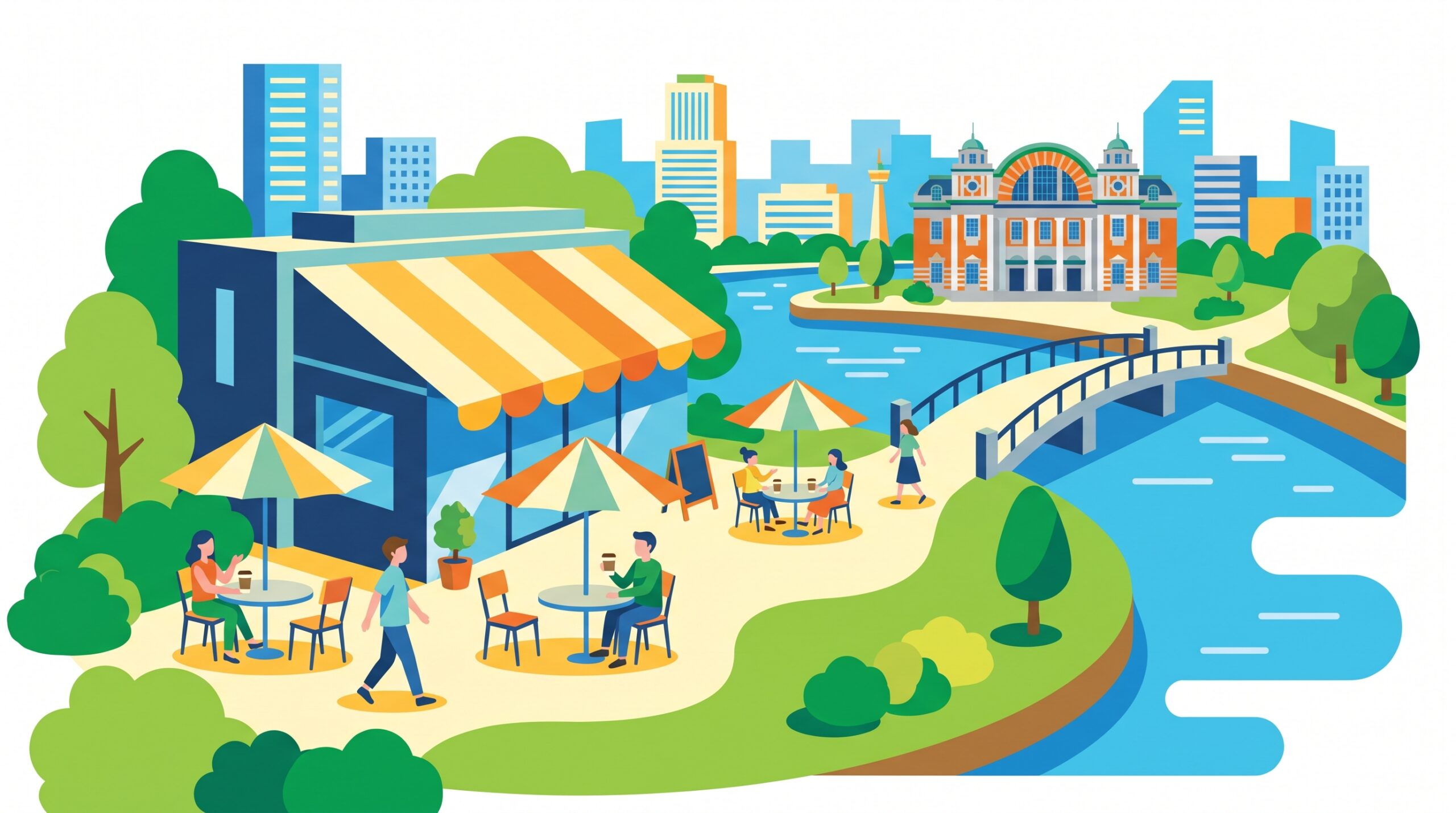
Osaka is loud. Osaka is neon. Osaka is a chaotic symphony of bicycle bells, vendor shouts, and the sizzling sounds of street food frying under the glow of the Dotonbori signs. Or so the tourist brochures will eagerly tell you. When foreign friends and prospective expats ask me if Osaka is simply too intense for long-term living, I always give them the same advice. I tell them to turn away from the neon. I tell them to walk north. I tell them to find the water.
To understand Osaka, you must understand that this city was not built on government decrees or imperial power. It was built on commerce, on trade, and most importantly, on the rivers. Long before Tokyo became the undisputed center of Japan, Osaka was known as the City of Water. The lifeblood of this merchant capital flowed through its canals and waterways. And sitting right in the center of it all, quietly holding the city’s historical and modern cultural identity, is Nakanoshima.
Nakanoshima is a narrow, three-kilometer-long sandbank island situated beautifully between the Dojima and Tosabori rivers. If Namba and Shinsaibashi represent Osaka’s endless appetite for consumption and entertainment, Nakanoshima represents its capacity for deep appreciation, sophisticated leisure, and quiet weekends. It is the sophisticated, tranquil antidote to the chaotic, neon-lit areas down south. For the international resident or the slow-traveling visitor who has already checked off the universal studios and the castle, this island is a revelation. It is where the locals go to breathe.
Here, the overarching theme is not rushing, but resting. It is a place where contemporary art museums, lush riverside parks, and stylish terrace cafes seamlessly blend together. As a researcher of this city’s layered past, I find that watching how modern Osakans interact with this historical space reveals a lot about our local mindset. We do not need constant stimulation; we simply require good coffee, accessible art, and a gentle river breeze. This is the ultimate guide to experiencing Osaka’s premier cultural and relaxing hub like a true local.
Nakanoshima: Osaka’s Premier Island for Art, Parks, and Cafes
To truly understand the vibe of Nakanoshima, you must let go of your preconceived ideas about Japanese urban landscapes. Tokyo creates parks for prestige and museums as grand landmarks. Osaka, true to its practical merchant roots, designs these spaces for functionality, integration, and everyday enjoyment. While we now call Nakanoshima an Art Island, its evolution into an urban oasis is a captivating tale of civic development.
Centuries ago, this very sandbank was Japan’s undisputed financial center. The powerful daimyos’ storehouses lined the riverbanks, and the world’s first futures exchange, the Dojima Rice Exchange, operated just across the water. The wealth flowing through these rivers laid the foundation of modern Japan. But as heavy industry relocated to the bay area and financial districts shifted, Nakanoshima was left with expansive, beautiful spaces and grand heritage architecture.
Why You Should Visit This Urban Oasis
Rather than demolishing it all to erect generic skyscrapers, the city and its people took a path very much in line with the Osaka spirit. They repurposed it. They transformed the financial district into a cultural hub. They preserved the western-style architecture that survived wartime bombings, protected the riverbanks, and welcomed artists, roasters, and landscapers to revitalize the area.
Foreigners often mistake Osakans as merely loud or materialistic. But spend a Sunday afternoon on Nakanoshima, and you’ll encounter a different reality. You’ll see young couples deeply engaged in contemporary art conversations. You’ll see elderly gentlemen sketching the riverside architecture in watercolor. You’ll see families relaxing on the grass with high-quality bakery bread and pour-over coffee. The island offers a cohesive experience that fulfills the desire for a curated, lifestyle-focused weekend. It’s not just about observing; it’s about inhabiting the space. Nakanoshima proves that Osaka can slow down just as effortlessly as it speeds up.
Top Art Museums on Nakanoshima Island
The western half of Nakanoshima is completely devoted to the mind. It serves as a concentrated center of visual culture that rivals any museum district in Asia. Yet, the atmosphere remains distinctly Osakan. There is no heavy pretension here. Art is embraced as an accessible part of an enjoyable weekend, not a sacred domain reserved for the elite. The close proximity of the museums allows you to easily walk from one major institution to another in under five minutes.
Nakanoshima Museum of Art, Osaka (NAKKA)
Rising like a mysterious, monolithic black cube against the sky, the Nakanoshima Museum of Art, Osaka, is the island’s newest crowning jewel. Recently opened, NAKKA was designed by architect Katsuhiko Endo as a profound architectural statement. Its stark black exterior offers a striking visual contrast with the lush green lawns and the blue waters of the Dojima River.
Inside, natural light floods the museum through a large glass atrium that cuts through the heart of the building. The curation is outstanding, with a strong focus on modern and contemporary art, as well as industrial design. Masterpieces by Modigliani comfortably coexist alongside bold contemporary installations. What truly sets NAKKA apart is the open lawn concept surrounding it. The museum was designed with public spaces that encourage people to sit, chat, and relax even without purchasing a gallery ticket. It acts as an extension of the street, an open invitation to gather. Locals are often seen lying on the grass, reading books, completely unfazed by the imposing black cube looming above them.
The National Museum of Art, Osaka
Right next to NAKKA stands an entirely different architectural marvel. The National Museum of Art, Osaka, designed by renowned architect Cesar Pelli, offers a beautiful optical illusion. From street level, you see only a striking, skeletal framework of intertwined titanium tubes reaching skyward, mimicking bamboo growth.
In reality, the museum is entirely underground. Visitors enter through a glass pavilion and descend into vast, expansive galleries below the surface. This design was chosen specifically to preserve Nakanoshima’s open skyline while accommodating a large footprint for contemporary art. The collection emphasizes post-war contemporary art by both Japanese and international artists. Walking through the quiet, cool subterranean halls feels like discovering a secret cultural vault hidden beneath the vibrant streets of this merchant city.
Relaxing in Nakanoshima Park
As you walk eastward away from the museums, leaving behind the sleek black cubes and titanium bamboo, the landscape gradually softens. Concrete gives way to manicured lawns, tall trees, and the vast beauty of Nakanoshima Park. Established in 1891, this was Osaka’s very first public park—a gift to a city in desperate need of a breathing space amid the industrial smog of the Meiji era.
Today, the park serves as the undisputed heart of weekend relaxation for locals in the Kita district. While Tokyo’s Yoyogi Park is renowned for its massive scale and performative subcultures, Nakanoshima Park focuses on intimate, quiet leisure. The rivers bordering the park on both sides act like natural air conditioners, drawing a gentle breeze across the grass even during humid summer days.
The Iconic Nakanoshima Rose Garden
The crown jewel of the park is the Nakanoshima Rose Garden. Occupying a large portion of the park’s eastern tip, this carefully maintained garden features over four thousand rose bushes, encompassing hundreds of varieties from around the world. The garden blooms spectacularly twice yearly, first in the warm days of May and again in the crisp air of October.
During these bloom seasons, the garden transforms into a vivid, fragrant tapestry of reds, pinks, yellows, and whites. You’ll spot photography enthusiasts with heavy lenses, young influencers hunting for the perfect light, and elderly couples enjoying their daily constitutional. With its low brick walls and European-style pathways, the garden’s design pays homage to the era when Osaka was rapidly modernizing and embracing Western influences. It is a stunning, deeply romantic space, feeling entirely distinct from the corporate towers just across the water.
Riverside Strolls and Picnic Spots
Beyond the rose garden, the broad pedestrian paths outlining the park offer some of the city’s best walking routes. Japan famously has no open container laws, and Osakans make the most of this on a sunny Sunday. The sprawling grassy lawns are ideal for spreading out a picnic blanket.
Locals often stop by a nearby depachika—a department store basement food hall—to pick up an assortment of high-end bento boxes, craft beers, and seasonal sweets, then spend hours lounging by the water. There’s a special joy in watching sightseeing boats glide by, waving to the tourists on board while you relax with a cold drink in hand. This is the everyday reality of Osaka that many foreigners overlook. The city is not just a place to hustle; it’s a place to settle into the grass and let the afternoon drift away.
Best Cafe Experiences Around Nakanoshima and Kitahama
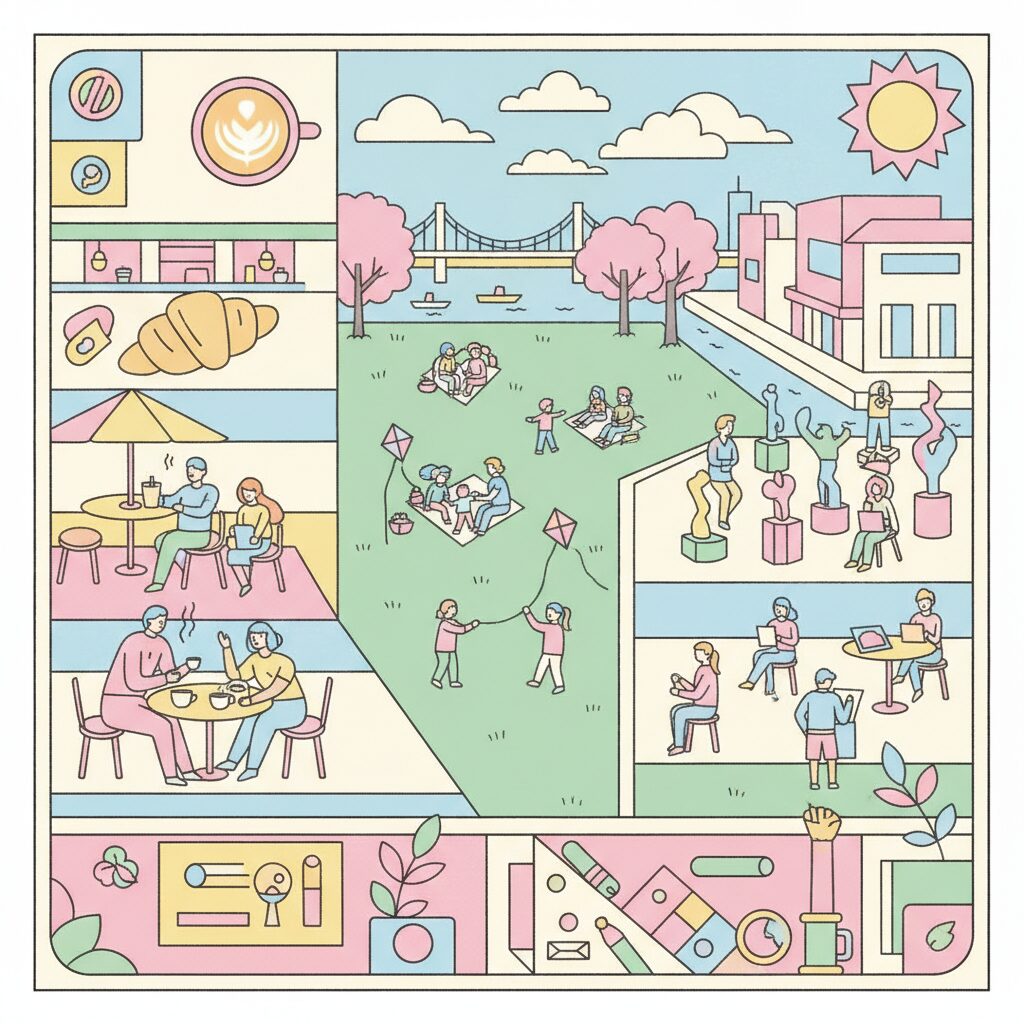
All this walking and art appreciation naturally creates a craving for quality caffeine and good food. Fortunately, the area around Nakanoshima Park, particularly the Kitahama district on the southern bank of the Tosabori River, is Osaka’s unrivaled hub for cafe culture.
To truly grasp modern Osaka’s cafe scene, you need to understand the Kitahama vibe. Osakans are famously discerning consumers. While we love a good bargain, we are more than willing to pay a premium for exceptional quality and a beautiful view. The cafes here cater exactly to this mindset. They don’t rely on gimmicks but on excellent roasts, stunning architecture, and unbeatable riverside locations.
Riverside Terraces for Coffee Lovers
The cafes lining the Kitahama side of the river employ a clever architectural approach. They feature outdoor terrace seating that seemingly hangs over the Tosabori River, providing direct views of Nakanoshima Park. Securing a spot on one of these terraces on a sunny weekend is a local competition.
Specialty pour-overs and thick, fluffy toast with artisanal butter dominate this stretch. You can enjoy a beautifully crafted latte while sitting on the wooden deck, watching the river gently flow by. The sound of the water softens the traffic noise, creating a pocket of complete tranquility. This riverside terrace culture is quite rare in Japanese cities, which often turn away from their waterways due to flood walls and expressways. But in Kitahama, the city fully embraces the river, crafting a lifestyle aesthetic that feels almost European yet uniquely Osakan with its warm, unpretentious hospitality.
Historic Architecture Turned into Stylish Cafes
What truly distinguishes this area from other cafe districts in Japan is its historic architecture. During the Taisho and early Showa eras, when Osaka surpassed Tokyo in population and economic power—an era known as Great Osaka—the city constructed magnificent Western-style banking halls, merchant houses, and civic buildings. Many of these brick and stone landmarks survived the war and still proudly line the riverbanks.
Rather than serving as stuffy museums, many of these historic buildings have been beautifully transformed into stylish cafes and bakeries. You can enjoy your single-origin Ethiopian drip coffee in rooms with soaring vaulted ceilings, original brass fittings, and heavy wooden doors that once protected the fortunes of the city’s merchant elite. Nearby, the Osaka City Central Public Hall—a stunning neo-renaissance brick building right on Nakanoshima—also features a fantastic restaurant in its basement. The seamless integration of history with modern cafe culture here reflects a profound respect for the past while keeping these spaces lively and relevant for today’s generation.
The Perfect Nakanoshima Half-Day Itinerary: Art, Nature, and Coffee
Understanding what Nakanoshima has to offer is one thing, but knowing how to connect it all is essential to mastering your weekend. A common mistake visitors make is zig-zagging back and forth, which leads to exhaustion. The best way to enjoy the island is to follow the flow of the rivers, starting from the west and leisurely walking eastward. Here is a practical, step-by-step itinerary that seamlessly combines contemporary art, nature, and coffee.
Morning: Contemporary Art Exploration
Begin your morning on the western side of the island. Arrive at Watanabebashi Station or Higobashi Station around ten o’clock when the museums open. Your first stop is the Nakanoshima Museum of Art, Osaka. Spend an hour and a half exploring the bold exhibitions inside the black cube. Let the striking architecture awaken your senses.
After NAKKA, take a short, two-minute walk to the National Museum of Art. Descend into the titanium building and immerse yourself in the underground galleries. Visiting in the morning means lighter crowds, allowing for a more intimate experience with the contemporary installations. By noon, your mind will be filled with visual inspiration, and your stomach will be ready for a break.
Afternoon: Park Walk and Riverside Cafe Break
Exit the underground museum and start walking eastward along the riverbank promenades. You will pass the sleek, curved facade of the Osaka Science Museum and move toward the historical center of the island. Soon, you’ll see the imposing stone columns of the Bank of Japan Osaka Branch and the beautiful brickwork of the Osaka City Central Public Hall.
Continue east past the public hall, and you’ll enter Nakanoshima Park seamlessly. If you visit in May or October, let the fragrance of the blooming Rose Garden guide you. Take your time wandering through the carefully designed flower beds.
After exploring the park, cross one of the elegant pedestrian bridges heading south into the Kitahama area. It will be mid-afternoon, the perfect moment to claim a spot on a riverside terrace. Find a café with an open deck, order a rich espresso or a seasonal fruit tart, and look back across the water at the park you just walked through. As the late afternoon sun casts long shadows over the river, you’ll understand why locals cherish this area so deeply. It is a complete, culturally rich experience that requires no rushing.
Practical Information for Your Visit
To keep your relaxing weekend completely stress-free, it’s essential to understand the logistics of getting to and navigating around the island. Osaka’s train network is very efficient, but selecting the right station significantly impacts your walking route.
How to Get to Nakanoshima
The island is exceptionally well-connected. The Keihan Railway runs the Nakanoshima Line directly beneath the island, with stations like Watanabebashi and Naniwabashi placing you right in the heart of the action. If you’re coming from major hubs like Umeda or Namba, take the Midosuji Subway Line to Yodoyabashi Station. Exiting at Yodoyabashi puts you in the center of the island, next to City Hall, letting you decide whether to head west toward art or east to the park.
Alternatively, if you’re interested in the café scene, taking the Sakaisuji Subway Line or the Keihan Main Line to Kitahama Station brings you straight to the riverside terrace district. The area is entirely flat and extremely pedestrian-friendly, making walking the best way to get around once you arrive.
Best Time of Year to Visit
Though Nakanoshima is lovely year-round, timing your visit can enhance the experience. Spring and autumn are undeniably the best seasons. In particular, May and October offer comfortable walking temperatures and the stunning bloom of the Rose Garden.
Winter also offers its own unique charm. In December, the island hosts the Osaka Hikari no Renaissance, a grand winter illumination event. Historic buildings are lit with intricate projection mapping, and the riverside paths glow with millions of LED lights. Food stalls appear, serving hot mulled wine and warm street food, transforming the atmosphere from a quiet daytime escape into a festive, glowing winter wonderland.
No matter when you visit, leave your hurry behind. Nakanoshima is not a place to rush through; it’s a place to savor. It embodies the quiet, cultured spirit of Osaka, resting peacefully between the flowing waters of its history. For anyone wanting to grasp the true rhythm of life in this remarkable city, spending a weekend wandering this island is an absolute must.