If you live in Osaka for more than a few weeks, someone will eventually ask you a deceptively simple question: “Where do you drink?” A new arrival may answer Umeda, Dotonbori, or Namba. Those places are easy to name because they are easy to recognize. But many Osaka residents will quietly point you toward Tenma, or Temma, depending on the English spelling.
Tenma is not best understood as a sightseeing district. It is a working neighborhood with an unusually dense concentration of small restaurants, standing bars, yakitori counters, sushi shops, snack bars, and old-fashioned izakayas. The attraction is not one famous building. It is the way the streets operate after work: people finish a shift, meet someone under a railway line, eat one dish, order one drink, move three doors down, and continue the evening without making a formal plan.
That rhythm explains something important about Osaka. The city’s social life is often less ceremonial than Tokyo’s, less polished than a central business district, and more dependent on repeated small interactions. A bar is not only a place to consume alcohol. It is a place to test the mood of a room, exchange a few jokes, complain about work, compare food, and decide whether you will stay for another drink.
This guide is for foreigners who live in Osaka, are considering life here, or want to understand what Osaka people are actually doing when they disappear into a narrow alley. It will explain how Tenma works, how to move through it without acting like a rude tourist, what local terms mean, how much an evening may cost, and why Tenma can teach you more about Osaka’s everyday mindset than a large entertainment district can.
Why Tenma Is Osaka’s Ultimate Izakaya Hopping Destination
Discovering Ura-Tenma and the Famous Lantern Street
Tenma is located in Osaka’s Kita area, just east of the Umeda and Osaka Station district. JR Tenma Station is small, straightforward, and conveniently useful. Upon exiting the station, you don’t step into a grand entertainment district with wide pedestrian promenades and neatly separated restaurant categories. Instead, you enter a dense urban neighborhood where a shopping arcade, railway tracks, apartment buildings, offices, wholesalers, clinics, old houses, and tiny bars are all closely packed together.
The area behind the main shopping street is commonly known as Ura-Tenma. “Ura” means the back or hidden side, but this name doesn’t imply the neighborhood is secret. Locals have frequented these alleys for years. The term simply refers to the restaurants tucked away behind the more prominent commercial streets. Osaka’s official tourism materials describe Tenjinbashisuji and Ura-Tenma as areas full of restaurants perfect for everyday relaxation, while the Japan National Tourism Organization directs visitors to the narrow lanes near Tenma Station where many izakayas cluster.
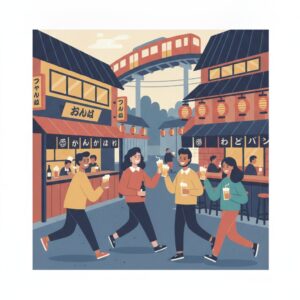
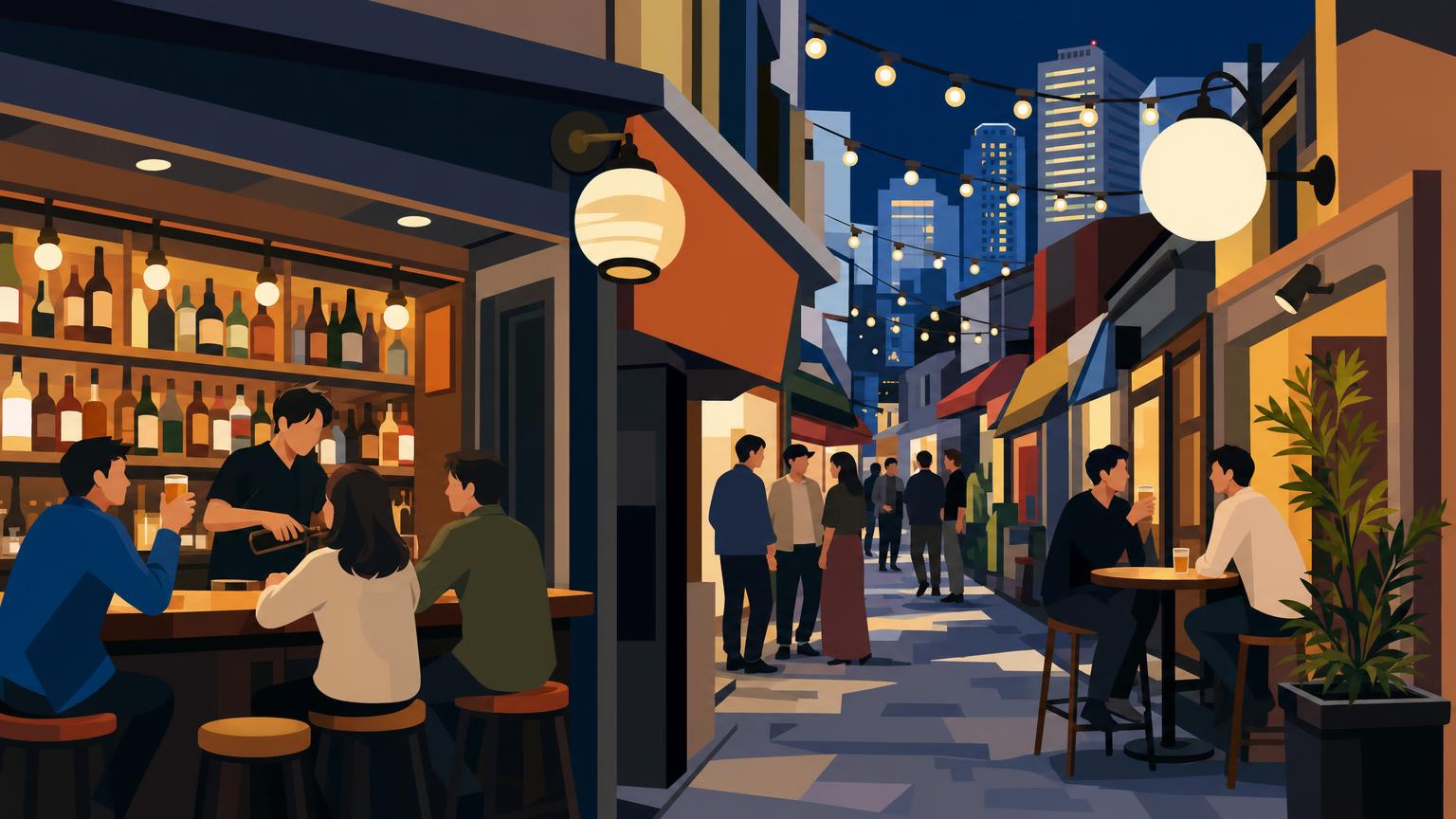
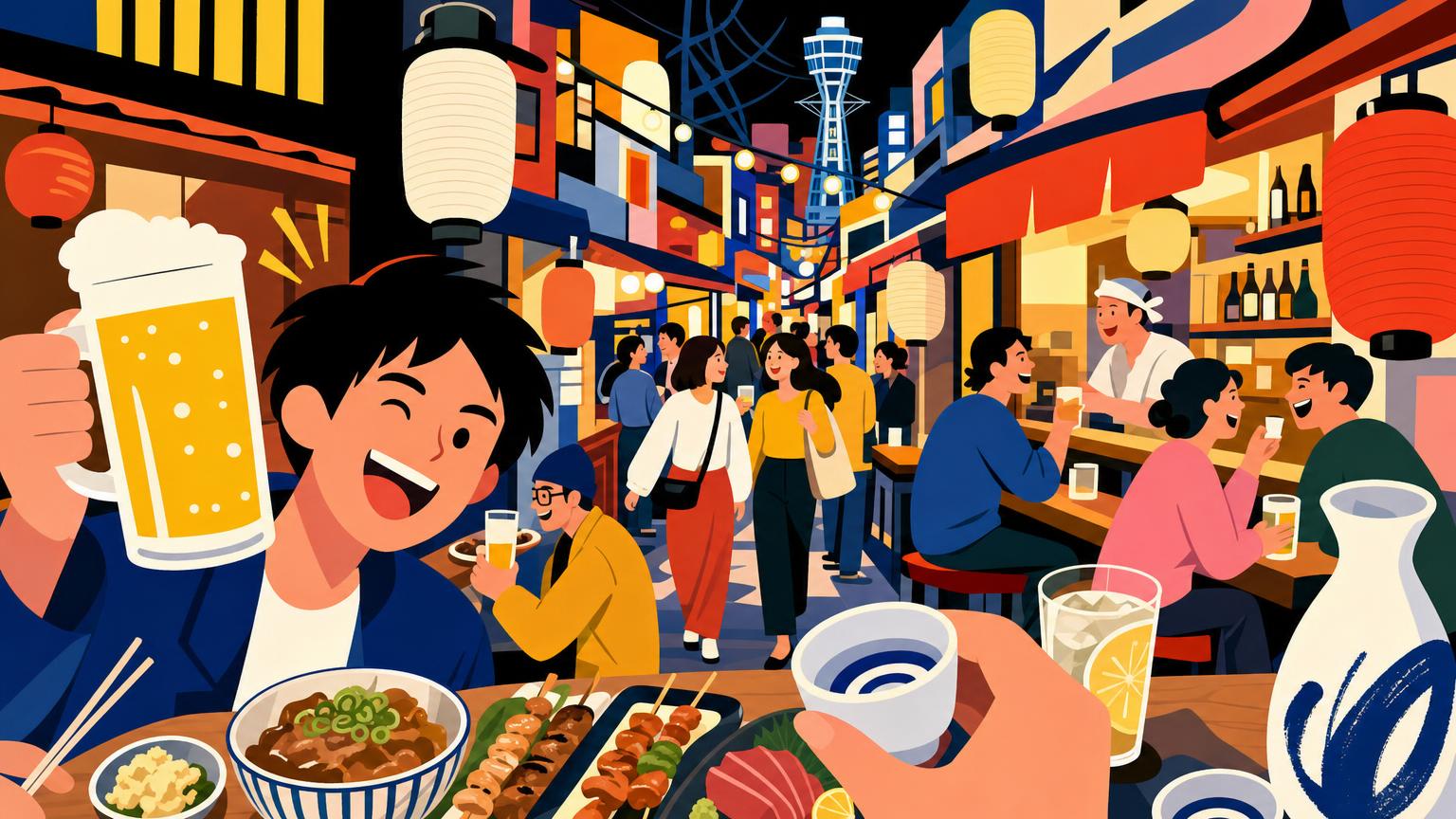
Ura-Tenma is visually distinctive once you know what to look for. Paper lanterns hang over doorways. Red and white noren curtains separate the street from the interior. Menu boards lean against walls. Bicycle handlebars almost touch the entrances. A kitchen fan sends the aroma of grilled chicken, soy sauce, frying oil, garlic, and charcoal into the alley. On rainy evenings, the lantern light reflects off the wet pavement, making the district feel narrower than it does during the day.
One of the most atmospheric sections is often called Chochin Street, or Lantern Street. The name fits the scene, but don’t picture a preserved historical village. Tenma is not a museum. Its charm lies in the mix of old and new businesses occupying the same tight spaces. A traditional horumon counter may stand next to a trendy natural-wine bar. A long-standing sushi shop may face a new standing bar with a handwritten menu. The area feels alive precisely because it hasn’t been homogenized into a single style.
This lack of uniformity is part of the lesson. Osaka often blends different social worlds. Office workers, shop owners, students, foreign residents, construction workers, chefs, retirees, and young couples all use the same narrow streets. They might not all become friends, but they share a practical urban environment. Tenma reveals this social overlap clearly.
The “Yasukute Umai” Cheap and Delicious Culture
A useful phrase in Osaka is “yasukute umai,” meaning cheap and delicious. This phrase doesn’t guarantee every dish will be perfect or every bill tiny. Instead, it expresses a local preference for value that feels immediate and honest. People want a satisfying portion, a lively atmosphere, and a price that encourages repeat visits.
This partly explains why Tenma differs from many foreigners’ views of Tokyo’s drinking districts. While Tokyo has inexpensive izakayas, central Tokyo’s nightlife often revolves around brand identity, reservations, polished interiors, and status. In Tenma, the main concern tends to be, “Is the food good for the price?” A simple counter offering excellent grilled liver may be more respected than an upscale room with trendy lighting.
Osaka’s commercial history sheds light on this attitude. The city developed as a merchant hub, with an identity tied to circulation: goods passing through markets, money changing hands, and customers comparing prices. The old idea of Osaka as “Japan’s kitchen” goes beyond food; it’s about judging quality through everyday use. A dish earns respect when people order it repeatedly, recommend it to coworkers, and return without a special occasion.
For foreigners, this may be confusing initially. You might expect the best spots to have the most beautiful interiors or the clearest English websites. In Tenma, those signs are less trustworthy. A cramped space with six stools might offer better food than a large, brightly lit restaurant. A handwritten Japanese menu can signal freshness and daily specials rather than poor service. A line outside a tiny shop may reflect limited seating, not social media hype.
The opposite is also true: local appearances don’t guarantee authenticity or value. Some places are now deliberately designed to look rough, casual, and “hidden.” The key isn’t chasing the most weathered signboard. Instead, observe how the place treats regular customers, how quickly food moves from the kitchen, whether the menu is clear, and if prices are visible before sitting down.
Practically speaking, expect to spend around ¥1,500 to ¥3,000 per stop if you have one or two drinks and a few small dishes. A more substantial visit with several drinks, sashimi, grilled items, or premium ingredients might reach ¥4,000 to ¥6,000. These are rough estimates, not guarantees. Prices, opening hours, payment methods, and menus vary by shop, and some restaurants add an otoshi or service charge.
How to Do Hashigo-zake Like a Local
Hashigo-zake refers to moving from one drinking spot to another, literally “climbing a ladder of drinks.” In Tenma, this is not a compulsory activity with a set route but a flexible way to enjoy food and socialize. You might start with sushi, walk ten minutes, stop for kushikatsu, and end at a small bar where the owner knows three regulars by name.
The key is to think in small portions. Tenma rewards curiosity. If you eat a full meal at the first restaurant, you lose the main advantage of the area: the chance to compare different venues, cooking styles, and groups of people. A good evening often involves two or three modest stops rather than one large dinner.
Rule 1: Master the Tachinomi Standing-Bar Style
Tachinomi means standing bar or standing restaurant. You may find a narrow counter, a few high shelves, and almost no traditional seating. At first, this can feel awkward, especially if you’re used to leisurely dinners. The brief stay is part of the concept.
A tachinomi often relies on quick turnover. Customers order a drink, choose one or two dishes, eat at the counter, pay, and leave room for the next guest. The vibe can be social but isn’t necessarily intimate. You share a small space, but you’re not automatically included in private conversations.
When entering a standing bar, pause near the entrance and wait for staff directions. If someone signals toward an open spot, take it. If the counter is full, don’t squeeze in just because you see a gap. Some places have a simple rule that customers must order at least one drink; others may require a minimum food order. If unsure, ask, “Ichi dorinku onegaishimasu?” or just point to the drink menu and say, “Kore, onegaishimasu,” meaning “This one, please.”
Keep your bags close. Don’t place a large backpack across a shared counter or block the entrance while checking your phone. In a tight space, physical awareness matters more than perfect Japanese. Move aside when staff need to pass. Keep your voice at a room-appropriate level. Don’t turn a small standing bar into a private party.
Tachinomi culture also changes how you use time. Standing doesn’t always mean you must leave immediately, but it usually indicates a shorter visit than a seated izakaya. One drink and two dishes may suffice. If the place gets crowded, notice the people waiting and consider paying rather than occupying the most useful spot for another hour.
Rule 2: Keep It Short and Sweet
The phrase “quick entry, quick exit” isn’t a demand to hurry but an instruction to respect the neighborhood’s rhythm. Tenma’s small businesses thrive because tables, stools, and counters keep turning over. A group occupying four seats while ordering just one beer each might be allowed to stay but causes friction.
If you’re visiting with friends, decide before entering whether you want a full dinner or a short stop. A narrow counter usually suits one or two people. Groups of five or six may need a larger izakaya or a reservation, especially on Friday and Saturday nights. Don’t assume a restaurant can combine tables just because there appears to be enough space.
A practical Tenma evening might go like this:
- Start with a drink and a small dish at a standing bar near the station.
- Move deeper into Ura-Tenma for sushi, sashimi, or grilled seafood.
- Stop at a kushikatsu or horumon shop for one shared plate.
- Finish at a quieter bar, coffee-alcohol counter, or late-night snack spot.
The route matters less than the transitions. After each stop, walk slowly enough to notice side streets. Tenma’s best discoveries are often just one turn away from the busiest lanes. At the same time, don’t enter every place just because the entrance looks inviting. Check the menu, seating, crowd, and whether the restaurant seems welcoming to walk-ins.
Don’t treat the night as a contest. Osaka’s drinking culture can seem lively, but many people aren’t trying to get extremely drunk. They aim to enjoy multiple tastes, chat, and get home in good shape. If you live in Osaka, this is an important distinction. A successful night isn’t always the loudest night.
Rule 3: Understanding Otoshi and Cash Payments
Otoshi is a small appetizer served shortly after you sit. In many izakayas, it acts as a table charge or seating fee, though the system varies. You may not order it, but it can still appear on the bill. The dish might be simmered vegetables, a small salad, tofu, pickles, seafood, or another simple item.
Foreign visitors sometimes mistake otoshi for an unwanted dish or think the restaurant has made a mistake. It’s better to see it as part of the establishment’s pricing. If you want to check the cost, ask, “Otoshi wa ikura desu ka?” meaning “How much is the otoshi?” You can ask before ordering, especially if menu prices aren’t clear.
A related issue is the service charge. Some bars add a small fee for the table, appetizer, or seating. This is more common in compact drinking establishments than casual fast-food shops. The charge shouldn’t justify a huge unexpected bill, but don’t assume that listed food prices are the total cost.
Cash remains useful in Tenma, even though many places now accept credit cards, transit payments, QR codes, or electronic money. Small independent shops may have card minimums, surcharges, or no card reader at all. Carry several ¥1,000 notes and some coins. Avoid paying with a ¥10,000 note for a small order during busy times unless you have no other option.
At the end, say, “Okaikei onegaishimasu,” meaning “The bill, please.” If the restaurant uses counter payment, staff may direct you to the register. If unsure whether to pay at the table, watch others or ask, “Doko de haraimasu ka?” meaning “Where do I pay?”
Tipping isn’t part of normal izakaya culture. Leaving extra money can cause confusion. Pay the bill as shown, collect your receipt and belongings, and thank the staff. “Gochisosama deshita” is a natural phrase after eating, meaning roughly, “Thank you for the meal.”
Must-Eat Foods and Izakaya Experiences in Tenma
Affordable and Fresh Sushi
Tenma is ideal for sushi because the area offers a range of dining experiences. You can enjoy a few pieces at a casual standing counter, order sashimi at a neighborhood izakaya, or sit down at a more traditional sushi restaurant. The key is not to assume that every sushi establishment caters to the same type of customer.
At a casual counter, the menu might list individual pieces by price. At a more traditional venue, the chef may suggest a sequence based on the day’s catch. If you’re not comfortable ordering in Japanese, start with a visible item or ask for “osusume,” meaning recommendation. You can say, “Osusume wa nan desu ka?” which means “What do you recommend?”
Sushi works especially well for hashigo-zake because it can be ordered in small portions. Two people might share a plate of sashimi, then each order a few pieces rather than committing to a large meal. Pay attention to the restaurant’s pace. If the chef is working swiftly and the counter is crowded, avoid holding up the line with long discussions about every ingredient.
You may encounter fish names that don’t translate easily into everyday English. Pointing is perfectly acceptable. Asking staff to use a translation app is also fine. The important thing is not to pretend you understand an allergy or preparation detail if you don’t. If you have allergies, prepare the Japanese term beforehand and show it clearly when ordering.
Sushi also reflects Osaka’s preference for relaxed quality. A shop may take the fish seriously without being formal about the atmosphere. The counter might be cramped, conversations loud, and the customer next to you could be eating quickly before catching a train. This doesn’t diminish the experience; it reflects the city’s tendency to value food quality and social ease over ceremony.
Crispy Kushikatsu and Rich Doteyaki
Kushikatsu consists of skewered ingredients coated in batter and deep-fried. You may find meat, seafood, vegetables, cheese, and seasonal items. The food arrives hot and crisp, meant to be eaten immediately. In a busy shop, the fryer often works continuously, creating a steady sound of bubbling oil beneath the conversation.
The famous “no double dipping” rule is strongly tied to kushikatsu restaurants, especially older styles where sauce is shared in a communal container. If the restaurant provides individual sauce cups, dip as directed. If the sauce is communal, use the provided spoon or brush, or pour sauce over the skewer without touching the food to the container. Never return a bitten skewer to shared sauce.
This rule is not just about hygiene; it reflects a broader Japanese preference for respecting shared boundaries in public. People may be informal and loud, but they still expect you to understand which objects are personal and which are communal. The same applies to chopsticks, serving utensils, wet towels, and shared plates.
Doteyaki is another dish to seek out. It usually consists of beef tendon and related cuts slowly simmered in a dark, sweet-savory miso sauce. The texture is soft and gelatinous, with a deep flavor that pairs well with beer, shochu, or a highball. Although it may look heavy, a small serving is often enough to appreciate the dish.
Kushikatsu and doteyaki reveal a practical side of Osaka. Tough or inexpensive ingredients become satisfying through technique, timing, and seasoning. This is not “poor people’s food” in a simplistic sense but a cuisine built on the belief that good cooking can elevate ordinary ingredients to something worth seeking.
Sizzling Horumon and Yakiniku
Horumon refers to offal, especially cuts used in grilled meat restaurants. The word is sometimes explained through a Kansai expression meaning “things to throw away,” though its modern food culture is more complex than that origin story. In Tenma, horumon may be found at charcoal grills, yakiniku shops, izakayas, or specialized counters.
Expect smoke, heat, grease, and strong aromas. Your clothes may smell like charcoal afterward. This is not a flaw but part of the experience. If the restaurant provides a small smoke hood above the table, use it properly and avoid leaning over the grill. If staff handle the grilling, let them do so. Some cuts cook quickly and become tough if left too long.
Useful terms include karubi for short rib, reba for liver, hatsu for heart, mino for tripe, and horumon as a general category. You don’t need to order everything. Start with a familiar cut, then try a small portion of something new. If you’re unsure whether a cut is fully cooked, ask, “Mada desu ka?” meaning “Is it not ready yet?”
Horumon shops offer a revealing glimpse into Osaka’s everyday directness for foreigners. The smell is unapologetic. The cooking is visible. The atmosphere may be loud and unpretentious. No one pretends that grilled meat is a refined performance; it is dinner, a drink, and a reason to sit close together.
Takoyaki, Niku-Sakana Dishes, and Small Plates
Takoyaki is associated with Osaka, but a more useful question is how people eat it in daily life. In Tenma, it may appear as a quick snack, a shared dish at an izakaya, or part of a late-night stop. The balls are extremely hot inside, so break one open carefully rather than eating it whole.
Doteyaki, grilled seafood, dashimaki tamago, potato salad, pickled vegetables, fried chicken, and simmered dishes are often better for hashigo-zake than a single large specialty dish. Look for items suitable for sharing. A small plate allows time to decide whether you want another drink or want to visit another restaurant.
The phrase “ippin,” meaning one dish or one item, is useful when ordering. You can say, “Ippin dake,” meaning “Just one dish,” if you’re making a brief stop. If you want to share, “Futari de tabemasu,” meaning “Two people will eat,” might help staff judge the appropriate portion.
Osaka food is often described as bold, but bold doesn’t always mean spicy or heavy. It can mean clear seasoning, generous portions, strong aroma, or a willingness to mix textures. The city’s food culture often aims for immediate satisfaction. Understanding that directness is key before judging dishes by fine-dining standards.
Tips for Non-Japanese Speakers in Local Izakayas
How to Order When There Is No English Menu
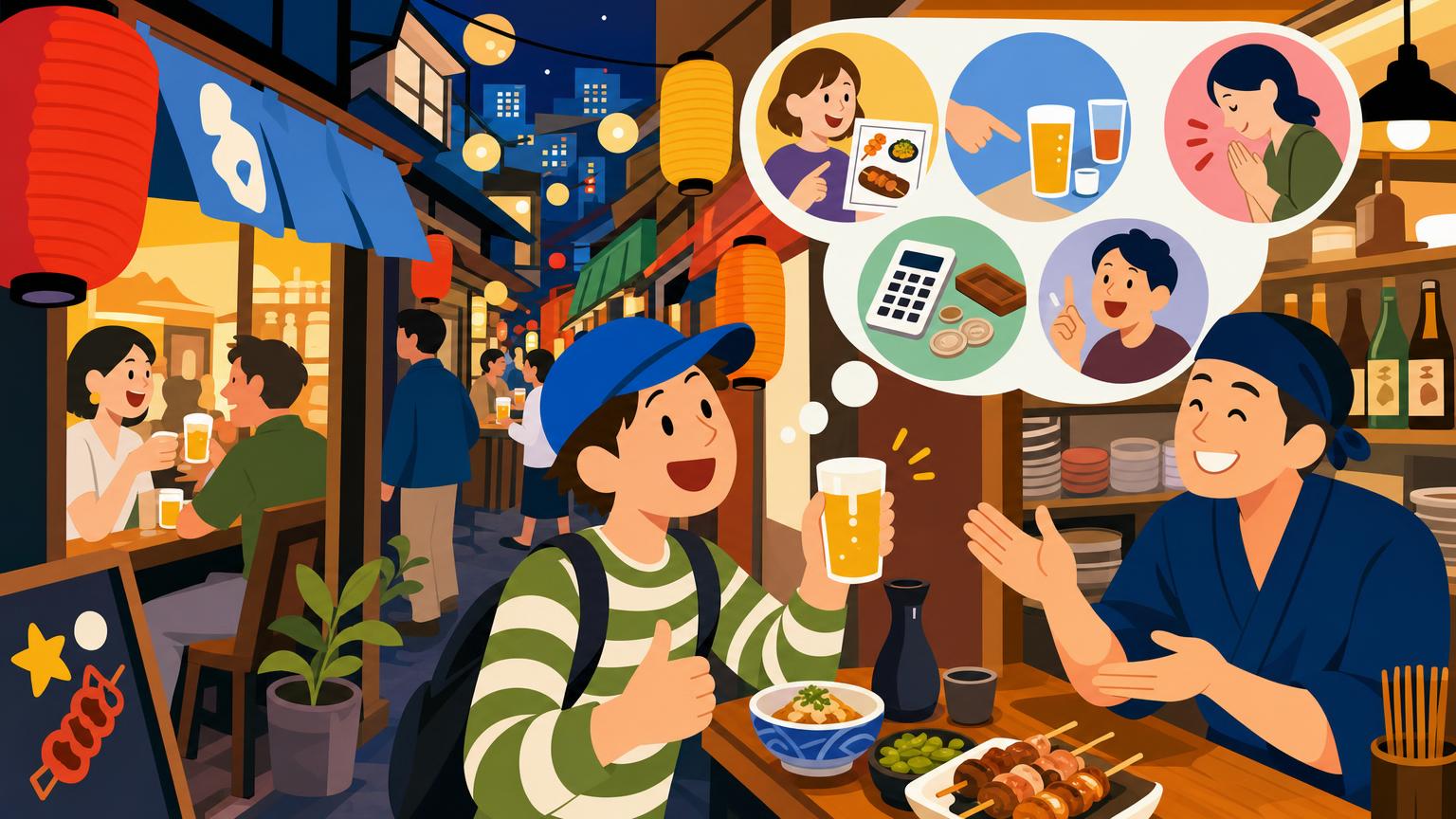
The key skill is not fluent Japanese but calm observation. Before entering, check for a menu displayed outside. See if prices are listed. Observe whether customers are seated, standing, ordering from a ticket machine, or speaking directly to staff. Just a few seconds of observation can prevent most misunderstandings.
Many Tenma shops now offer photos, translated menus, QR menus, or staff who can handle basic English. However, “English-friendly” doesn’t guarantee every detail will be explained. Staff may be comfortable taking orders but still unable to discuss allergens, regional ingredients, cooking methods, or payment rules in depth.
Memorize a few useful phrases:
- “Kore wa nan desu ka?” means “What is this?”
- “Osusume wa?” means “What do you recommend?”
- “Hitotsu onegaishimasu” means “One, please.”
- “Futatsu onegaishimasu” means “Two, please.”
- “Niku nashi” means “No meat.”
- “Osakana wa taberaremasu” means “I can eat fish.”
- “Nomi-mono wa kore” means “This drink.”
- “Okaikei onegaishimasu” means “The bill, please.”
Pointing is normal. Use the menu, point to photos, indicate quantities with your fingers, and repeat item names if needed. Avoid waving your phone aggressively in front of staff or assuming translation apps fully capture the context. These apps can be helpful but sometimes produce unnatural or misleading translations. Short phrases are usually safer than long explanations.
If you have a serious allergy, write down the ingredient in Japanese before you go. For instance, prepare a clear message like “I have a peanut allergy” in Japanese to show staff. Don’t rely on gestures or the English word “allergy.” Small kitchens may use shared oils, sauces, or utensils even if an ingredient isn’t obvious.
If the menu is confusing, ask for the simplest explanation. “Kore wa sakana desu ka?” means “Is this fish?” “Nama desu ka?” means “Is it raw?” “Karai desu ka?” means “Is it spicy?” You don’t need a full conversation to make a reasonable choice.
Embracing the Friendly Osaka Vibe Without Performing It
People often say Osaka is friendly, but that’s incomplete. Osaka friendliness is usually practical, teasing, and situational. A shop owner might ask where you’re from, joke about your Japanese, recommend another restaurant, or complain about the weather while preparing your food. This doesn’t necessarily signal deep friendship—it means the interaction is more human than purely transactional.
Tokyo and Osaka are both diverse, modern cities, so broad stereotypes can be misleading. Still, many foreigners notice a different conversational tone. Tokyo interactions tend to be more reserved, especially among strangers. Osaka conversations often become direct sooner, especially when talking about food, sports, prices, or local neighborhoods.
The right approach isn’t to mimic Osaka-style comedy. You don’t need to shout, force jokes, or call everyone “friendly.” A relaxed smile, a brief answer, and one sincere question will do. If someone asks “Doko kara?” simply answer. If they suggest a dish, try it if you wish. If you don’t get a joke, smile and say “Sumimasen, wakarimasen,” meaning “Sorry, I don’t understand.”
Osaka locals may tease, but teasing has limits. Don’t assume every joke invites personal questions. Avoid commenting on someone’s body, income, age, marital status, or drinking ability. Don’t treat a drunk customer as entertainment. If a conversation feels uncomfortable, refocus on your food.
A helpful way to participate is by supporting smooth room flow. Move your bag out of the way, pass shared dishes politely, close doors behind you, make space for others, and thank staff when leaving. These small acts show cultural understanding more effectively than memorizing slang.
What Foreigners Commonly Misunderstand
The first misunderstanding is assuming a crowded shop will welcome everyone. In reality, small restaurants may be full, reserved, or unsuitable for large groups. If staff say “chotto,” meaning “a little,” it often gently means entry isn’t possible. Don’t argue or demand an explanation.
The second misunderstanding is thinking a casual interior means casual rules. A cheap-looking place may still expect you to remove backpacks from chairs, avoid photographing other customers, and keep doorways clear. Always ask before photographing staff, chefs, or regulars. Food photos are usually okay, but avoid flashes in tight spaces.
The third misunderstanding is believing silence means unfriendliness. Some customers come to eat alone after work and may not want to chat. Standing bars can be social without requiring everyone to socialize. Read the atmosphere—if someone gives short answers and returns to their food, respect their privacy.
The fourth misunderstanding is interpreting Osaka’s directness as having no boundaries. In fact, Osaka’s casual vibe depends on boundaries being understood quickly. People may speak loudly, but they still expect proper queuing, respect for shared spaces, correct payment, and care not to disturb neighbors when leaving.
The fifth misunderstanding is assuming a local izakaya is “authentic” simply because it lacks English. Authenticity isn’t about inconvenience. Some restaurants genuinely serve locals and don’t need English; others welcome foreigners and adapt their menus. Choose based on your comfort, budget, dietary needs, and interests. You don’t show respect by creating avoidable problems for the staff.
How to Get to Tenma Izakaya Street
From JR Tenma Station
When starting from JR Tenma Station, orient yourself before immediately opening a map app. Exit into the commercial streets and take note of the covered shopping arcade, railway structure, traffic patterns, and signs pointing to Tenjinbashisuji. Izakaya clusters fill the streets around the station, especially to the east and north, with the smaller alleys of Ura-Tenma accessible after a brief walk.
The exact route varies depending on the restaurant. Some are just a few minutes from the station, while others lie farther toward Ikeda-cho, Tenjinbashi, or the Tenjinbashisuji Rokuchome side. Osaka’s tourism information highlights Tenma Station, Osaka Tenmangu Station, Ogimachi Station, Minamimorimachi Station, and Tenjinbashisuji Rokuchome Station as useful access points for the broader Tenjinbashisuji and Ura-Tenma area.
A practical way is to exit JR Tenma Station, walk into the main shopping street, and then turn into the narrow side lanes where lanterns and small menus appear. Don’t expect a single official “Izakaya Street” with one entrance. Tenma’s drinking district is more of a network than a line. Within the same minute, you might pass a bicycle shop, a pharmacy, a residential doorway, and three different restaurants.
If meeting someone, choose a recognizable spot outside the station or near a major shop. Avoid saying just “Tenma Station” since it has several nearby exits and finding someone waiting inside one alley can be surprisingly difficult. When possible, send the restaurant name in Japanese characters, especially if it uses a common English spelling.
From Osaka Station and Umeda
Tenma is close to Osaka Station, but for most people, the easiest way is to take the JR Osaka Loop Line to Tenma Station. The train ride is short, while walking from Umeda takes longer and becomes confusing due to elevated roads, large buildings, and varying street levels.
This short train ride also reflects Tenma’s place in Osaka life. It’s near the corporate and commercial center, yet feels less controlled and more affordable. Office workers can leave Umeda, travel just one stop, and enter a neighborhood where the evenings revolve around small businesses rather than large developments.
If you live in Osaka, visit Tenma at different times of the day. Late afternoon reveals restaurants preparing, shopping-street customers buying groceries, and staff arranging menus. Early evening brings after-work groups. Later at night, some places quiet down while others get livelier. In just a few hours, the same street can transform from a local shopping district to a dining area and then to a drinking maze.
From Osaka Metro Stations
Ogimachi Station is convenient for the southern and central parts of the Tenjinbashisuji area. Tenjinbashisuji Rokuchome Station serves the northern side and parts of Ura-Tenma. Osaka Tenmangu and Minamimorimachi stations are handy for the southern end of the wider district, though not always the most direct for restaurants immediately around JR Tenma Station.
Choose the station closest to your destination instead of relying solely on JR Tenma. Osaka’s station network allows you to enter a neighborhood from one side and exit from another. This is especially helpful after drinking, as it reduces the temptation to walk farther than necessary when tired.
A Practical Tenma Evening for Someone Who Lives in Osaka
Start before the busiest time if you want to explore at a relaxed pace. Around 5:00 or 5:30 p.m., some restaurants are preparing to open, while others are already welcoming early customers. This is a good opportunity to look over menus, ask questions, and pick your first stop without competing with the full after-work rush.
Spend about ¥1,500 to ¥3,000 at the first place. Select a dish that best represents the establishment instead of ordering everything. At a sushi counter, try a few pieces or sashimi. At a kushikatsu shop, share several skewers and doteyaki. At a horumon restaurant, start with one familiar cut and one new one. Leave while you’re still curious.
Walk for ten to fifteen minutes before heading to the next spot. This break allows you to observe how the neighborhood changes and lets your first meal settle. It also helps prevent the evening from becoming a blur of alcohol and fried food. Tenma is most enjoyable when you pay attention to the streets between restaurants.
At the second stop, opt for a different style. Shift from standing to sitting, from seafood to grilled meat, or from a busy alley to a quieter counter. This is where hashigo-zake transforms into a way of understanding Osaka rather than just consuming it. You’re comparing how different owners approach hospitality, how customers use the space, and how food is priced.
Finish with a place suited for conversation. This could be a small bar, a snack counter, or an izakaya serving late-night dishes. If you are alone, don’t feel pressured to find a group. Eating alone is normal in Osaka. If you’re with friends, lower your voice when leaving and avoid gathering directly in front of residential entrances.
Why Tenma Helps You Understand Osaka
Tenma does not present a perfect image of Osaka. It experiences rising rents, evolving businesses, tourist interest, chain restaurants, busy weekends, and the same challenges common to other central neighborhoods. Some old shops close, while some new businesses adopt the visual style of “local Osaka” as part of their marketing. The district is evolving, and it’s important not to mistake change for decline or preservation for authenticity.
Nonetheless, Tenma provides a meaningful answer to the question, “What are Osaka people like?” The answer is not that everyone is naturally outgoing or that every interaction is warm. A more accurate description is that many everyday interactions revolve around practical closeness. People stand close to one another, share food, compare prices, comment on the weather, and make space when necessary. Conversations often start with a tangible subject rather than an abstract introduction.
This is also why Osaka can feel different from Tokyo to foreign residents. Tokyo may offer more anonymity, clearer boundaries between social groups, and a more formal public atmosphere in many situations. Osaka often facilitates casual contact more easily, but this can sometimes feel intrusive or less polished. A joke may come before you’re ready, a shop might not explain every rule, and a stranger may address you directly. The warmth comes with some ambiguity.
Tenma teaches you to navigate that ambiguity without becoming defensive. Observe first. Ask simply. Pay attention to the environment. Accept that a “local” spot may not be designed around your expectations. At the same time, remember that you are free to choose a restaurant with an English menu, a quieter space, card payment, or more room. Living in Osaka doesn’t require you to endure hardship to belong.
The deepest form of cultural understanding is practical respect. You don’t need perfect Japanese, a local accent, or encyclopedic knowledge of Kansai cuisine. You need to notice how a place functions and adjust your behavior accordingly. In Tenma, this usually means ordering modestly, moving efficiently, paying carefully, respecting shared space, and enjoying the food without turning the neighborhood into a performance.
If someone asks where you drink in Osaka, you can mention Tenma. But to understand Osaka people better, do not stop at the names of restaurants. Notice who arrives after work, who eats alone, who knows the owner, who picks the cheapest dish, who pays in cash, who steps aside when the kitchen door opens, and who says “Gochisosama deshita” before stepping back into the alley.
That is where Tenma’s true culture lies: not in any famous landmark, but in the small choices people make while eating, drinking, sharing space, and heading home.