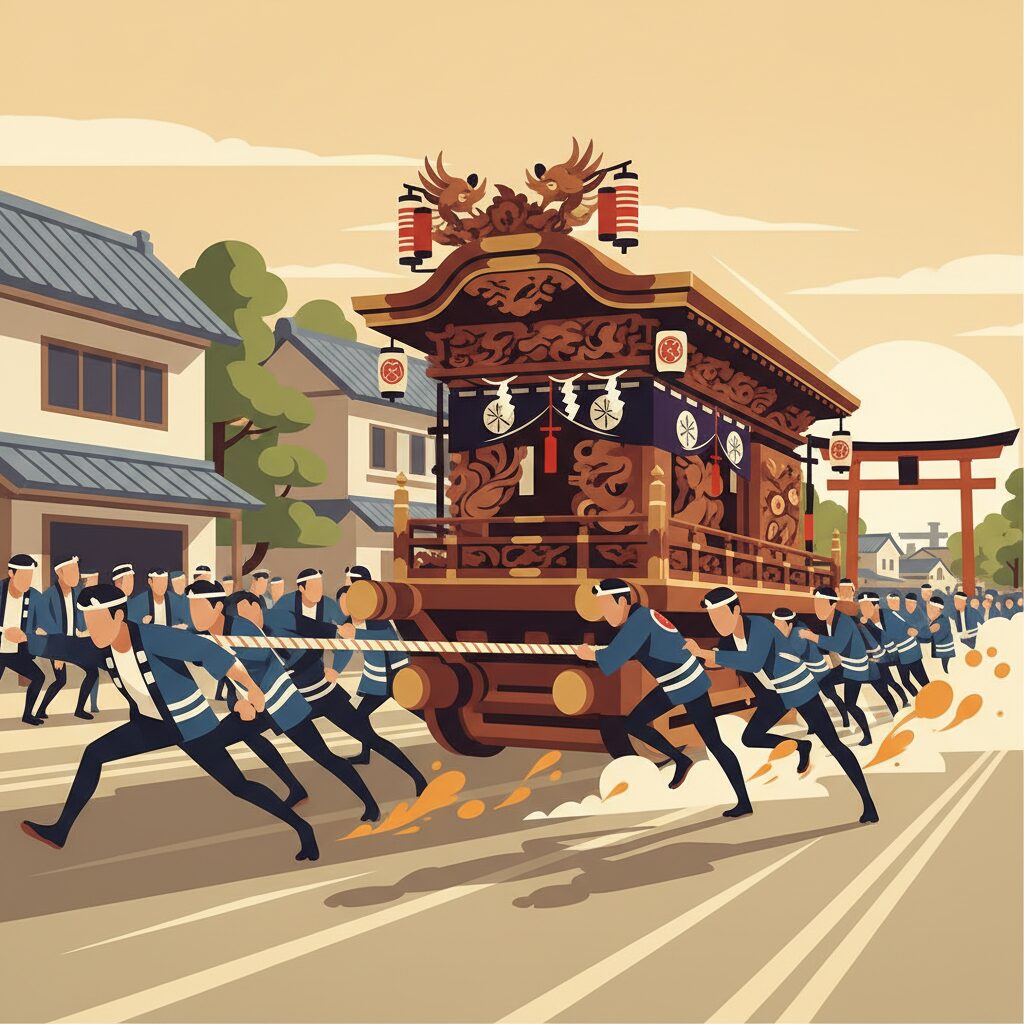
The first thing that hits you is the sound. It’s not just noise; it’s a physical force. A rhythmic chanting, a clatter of wood, the piercing shrill of a flute, and underneath it all, a deep, earth-shaking rumble that you feel in your bones long before you see its source. Then, it appears. A massive, intricately carved wooden float, a danjiri, weighing over four tons, careens around a corner at a full sprint, pulled by hundreds of people running with frantic, synchronized determination. The whole scene is a blur of motion, sweat, and a kind of primal energy that feels both thrilling and terrifying. This is the Kishiwada Danjiri Matsuri. And your first thought as a foreign resident might be, “How do I even begin to watch this without getting in the way, or worse, getting hurt?”
Forget everything you know about quaint Japanese festivals with their slow, graceful processions. The Danjiri is something else entirely. It’s raw, it’s fast, and it is deeply, fiercely local. It’s not a parade put on for tourists. It’s a high-stakes, high-octane expression of community identity, a tradition steeped in a very specific code of conduct that is completely unspoken. For an outsider, the line between spectator and obstacle is razor-thin and constantly shifting. This guide isn’t about the best photo spots or the history of the floats. It’s about the etiquette of the asphalt, the social dynamics of the crowd, and how to read the unwritten rules so you can safely witness one of Japan’s most powerful cultural displays. It’s your key to understanding the mindset behind the controlled chaos, a mindset that reveals so much about the proud, practical, and passionate heart of Osaka.
For additional local context on navigating bustling city life, consider checking out the Osaka shōtengai rental guide for insider perspectives on everyday challenges in this energetic urban environment.
The Danjiri is Not a Performance, It’s a Way of Life
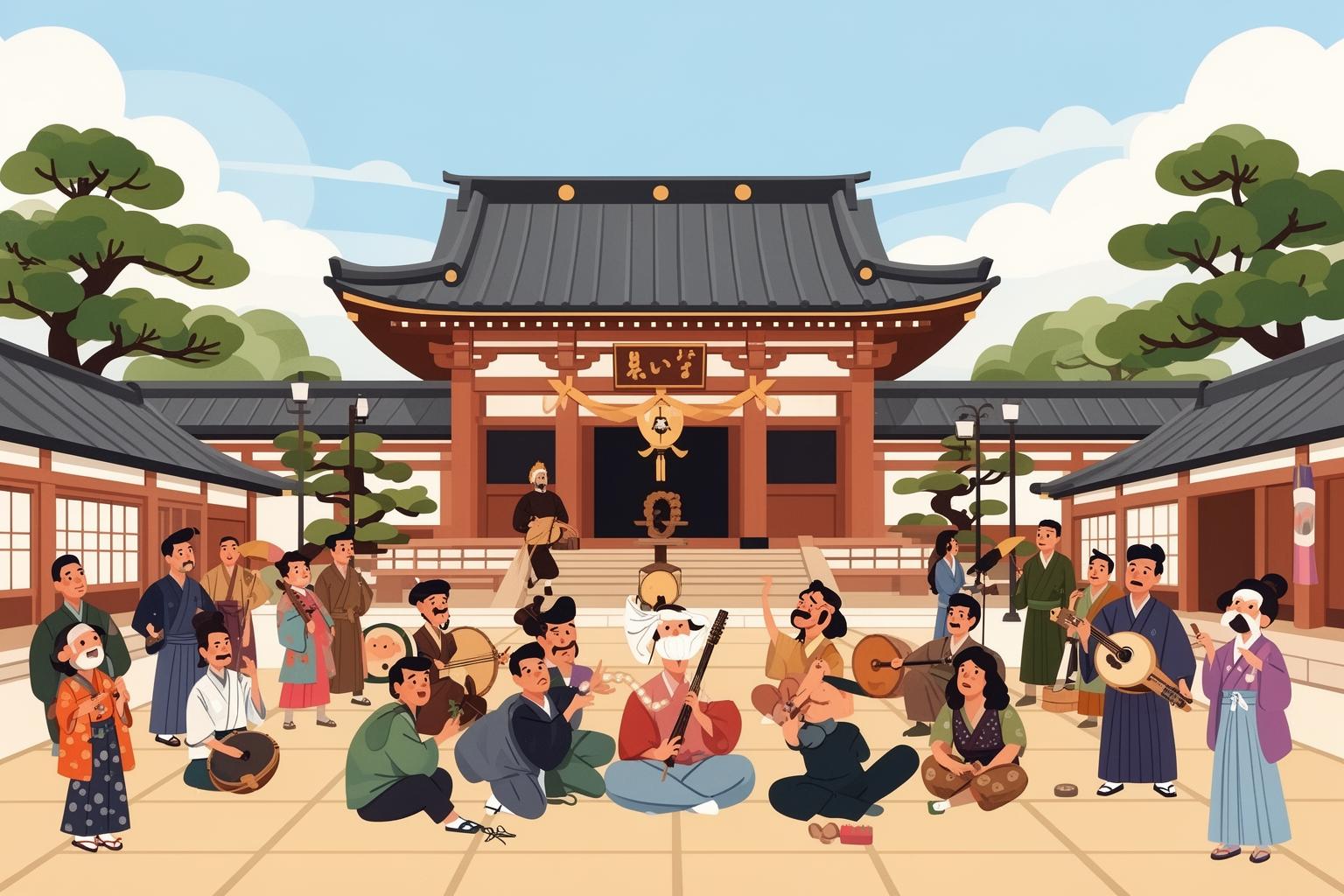
Before you can fully grasp the rules of the festival, you must first understand a fundamental truth: this is not a performance. The people pulling those ropes and dancing atop the roof are not entertainers. For the men and women of Kishiwada, the Danjiri is the organizing principle of their entire year. It shapes social calendars, defines neighborhood ties, and forges personal identities. From the moment a child is born in a particular district, or `cho`, their destiny is linked to their local float. They grow up learning the chants, watching their fathers and grandfathers, and waiting for the day they can take their place on the ropes.
Each of the dozens of danjiri represents a distinct neighborhood. At its core, the festival is a raw competition between these `cho`. It showcases their unity, skill, and collective strength. The pride is immense and intensely localized. This isn’t about being from Kishiwada broadly; it’s about belonging to your specific block. This hyper-local identity is common throughout Osaka, a city defined by neighborhoods, but Kishiwada elevates it to an intense level. The intricate hierarchy on display reflects a real social structure. The revered `daiku-gata`, carpenters who leap and dance on the speeding float’s roof, are masters of their craft and embody the spirit of the float. The `hiki-te` are the powerhouse, hundreds of pullers providing the raw force. Meanwhile, the men at the back use levers to steer the massive float. Every role is earned through years of commitment. When you watch, you’re not witnessing a reenactment; you’re observing a living, breathing social organism in action. This is why a casual attitude feels completely out of place here. You are a guest in their home during their most important annual ritual.
The Unspoken Rules of the Sidewalk: Where to Stand and Where NOT to Stand
This is the most crucial lesson for anyone attending the Danjiri festival. The single most important rule is this: The street belongs to the danjiri. No exceptions. These floats are four-ton wooden battering rams moving at full sprint speed. They cannot swerve for you or stop suddenly. Your personal safety is entirely your own responsibility, beginning with staying out of the way.
The Peril of the Corner: Understanding the Yarimawashi
The festival’s most famous and dangerous maneuver is the `yarimawashi`. This is when the danjiri takes a 90-degree turn at full speed without braking. It’s a breathtaking display of coordination and physics, where the float seems to defy gravity as it pivots violently, its wooden wheels screeching against the asphalt. Naturally, these corners are the most popular viewing spots. For first-timers, however, they are the absolute worst places to be. The crowds are packed ten people deep, pressed together and surging with energy. Local experts and press photographers claim these spots hours, sometimes days, in advance. If you try to squeeze in, you’ll not only see nothing but also find yourself in a highly volatile and potentially dangerous crush of people. My advice is simple: avoid the main corners on your first visit. Instead, find a spot along a straightaway where you can see the danjiri approaching from a distance and feel its power as it thunders past. You’ll have more space and a much safer, more enjoyable experience.
Respecting the Human Barrier
As a danjiri approaches, you’ll notice festival officials—often younger men from the participating `cho` wearing distinct uniforms—running ahead to clear the path. They are the `wakamonogashira`, and their word is law. They will yell, wave their arms, and may even physically push the crowd back. This is not rudeness. This is not the polite, deferential Japan you might be used to. This is Osaka practicality at its most intense. Their job is to keep a clear lane for a speeding four-ton float, and to keep you alive. They establish an invisible line at the edge of the curb. Do not cross it. Don’t lean over it with your phone. Don’t let your feet creep into the street. If you’re told to move back, do so immediately and without argument. They’re not making a suggestion; they’re issuing an order essential for everyone’s safety. In a culture that often values indirect communication, Danjiri is a place of stark, necessary clarity. Following these commands shows respect for their tradition and responsibility.
The Ultimate Faux Pas: No Ladders, No Crates
You might be tempted to bring a small stepladder or plastic crate to stand on for a better view. Don’t. Under any circumstances. This is considered the height of disrespect. It blocks the view for everyone behind you and is seen as a selfish act in a deeply communal event. Locals won’t hesitate to tell you to get down, and their reprimand will be swift and public. You are expected to stand on your own two feet like everyone else. Finding a good vantage point is part of the experience, requiring patience and awareness—not a piece of hardware store equipment.
Respect the Uniform, Understand the Hierarchy
The festival is a sea of traditional clothing, but these are not mere costumes. Each garment serves as a uniform that signifies rank, role, and affiliation. The most common piece is the `happi` coat, emblazoned with the crest of the `cho` on the back. The color of the `hachimaki`, or headband, can also indicate a person’s group or role within the intricate festival hierarchy. Take a moment to notice these details, and you’ll start to recognize the different teams, the leaders giving directions, and the unified appearance of the pullers. It’s a visual language that reveals the community’s structure.
This leads us to another important aspect of etiquette: you are an observer, not a participant. The crowd’s energy is extremely contagious, and you may feel drawn to get closer or join in the action. Resist that impulse. Never, under any circumstances, touch the danjiri. These floats are sacred objects to their communities, carefully preserved and often centuries old. Touching one is a deep violation. Likewise, do not attempt to grab the ropes or run alongside the participants. Doing so would disrupt a finely tuned operation and put both yourself and the crew in danger. The best way to show respect is to maintain a safe distance, watch with appreciation, and allow the participants the space they need to carry out their dangerous and sacred task. Observe their faces: amid the shouting and exertion, you’ll see expressions of intense, focused concentration. For them, this is not a celebration but a test of skill and a spiritual commitment. Recognizing that seriousness is essential to being a respectful spectator.
Navigating the Crowds and the City: A Practical Guide
Attending the Danjiri involves logistical challenges comparable to navigating its customs. Kishiwada, usually a quiet suburb, swells to hundreds of thousands of visitors during the festival weekend. The primary access is through the Nankai Main Line, with Kishiwada and Takojizo stations serving as the main hubs. Expect these stations and their trains to be extremely crowded. The best approach is to arrive very early in the morning and plan to leave either before the last runs of the day or well afterward. Attempting to catch a train in the late afternoon means facing a line that stretches for blocks.
At the festival, the streets transform into a lively celebration area, bustling with `yatai` (food stalls) offering everything from takoyaki to candied apples. This is a delightful part of the experience, but be ready for long lines for food, drinks, and especially toilets. If you’re attending with family, have a strategy. As a mother, I can say without hesitation that the main festival route during the day is not suitable for strollers or very young children. The crowds are too dense, movement is unpredictable, and the overwhelming sensory input can be too much for little ones. It’s simply unsafe. A much better option for families is to enjoy the evening festival. After sunset, the danjiri are decorated with paper lanterns and pulled at a slower, more ceremonial pace. The atmosphere is calmer, more relaxed, and much easier to handle with children. This way, you can get a closer look at the beautiful carvings on the floats without the danger and intensity of the daytime `yarimawashi`.
Beyond the Thrills: What the Danjiri Reveals About Osaka
If you look beyond the spectacle, the Kishiwada Danjiri Matsuri reveals a profound insight into the Osaka character, or at least one striking aspect of it. First, it offers a stunning display of community triumphing over the individual. The success of a `yarimawashi` relies on hundreds of people moving in unison. Personal glory is secondary to the honor of the `cho`. This deep-rooted, hyper-local collectivism is a powerful force in many Osaka neighborhoods, creating a social fabric that often feels much tighter and more demanding than the anonymous urbanism found in Tokyo.
Second, the festival embodies a concept of controlled chaos and an acceptance of risk. To outsiders, it may seem like an accident waiting to happen. To participants, it is a system refined over generations. The danger is real, and injuries are not uncommon, but it is managed through immense skill, relentless practice, and absolute trust in teammates. This isn’t about creating a perfectly safe, sanitized event; it’s about confronting danger head-on and mastering it. This practical approach to problems, and the willingness to embrace a certain level of grit and risk, is something palpable in Osaka’s business and social life. It’s less about conforming to an ideal and more about wrestling with a complex reality.
Finally, the Danjiri is pure, unfiltered passion. Osakans are often stereotyped as loud, direct, and emotional. The Danjiri reveals the cultural roots of that stereotype. It’s an unapologetic, full-throated expression of pride in one’s home, one’s team, and one’s heritage. The intensity that a foreigner might mistake for aggression is, here, the clearest expression of love for a community. Understanding this reframes many daily interactions in the city. The directness isn’t meant to be rude; it’s meant to be clear. The volume isn’t anger; it’s passion.
A Window into the City’s Soul
The Kishiwada Danjiri Matsuri is not a simple festival. It requires your attention, respect, and constant alertness. It is crowded, noisy, and follows a social logic that can seem unclear to outsiders. However, if you approach it as a humble and observant guest, you will be rewarded with an unforgettable experience. You will witness a display of communal strength and cultural pride that feels both ancient and strikingly immediate. Come with an open mind, stay on the sidewalk, and follow the officials’ instructions. By doing so, you won’t merely watch a parade of floats—you’ll feel the powerful, rhythmic, and unwavering heartbeat of a community defined by the thunder of wood on asphalt, a sound that resonates with the very soul of Osaka itself.