
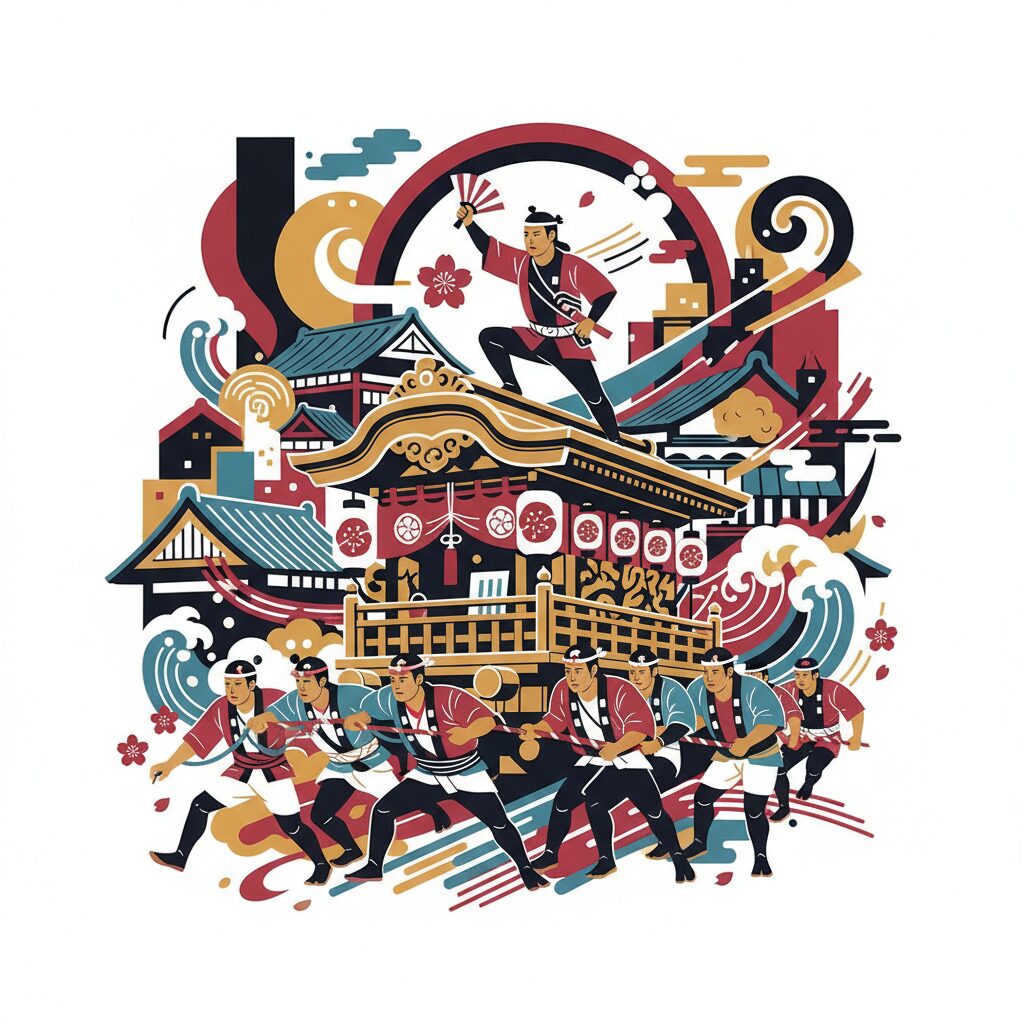
Ask anyone in Osaka about Kishiwada, and you’ll likely get a sharp intake of breath, a shake of the head, and a single, evocative word: abunai. Dangerous. The image that flashes in their mind, and probably yours, is the Kishiwada Danjiri Matsuri. It’s a spectacular, terrifying ballet of speed and chaos. Gigantic, intricately carved wooden floats, weighing up to four tons, are hauled through narrow streets at a dead sprint by hundreds of men. The festival’s defining moment is the yarimawashi, a 90-degree turn at full speed that defies physics and common sense. It’s a spectacle of raw energy, primal community spirit, and very real risk. For two days in September, Kishiwada is the most intense place in Japan. But that’s the question that got my family into the car on a quiet Saturday morning. What happens on the other 363 days? Does a town that runs on pure adrenaline simply power down? Or is that ferocious spirit still humming just beneath the surface? We left the familiar, vertical density of central Osaka behind, heading south along the bay, to spend a weekend listening for Kishiwada’s silent roar.
Behind the spectacle of Kishiwada’s high-octane festivals, many residents navigate the quieter days by tackling everyday challenges like understanding upfront rental costs in Osaka, which showcases another facet of the region’s dynamic lifestyle.
The Town That Breathes Danjiri
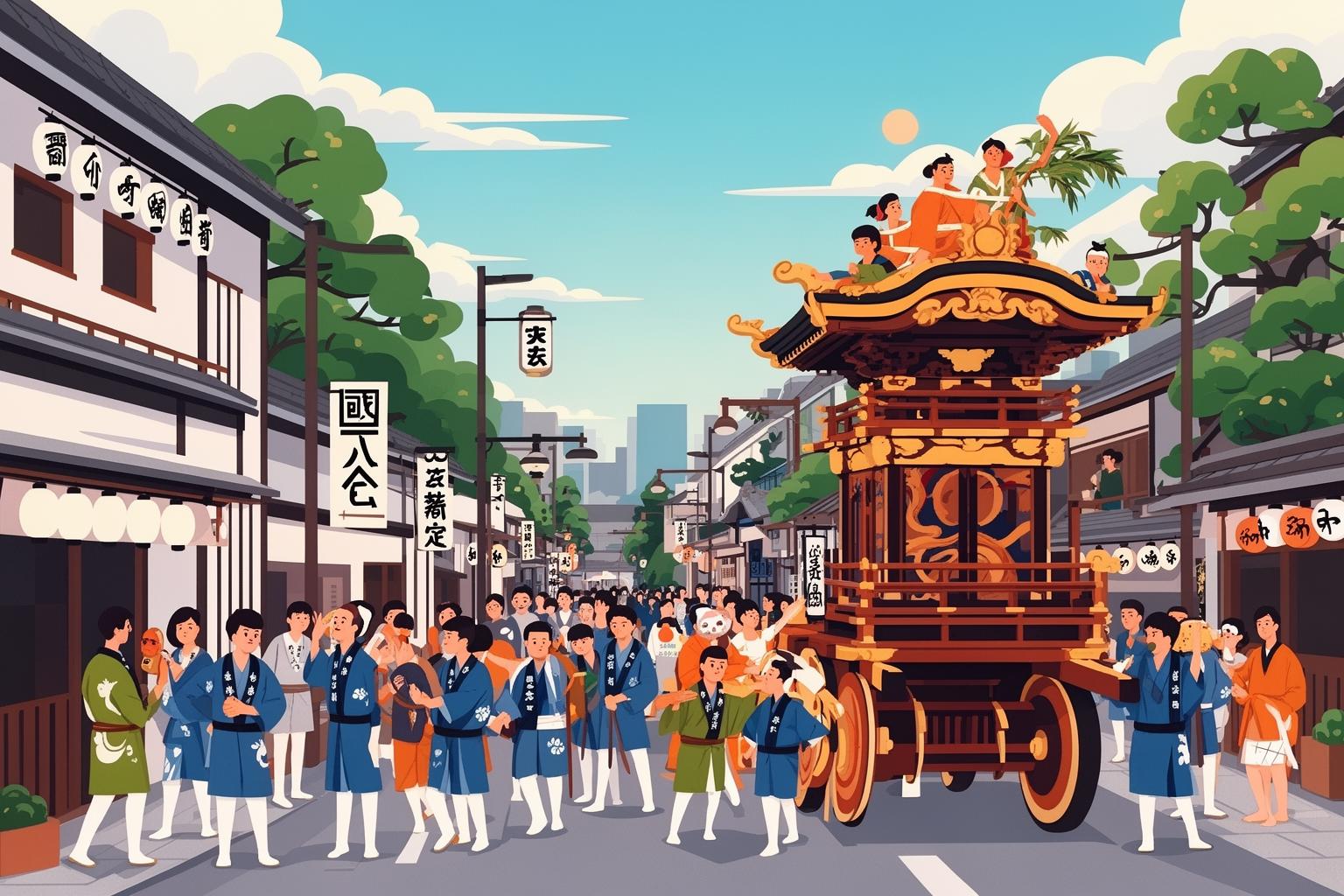
Driving into Kishiwada brings a subtle yet noticeable change in atmosphere. The generic roadside sprawl of greater Osaka transforms into something more distinctive and self-contained. The buildings become lower, the sea breeze more pronounced, and the symbols begin to emerge. Once you start looking, they’re everywhere. The manhole covers shift from abstract geometric designs to detailed reliefs of the danjiri floats and the runners wearing their iconic hachimaki headbands. A local bakery offers cookies shaped like the floats. Lanterns hanging outside a small, weathered izakaya display the crest of a neighborhood team. This is not merely branding; it’s a declaration of identity woven into the town’s very fabric. In central Osaka, a neighborhood’s identity might be tied to its main train station, a famous shopping street, or a specific culinary specialty—often commercial and fleeting. Here, the identity is singular and unwavering. The town is the festival, and the festival is the town. There is no divide. Even on a quiet afternoon, with only cicadas and the occasional passing car breaking the silence, you sense an undercurrent of immense, coiled energy. Walking through the Shotengai, the covered shopping arcade, it felt unlike counterparts in Tenjinbashi or Shinsaibashi. It was less about catering to everyone and more about serving the community. The shops sold festival gear year-round: specially made split-toed tabi shoes with extra grip, custom-embroidered towels, and miniature wooden danjiri for home altars. This wasn’t a tourist trap, but rather the local hardware store, clothier, and everything else, all focused around one unifying purpose.
More Than a Hobby, It’s a Generational Contract
To truly understand Kishiwada, you must discard the Western idea of a hobby. A hobby is something you choose to do in your free time. Danjiri is not a hobby. For the men of Kishiwada, it is an inheritance, a duty, and a fundamental part of their identity. It’s a generational agreement forged through blood, sweat, and community pride. You don’t opt in; you are born into it.
The Neighborhood as a Feudal Lord
The basic unit of Kishiwada society is neither the nuclear family nor the company you work for. It is the chōnai, the neighborhood association, each with its own danjiri float. Your address determines your loyalty. You belong to the Numa-chō district, or the Kaminogō-chō district. This allegiance is absolute and lifelong. The system feels almost feudal in nature, sharply contrasting with the fluid, often anonymous lifestyle of a huge city like Tokyo, where neighbors are often strangers. In Kishiwada, your neighbors are your teammates, your rivals, your support system, and the people you will train with, celebrate with, and grieve with throughout your life. We witnessed it firsthand: a group of tiny children, no older than four or five, running down a side street pulling a miniature danjiri made from cardboard and rope. They shouted “Sorya! Sorya!” with a seriousness both endearing and slightly intimidating. They weren’t merely playing; they were practicing. They absorbed the movements, sounds, and spirit of their future roles. Their fathers and grandfathers likely watched from a nearby doorway, nodding in approval. The training begins in infancy.
A Lifetime on the Ropes
The hierarchy within each danjiri team is strict and earned over decades. Young boys begin by handling simple tasks, cleaning the float and learning its history. As teenagers, they join the hundreds of pullers, the raw power behind the danjiri. This is the wakai-shu, the young group full of strength and ambition. Over time, with experience and skill, a man may advance to more strategic roles, such as steering from the sides or managing the brakes. The highest and most coveted, yet dangerous, position is the daikugata, the carpenter. This man rides atop the danjiri, leaping, dancing, and guiding the pullers with a fan—his body serving as a living rudder. Achieving this role demands a lifetime of commitment and requires not only athletic ability but also a deep, instinctive understanding of the float’s momentum and the street’s curves. This progression, this ladder of respect, runs alongside a man’s professional career. His standing in the community is shaped as much by his role on the danjiri as by his occupation. This builds a strong social bond that transcends the hierarchies of modern workplaces. The company president and the factory worker may pull the same rope together, their social status equalized by their shared mission. It’s a grassroots meritocracy that is rare to find in the highly stratified corporate world of Tokyo.
The Language of Unfiltered Emotion
If standard Japanese is a language of nuance, politeness, and indirect expression, and Osaka-ben is its more straightforward and punchy relative, then Kishiwada-ben is a dialect that has discarded all pretense. It is famously rough, fast, and guttural. It’s the linguistic equivalent of the yarimawashi turn—it gets straight to the point with maximum force and no hesitation. Listening to locals converse is an experience in itself. The sentences are brief, the consonants sharp, and the volume consistently loud. What might sound like a heated argument to outsiders is often just a casual chat about the weather. This can be startling for foreigners and even for Japanese people from other areas. The stereotype of the loud, aggressive Osakan finds its strongest expression here. But mistaking this directness for mere rudeness misses the point. It reflects a culture that values honesty and efficiency over performative politeness. In situations where a split-second decision can mean the difference between a perfect turn and a disastrous accident, there’s no time for honorifics or ambiguity. You say what you mean, and you say it immediately. This mindset extends into everyday interactions. A shopkeeper won’t politely suggest a product; he’ll tell you, “This is the one you need.” It’s not a hard sell; it’s a straightforward statement from his perspective. This unfiltered communication is characteristic of Osaka culture in general, sharply contrasting with the layers of tatemae (public face) and honne (true feelings) that famously regulate social interactions in Tokyo. In Kishiwada, the tatemae has been stripped away by generations of friction, leaving only the raw, unapologetic honne.
A Castle Town’s Soul, Carved in Wood
To truly understand the depth of this local pride, you need to look beyond the festival itself and focus on the town’s centerpiece: Kishiwada Castle. Unlike the grand, reconstructed castles of Osaka or Himeji, Kishiwada’s castle feels more personal, more seamlessly woven into the town. From its top floor, you can observe the city’s layout, a network of narrow, winding streets. This wasn’t the result of poor urban planning; it was a defensive tactic. The same tight corners designed to slow invading samurai armies centuries ago now serve as the legendary spots where the danjiri floats perform their daring turns. The town’s history and the festival’s identity are physically and spiritually intertwined. We spent an afternoon at the Danjiri Kaikan, the festival museum, located in the castle’s shadow. It’s an extraordinary place. Full-sized floats are displayed, allowing you to admire the stunning craftsmanship up close. Every surface is adorned with intricate wood carvings depicting scenes from Japanese history and mythology. These are not static museum pieces behind glass; they are living, working machines, carefully maintained and handed down through generations. What struck me most was the deep respect the locals showed toward the exhibits. They weren’t just observing; they were connecting. An elderly man pointed to a specific carving to his grandson, sharing the story behind it, his hand resting on the polished wood as if it were a family member. The floats are the town’s sacred texts, and the festival is the yearly ritual where those texts come alive. This isn’t merely a celebration. It’s a form of ancestor worship, a tribute to history, and a powerful reaffirmation of a shared identity that has persisted for over 300 years.
The Outsider’s Perspective
So, what does all this mean for an outsider, for a foreign family on a weekend trip? Is this an impenetrable culture? Yes and no. On the surface, it can appear to be a closed society. The bonds are so strong, the history so rich, that it’s easy to feel like you’re an outsider looking in. We glanced into an open garage where a group of men were carefully polishing brass fittings for their float. They paused and stared, their expressions a mix of curiosity and suspicion. The silence was palpable. But then my son, free from social anxiety, pointed at the giant wheel and said “Wow, big!” in his clumsy Japanese. The tension eased. One of the men chuckled, knelt down, and explained how the wheel was made of pine and built to endure tremendous forces. They weren’t unfriendly; they were simply deeply absorbed in their world. A genuine, simple expression of interest was the key that briefly opened the door. This is an important lesson for living in Osaka, and Japan in general. Communities may seem insular, but they often function on a foundation of shared passion. If you show sincere respect and curiosity for what they treasure—whether it’s a danjiri float, a local ramen recipe, or a Hanshin Tigers baseball game—you will often find an unexpected warmth and acceptance. What people frequently misunderstand about Kishiwada, and by extension, the more traditional side of Osaka, is that the intense, sometimes aggressive exterior serves as a shield for something deeply valued. It’s the fierce protection of a unique identity in a rapidly homogenizing world. They aren’t trying to exclude you; they are trying to preserve their culture.
The Lingering Echo
Driving back to Osaka City on Sunday evening felt like entering a different world. The urban skyline reappeared, the streets expanded, and the air thickened with the anonymous buzz of countless untold stories. The singular, thunderous tale of Kishiwada softened into a faint echo. Yet, something had shifted. I began to notice mini-Kishiwadas scattered throughout Osaka. The intense loyalty of baseball fans in a Tigers-themed bar near Kyocera Dome. The passionate, almost territorial pride of shop owners in the Kuromon Market. The way neighbors in my own apartment building in Tennoji come together for the local summer matsuri, though on a smaller, safer scale. Kishiwada is not an exception. It is the purest, most concentrated expression of a fundamental Osakan trait: an identity grounded not in national or corporate ties, but in the soil of the neighborhood you call home. It’s a fierce, unconditional, and sometimes intimidating local pride. You don’t have to witness the vibrant chaos of the Danjiri Matsuri to grasp its spirit. In fact, perhaps the best way to understand it is to visit when the streets lie quiet. It is in the silence that you can truly feel the town’s powerful, unwavering heartbeat—a rhythm that has propelled its people for centuries and will continue long after the tourists have left.








