There’s a sound that defines daily life in Osaka more than the rumbling trains or the cheerful calls of shopkeepers. It’s the gentle, rhythmic squeak of an un-oiled bicycle chain, the jingle of a bell, and the soft whir of tires on pavement. In this city, the bicycle isn’t a piece of sporting equipment or a weekend hobby. It’s a limb. It’s a vital organ. The mamachari, or “mommy bike,” with its sturdy frame and cavernous front basket, is the unofficial chariot of the Osakan populace. To own one is to claim a piece of the city for yourself. But is this two-wheeled key a ticket to urban freedom, or a daily subscription to a special kind of stress? The answer, like so many things in Osaka, is complicated, pragmatic, and reveals the very soul of the city. It’s a constant negotiation between the bliss of mobility and the headache of navigating a city that loves its bikes almost too much.
Amid this continuous interplay between urban freedom and the daily challenges of cycling in Osaka, many locals find invaluable insights by navigating Osaka’s unique bicycle culture to master their daily commute.
The Unchained Melody: Embracing the Freedom of Two Wheels
To grasp why the bicycle holds such a dominant place, you first need to appreciate the pure joy it brings. It’s not a vague idea; it’s a concrete, everyday escape from the strict schedules and cramped conditions of public transit. Cycling in Osaka means flowing with the city’s natural rhythm, rather than the abrupt timing of train departures.
The City is Your Canvas: Osaka’s Glorious Flatness
Unlike Tokyo’s unexpectedly hilly terrain or the steep slopes around Kobe, central Osaka is as flat as a pancake. This vast, sprawling plain is shaped by rivers but thankfully free from exhausting hills. This geographic advantage underpins Osaka’s cycling culture. It makes travel accessible to everyone. You don’t need to be an athletic Lycra enthusiast; grandmothers carrying baskets of daikon pedal alongside university students and salarymen in suits. This flat landscape turns the city from a patchwork of disconnected transit hubs into a seamless, continuous map. You can effortlessly ride from the commercial canyons of Umeda up north, cross the Yodo River, pass through Nakazakicho’s hipster neighborhoods, and continue all the way to the neon-lit streets of Namba without breaking much of a sweat. The bicycle weaves the city’s diverse neighborhoods into a unified whole, making you feel like a genuine resident rather than just a traveler.
The Mamachari Manifesto: A Symbol of Pragmatism
At the heart of this story is the modest mamachari. It’s a triumph of practical design, a bike made for everyday living rather than speed. Notice its features: the tall, swept-back handlebars promote an upright, dignified ride. The built-in lock snaps shut with satisfying certainty. The dynamo-powered headlamp lights up as you pedal through dusk. And naturally, the basket. The basket is the bike’s essence, a carrier for groceries from the local shotengai, a child’s school bag, or even a sleepy dachshund enjoying a ride. This isn’t a fitness bike; it’s a lifestyle tool. It perfectly captures the Osakan mindset: pragmatism over prestige, usability over style. Expensive carbon-fiber frames impress no one here. What matters is your skill in balancing a week’s worth of groceries, a bag of rice, and a case of Asahi beer while maneuvering through crowded streets. The mamachari stands as a statement that life is about getting things done efficiently and with minimal fuss—a core value of the local character.
Beyond the Loop Line: Discovering the Soul of the Neighborhoods
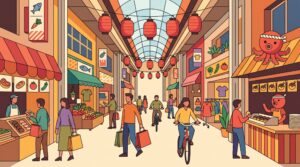
Living in Osaka solely via trains is like reading a book by glancing only at the chapter titles. The JR Loop Line and the Midosuji Subway Line serve as the main arteries, but the city’s true heartbeat lies in the tiny capillaries between them. A bicycle is your personal key to this hidden network. On a bike, you’ll discover the authentic Osaka. You’ll find the tiny, family-run okonomiyaki shop tucked away on a residential street in Fukushima, the tranquil shrine hidden behind a pachinko parlor in Tenma, and the impossibly narrow shopping arcade where vendors still count with an abacus. These spots give Osaka its texture, character, and warmth. Cycling lets you engage on a human scale, to stop spontaneously, to follow an intriguing scent, to interact with the city in a way impossible when you’re 50 feet underground on a subway. You become part of the streetscape, actively involved in the daily pulse of neighborhood life rather than a mere passerby.
The Ultimate Life Hack: Dodging Fares and Crowds
Let’s be straightforward, as Osakans always are. This city prides itself on shrewdness and finding the best value. The Japanese term kechi is often translated as cheap or stingy, but ‘economical’ might be a better fit. Osakans dislike waste, and paying a 230-yen subway fare for a ten-minute trip that can be biked in fifteen strikes them as sheer folly. Over a month, the savings add up. Over a year, they’re substantial. But the benefit goes beyond money. It’s the quiet satisfaction of passing by the long queue waiting to descend into the subway during the morning rush. It’s the freedom of avoiding the sweaty crush of strangers on a packed train on a humid summer evening. Each journey becomes a small triumph, a clever hack around the system, a testament to your own ingenuity. This feeling perfectly reflects the independent, slightly rebellious streak deeply woven into Osaka’s spirit.
The Daily Grind: Navigating the Frustrations
But the romance of the open road—or in this case, the open sidewalk—is often interrupted by a series of uniquely Osakan frustrations. For every moment of cycling bliss, there’s an equally frustrating moment that tests your patience. This is the flip side, the daily struggle that challenges even the most experienced rider.
The Great Disappearing Act: The Bicycle Parking War
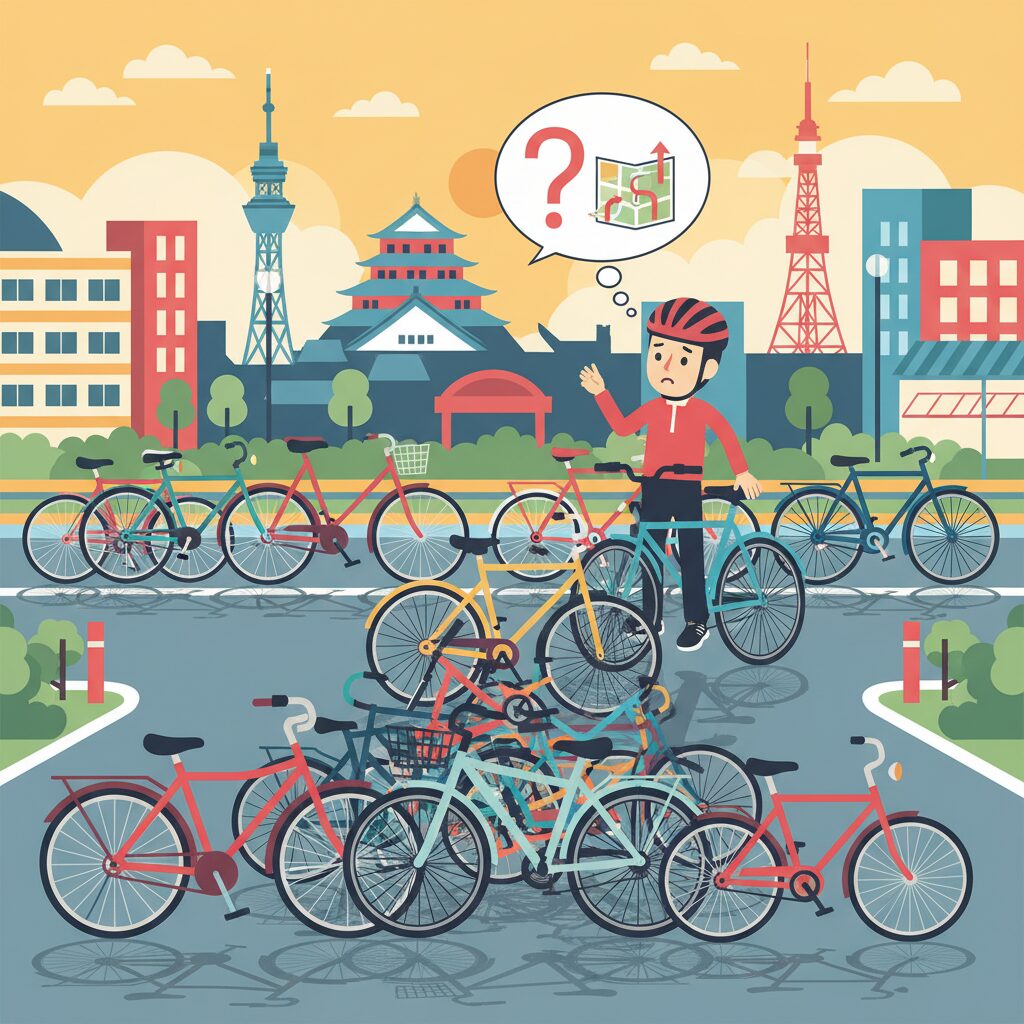
Your journey may be free, but your destination certainly isn’t. The biggest source of stress for any Osaka cyclist is the relentless and soul-crushing search for legal parking. Major train stations act like black holes for bikes. You find yourself circling the block repeatedly, scanning for an open space in the designated, fee-based lots that are almost always full. Around you, sidewalks remain tantalizingly empty but plastered with bright red “No Bicycle Parking” signs. The urge to just lean your bike against a railing for “just five minutes” is strong, but it’s a risky gamble. This city is fighting a war with itself. It promotes cycling but then punishes it with a severe lack of infrastructure. The foot soldiers in this conflict are the city workers in silver vans—the dreaded bicycle impounders. They patrol the streets, systematically tagging illegally parked bikes with warnings and then, hours later, hauling them away. Retrieving your bike is a bureaucratic nightmare involving a trip to a remote, desolate impound lot and a fee of several thousand yen. Nearly every long-term resident has a tale of leaving a shop only to find their trusted ride gone, replaced by a small, heartbreaking sticker. It’s a constant, low-level anxiety that gnaws at the edges of your urban freedom.
The Sidewalk Scramble: Anarchy on Two Wheels
If you come from a place where traffic laws are strictly enforced, cycling in Osaka can be a real culture shock. Here, the rules of the road often feel more like polite suggestions. While cycling on the street is technically the rule, the sidewalk is where the real action happens. It’s a chaotic, intricate dance of pedestrians, cyclists, and the occasional scooter. People ride holding umbrellas in the rain, a feat of balance that seems to defy physics. They text while weaving through crowds. They ring their tiny bells not as a warning but as a polite, firm request for pedestrians to yield the way. To newcomers, this behavior can feel aggressive and dangerous, a sharp contrast to the more orderly, rule-abiding image often associated with Japan. But it’s not driven by malice. It’s born from Osaka’s sekkachi (impatient, hurried) culture and a strong belief in mutual awareness. The unwritten rule is that everyone is responsible for avoiding collisions. You are expected to stay alert, scan constantly, and keep predicting and adjusting. An Osakan cyclist assumes you see them as clearly as they see you—and that both parties will make the small adjustments needed to avoid crashing. It’s a high-stakes, high-trust system that seems like utter chaos until you get its rhythm. This is a marked difference from Tokyo, where, although rules are bent, there is a stronger social pressure to conform.
The Elements’ Veto: Rain, Wind, and the Summer Swelter
The bicycle is a fair-weather friend. In Osaka, however, the weather is often anything but fair. During tsuyu, the rainy season in June and July, the sky opens up and your primary mode of transportation becomes a useless, rusting paperweight. You might try plastic rain ponchos that turn you into a walking greenhouse, but a strong gust of wind or passing truck can leave you soaked and miserable. Then comes summer. Osaka’s August is a brutal physical assault. The humidity is a thick, wet blanket smothering the city. Just five minutes of pedaling means arriving at your destination with your shirt stuck to your back, looking as if you’ve run a marathon. The dream of a breezy ride is replaced by the reality of a grueling, sweaty slog. On these days, the air-conditioned refuge of the subway feels like the greatest luxury, while your once-beloved bicycle sits outside, mocking you in the sweltering heat.
The Lock and the Ledger: Security and Bureaucracy
Even in a country as famously safe as Japan, bicycle theft is a real concern. This leads to the first bureaucratic hassle you’ll likely face: jitensha bouhan touroku, or mandatory bicycle crime prevention registration. When you buy a bike, new or used, you must register it with the police for a small fee. The orange sticker affixed to your frame is your proof of ownership. While this helps, it doesn’t erase the risk entirely. And it’s not only fancy road bikes that get stolen; a beat-up, squeaky mamachari is just as vulnerable if not properly locked. It’s another small friction point, a reminder not to be complacent. It adds a layer of vigilance to your daily routine—always using the built-in lock, often securing a second, sturdier lock, and feeling a slight pang of anxiety whenever leaving your bike unattended for long periods in crowded places.
The Verdict: Is the Osaka Bicycle Life for You?
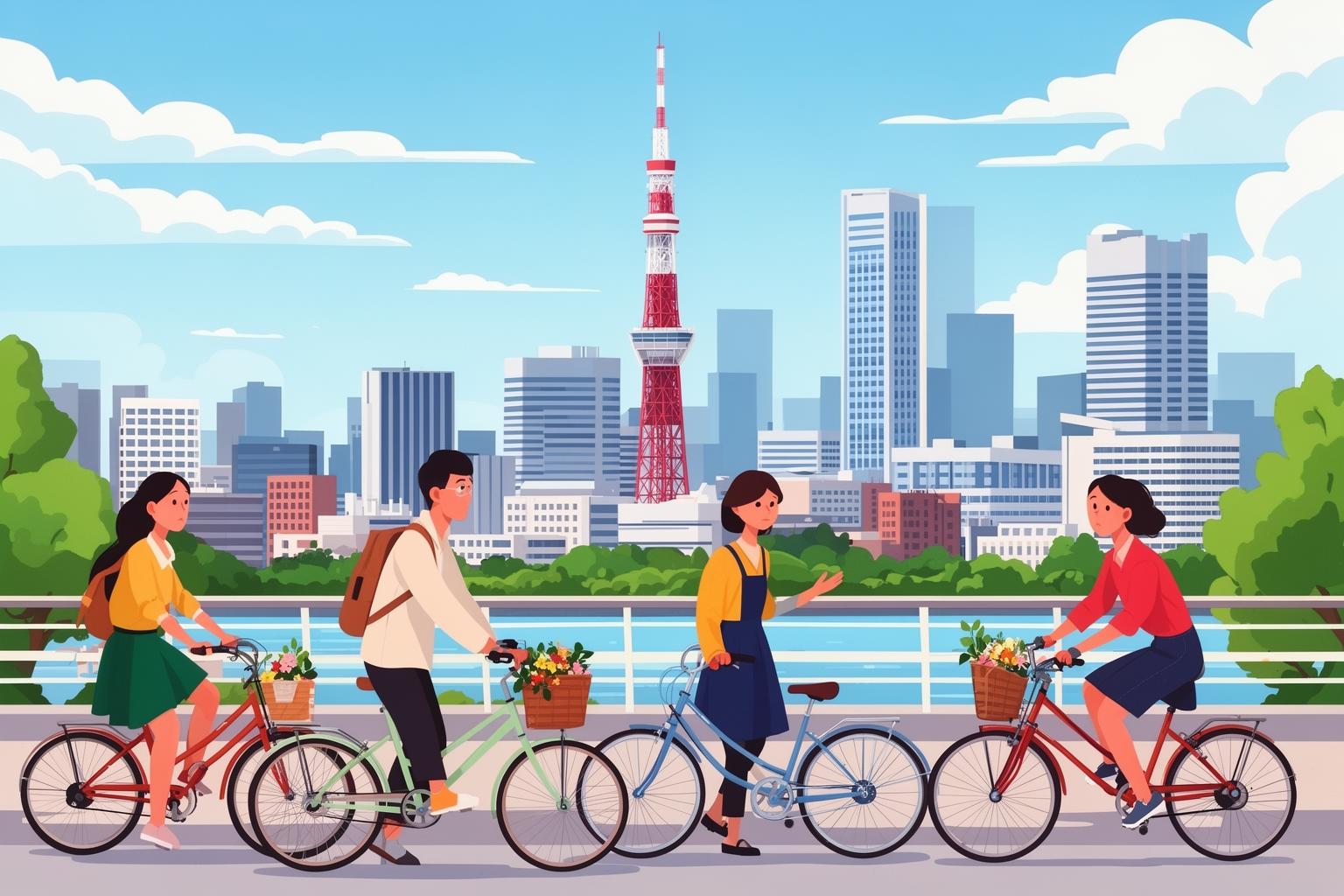
So, is the bicycle a chariot of freedom or a chariot of fire? The truth is, it’s both. Using a bicycle in Osaka means fully embracing the city’s contradictions. It offers an unparalleled sense of autonomy, allowing you to navigate the city on your own terms, reflecting the independent, do-it-yourself spirit of the Osakan people. It saves you money, uncovers the city’s hidden corners, and connects you to the rhythm of its streets in the most intimate way possible.
Yet, it also demands a certain resilience. It calls for a high tolerance for organized chaos, a Zen-like patience for the daily parking puzzle, and a pragmatic acceptance that sometimes, the weather will simply prevail. Choosing to become a dedicated cyclist in Osaka is less a practical decision and more a philosophical one. It’s a commitment to experiencing the city in its rawest form—efficient, occasionally frustrating, a bit lawless, but always, always vibrant.
Ultimately, understanding Osaka’s complex relationship with the bicycle is a shortcut to understanding Osaka itself. The freedom it provides and the frustrations it brings perfectly encapsulate the city’s character: a place that values practical solutions and individual ingenuity over strict rules and polished appearances. If you learn to navigate the sidewalks, win the parking battle, and embrace the mamachari mindset, you haven’t just found a mode of transport. You’ve found a way to belong.