
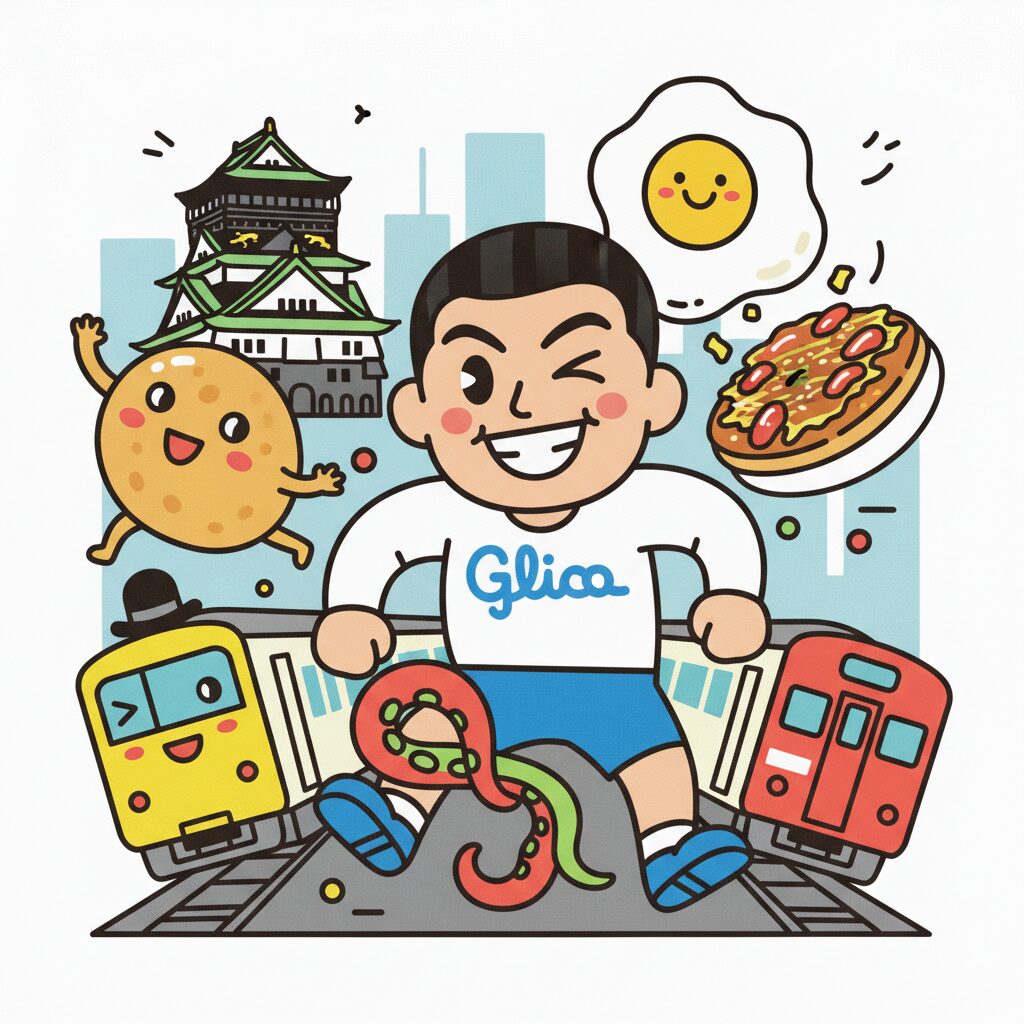
Step off the train in Osaka, and the first thing you notice isn’t the neon glow of Dotonbori or the sheer scale of Umeda Station. It’s the sound. Not just the volume, but the rhythm, the cadence, the unmistakable feeling that you’ve walked into the middle of a city-wide conversation where everyone is simultaneously the performer and the audience. Walk into a tiny takoyaki stand, and the guy behind the grill doesn’t just ask for your order; he might comment on your t-shirt, crack a joke about the weather, and then dramatically sigh about how his octopus balls are too delicious for their own good. Go to pay for groceries, and the cashier, a woman in her sixties, might scan your instant ramen and say, “Ah, a student’s feast! Don’t worry, you’ll be able to afford the fancy stuff someday.” It’s relentless, it’s charming, and for newcomers, it can be utterly bewildering. Why does every interaction, no matter how mundane, feel like a comedy sketch waiting for a punchline? In Tokyo, a transaction is a transaction. It’s efficient, polite, and follows a script. In Osaka, a transaction is an opportunity. An opportunity for connection, for performance, and most importantly, for a laugh. This isn’t just about being “friendly”; it’s a deeply ingrained communication philosophy, a cultural mindset where humor isn’t just a spice, it’s the main ingredient. To understand Osaka, you have to understand its comedy. It’s the key that unlocks the city’s heart, its history, and its very soul.
Navigating Osaka’s streets reveals that the same vibrant humor permeating everyday exchanges also infuses its rich culinary traditions, as seen in Osakans’ kuidaore culture.
The Unspoken Rule: Every Conversation Needs a Punchline
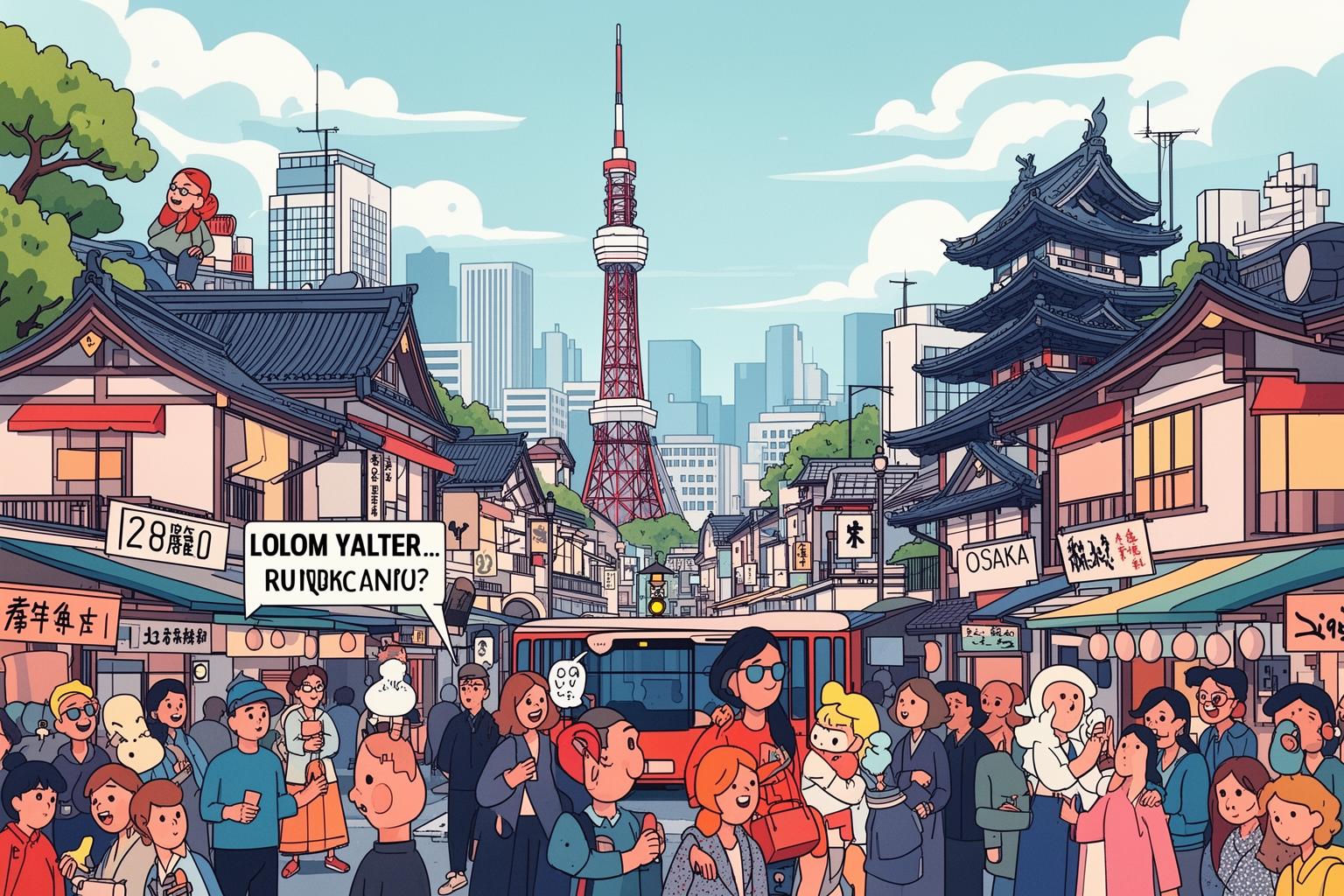
In most regions, a story primarily serves to convey information. However, in Osaka, its main purpose is to entertain. This fundamental distinction is the root of one of the most frequent criticisms you’ll encounter in conversations in Osaka: the dreaded accusation that a story lacks an ochi.
Ochi ga Nai (There’s No Punchline)
Picture telling your friend from Osaka about your morning: “I woke up, brushed my teeth, the train was on time, and I got to work.” You’re likely to be met with a blank look, maybe a sigh, followed by the inevitable question: “De, ochi wa?” (So, what’s the punchline?). A story without a twist, a humorous observation, or a self-deprecating ending is seen as pointless. It’s like serving a meal without the main dish. This expectation to provide an ochi influences all forms of communication. People don’t merely recount events; they shape stories. A simple supermarket trip becomes an epic saga of battling crowds for the last discounted bento, complete with dramatic sound effects and exaggerated gestures. A minor error at work gets retold as a disastrous yet comical failure. This is why conversations here are so lively. People are constantly tweaking their own life stories on the fly, hunting for the comedic angle, the absurd detail, the perfect moment to end with laughter. It’s not about being dishonest; it’s a shared understanding that the purpose of talking is to create moments of mutual enjoyment.
The Art of the Tsukkomi and Boke
This conversational art follows a classic comedic form found in Japanese manzai comedy, repeated countless times daily on Osaka’s streets: the interplay between the boke and the tsukkomi. The boke plays the fool, saying something absurd, silly, or illogical. The tsukkomi acts as the straight man, pointing out the absurdity with a sharp, witty comeback, often accompanied by a light tap. These roles aren’t fixed; people switch between boke and tsukkomi effortlessly within a single conversation. It’s a verbal dance. For example, a shopkeeper might hold up a ridiculous hat and say seriously (boke), “This will solve all your problems.” The customer’s response isn’t silence but a quick tsukkomi, such as, “What problems, making me look like a traffic cone?” This back-and-forth is immediate and natural. For foreigners, mastering this may seem intimidating, but you’re not expected to become a professional comedian. The key is to join in. When an old man on the bus notices your large backpack and says (boke), “Are you running away from home?” a simple, playful tsukkomi like “Nande ya nen!” (a classic Kansai phrase meaning “No way!” or “Why the heck!”) earns a warm laugh and an instant sense of connection. It signals you understand the game and are willing to play.
The Historical and Economic Roots of Osaka’s Wit
Osaka’s fascination with humor isn’t just a random trait. It has been shaped by centuries of history as a city of merchants, where wit was as prized as wealth. This commercial mindset fostered a culture that valued pragmatism, straightforwardness, and the ability to quickly build rapport—all qualities that humor naturally supports.
A Merchant’s Mentality: Building Rapport Through Laughter
For centuries, Osaka was known as tenka no daidokoro, or “the nation’s kitchen.” It served as Japan’s economic powerhouse, a lively center where merchants from across the country gathered to trade. Unlike the strict, hierarchical samurai class dominant in the political capital Edo (now Tokyo), Osaka’s strength lay in its people and their business acumen. In a competitive market, standing out was essential. Humor served as the perfect icebreaker. A clever joke could ease tension in a negotiation, a self-deprecating quip could make one more approachable, and a memorable, amusing exchange would ensure a customer’s return. This tradition continues today. When a clerk at Tenjinbashisuji Shopping Street playfully chides you for taking too long deciding between two nearly identical snacks, they’re not being rude—they’re delivering a uniquely Osaka-style customer experience. The joke is a small gift, a bit of entertainment added free with your purchase. It signals, “We’re not just a faceless store and anonymous customer. We’re two people sharing a moment.” This stands in sharp contrast to the polished but often impersonal service typical of Tokyo, where flawless performance often outweighs personal connection.
The Anti-Tokyo Sentiment: Humor as Identity
Osaka’s identity has long been defined in contrast to Tokyo. Whereas Tokyo centers on government, formality, and established authority, Osaka represents the common people, entrepreneurs, and challengers. It is a city marked by healthy skepticism toward authority and pride in its unique culture. Humor emerged as a strong expression of this identity—a way to be direct and honest (honne) in a society that often values a polite public front (tatemae). Jokes serve to subvert the stiff formalities associated with the capital. They act as a subtle rebellion, a cultural statement that “we don’t take ourselves so seriously here.” This attitude explains Osaka’s refreshingly direct communication style. People are more apt to speak their minds, with humor smoothing the way to avoid offense. A joke can deliver criticism or advice that might sound harsh if said bluntly. It is a tool for honest communication while preserving harmony.
Navigating the Comedy Landscape: A Foreigner’s Guide
For someone who isn’t a Japanese resident, diving into this world can be both thrilling and daunting. The fear of missing the joke, or worse, responding incorrectly, is very real. But the charm of Osaka’s humor lies in its inclusivity. The aim is to share a laugh, and the locals are more than happy to help you get there.
Don’t Be Afraid to Join In
The biggest error you can make is responding to a joke with a serious, literal reply. This can shut down the interaction and may be taken as coldness. You don’t need to come up with a perfect, witty retort. Often, a hearty laugh, a smile, or even a playful look of confusion is enough to show you’re involved. The person telling the joke isn’t testing you; they’re inviting you to connect. Accepting that invitation is what really matters. If you feel daring, try a simple tsukkomi. For example, if a friend shows up wearing a flashy shirt, a casual “Mecha hade ya na!” (“That’s super flashy!”) works wonders. People will greatly appreciate the effort. It shows you’re not just living in Osaka, but trying to live like an Osakan.
The Language of Laughter: The Role of Kansai-ben
You can’t discuss Osaka’s humor without mentioning its dialect, Kansai-ben. Compared to the flatter, more monotonous standard Japanese spoken in Tokyo, Kansai-ben is rhythmic, expressive, and packed with emotional impact. Words like meccha (very), honma (really), and akan (no good/impossible) are delivered with a musicality that naturally suits comedy. The intonation rises and falls dramatically, making even simple statements sound like a performance. The dialect is so closely linked to comedy that just hearing it on TV often signals to viewers that the character is the funny one. As you live here, you’ll begin to pick it up, and you’ll find that speaking even a bit of Kansai-ben makes your interactions warmer and more playful. It’s the official language of Osaka’s comedic spirit.
When Humor Goes Too Far: Reading the Room
It’s important to be upfront: Osaka’s humor can be very direct and sometimes feel personal. The boundaries of polite conversation are different here. It’s not unusual for people you’ve just met to joke about your love life, your clothes, or how much you’re eating. A friendly grandmother at a restaurant might say, “Eat up! You’re too skinny!” This is not intended as an insult. In Osaka, this kind of teasing often signals affection and familiarity. It’s a way of fast-tracking intimacy, bypassing formal small talk for a more personal connection. However, it’s a delicate balance. The key is to interpret the intent behind the words. Is the person smiling? Is the mood light? In ninety-nine percent of cases, the answer is yes. The humor is designed to build a bridge, not a barrier. If you ever feel truly uncomfortable, a polite deflection is acceptable, but keep in mind that you’re engaging in a culture where a little personal teasing is a mark of friendship.
Beyond the Stereotype: The Humanity Behind the Humor
It’s easy to reduce Osaka’s culture to a simple stereotype of loud, funny people. However, the humor extends beyond a mere personality trait; it serves as a philosophy for life. It acts as a tool for resilience, a means of community building, and the most genuine expression of the city’s profound humanity.
Laughter as a Coping Mechanism
Life is difficult everywhere. People endure bad days, financial hardships, and disappointments. In Osaka, the typical response to adversity is to find humor in it. Complaining about a terrible boss becomes a dramatic monologue, complete with impersonations, that has your friends laughing uncontrollably. Worrying about rent turns into a string of jokes about increasingly desperate (and absurd) ways to make money. This isn’t about ignoring problems; it’s about diminishing their power. By transforming struggles into shared stories and shared laughter, the burden feels lighter. It functions as collective therapy, reflecting the resilience of a city that has always had to be tough and resourceful. Laughter is the ultimate emotional shock absorber.
The True Meaning of “Friendly”
Returning to the familiar cliché: “Osaka people are friendly.” It’s true, yet the word “friendly” doesn’t fully capture what’s occurring. Osaka’s friendliness is not passive; it’s not the polite, non-intrusive kind of friendliness characterized by keeping to oneself. It is an active, engaging, and participatory warmth. A joke from a stranger acts as a proactive gesture of connection. It breaks down the invisible barrier that usually exists between people in a large city. It’s a brief declaration that, for a moment, we are not strangers. We are two people sharing space and laughter. Living here means your daily routine is filled with these moments. Your trip to the post office, your lunch break, your walk home—they all hold the potential for a small, unscripted scene. This is the true nature of daily life in Osaka. You are not just an anonymous face in the crowd. You are a potential scene partner, a future audience member, a co-star in the endless, hilarious, and deeply human comedy that is Osaka.








