When I first moved to Osaka from Tokyo, I thought I had the daily commute figured out. You get your IC card—an ICOCA here, not a Suica—tap it on the reader, and zip through the gates. It’s the rhythm of urban Japan, a seamless, thoughtless dance of technology and efficiency. For weeks, I did just that, tapping my way from my apartment to our event planning office in Umeda. Then one day, my boss, a born-and-bred Osakan named Tanaka-san, watched me breeze through the ticket gate. He just chuckled. “Hara-san,” he said, shaking his head with a grin, “you’re still commuting like a Tokyoite.”
I was confused. Wasn’t this the way? The fast way? The modern way? He pulled a tiny, flimsy paper ticket from his wallet. It looked ancient. “This,” he declared, holding it up like a trophy, “is the Osaka way.” He explained that he’d bought it just a minute before at a little shop crammed between a takoyaki stand and a pharmacy. The savings? A mere twenty yen. Twenty yen. It seemed like an absurd amount of effort for the price of a piece of cheap candy. Why would anyone trade the sublime convenience of a rechargeable smart card for a paper ticket to save pocket change? What I didn’t realize then was that this wasn’t just about twenty yen. It was about a philosophy, a game, and the very soul of Osaka’s merchant culture. This was my introduction to the world of kin-ken shops, the city’s unsung engine of savvy savings, and the moment I started to understand what truly makes Osaka tick.
This encounter sparked my curiosity about Osaka’s everyday practicality, leading me to explore local shōtengai errands that further reveal the city’s unique rhythm.
What in the World is a ‘Kin-ken Shop’?
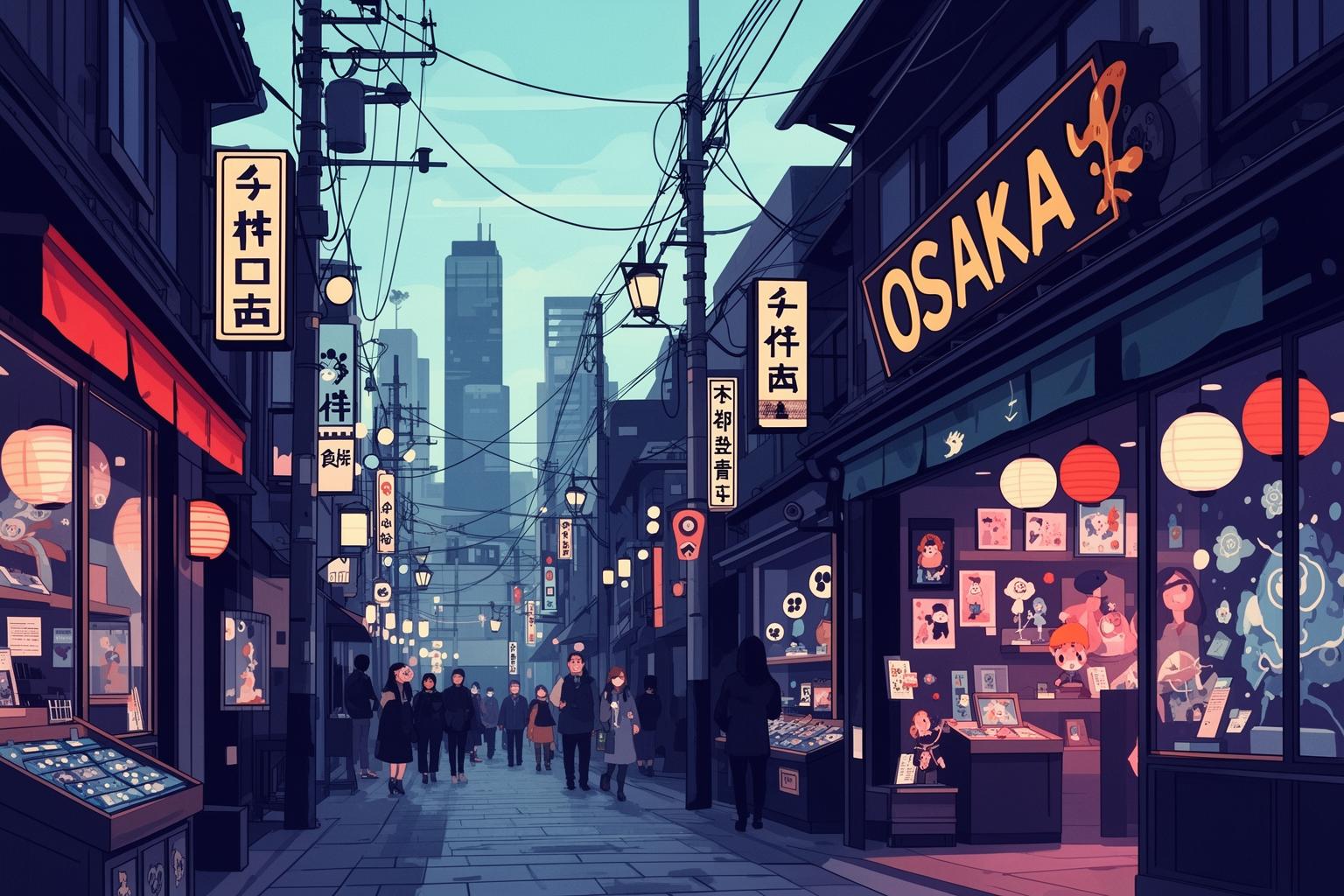
Walk around any major train station in Osaka—Umeda, Namba, Tennoji—and you’ll spot them. Nestled into narrow strips of real estate, these storefronts bombard the eye with neon signs, handwritten posters, and flashing numbers. They are the kin-ken shops, or discount ticket stores. The name itself translates directly: kin (金) means ‘money’ or ‘gold,’ and ken (券) means ‘ticket’ or ‘voucher.’ They are, quite literally, money-ticket shops, a marketplace for untapped value.
Inside, behind a sheet of plexiglass, a clerk oversees a world of discounted paper. It’s an organized chaos of small drawers and plastic sleeves holding everything from Shinkansen bullet train tickets and department store gift certificates to movie passes, postage stamps, and even stock shareholder coupons. They resemble a currency exchange booth that has expanded to trade in every form of paper promise a consumer society can produce.
So how does this system work? The business model is a simple, clever form of arbitrage. These shops buy tickets and vouchers from people who don’t need them—such as employees who receive gift cards as corporate bonuses or travelers with changed plans—and sell them to those who do, at prices slightly below face value. The shop takes a small cut, the original owner gets cash for something unusable, and the new buyer scores a deal. It’s a win-win-win ecosystem based on the idea that no value should ever be wasted. In a city built by merchants, it’s the most natural business in the world.
The Commuter’s Secret Weapon: ‘Kaisuken’
For the daily commuter, the holy grail of the kin-ken shop is the kaisuken (回数券). The term means ‘coupon ticket’ or ‘book of tickets.’ Train companies in Japan have long offered these as a small token of loyalty. Typically, you can purchase a booklet of eleven tickets for the price of ten. It’s a decent bargain, but it comes with a catch: the tickets usually expire within three months, and they’re only valid between two specific stations.
This is where the system’s rigidity creates an opening. What if you work only four days a week? What if you have a vacation planned? You might not use all eleven tickets before they expire. You’d lose money, nullifying the whole purpose. This is the problem the kin-ken shop solves with elegant simplicity. The shops buy these kaisuken booklets in bulk, break them apart, and sell the individual tickets one by one. Suddenly, the 10% discount offered by the train company becomes accessible to everyone. You no longer need to commit to a full booklet; you can enjoy the benefit every day, simply by purchasing a single ticket.
This is the secret behind Tanaka-san’s flimsy paper ticket. He wasn’t just saving twenty yen. He was leveraging a system designed by locals, for locals, to get the most value from the rigid fare structures imposed by giant corporations. It’s a small act of rebellion, a way of saying, “I’ll play by the rules of public transport, but on my own terms.” It’s the opposite of the Tokyo mindset, where the IC card rules supreme. In Tokyo, convenience is king. The ability to tap-and-go, with your train pass automatically reloading from your credit card, is the ultimate goal. The seconds saved outweigh the yen lost. In Osaka, the equation is reversed. The satisfaction of a good deal surpasses the minor inconvenience of a two-minute detour.
A Day in the Life: The Kin-ken Commute
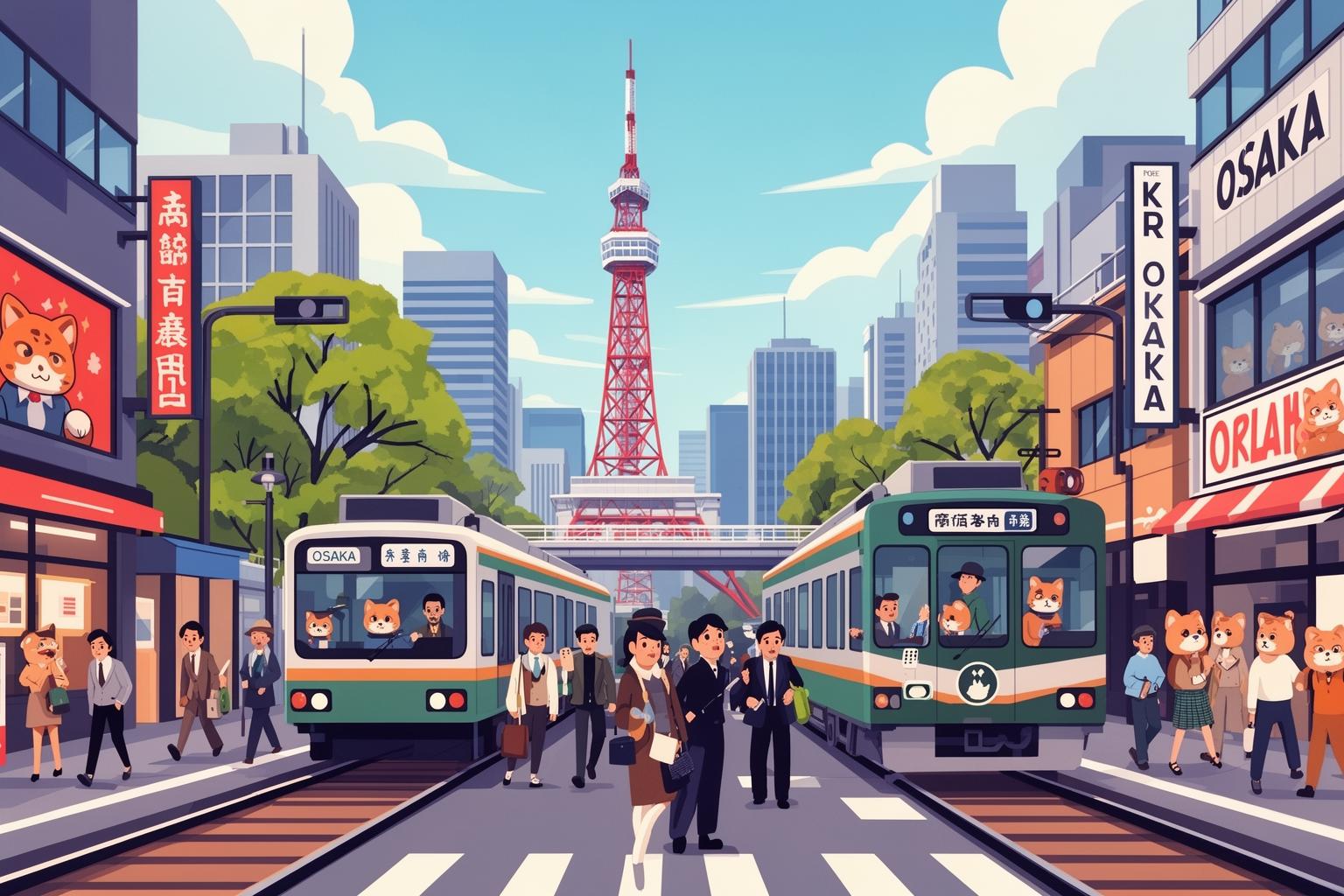
Once Tanaka-san shared the secret with me, I decided to give it a try. My morning routine changed. Instead of heading straight for the station, I would veer toward the cluster of kin-ken shops bustling with early morning activity. The first time, I felt nervous. My Japanese was functional, but the speed of the transactions I witnessed was intimidating. People would approach the window, mutter a few words, exchange coins for a ticket, and be gone in less than ten seconds.
I stepped forward. “Umeda kara, Namba made, ichimai kudasai,” I said, carefully pronouncing my request for one ticket from Umeda to Namba. The clerk, a woman who seemed capable of calculating complex arbitrage while monitoring three different stock markets simultaneously, didn’t even flinch. She pulled a ticket from a slot, stated the price—270 yen—and I handed over the coins. The standard fare was 290 yen. I had done it. I had saved twenty yen.
It felt… surprisingly good. It was more than just the money. It was the sensation of unlocking a new level of city life. The daily ritual soon became second nature. The detour added maybe ninety seconds to my commute. I learned the shorthand: “Namba, ichimai.” The transaction became a smooth, familiar rhythm in my morning routine.
Let’s do the math, because in Osaka, you always do the math. I saved 20 yen on my way to work and 20 yen on the way back. That’s 40 yen a day. Not much, right? But multiply that by five days a week, and it’s 200 yen. Multiply that by four weeks a month, and it totals 800 yen. That’s enough for a really good bowl of ramen, or a couple of craft beers. Over a year, it comes to 9,600 yen. That’s a new pair of shoes or a nice dinner out. For an Osakan, this isn’t found money. It’s earned money. It’s the salary you pay yourself for being smart. It’s money you’ve successfully kept from leaving your pocket. It’s a victory, won twice a day, every single workday.
The Osaka Mindset: It’s Not Just About the Money
To grasp why this seemingly minor act is so deeply embedded in the local culture, you need to understand the difference between being kechi (ケチ) and being shimarishou (しまり性). Kechi means stingy or cheap, carrying a negative connotation of tight-fistedness that causes inconvenience to others. Shimarishou, however, is a high compliment in Osaka, meaning you’re thrifty, economical, and savvy. You don’t waste money; you recognize the value of things. A shimarishou person will treat friends to an extravagant meal but will also walk ten minutes out of their way to save 100 yen on groceries. It’s not about hoarding money but about spending it wisely.
Using a kin-ken shop represents the pinnacle of being shimarishou. It’s a public statement of your savvy nature, connecting you to a shared local identity—a collective effort to outsmart the system. When you see someone else slipping into a kin-ken shop, there’s a silent nod of acknowledgment; you’re both part of the hustle. This spirit stems directly from Osaka’s history as tenka no daidokoro (天下の台所), or “the nation’s kitchen.” For centuries, this city was Japan’s commercial hub—a place of merchants, traders, and artisans where everything had a price and securing a good deal was an art form. People bargained, compared prices, and built fortunes on sharp instincts and shrewd deals. While samurai and aristocrats ruled the rest of Japan, Osaka was led by the merchant class. That heritage still lives on today.
This is possibly the most significant difference between Osaka and Tokyo. Tokyo is a city of systems and top-down efficiency; the rules are set, and the aim is to navigate them with ease. The automatic Suica card perfectly symbolizes this: a seamless system that anticipates your needs and eliminates the need for thought. Osaka, by contrast, is a city of loopholes and workarounds—a grassroots culture where people constantly seek better ways and smarter angles. The kin-ken shop physically embodies this mindset. It’s a user-generated solution to a system not designed with the individual in mind. It’s a choice to actively participate in your own economy, not just passively consume.
Beyond the Daily Commute: The Kin-ken Universe
The rabbit hole runs far deeper than just your daily train ticket. The shimarishou mindset influences almost every commercial transaction, and kin-ken shops support this approach. Planning a shopping trip to the vast Hanshin department store in Umeda? Your first stop is the kin-ken shop to buy a 10,000 yen gift certificate for 9,850 yen. You’ve already saved 150 yen before stepping inside. It’s like a reverse convenience fee.
Want to catch the latest blockbuster movie? Don’t buy your ticket at the cinema. The kin-ken shop offers them at 1,500 yen instead of the usual 1,900 yen. Sending a letter? You can purchase a book of stamps at a small discount. The savings on a single stamp might be just one yen—a seemingly trivial amount—but it’s the principle that matters. It’s an unbroken chain of value optimization.
And then there’s the big one: the Shinkansen. Traveling between Osaka and Tokyo can be costly, with a one-way ticket around 14,500 yen. But kin-ken shops often sell that same ticket for 13,500 yen or less. Saving a thousand yen is substantial. For business travelers and families, these discounts are significant. The only limitation is that tickets might not be valid during peak holiday seasons like Golden Week or New Year’s, but for most of the year, it’s a straightforward, valuable discount. Mastering the kin-ken shop means securing a permanent discount on travel, shopping, and entertainment all across Japan.
Is the Kin-ken Life for You? A Practical Guide

So, should you, a non-Japanese resident of Osaka, dive into this world? It depends on your personality and routine. It’s not meant for everyone.
It’s definitely for you if your commute is a direct route between two major stations. The more often you travel the same path, the greater the savings accumulate. It’s also ideal if you enjoy the thrill of finding a good deal and feeling like a local. If you like optimizing your life and don’t mind adding a small extra step to your routine, you’ll fit right in.
However, it’s probably not for you if your commute requires multiple transfers on different private train lines, as choosing the right ticket combination can become complicated. It’s also not suitable if you’re always running late. The speed and convenience of an IC card are unbeatable when every second counts. If the idea of handling tiny paper tickets and making an extra stop every morning stresses you out, stick with the simple tap of your ICOCA.
Worried about the language barrier? Don’t be. The kin-ken shop is a place of straightforward transactional efficiency. You can simply point to a sign with your destination and hold up one finger. The clerk will understand. All you really need to know is your destination station and the word for ‘one piece,’ which is ichimai (一枚). Many shops, anticipating the morning rush, have the most popular commuter tickets pre-sorted and ready for purchase.
For those pressed for time or feeling socially anxious, there’s a modern option: the kin-ken vending machine. Located outside many shops, these automated devices operate 24/7. You can buy your ticket for the next morning’s commute on your way home the night before. It’s the perfect mix of old-school savings and modern convenience—a solution that truly feels unique to Osaka.
Conclusion: More Than a Ticket, It’s a Mindset
That first paper ticket from Tanaka-san was more than simply a piece of paper. It was a key, unlocking a deeper understanding of my new home. In Tokyo, I felt like a user of the city’s flawless systems. In Osaka, I learned to be a participant in its lively, chaotic, and wonderfully human marketplace.
Using the kin-ken shop is a small, daily act of engaging with the city on its own terms. It’s a rejection of passive consumption. It’s a choice to value money wisely—not in a stingy way, but in a smart, self-respecting manner. It turns the mindless routine of a daily commute into a small, satisfying game.
This, I’ve realized, is the essence of the Osaka spirit. It’s a city that doesn’t simply offer convenience; it challenges you to find it, create your own efficiencies, and hustle for your own little victories. And when you slide that discounted ticket through the gate, you’re not just saving a few coins. You’re taking part in a collective ritual, a shared secret that connects the people of this city. You’re no longer just living in Osaka; you’re beginning to live like an Osakan.