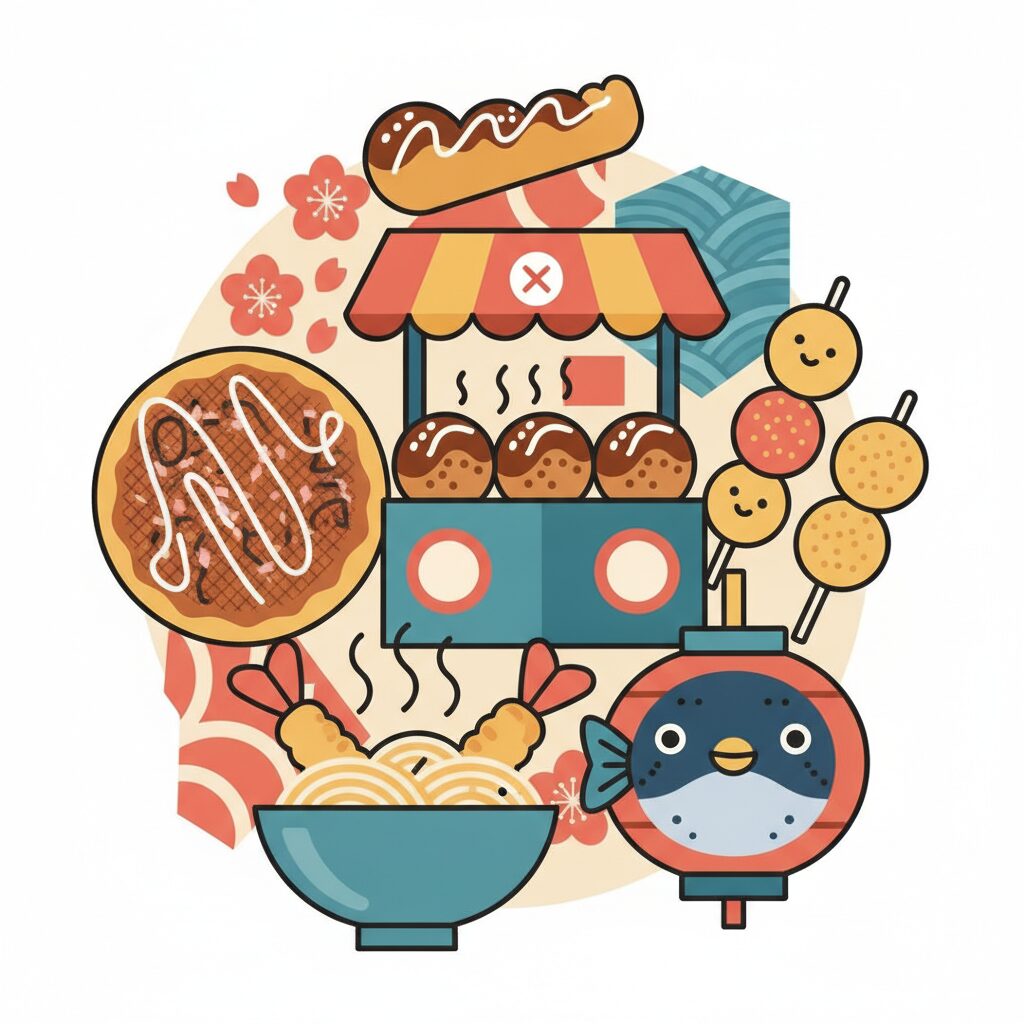
Walk through Osaka, any part of it, and you’ll feel a relentless, delicious energy thrumming just beneath the pavement. It’s not the frantic, clockwork pulse of Tokyo, a city powered by deadlines and train schedules. This is a different rhythm, a grumbling, anticipatory hum that emanates from kitchens, market stalls, and the spirited chatter of people deciding where to eat next. To the newcomer, it can seem like a caricature, a city that lives up to its foodie reputation a little too enthusiastically. You hear the word ‘Kuidaore’ (食い倒れ) and translate it literally: to eat until you collapse into financial ruin. It conjures images of tourists stumbling down Dotonbori, clutching takoyaki in one hand and a skewer of kushikatsu in the other, a comical, gluttonous free-for-all. But if you live here, you quickly realize that’s just the glossy cover of a much deeper, more practical story. Kuidaore isn’t about excess. It’s about expertise. It’s a city-wide philosophy, a consumer-driven martial art that has shaped Osaka’s economy, its social interactions, and the very fabric of daily life. It’s the invisible force that makes living in this city not just tastier, but fundamentally more affordable and intelligent. It’s a collective mindset that scrutinizes, critiques, and ultimately celebrates value above all else. This isn’t about eating until you drop; it’s about eating until you’ve outsmarted the system, securing the absolute maximum amount of deliciousness for every single yen you spend. Forget the tourist traps and the neon-lit extravaganzas for a moment. The real spirit of Kuidaore lives in the quiet, calculated decisions of millions of Osakans every single day, and understanding it is the key to understanding the soul of this city.
This philosophy of smart spending mirrors the everyday energy found in the city’s bustling Osaka shotengai, where commerce intertwines with community to redefine urban living.
From ‘Nation’s Kitchen’ to the Modern Super-Consumer
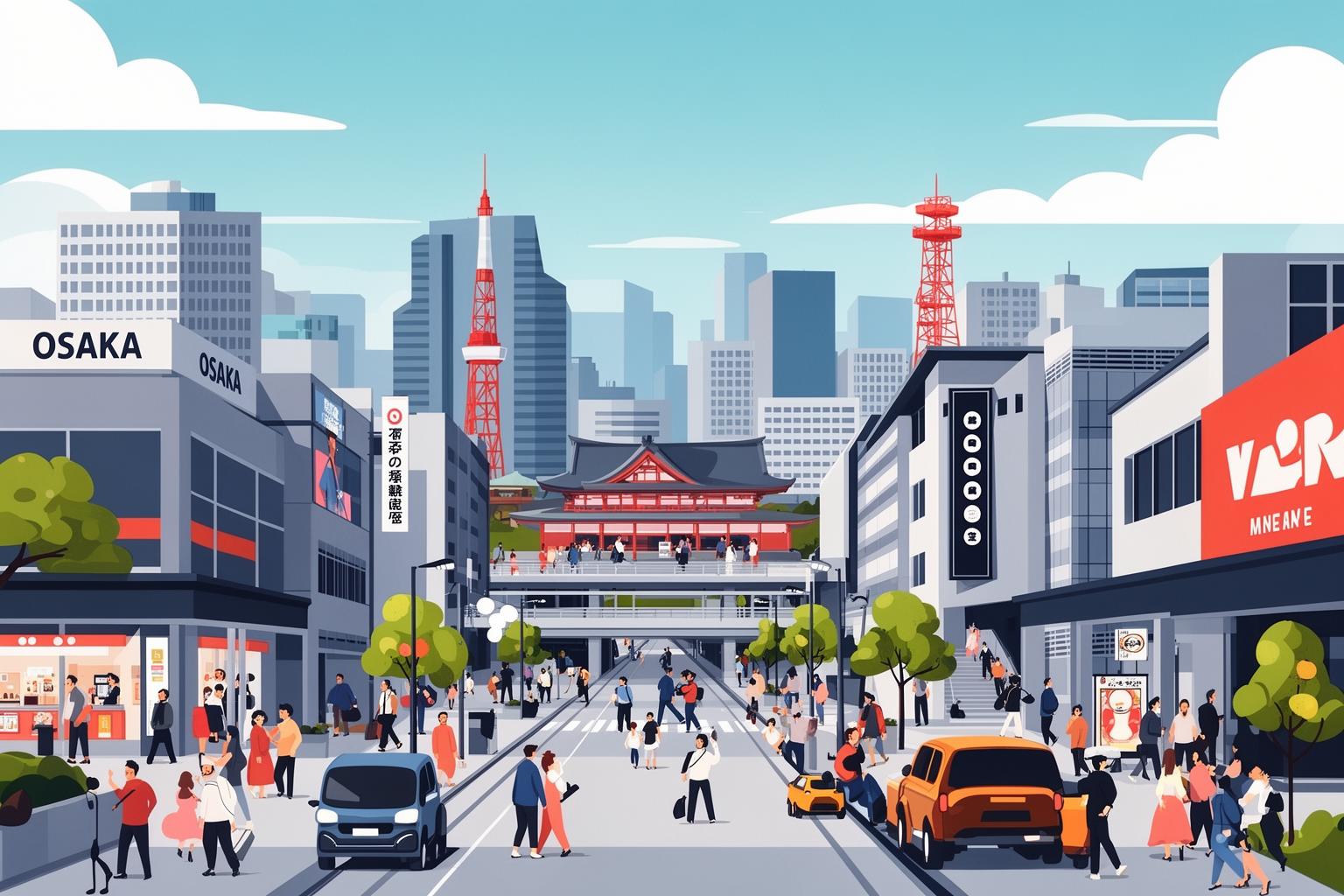
To understand why an Osakan will walk three extra blocks to save 50 yen on a bento box that tastes just slightly better, you need to look back in history. During the Edo Period, Osaka was not the capital, but it was unquestionably the economic powerhouse of Japan. It was known as the ‘Tenka no Daidokoro’, the ‘Nation’s Kitchen’. Rice, sake, soy sauce, and goods from across the country flowed into Osaka’s warehouses before being distributed nationwide. This city was not one of samurai and aristocrats; rather, it was a city of merchants, traders, and artisans. Money, practicality, and the tangible quality of goods were the languages spoken here. Status was earned not by lineage, but through sharp business acumen and the ability to provide quality products at a fair price. This legacy is embedded in the DNA of the modern Osakan. While Tokyo grew as the political center, with a culture that often emphasizes form, reputation, and presentation, Osaka developed a strong pragmatism. The spirit of the merchant class endures: a deep skepticism toward anything overpriced, overhyped, or lacking value. This historical background shaped the ultimate super-consumer. For generations, Osakans have been surrounded by top-quality ingredients. They know how a good piece of fish should smell. They understand the correct price for winter daikon. They possess an innate, nearly cellular understanding of food quality and cost passed down through families. This isn’t academic knowledge; it is practical, lived experience. When selling something in Osaka, you are not dealing with a passive customer. You face a panel of expert judges who have been honing their skills their entire lives. They will not be impressed by fancy interiors, celebrity chefs, or clever marketing. Their verdict is condensed into one harsh question: Is this product, meal, or ingredient worth the price being asked? This merchant heritage means Osakans approach consumption with a critical eye. A purchase is a transaction, and a good transaction maximizes value. This creates an intensely competitive environment where only the best and most reasonably priced survive. It’s a natural selection system that eliminates mediocrity and pretense, leaving a culinary scene that is honest, robust, and immensely rewarding for the average resident.
The Osaka Litmus Test: ‘So, How Much Was It?’
In many cultures, and certainly in other parts of Japan, discussing the price of a meal can be seen as somewhat gauche or slightly indelicate. In Tokyo, when a friend recommends a fantastic new sushi restaurant, your follow-up questions are likely to focus on the ambiance, the chef’s background, or the difficulty of securing a reservation. The conversation revolves around the experience and the status it imparts. In Osaka, however, the conversation takes a different, much more direct turn. The immediate, almost automatic, follow-up question is, “De, nanbo yattan?”—“So, how much was it?” This is not a breach of etiquette; rather, it is the entire point. It represents the key information needed to complete the evaluation. An Osakan cannot fully assess whether the sushi was truly “fantastic” without knowing the cost. A 20,000-yen omakase and a 2,000-yen sushi lunch set are judged by entirely different, though equally rigorous, standards. The main criterion is ‘cospa,’ a Japanese portmanteau of ‘cost performance.’ Is the quality, taste, and satisfaction gained from the meal proportional to its price? This cospa calculation is constantly active in every Osakan’s mind. A 700-yen bowl of ramen with a rich, complex broth and perfectly chewy noodles is a triumph of cospa. In contrast, a 1,500-yen bowl that is only slightly better is a failure. This mindset explains why locals enthusiastically praise a tiny, no-frills udon shop with the same passion as a high-end kappo restaurant. It’s not about spending a lot or a little; it’s about the excitement of finding the perfect balance between price and quality. The price is not an awkward detail; it’s an essential part of the story, the punchline that determines whether the experience was a success or a disappointment. This emphasis on tangible value over abstract prestige marks one of the most significant cultural divides between Osaka and Tokyo. Tokyo may chase trends and Michelin stars, but Osaka pursues deals. A Tokyoite might be impressed that you dined at a world-famous restaurant, but an Osakan will be more impressed that you discovered a place serving incredible horumon (offal) and beer for under 2,000 yen. This relentless focus on ‘nanbo’—how much—is the driving force behind Kuidaore. It compels businesses to be honest and competitive, turning the everyday act of eating into a game of strategy and discovery for the city’s residents.
How ‘Kuidaore’ Keeps Your Wallet Full and Your Stomach Happy
This abstract philosophy of value manifests in very real, tangible benefits for anyone residing in Osaka. The city’s layout, its commerce, and its daily rhythms are all influenced by this collective pursuit of high cost-performance (cospa). Consequently, eating well becomes a standard expectation rather than a luxury and doesn’t require a large budget. The Kuidaore mindset generates a positive feedback loop: discerning customers demand value, which drives fierce competition among vendors, resulting in residents having access to high-quality, affordable options wherever they go. This dynamic plays out across several essential aspects of daily life, making Osaka a paradise for budget-conscious food lovers.
The Battlefield of the Shotengai (Shopping Arcade)
To witness Kuidaore in its purest form, simply stroll through a local shotengai, one of Osaka’s covered shopping arcades. Skip the tourist-heavy Shinsaibashi and head to Tenjinbashisuji, the longest shotengai in Japan, or explore any smaller neighborhood arcade. Here, the principle of hyper-competition is vividly evident. Rather than a single butcher, you’ll find three lined up side by side, each clearly displaying prices for minced pork and sliced beef like a stock market ticker. Nearby, two fishmongers might be loudly promoting their daily catch. Just a few steps away, there are four competing stalls selling fried items—croquettes, tempura, tonkatsu—with slight price variations, such as one selling croquettes for 80 yen and the neighboring stall offering a slightly larger one for 90 yen. Local shoppers, mostly sharp-eyed oba-chan (aunties/older women), will pause attentively, comparing options with the precision of chess masters. They know the going rates, which shops use better potatoes, and whose frying oil is fresher. They will switch their loyalty over a mere 10-yen price difference or a perceived drop in quality without hesitation. This is economic Darwinism in practice. A business in an Osaka shotengai can’t survive on loyalty alone; it endures by consistently providing a product that meets the community’s stringent cost-performance standards. This intense, localized competition keeps prices for daily essentials—from vegetables and meat to prepared foods—remarkably low. For residents, this means smaller grocery bills and higher quality purchases. They directly benefit from this relentless contest for the customer’s yen.
The Lunchtime Gauntlet: More Than Just a Meal
In many cities worldwide, a decent lunch can be a costly daily affair. In Tokyo, a typical lunch set in a business district can easily cost between 1,000 and 1,500 yen. In Osaka, however, the lunchtime economy exists on a different level. The 500-yen “one coin” lunch isn’t a rare promotional offer; it’s a fiercely guarded tradition. From Umeda’s business district to Namba’s backstreets, countless restaurants serve complete, satisfying lunch sets—often including a main dish, rice, soup, and pickles—for around 500 to 800 yen. This is not simply about being cheap. The Kuidaore philosophy demands that quality is never sacrificed, even at these low prices. Rice must be perfectly cooked, miso soup flavorful, and the main dish delicious. An Osaka office worker won’t hesitate to walk ten minutes past several eateries to reach the one famous for its 650-yen karaage set, known as the best value. They discuss it with colleagues, debating the chicken’s crispiness or the tea’s quality. This daily ritual encapsulates the city’s entire food culture, reinforcing the idea that a good meal is a right, not a privilege, and that value should be accessible to all. For residents, this means the daily living cost is significantly reduced without giving up the joy of dining out. They can enjoy a different, high-quality, affordable lunch every day of the week, leaving more room in their budget for other things. This practical, everyday expression of the Kuidaore spirit makes life in Osaka uniquely sustainable and enjoyable.
Supermarket Savvy: A Game of Strategy
The strategic mindset of Osakan consumers extends deeply into supermarket aisles. People here don’t stick to just ‘their’ grocery store; they maintain a mental portfolio of shops, each with distinct strengths. This level of consumer savvy goes far beyond casual shopping. Conversations with long-term residents often reveal carefully planned weekly shopping strategies. They may visit local but somewhat pricier stores like ‘Life’ or ‘Mandai’ for fresh, high-quality vegetables on special sale days, while heading to discount giants like ‘Gyomu Super’ or ‘LAMU’ for bulk items, beverages, and frozen goods at rock-bottom prices. For premium meat or fish, they might skip supermarkets entirely, choosing trusted specialty shops in their neighborhood shotengai. They know which drugstore offers the cheapest milk and eggs and have weekly flyers memorized or checked diligently online, organizing their meals and shopping trips to optimize savings. This approach isn’t driven by poverty, but by a merchant-city ethos that sees wasting money as foolish. Why pay 120 yen for tofu at one store when it’s 80 yen at another? It’s not just about the 40 yen difference; it’s about the principle of being a smart, informed consumer who won’t be taken advantage of. Living in such an environment is a value education. Residents quickly adopt this strategic approach themselves, becoming more conscious and efficient shoppers. The intense competition among supermarket chains, fueled by these savvy customers, keeps prices competitive across the board, further lowering the cost of living for everyone.
The Unspoken Language of Food

In Osaka, food serves as more than mere sustenance; it is the primary channel for social interaction. It acts as the city’s lingua franca, a universal language that cuts across age, profession, and background. While social life in other cities might be defined by formal networking events or rigid, hierarchical business dinners, in Osaka, relationships are forged in the lively, unpretentious settings of an izakaya, a tachinomi (standing bar), or over a shared plate of okonomiyaki. Eating together plays a crucial role in building trust and camaraderie. Business dealings are frequently finalized not in boardrooms, but over drinks and grilled skewers, where the collective enjoyment of affordable, delicious food breaks down barriers and fosters a sense of unity. The Kuidaore philosophy adds a distinct flavor to these interactions. Social capital is earned not by taking someone to the priciest establishment, but by introducing them to a hidden gem—an outstanding, little-known spot with excellent cospa. Saying, “I know a place that has the best doteyaki in the city, and it’s only 400 yen a plate,” serves as a meaningful social gesture. It showcases local knowledge, generosity, and a shared appreciation for the city’s core values. This makes Osaka an exceptionally easy city for connecting with others. You don’t need a fancy hobby or exclusive membership to find your community; all you need is curiosity about food. Asking a colleague, “Where’s a good place for lunch around here?” isn’t mere small talk; it’s a sincere invitation to connect. People are eager to share their favorite spots, debate the merits of various ramen broths, and invite you along on their endless quest for the next great meal. This food-focused social culture makes the city feel accessible and welcoming, replacing formality with a shared, democratic joy and creating a warm, vibrant community where the quickest way to make a friend is by sharing a meal.
What This Means for You as a Resident
So, what does this all mean for someone living in Osaka or considering a move here? It means you are entering an environment fundamentally designed for the consumer. The city’s passion for food isn’t just an entertaining cultural trait; it is a powerful economic force that benefits you every day. First, your cost of living will be lower, but your quality of life, at least from a culinary standpoint, will be higher. You don’t need a large income to eat exceptionally well. In fact, you’ll soon realize that some of the city’s most beloved and delicious meals are also its most affordable. The true charm of Osaka lies not in its Michelin-starred restaurants, but in its neighborhood canteens, lively market stalls, and family-run noodle shops. Second, living here will change you. You will inevitably adopt the Kuidaore mindset. You’ll begin to pay closer attention to prices. You’ll develop a more refined palate. You’ll find yourself comparing the takoyaki from different street vendors with an analytical seriousness you never expected. You’ll start to notice the subtle difference in the dashi broth of your morning udon. This isn’t about becoming cheap; it’s about becoming smarter, more engaged with your consumption, and gaining greater satisfaction from your choices. Finally, Osaka is a city that rewards involvement. The Kuidaore spirit is active, not passive. It’s about exploration and discovery. The best parts of the city aren’t presented neatly for tourists. They’re hidden in the side streets of Tenma, the back alleys of Tsuruhashi, and the many local shotengai scattered across the map. To truly experience Osaka, you must join the search. Talk to shopkeepers. Ask locals for recommendations. Try the spots with long lines of residents outside. By doing so, you’re not just finding a good meal; you are engaging with the living, breathing culture of the city and becoming part of the great, delicious conversation that embodies the heart and soul of Osaka.