
When you first hear the word ‘Kuidaore,’ your mind probably jumps to a very specific image. You see the flashing neon lights of Dotonbori, the giant mechanical crab waving its claws, the steam rising from countless takoyaki stalls. You picture tourists, jaws agape, trying to cram one more skewer of kushikatsu into their already-stuffed bellies. Kuidaore, the famous Osaka slogan, is almost always translated as “eat until you drop” or, more dramatically, “eat yourself into bankruptcy.” And while that’s not technically wrong, it misses the entire point. It’s a tourist-friendly tagline for a deeply ingrained, fiercely local philosophy that has almost nothing to do with all-you-can-eat buffets or gluttonous excess.
Living here, you quickly realize that the real spirit of kuidaore isn’t about volume; it’s about value. It’s a relentless, city-wide obsession with getting the absolute best possible food for the lowest possible price. It’s a game, a sport, and a source of immense civic pride. This isn’t just a quirky personality trait; it’s the operating system of the city, born from centuries of history as Japan’s merchant capital, the ‘nation’s kitchen.’ In Tokyo, a high price tag often signifies quality, status, and craftsmanship. In Osaka, a high price tag is met with a skeptical squint and the unspoken question: “Is it really worth it?” This fundamental difference in thinking shapes everything from the way people talk to their butchers to the way they plan their weeknight dinners. To truly understand daily life in Osaka, you have to look past the Glico Running Man and into the humble, brightly-lit aisles of the neighborhood supermarket, where the real battle for kuidaore is fought and won every single day.
This nuanced appreciation of Osaka’s culinary and economic spirit is further enriched by insights that challenge prevailing local myths, as seen in a deep dive into the Osaka oba-chan stereotype.
‘Nebo Ote-makka?’ – The Price is Always the First Question

In many cultures, and especially in the more reserved parts of Tokyo, starting a conversation by asking about the price can seem somewhat blunt or even a bit rude. However, in Osaka, this serves as the unofficial greeting and the starting signal for any genuine transaction. Walk through a shotengai, one of the city’s iconic covered shopping arcades such as Tenjinbashisuji, and you’ll hear it everywhere: “Nebo ote-makka?” (How much is it?) followed by “Honma ni? Yassui naa!” (Really? That’s so cheap!).
This goes beyond simple haggling, which is less common than expected. It’s about setting a baseline for value. It invites the shopkeeper to perform, to explain why this particular daikon radish is a bargain today, or why these sardines, freshly caught this morning, justify every single yen. The interaction is a lively dance. The vendor is not just a seller; they are a curator of bargains and a trusted source. The customer is more than a buyer; they are a discerning connoisseur who can spot a great deal from afar.
I once observed a woman at a local fruit stand spend a full five minutes debating the relative merits of two different baskets of strawberries with the owner. She wasn’t merely asking about the price; she wanted to know about sweetness, origin, and why one basket was 50 yen cheaper than the other. The owner explained with theatrical enthusiasm that the cheaper ones were slightly smaller but came from a farm renowned for its strong flavor, making them ideal for jam. The woman bought two baskets, smiling not just because she had secured a good deal but because she had gained insider knowledge. She had won. This daily performance underpins Osaka commerce. It’s personal, pragmatic, and driven by the core kuidaore principle that a good price matters just as much as good quality.
The Supermarket as a Battlefield: Deciphering the Art of the Deal
While the shotengai provides a traditional window into this mindset, the modern stage for kuidaore is the supermarket. Grocery shopping here is far from a passive task; it’s a tactical mission demanding sharp observation, perfect timing, and steady nerves. For newcomers, it can be overwhelming. For locals, it’s a finely choreographed dance of bargain hunting.
The Religion of the ‘Waribiki’ Sticker
Across Japan, waribiki (discount) stickers mark items nearing their best-before dates. In Osaka, however, these stickers aren’t merely a nice bonus; they’re an institution, a daily ritual that shapes meal plans citywide. As evening nears, a tangible tension rises in the prepared foods and fresh meat aisles. Shoppers, appearing casual, are actually positioning themselves, carts angled for a swift strike. They await the ‘sticker ninja’—the staff member armed with a pricing gun and rolls of 20%, 30%, and the prized 50% off (hangaku) stickers.
When the staff arrives, a quiet, controlled frenzy unfolds. There’s no pushing, but an unspoken urgency prevails. A pack of premium sashimi, originally priced at 1,200 yen, receives a hangaku sticker. A shopper who feigned interest in tofu swiftly grabs it. This isn’t considered cheap or desperate; it’s lauded as savvy. You just landed a luxurious dinner for the cost of a bowl of noodles. You outwitted the system. The triumph comes from planning to eat that sashimi tonight, fully capitalizing on the discount. An Osakan will proudly tell friends, “I got this amazing fatty tuna for half price!” The story isn’t just about the food; it’s about the cleverness of the capture.
Super Tamade: The Neon Jungle of Unbelievable Bargains
To see kuidaore taken to its most extreme and theatrical expression, you must visit Super Tamade. This Osaka-only supermarket chain is less a grocery store and more a sensory onslaught. Flashing neon lights, pachinko-parlor-level jingles, and chaotic handwritten signs create an atmosphere of constant, frantic sale. It looks, feels, and sounds like nowhere else on earth.
Tamade is renowned for its legendary loss leaders, especially the “1 Yen Sales.” If you spend a certain amount (usually 1,000 yen), you can purchase a select item—a carton of eggs, a block of tofu, a pack of noodles—for just one yen. Tourists might see it as a strange gimmick, but for locals, it’s a calculated part of the weekly shopping routine. You learn to navigate Tamade’s unique world, knowing which private-label products are unexpectedly good and which are best skipped. You realize the produce might not be the prettiest, but it’s perfectly fine for the stir-fry you plan to make tonight.
Shopping at Tamade is an exercise in faith and strategy. It embodies the high-risk, high-reward spirit of Osaka’s value-driven quest. You might leave with a week’s groceries at a shockingly low price, feeling like a genius. It stands in sharp contrast to the elegantly curated, often pricey, department store food halls or boutique supermarkets typical of Tokyo. Tamade is loud, unpretentious, and unapologetically dedicated to one goal: giving you the most for the least. It is the vibrant, neon heart of kuidaore.
Home Cooking, Osaka-Style: Maximizing Flavor, Minimizing Cost
The rewards of these strategic shopping excursions have a direct impact on what unfolds in the Osaka kitchen. The aim is always to turn inexpensive ingredients into something richly satisfying and flavorful. This practical approach has shaped the city’s iconic dishes and culinary values.
‘Konamon’ Culture at Home: Beyond Just Takoyaki
Osaka is well known as the land of konamon, a broad term referring to flour-based dishes. While tourists queue for takoyaki and okonomiyaki on the streets, locals are preparing them at home. There’s a very practical reason for this: they represent the ultimate cost-effective meals. Flour, eggs, cabbage, and water are incredibly affordable. From these simple ingredients, you can create a filling and tasty meal.
Furthermore, they are an ideal way to use up whatever was on sale at the supermarket. The pork in your okonomiyaki? It was the 30% off pack you grabbed yesterday. The shrimp and squid? From the frozen section, purchased during a special offer. Almost every Osaka home owns a portable electric griddle (hotto purēto), and weekend okonomiyaki parties are a beloved tradition. It’s communal, enjoyable, and feeds an entire family for just a few hundred yen. This is kuidaore in action: a meal that maximizes social enjoyment and flavor while keeping costs low.
The Sanctity of Dashi and the Quest for Umami
If you think Osaka cuisine is only about flour and discounted meat, there is a more refined aspect to consider. Osakans are deeply passionate about dashi, the essential soup stock usually made from kombu (kelp) and katsuobushi (bonito flakes). Whereas Tokyo tastes often favor strong, sharp soy sauce flavors, Osaka’s cooking is based on the subtle, savory, umami-rich essence of a perfect dashi.
This is where Osakans are unwilling to compromise. They invest well in high-quality kombu from Hokkaido or premium bonito flakes. Why? Because an excellent dashi can enhance even the simplest ingredients. A humble bowl of udon noodles in an exquisite broth is regarded as a feast. Their thinking is strategic: invest in the flavor base so you can economize on everything else. This profound appreciation for dashi is the refined heart of kuidaore. It shows that seeking value isn’t about sacrificing quality, but about understanding where quality matters most. A cheap bowl of noodles can taste like a luxury if the broth is perfect. That, fundamentally, is the genius of Osaka cooking.
‘Cos-Pa’ is King: How Kuidaore Shapes Eating Out for Locals
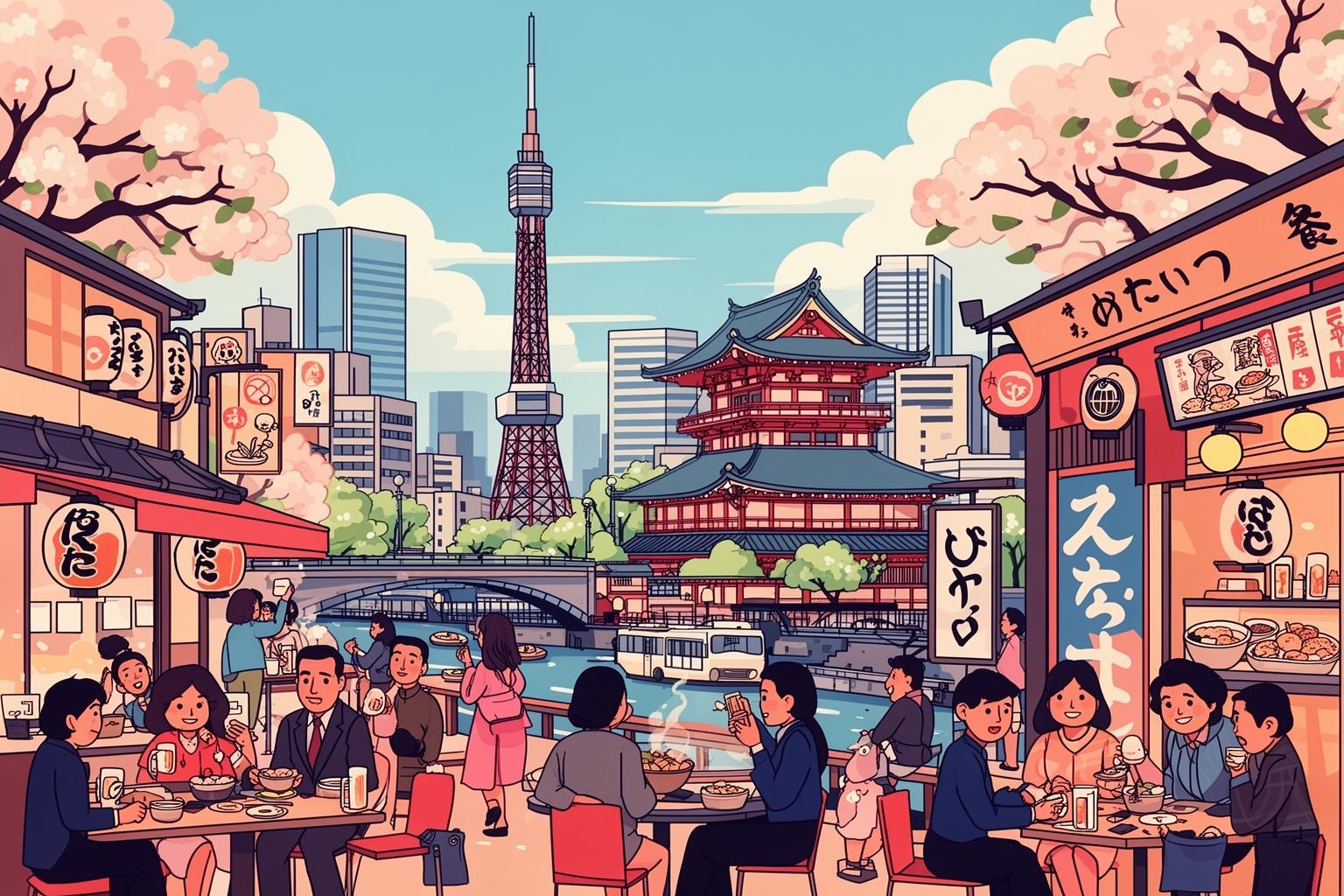
This fixation on value goes beyond the home kitchen and entirely shapes the casual dining scene in the city. The Japanese have a perfect word for this: cos-pa, a contraction of “cost performance.” In Osaka, cos-pa isn’t just one factor; it stands as the most crucial criterion by which a restaurant is evaluated.
The Lunchtime Battleground
Lunchtime in Osaka is a fierce contest. The city overflows with restaurants offering “one-coin lunches,” complete set meals for a single 500-yen coin. A typical meal might include a large serving of chicken karaage, a bowl of rice, miso soup, and a side of pickles. For a restaurant to charge more than, say, 800 yen for lunch, it must offer something truly outstanding. The standard expectation is to leave fully satisfied without spending much.
This creates an environment where restaurants cannot survive unless they deliver exceptional value. Portions are generous, quality is surprisingly high, and the pressure to innovate never lets up. An Osakan will happily walk an extra ten minutes to visit the place that offers a free raw egg with curry rice or the udon shop with unlimited tempura crunchies. This constant consumer demand keeps the city’s food scene vibrant, affordable, and relentlessly focused on customer satisfaction.
Tachinomi: Standing Bars and the Social Fabric
Perhaps the ultimate embodiment of everyday kuidaore is the tachinomi, or standing bar. Found around major train stations like Kyobashi, Tenma, and Umeda, these no-frills spots are the social heartbeat for many Osaka residents. There are no chairs, no cover charges, and no pretension.
You stand shoulder-to-shoulder with salarymen, shoppers, and retirees, ordering cheap beers or highballs and choosing from a menu of small, tasty, and incredibly affordable plates. Think of a grilled chicken skewer for 150 yen, a small plate of potato salad for 200 yen, or fresh sashimi for 400 yen. You can enjoy two drinks, three plates of food, engage in a great conversation with a stranger, and still walk away with change from a 2,000 yen bill.
The tachinomi is a microcosm of Osaka culture. It’s efficient, social, and delivers maximum satisfaction for minimal cost. It’s a spot to relax after work without a commitment to a full, costly meal. It symbolizes that a good time doesn’t have to be formal or expensive. It’s about good food, good drink, and good company, all served with the best cos-pa imaginable.
What Foreigners Often Misunderstand
Given its complexity, it’s easy to understand why outsiders might misinterpret the spirit of kuidaore. The tourist-friendly slogan is a simplified caricature of a far more nuanced and intelligent way of life.
First, there’s a common misconception that kuidaore means gluttony. In reality, it’s not about eating the most; it’s about eating the smartest. Pride comes from uncovering hidden gems, incredible deals, and places that serve restaurant-quality food at street-stall prices. An Osakan would be much more impressed by your story of a delicious 600-yen teishoku lunch than an extravagant 10,000-yen course dinner.
Secondly, there’s the stereotype that Osaka food is merely cheap, heavy, and fried. While the city is famous for its konamon, it is also the region that perfected the art of refined counter dining (kappo) and places great value on the delicate, subtle flavors of dashi. The point isn’t that all the food is cheap; rather, that exceptional quality isn’t reserved exclusively for the wealthy. The challenge and enjoyment lie in making excellence accessible.
Finally, many assume this is driven simply by a desire to save money. Although Osakans are known for their financial pragmatism, it goes much deeper. It’s a communal hobby, a city-wide sport. Sharing tips about a new tachinomi with amazing cos-pa or a supermarket’s secret sale schedule is a form of social bonding. It’s a shared cultural language—a way to navigate the city that connects people. It’s not just about saving money; it’s about the thrill of the hunt and the joy of sharing your findings.
Kuidaore as a Life Philosophy
So, what exactly is kuidaore? It’s a philosophy that challenges the idea that price and quality must always be connected. It’s the belief that with enough knowledge, timing, and savvy, you can live and eat wonderfully without breaking the bank. It’s a practical, unpretentious, and joyful way of life deeply embedded in the fabric of this city.
Living in Osaka means gradually adopting this mindset. You begin to instinctively check the price per 100 grams. You feel a genuine rush when you spot a 50% off sticker. You realize that the best meal might not be in an upscale restaurant, but in a bustling, noisy standing bar beneath the train tracks. To truly understand Osaka, you don’t have to eat until you go broke. You just need to learn to see the world through the lens of value, to savor the artistry in a perfect bowl of dashi, and to appreciate the quiet triumph of a well-timed grocery run. That is the real flavor of the city.