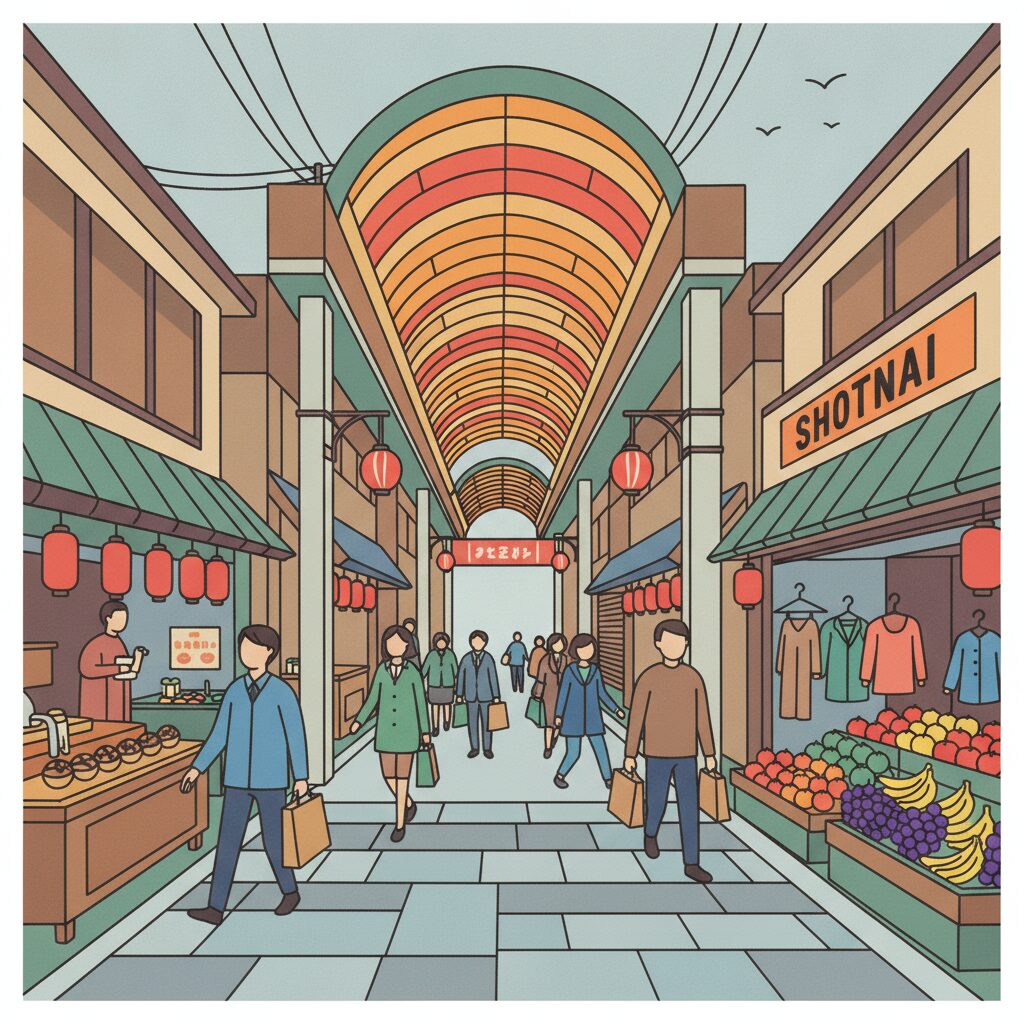
You’ve seen the pictures. The giant crab, the Glico Running Man, the endless river of neon reflecting off the Dotonbori canal. It’s a sensory explosion, a tourist magnet, and for many, the definitive image of Osaka. But to live here, to really get under the city’s skin, you have to look past the glowing billboards. You have to turn down a quieter street, walk under a weathered archway, and enter the true heart of the city: the neighborhood shotengai, or shopping arcade. This isn’t a theme park version of Japan; it’s the city’s living room, its kitchen, and its communal backyard all rolled into one. It’s where Osaka stops performing for tourists and starts being itself. The real question isn’t what to buy here, but how to belong here. How do you move from being an outsider looking in to becoming part of the daily rhythm? It starts with understanding that a shotengai is less about commerce and more about connection.
For a richer taste of Osaka’s authentic community, consider diving into local insights on Shinsaibashi and Namba that reveal the vibrant pulse beyond the neon glow.
The Unspoken Language of the Arcade
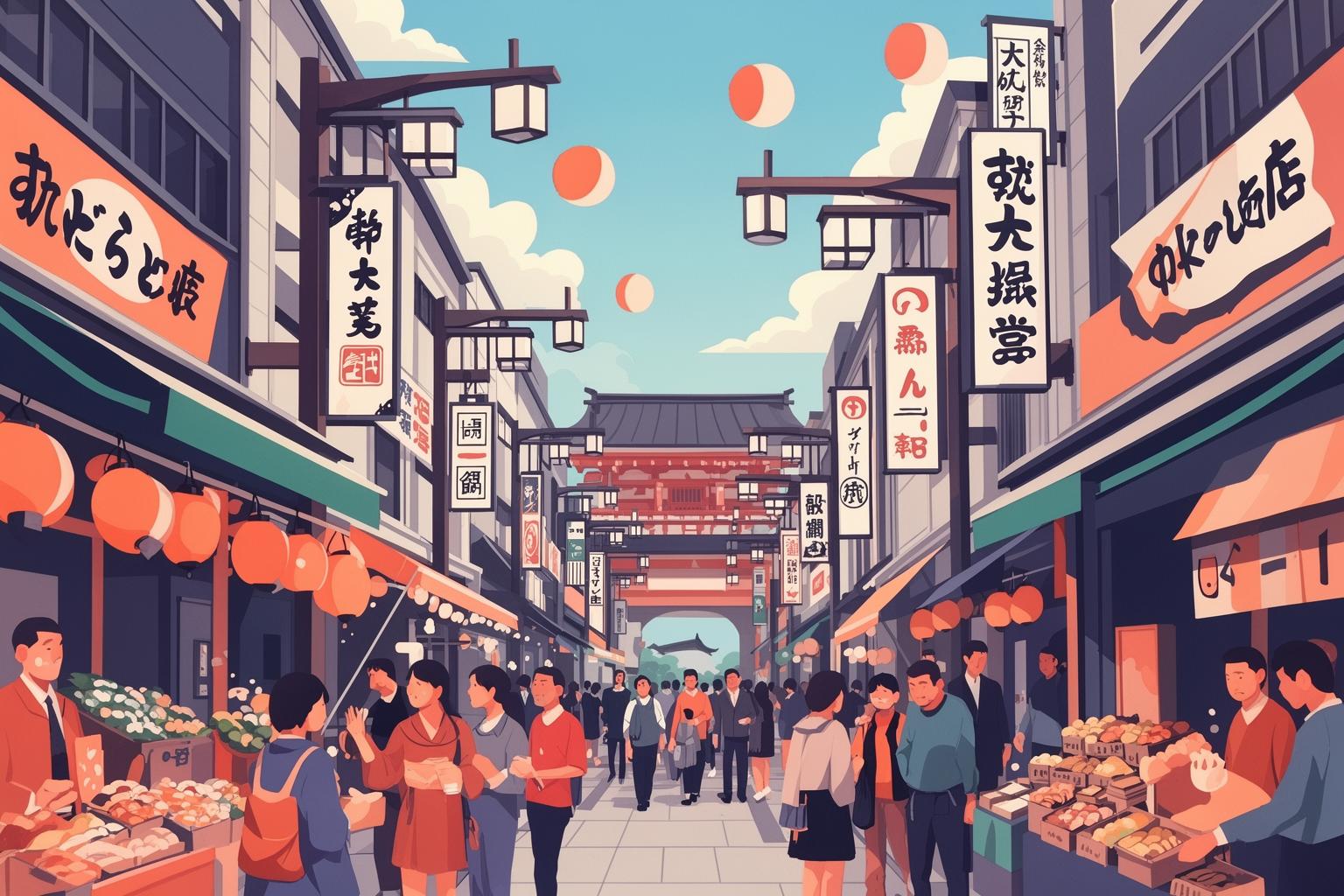
Step into a Tokyo department store, and you’ll encounter flawless politeness. Bows are deep, greetings formal, and the service efficient, quiet, and impeccable. It’s a finely tuned system designed to part you from your money with utmost grace and minimal hassle. A neighborhood shotengai in Osaka operates under a completely different approach. The aim isn’t merely a transaction; it’s an interaction. This is often what catches people off guard. They misinterpret the directness as rudeness and the banter as hostility. But it’s quite the opposite. It’s the local language of community.
It’s Not a Transaction, It’s a Conversation
In Osaka, the phrase “the customer is always right” is given a dose of practicality. It’s more like “the customer is a neighbor, so let’s have a conversation.” When you buy fish, the owner won’t just weigh and wrap it. He’ll ask what you’re preparing for dinner. He’ll suggest that the mackerel just arrived is ideal for grilling tonight and recommend trying it with some daikon. The woman at the vegetable stand will notice you picking potatoes and casually say, “You look a bit tired today, better make some nikujaga to regain your strength.” Then she’ll slip an extra onion into your bag with a wink and a gruff, “Kore wa omake.” This is omake, the little freebie, and it’s not a discount. It’s a gesture—a shopkeeper’s way of saying, “I see you. Thanks for returning.” This rarely happens in Tokyo, where price is fixed and relationships remain purely commercial. In Osaka, loyalty is rewarded not with points on a plastic card, but with a personal connection and perhaps a free carrot.
Reading the Room: The Art of “Nori”
To truly succeed in a shotengai, you must grasp the concept of nori. It has no exact English equivalent. Consider it the vibe, the flow, the shared rhythm of an interaction. It’s about being in sync. When a shopkeeper teases you, they’re not being rude; they’re testing your nori. They’re inviting you to play along. For instance, if you ask the price of strawberries, the owner might deadpan, “For you? Five thousand yen.” A typical polite, non-Osakan reaction might be confusion or an awkward laugh. The Osaka response, which shows good nori, is to shoot back, “What? Are these strawberries made of gold? I’ll give you five hundred!” The owner will burst out laughing, tell you the real price, and from that point on, you’re not just another customer—you’re someone who understands. This contrasts sharply with Tokyo, where social harmony (wa) is preserved through politeness and avoiding conflict. In Osaka, harmony is created through engagement, shared jokes, and the playful exchange of a mock negotiation. Foreigners often fear saying the wrong thing, but in Osaka, the greater social faux pas is not joining in at all. A clumsy effort to participate in the banter is far more valued than silent, detached politeness.
Decoding the Shotengai Ecosystem
Many shotengai appear chaotic to those unfamiliar with them. They’re a mix of faded signs, mismatched storefronts, and a blend of sounds and smells. It’s not planned or designed; it’s organic. It evolved over decades to meet the community’s needs and functions as a perfectly balanced ecosystem. If you learn to recognize the patterns, you’ll see that everything essential for daily life exists within a few hundred meters beneath that covered roof.
The Anatomy of an Arcade
Take a leisurely walk from one end to the other. You’ll pass the fishmonger, his voice hoarse from calling out the morning specials over a bed of crushed ice. Next door is the butcher, whose cleaver strikes a familiar hypnotic rhythm. You’ll catch the sweet aroma of soy sauce from the yakitori stall grilling chicken skewers for the evening crowd, then the savory scent of dashi from the tiny udon shop, operated by the same family for three generations. There’s the tofu maker’s steamy shop, fragrant with fresh soybeans. The fruit and vegetable stand bursts with seasonal colors. There’s the dusty little hardware store where you can find anything from a single screw to a pickaxe. Interspersed among them are social hubs: the old-school kissaten (coffee shop) where retirees spend hours reading the paper, and the standing-room-only bar that fills up at 4 PM. This isn’t a mall designed by focus groups. It’s a living organism, with each shop acting as a vital organ, supporting both the others and the community as a whole.
Why Your Local Supermarket Feels Soulless by Comparison
Naturally, Osaka has modern supermarkets. They’re clean, convenient, and brightly lit. Yet they lack soul. In a supermarket, you are just an anonymous consumer. You push a cart, choose pre-packaged goods, and interact only with a cashier who mechanically scans your items and recites a scripted thank you. A shotengai is the opposite of this anonymity. The words you hear are different. When you enter a shop, it’s not a cheerful but impersonal “Irasshaimase” (Welcome). It’s a warm, familiar “Maido!” roughly meaning “Thanks, as always.” It signals an ongoing relationship. And when you leave, it’s not simply “Arigatou gozaimashita.” It’s “Ookini!”—the warm, round sound of Osaka-ben that carries far more meaning than just “thank you.” It means, “I truly appreciate you.” The vegetables aren’t wrapped in plastic; you select them yourself. The butcher doesn’t just sell you a steak; he asks how you’ll cook it and cuts it to the perfect thickness for your pan. Life in the shotengai is tactile, personal, and rooted in the reality of preparing and sharing food—the most fundamental human activity.
Breaking the Foreigner Bubble: How to Actually Participate
Knowing all this is one thing; putting it into practice is another. Stepping into such a close-knit community can feel intimidating. You may feel like an outsider. But the barrier to entry is lower than you expect. Osakans are curious and generally welcoming, though they won’t roll out the red carpet. You need to make the first move and remain consistent.
Your First Mission: Become a Regular
The biggest mistake people make is treating the shotengai like a tourist spot, hopping from one to another each weekend. To truly connect, you must do the opposite. Choose one shotengai, preferably the one nearest your home. Then, become a regular. Buy your bread from the same bakery. Get your coffee from the same elderly man at the kissaten. Purchase your vegetables from the same woman every Saturday. At first, you’ll just be another face, receiving standard, polite service. Keep going. After a few weeks, they’ll start to recognize you—a nod, a small smile. This is stage two: becoming a familiar face. You might even advance to saying “Itsumo no” (the usual). The real breakthrough is stage three: becoming a regular. That’s when conversations begin. The butcher will ask where you’re from. The fruit seller will save the best apples for you because she knows you’re coming. The coffee shop master will ask if you watched the Hanshin Tigers game last night. This is how you build a community in a city of millions—not through grand gestures, but through the simple, repeated act of showing up.
The Power of Pointing and Asking
For many, the language barrier is a genuine concern. You may worry about not understanding or saying something wrong. Forget that. The shotengai is the city’s best language school, and tuition is free. You don’t need perfect grammar; you only need the willingness to try. Start simple: point to something and say, “Kore, kudasai” (This one, please). Want to be more adventurous? Point and ask, “Kore, nani?” (What’s this?). Shopkeepers often love explaining. They’ll tell you the name of a strange vegetable and mime how to cook it. They speak slowly and patiently. They appreciate effort far more than linguistic precision. In a city that values direct communication, a genuine attempt to connect—however clumsy—will always be better received than silence.
The “Ame-chan” Test
There’s a well-known custom in Osaka: the obachan (older woman) who carries candy (ame-chan) in her purse to hand out to people. This isn’t just a myth; it really happens. If an obachan in the shotengai offers you candy, it’s more than just a sweet treat. It’s a social test, a small, informal induction into the neighborhood. The wrong way to react is to be shy, politely refuse, or appear confused. The right way is to break into a big smile, accept the candy with a slight bow, and say loudly and clearly, “OOKINI!” You have just passed the test. You’ve shown you understand Osaka’s unwritten rules: accept kindness, show gratitude openly, and don’t take things too seriously. You’re no longer just a random foreigner—you’re the foreigner who gets it. You’re now part of the local fabric.
What Shotengai Tell You About the Real Osaka
If you truly pay attention, these covered arcades serve as a perfect illustration of the Osaka psyche. Their very presence, appearance, and the behavior of people within them reveal the city’s deeply rooted character. This character, shaped by history and geography, sharply contrasts with the formal culture of Tokyo.
Pragmatism Over Polish
Many shotengai aren’t conventionally beautiful. They might appear a bit worn, somewhat cluttered. Floors could be stained, and lighting might flicker from fluorescent bulbs. A Tokyoite could see this as lacking refinement. But for an Osakan, it represents pure, unfiltered function. The arcade’s roof shields from rain. Shops offer good, fresh food at fair prices. The people are genuine. What else truly matters? This is Osaka’s famed pragmatism in action. Substance always trumps style. Polish comes second to practicality. This mindset explains much about the city. It’s why people willingly wait in line for an hour outside a shabby-looking takoyaki stand—because it’s the best, and that is the only standard that counts. Outsiders often misinterpret this as neglect, but it is really a sharp focus on what matters most. Is it useful? Is it tasty? Is it a good value? If yes, then nothing else is important.
A City of Merchants, Not Samurai
This culture has deep historical roots. Tokyo (formerly Edo) was the samurai’s city, the shogun’s capital. Its culture emphasized hierarchy, formality, and saving face. Osaka, by contrast, was the tenka no daidokoro—the nation’s kitchen. It was a commercial center, a city shaped by and for merchants. The samurai code held little influence here. What counted were your word, negotiation skills, business savvy, and relationships. You had to be straightforward, shrewd, and perceptive. That merchant DNA flows strongly through today’s shotengai. The friendly banter and haggling echo the rice brokers of the 18th century. The emphasis on cultivating long-term customer relationships reflects principles that have driven business here for centuries. Osakans harbor a healthy skepticism of authority and believe in a level playing field where everyone strives to make a living. In the shotengai, shop owners and customers are partners in life’s daily dance, not master and servant.
So next time you’re in Osaka, skip the tourist-filled arcades for a while. Seek out a local one on the map, one without English signs, a bit rough around the edges. Don’t go just to take photos. Go to buy dinner. Go to become a regular. Feel the rhythm of the place. Try to join the conversation, even if you falter with the words. Listen to the chorus of “Maido!” and “Ookini!”. It may feel noisy, slightly chaotic, even intimidating at first. But that noise is the city’s genuine heartbeat. Learn to find your own rhythm within it, and you’ll do more than just live in Osaka—you’ll become a part of it.